Somewhere, a monkey’s paw has a crooked middle finger, and it’s all thanks to Stephen Chow.
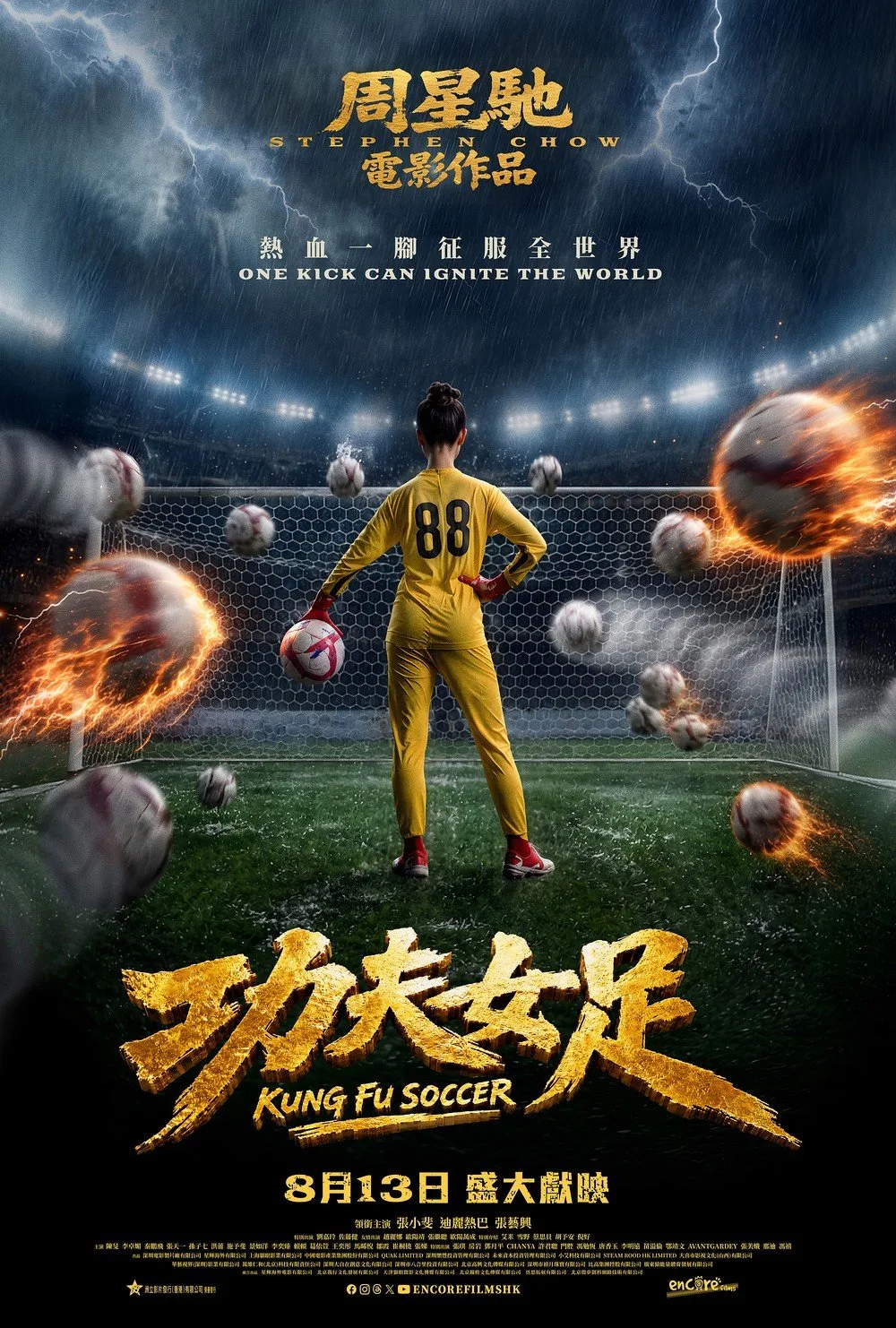
This summer, the Hong Kong comedian-turned-filmmaker dominated the Chinese box office with “Kung Fu Soccer,” a long-awaited follow-up to his 2001 crossover hit “Shaolin Soccer.” “Kung Fu Soccer” earned $1.86 billion, and Chow estimates he spent half of the sequel’s $59 million budget on AI-generated computer graphics for its brightly colored, totally numbing soccer scenes. Chow is now a “strategic stakeholder” in a Suzhou-based AI company that plans to rework Chow’s earlier movies into bite-sized clips to satisfy Chinese consumers’ taste for AI-produced mini-dramas. To quote another irascible cynic: Ever get the feeling you’ve been cheated?
There’s just enough of Chow’s loopy wordplay and physical comedy to make “Kung Fu Soccer” a real disappointment. This pandering, ultimately dismal best-of compilation ignores the plot and characters of “Shaolin Soccer” and retains little of that earlier movie’s humor or warmth. Chow and an army of enablers (three co-directors and ten credited screenwriters) have reduced that earlier sports comedy to a lifeless advertisement for this type of movie.
So “Kung Fu Soccer” is another crowd-pleasing underdog story, only now it’s less clear why we should care about these underdogs since we don’t know that much about what they mean to each other or why their success matters.
At first, “Kung Fu Soccer” seems to be about the controversies and clashing personalities that have made the superhumanly capable Team Emei into social media villains. But the media and its hunger for gossip-friendly controversies stop mattering as soon as Emei’s self-absorbed Captain, Shuang (“YOLO” star Zhang Xiaofei), stops quarreling with her childhood bestie, the hotheaded striker Jade (Dilraba Dilmurat).
Shuang and Jade then team up with their teammates to defeat their traitorous coach, Xu Feng (Lay Zhang), another childhood friend. The stakes rise as Team Emei faces increasingly evenly matched opponents in the women’s Supreme and Invincible Cup finals.
The filmmakers don’t seem to care much about Emei bench-warmers like Chusan (Ai Mi) or Snowy (Xue Ye). They only step into the spotlight when they’re on the pitch, and only to show off some underwhelming AI-boosted super-move or something else. That’s especially disappointing since Snow (Xue Ye), one of Emei’s second stringers, coins the team’s unofficial mantra: “I don’t play to win: I play to play.” That sounds important, but it means very little coming from a character who’s more a disposable plot device than a supporting player.
Chow and his team don’t exhibit the essential playfulness that made Chow’s worst star vehicles feel like overstuffed extensions of his off-the-wall imagination. His former producer, Wong Jing, claimed that his early collaborations with Chow succeeded because he encouraged Chow to imitate poses and facial expressions from Japanese manga. While Wong unquestionably earned his reputation for playing to the cheap seats, he also routinely gave a gifted performer plenty of room to show off, even in so-bad-they’re-good duds like “Fight Back to School III” and “Tricky Brains.”
By contrast, “Kung Fu Soccer” often bears a passing resemblance to “Shaolin Soccer,” since Chow and his crew don’t spend enough time showcasing the ensemble. Sometimes the plot’s buoyed by the same indestructible sports-movie formula Chow lovingly parodied in “Shaolin Soccer.” But most of the time, “Kung Fu Soccer” lurches forward blindly, with no real momentum or urgency.
Admittedly, Chow’s irreverent sense of humor intermittently shines through, particularly when Team Emei isn’t talking about or playing soccer. Several of these jokes still chase a decent setup with a hail of middling punchlines, like when Jade and Shuang try to avoid negative press by not talking at a press conference. The attending journalists mostly ask and answer their own questions, but very little of what they say leaves a strong impression.
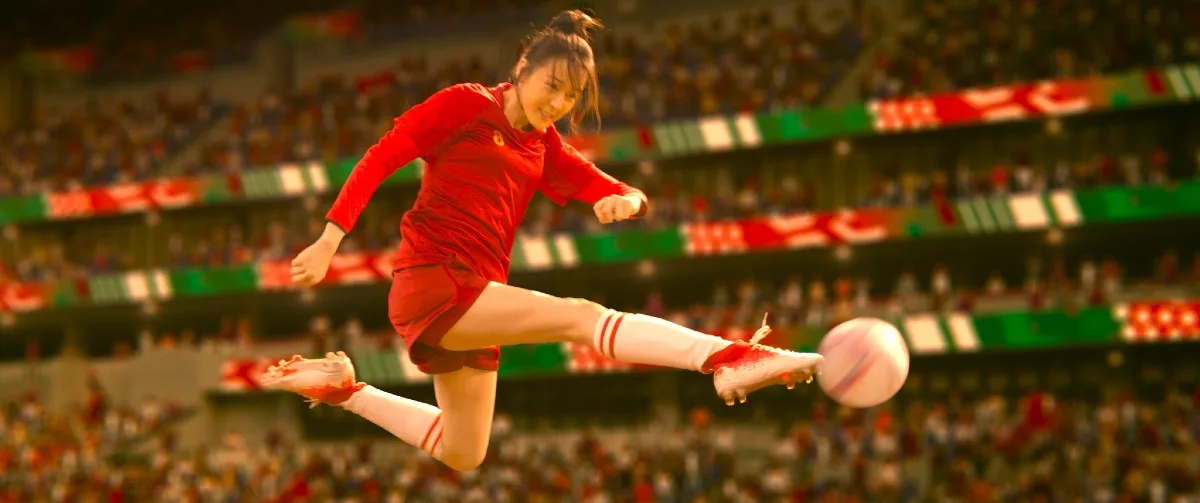
The soccer scenes are especially disappointing, though, since the filmmakers’ use of AI only creates a disturbing Uncanny Valley effect. You probably already know how you feel about AI art, but the movie may still put you off, given how much AI was used in several key scenes. Here, algorithm-enabled programming smothers the animating spirit behind Chow’s surreal maximalism. And while we can all agree that a new Stephen Chow movie sounds great, “Kung Fu Soccer” is a Stephen Chow movie like a taxidermied animal is a life-like approximation of its former self. A case could be made, but only if you’re determined.