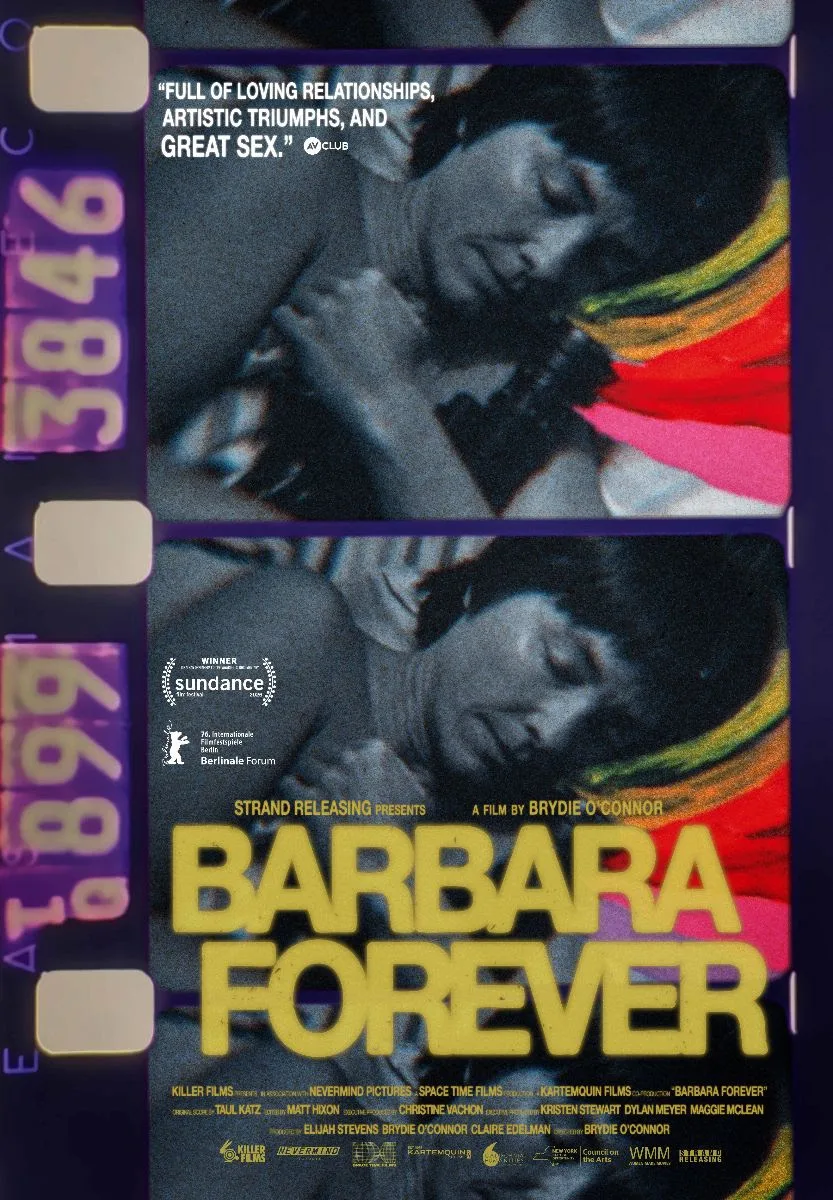

“Suddenly I found myself not being gone, but being part of the world again.” These words, spoken by the late subject of Brydie O’Connor’s magnificent documentary, “Barbara Forever,” encapsulate with prophetic precision both Barbara Hammer‘s legacy and the film’s ethos. Hammer, an experimental lesbian filmmaker with over 50 years of filmography to rifle through, is a rich subject, though a tricky one. Her half-century of documentation amounts to a memoir of peak authenticity, captured as the moments passed, rather than reflected on with memory. With “Barbara Forever,” O’Connor mimics her subject’s experimental style, compiling archival footage with Hammer’s own narration, providing a bite-size biography that is impactful on its own merit, rather than by consequence of a strong source.
As was her intent, it is difficult to discern the line between Hammer’s life and her art. Perhaps because they were one and the same. Her goal, to capture the truth and movement of real lesbian lives and love, was executed with a stunning mix of interviews with friends and lovers, gorgeous self-portraiture, curated tableaus, and intimate documentations, all of which emanate a pure, tactile authenticity. Her films were sincere, textured, and certifiably queer. While unquestionably turning her eye to the dynamics of sex and seduction, she also examined identity, age, culture, and eventually, illness.
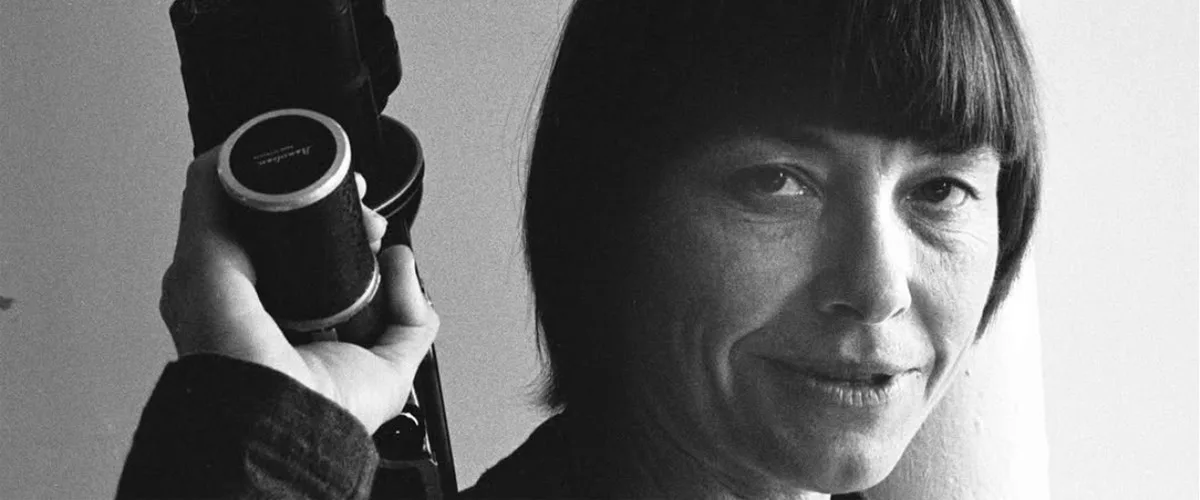
Hammer was magnetic. If shots of women eyeing her from below her perch on a trapeze, her poolside recline, or her seductive rehearsals in front of mirrors weren’t vicarious evidence enough, her self-portraiture and narration will tip the scales. From her signature gap-toothed smile, choppy haircut, and depth of gaze, Hammer had the look of a woman who existed in poetry and the unbridled confidence and voice of an artist who knew her importance, even as she built it brick by brick.
“Barbara Forever” doesn’t play by the biographical book; it’s not quite chronological, nor does it follow a firm outline. Utilizing Hammer’s work to make her own tribute to a Hammer film, O’Connor delivers in the manner of stylistic homage, a collage made from moments of a life. Many minutes are occupied by the mundane (Hammer flexing nude in front of the camera, having sex, chatting here and there) while others carry significant weight (marrying her wife, Florrie R. Burke, and navigating the cervical cancer that eventually took her life). But as was Hammer’s grand proclamation, all these moments of lesbian life are worth the film it’s shot on.
In an era where she was told to choose between avant-garde filmmaking and lesbian filmmaking, Hammer pioneered the path she wanted. She didn’t cater to predetermined audiences; rather, she created her own, built from the community she inhabited and portrayed. At Sundance Film Festival in 1993, where she showcased “Nitrate Kisses,” someone jovially tells her that there had never been more lesbians present at the fest, and “it’s all your fault.” Later, a trans-masc filmmaker comes out to Hammer through a film of his own, saying that despite legally changing his name months ago, he wanted to tell her first. These little puzzle pieces add up to an enduring queer legacy, and to the magnitude of Hammer’s work in the queer and experimental film canon.
Self-described as a businesswoman, artist, and lover, Hammer’s tenderness, sincerity, and unshakeable determination to carve a lesbian space into film culture shine through. With “Barbara Forever,” O’Connor presents an entrance into the mind and life of a queer iconoclast. Formatted by a viscerally moving body of work and a discerning hand, this film is a true immortalization conducted by Hammer but curated by O’Connor: a remarkable collaboration between queer filmmakers past and present, and a testament to the impact of trailblazing. It’s an exhibition that inspires a call to action. “Barbara Forever” is a chance to learn the legacy of what its subject deemed the art of living, making, and dying. Hammer’s filmography is where you must go to experience it fully for yourself.