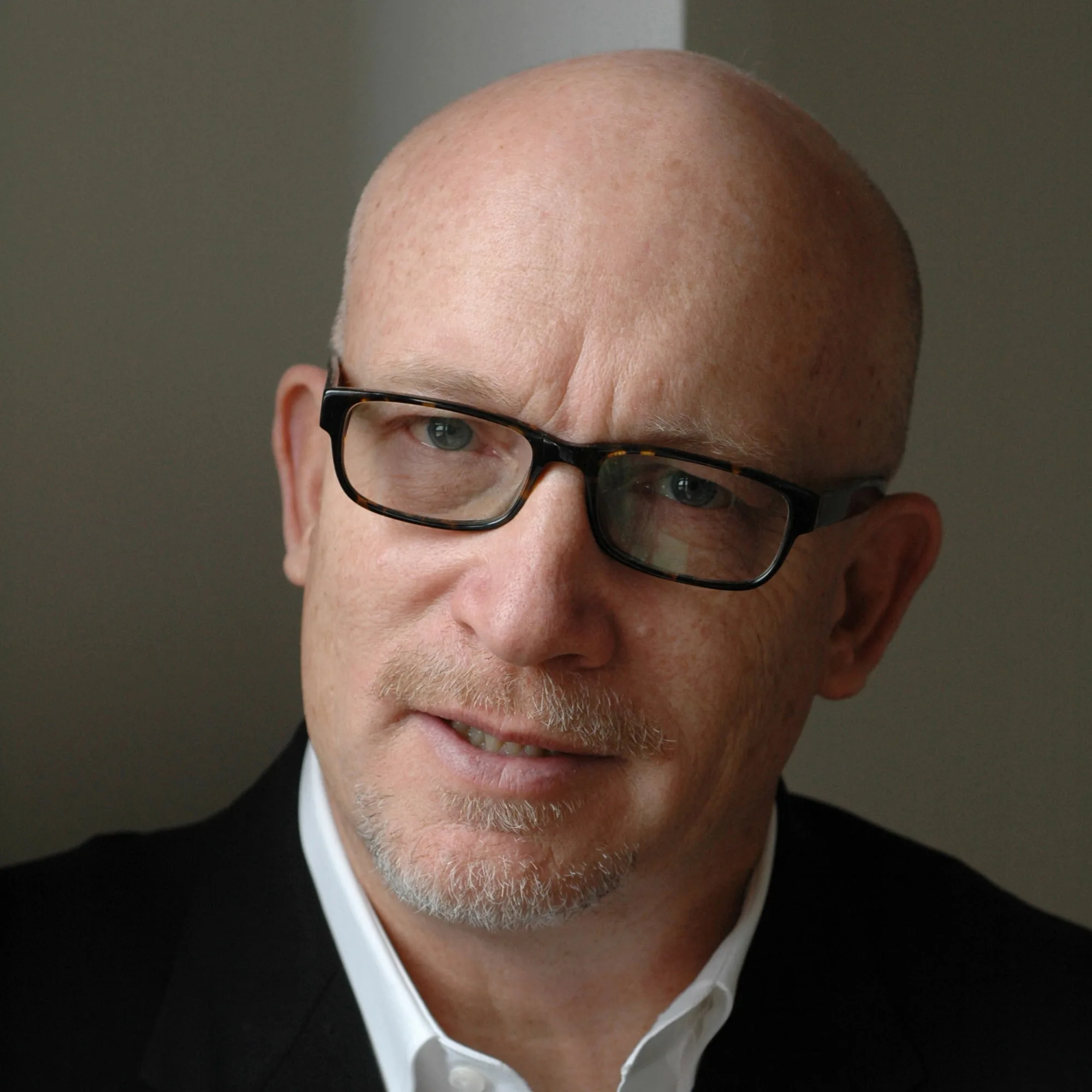
Oscar-winner Alex Gibney’s latest documentary is “Musk,” a four-hour look at the world’s richest man. Elon Musk’s reach includes Tesla, SpaceX, Neurolink, The Boring Company, Xai, X (formerly Twitter), and many more, and, with his involvement in President Trump’s second election and, in the early days of the administration, DOGE (Department of Government Efficiency), plus various international and global ventures and connections. In an interview with rogerebert.com, Gibney talked about Musk’s priorities, what he learned from interview two of Musk’s former romantic partners and his father, and what access Musk has to our most personal information.
When you began to take on this project, where did you start?
I started looking at his businesses. The whole idea was the idea of a 21st century power, and this is back in 2022, before he hitched his wagon to Trump. So. It was then about financial power and tech power.
You’ve got a beautiful score by Daniel Pemberton. Tell me about working with him.
Working with Daniel was a dream. He got the themes of the film right away, and the tone, so it was it was really a joy. And he has two lovely women who work for him as music editors in L.A. He was coming up with ideas constantly, and then they were always working together to make them fit in the film. He was just a joy to work with. And then I reached out to David Byrne because we desperately needed a song for the end of the film, in the vibe of Elon.
The the song that just precedes that is this Flaming Lips song, which is sort of dreamlike but also kind of an elegy. But then we wanted something that was just Elon. David Byrne happened to be in the UK. He bicycled over to see Daniel, and they worked up something. And then while David was on tour, they continued to refine it into a song. Daniel hired the live musicians. I was watching online as they were tossing stuff back and forth. It was great.
One issue in the film that that I think deserves a lot more attention is how much does he know about all of us now? How much did he vacuum up from his time at DOGE about our personal information?
I think a lot. Now what we do know for sure is what DOGE had access to. We know it from the heads of IT at a number of federal agencies, that they had super admin status, which meant that they were not constrained by many of the silos that are often put in place because of classified information or because of personal information which we give to the government, whether it be Social Security, Department of Education, the IRS. So, so they had that complete and total access. Now, did it go to SpaceX? We don’t know. We do know that it would have been as easy as drag and drop.
The other thing that’s interesting and something I learned in this process — everybody’s heralding Starlink, and there are aspects of Starlink which are great. It’s not as good as fiber inside a city, but if you live in a rural community or you are on a plane, great. But here’s the thing I didn’t realize until the news reports that SpaceX personnel had installed Starlink in the White House complex. It was it was a jaw dropper. Starlink, unlike the regular internet, is not end to end. If you’re in Omaha and you send an email to somebody in New York, it goes up to SpaceX, and then goes up to another satellite, which then beams down to you. So we’ve got to ask: Do we want all of the White House data and information flowing through SpaceX?
You have interviews from Musk’s former romantic partners. How do you evaluate their comments?
People are free to draw their own conclusions. They’re no longer with him, so the audience can assume that maybe there’s an axe to grind. But I would also say that both women spoke very movingly about their time with him before the relationship soured. Justine Musk, his first wife, almost breaks down into tears talking about how much in love with him she was at one time. To me it felt very real and very personal. Also a lot of the information that they gave me was information that I had gotten from other sources, stuff that I’d gotten from other sources, and they were confirming.
In the case of Ashley St. Clair, I wondered why he turned so hard for Trump. I was speculating, and other people had told me that it might have been as a result of government investigations into him and his businesses. Ashley St. Clair actually had texts from Elon saying that that’s why he turned to Trump. So, so that was very valuable.
You’ve made some great documentaries about frauds and liars including films about Enron, Lance Armstrong, and Elizabeth Holmes. Do you see any similarities to Musk?
There were three earlier films I had done that this reminded me of a lot. One was “Enron”. One weirdly was “The Armstrong Lie,” and one was “The Inventor” about Elizabeth Holmes. Particularly Enron, you know, there was a lot of faking it at Enron, and in the service of trying to make the company succeed. And early on at Tesla, he was doing a lot of faking it in order to impress the stock market and to also hack into federal subsidies and federal carbon credits.
You look at it now and you almost laugh. I mean, he had this battery swap idea, and the idea was he was supposed to be able to go to a gas station and swap out your battery in like two minutes. Less than the time it takes to fill your gas tank. But a Tesla battery is a thousand pounds. It’s not like a double A battery. And also, out of the factory, it comes with sealant and everything else. You know. But they did have this big demonstration where they may have done it once. You don’t really see what’s happening underneath the car. But it never happened in real life. Had it happened, it would have been the solution to the most public problem of the electric car, which is range. That’s what everybody always asks about. But it was a scam. It was a con.
One of the themes that really jumped out at me was what I think of as “stolen valor.” With all that he has accomplished, he wants people to think he did even more. Why is that?
Main character syndrome. We can speculate that he’s a narcissistic personality, but also, I think he learned to monetize this idea of main character syndrome that that he was creating. Very consciously, and sometimes I would say, unconsciously, a character that people could invest in, and that’s what people end up putting their money in when they’re thinking about the future of Tesla. It’s his own psychological makeup and it got worse and worse and worse the more success he obtained. That’s one thing I learned from Justine. But I think it also had, particularly in the culture of Silicon Valley, a particular utility for fundraising, selling stock.
For me the most chilling part of your film is the interview with Musk’s father, when he talks about shooting three intruders and killing them. What do we learn from seeing Errol Musk?
The apple doesn’t fall far from the tree. That’s what I think we learned from it. His father is a scary character. Justine Musk once told me that she’d only one met one person in her life who scared her, and that was Errol Musk. You can see his his sense of fabulism, his comfort with violence. I had no idea he was going to go into such loving detail about the color of the blood. I kept it in for that reason.
Has he ever admitted a mistake? Has he ever apologized to anybody?
There is a funny moment where he pretends to admit a mistake as part of DOGE, where he says, “We will make mistakes. For example, we accidentally canceled the Ebola relief program.“ Right, but we but we recognized our mistake and immediately turned it on. Well, he’s right that they accidentally shut down the program, but he’s lying when he says they turned it back on. They did not. The early Elon on Twitter would sometimes say, “Yeah, I was wrong,” but increasingly, as he be surrounded himself with more and more flatterers, and became more and more convinced, more high in his own supply, almost rarely, almost never.
Is there anybody that he respects or listens to?
I don’t think so. One of the things that occurred to me was a comparison with Steve Jobs, because I also made a film about him. And one thing I will say about Jobs was that after the failure of NeXT, when he went back to Apple, he surrounded himself with a small group of people who could criticize him, who could say “no” to him honestly, and he made it a point of listening to them. That is to say, he grew up, and it gave him a sense of perspective. As Musk gets more and more power, he listens to fewer and fewer people, and surrounds himself with flatterers like the podcasters,
What do you think were the pivot points that propelled Musk into public policy and politics?
But certainly, COVID was a moment. He bristled mightily as the movie shows, against the attempts by California to put in some kind of safety protocols for his employees. And by the way, this is early in COVID when when freezer trucks were filling up with corpses in New York City. And you would think you know he might have some regard for his workers, but that so offended him that he ended up fleeing to Texas, where pay-to-play is much more effective.
In terms of the transition of his daughter, here’s a moment that’s kind of classic bully behavior. You’re not big enough to understand that you’re dealing with a child who’s growing up. Instead, it’s somehow an insult or an offense to you personally. And so, you become wounded, and then you find other people that are anti-trans, and you form common cause with them. And I think there’s a little bit of that, but ultimately, you know, he goes hard right with Trump when it becomes because he was always a reward hacker with the government. He was the kind liberal as Obama showered him with loans and subsidies, and Biden administration, after he’s snubbed by Biden for the electric car gathering, he is so petulant and petty. He’s a little boy.
And then, of course, always in addition to sort of the petulant little boy quality of Elon Musk, because the the flip side of every bully is a coward, is this pragmatism. He was facing a lot of federal and investigations into his companies, and one criminal investigation, which might have put him in prison. In fact, he he jokes with Tucker Carlson. We included in the film. He said, “I wonder how long my prison sentence is going to be if Trump isn’t elected.“ So he knew that if he got Trump elected, all of that would go away. And indeed, he he was put in charge of making it go away.
Does he think at all about his legacy?
I think he must. At the end of the movie, planet Earth explodes, and Elon is fleeing in his spaceship to Mars. That was not an accidental image. This guy’s gone from climate savior to to climate destroyer by backing Trump, and his body count now is extraordinarily high in terms of people who have died as a result of his actions. Not only at USAID, but starting earlier at the Autopilot program. They all love Lord of the Rings. If he is thinking honestly and clearly about his legacy, he must conclude that he’s he’s not Frodo. He’s Saruman.
Who can stop him?
We can, if we choose to. The reason he’s putting so much money into this midterm election cycle is he understands that if the Democrats take the House, which they almost certainly will, and possibly the Senate, there will be a lot of investigations into him. And as powerful as he is, and and as much as he’s trying to integrate what he’s doing into all of our systems, we do have a democratic system, what’s left of one. It’s been deeply compromised. But this is this is one guy we need to investigate and hold to account because if we don’t, that’s on us.