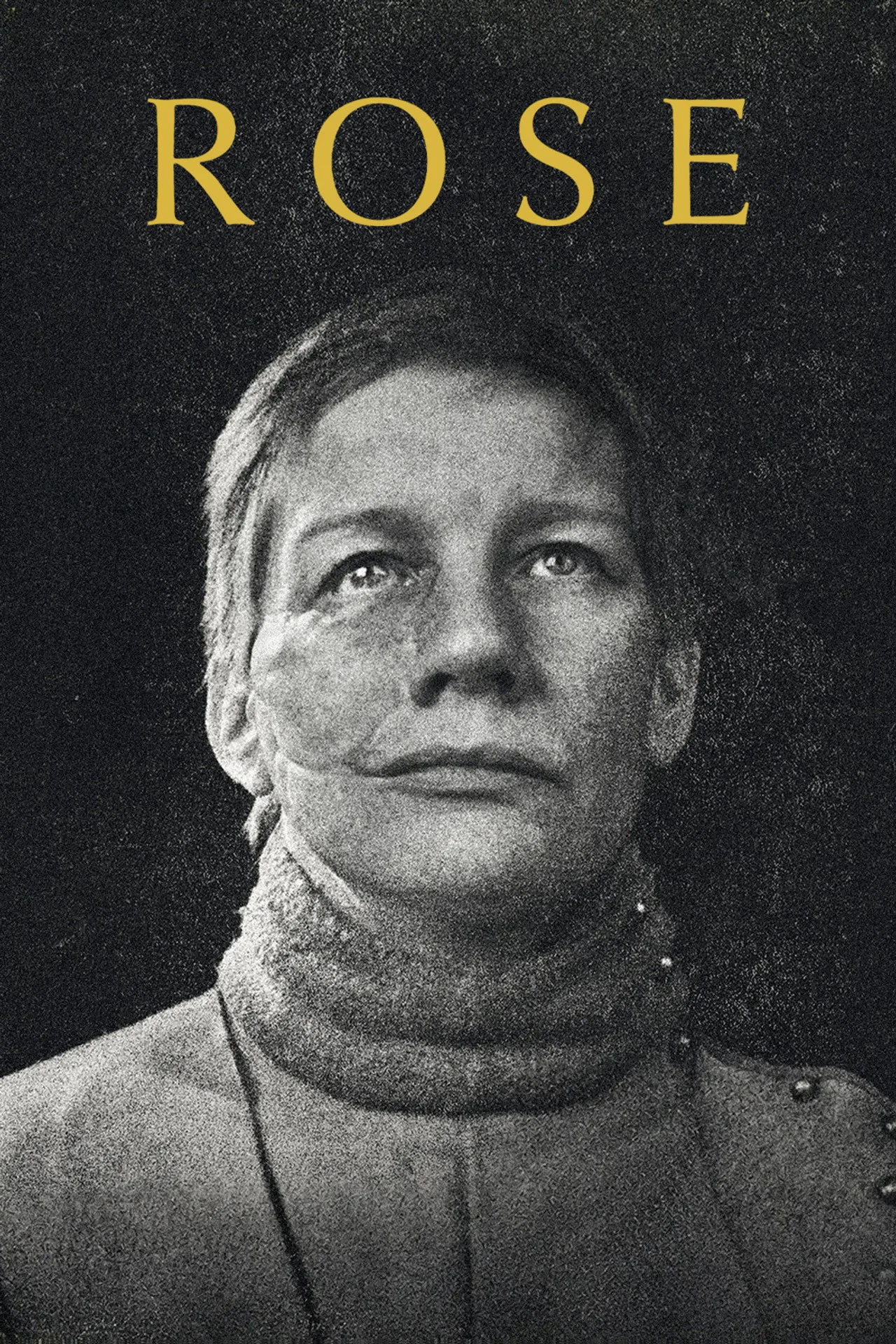

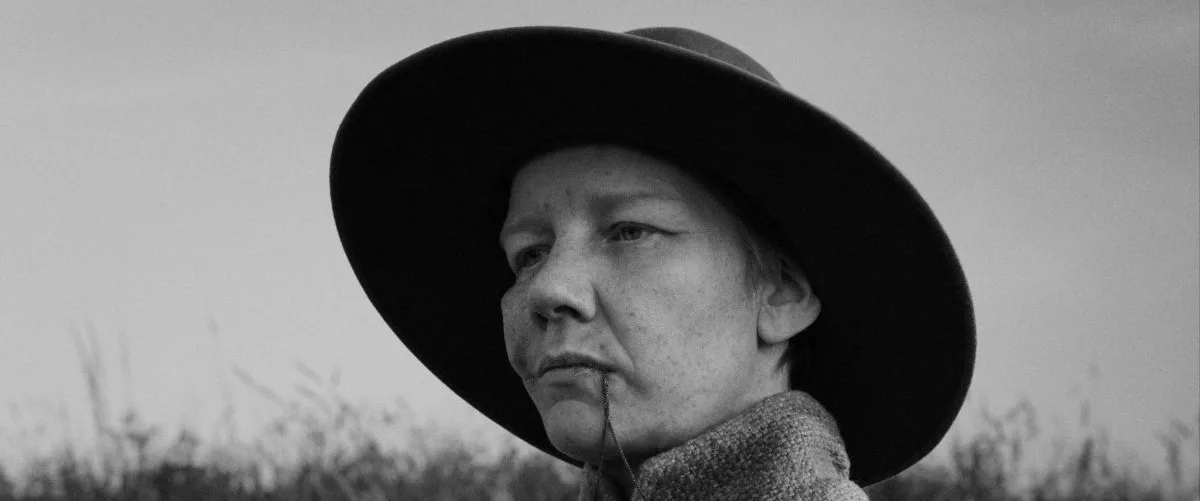
She arrives alone in winter, carrying a bag of gold and healed wounds from the Thirty Years’ War. Entering a small 17th-century Protestant German village, she has all the necessary documentation and, more importantly, the local historical knowledge needed to prove her birthright. Her name is Rose (Sandra Hüller). But she doesn’t tell the patriarchal order this. Rose has spent decades passing as a man, serving as a soldier, and practicing a level of discipline that must’ve often felt soul-crushing. She arrives in this village under a false identity for the glimmer of a better life only to discover bittersweet freedom.
“Rose” comes from director Markus Schleinzer, who co-wrote the script with Alexander Brom. Schleinzer spent a good chunk of his career as a casting director for Michael Haneke and Ulrich Seidl, and in some ways, at least from the former, you can see their DNA in this tactile film.
The Schleinzer- and Brom-penned script opens with an evasive note: “The true tale of a deceiver of land and folk who, though born a woman, assumed the guise of a man, and under a false name committed many a wicked deed.” A “deceiver” and “wicked” by whose definition one might ask. Complicating matters is the narration of an older woman (Marisa Growaldt) who often questions Rose’s choices. She opines what kind of heroism or freedom someone could feel by hiding in plain sight not solely from the world but from themself too. In that question lurks pockets of truth and condemnation, making one interrogate from what perspective this history is being told.
When Rose arrives, she finds her potential farm in disrepair. The snow-covered ramshackle timber frame home only houses crunchy decaying leaves. The brittle land looks a step below arid. She might hold plenty of money in her purse to hire men to work the farm with her, but they do not trust her. She only gains their support when she shoots and kills a bear attacking a stable boy. Schleinzer, in an on the nose visual queue, is sure to make sure you notice Rose wielding the phallic shotgun to prove her masculinity.
The film finds greater tension by positioning capitalism and greed against the seemingly purer agrarian rural way of life led by the villagers. In a bid for greater profit, Rose attempts to buy a stream from a wealthy farmer (Godehard Giese). Instead of selling to her, he makes a deal: If she marries his daughter Suzanna (Caro Braun), then she can use the stream at her will while he still owns it. Rose agrees despite knowing that eventually she’ll have to produce an heir for the farmer. Schleinzer is well-aware he’s created a false dichotomy. Is Rose greedy or is she merely playing within an already exploitative system wielded by the patriarchal landowners who always see women and children as opportunities to extend their domain?
The narrator somewhat shields herself from that charge by perpetually positioning God and divine will as the primary arbiters of Rose’s fate. She also denounces her desire to own a farm and raise a family as a rebellious act against God’s wishes. A reminder of her temerity, in fact, hangs around her neck: She often chews the bullet that ripped through her face, causing her right cheek to be misshapen. If there’s one critique of Schleinzer’s creative decisions, it’s that he often lacks subtlety. He runs full speed with the image of a persecuted woman, moving toward overt references to Renée Jeanne Falconetti’s venerated performance in “The Passion of Joan of Arc.”
While many actors would crumble under those expectations, Hüller isn’t like many other actors. In a year that includes turns in “Digger,” “Project Hail Mary,” and “Fatherland,” “Rose” is Hüller at her best. In Gerald Kerkletz’s black-and-white photography, which often recalls a Daguerreotype, she attains a sly relationship with the camera. While her stiff vintage-era posture and physical form in vintage garb project confidence, her searching glances, particularly at the film’s bookends, invite other interpretations. She also finds room for wonder and surprise beneath this makeup, while the equally affecting Braun hides her emotions until the right moment.
Their world ultimately twists both Rose and Suzanna into allies against erasure. In Schleinzer’s bleak, melancholic picture, a sense of foreboding lingers, a warning from our cagey narrator that destruction for individualistic women is always just around the corner. “Rose” emerges from those perils with remarkable force and even greater tenacity, a testament to a woman’s unbreakable will.
This review was filed alongside its Chicago International Film Festival premiere. It opens on December 11.