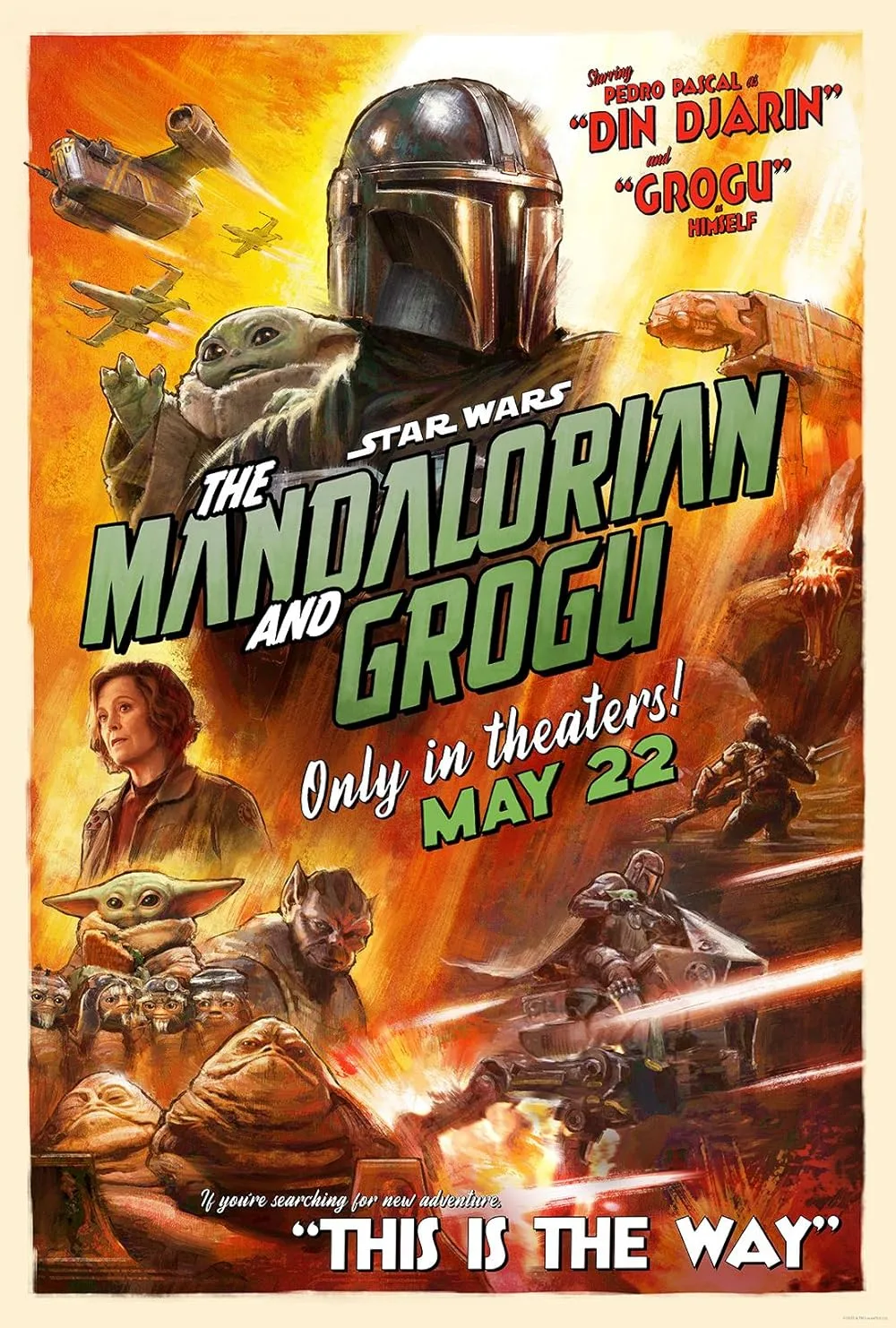
Will “The Mandalorian and Grogu,” the first theatrical “Star Wars” feature in seven years, prove to be the beginning of the end of this mini-empire’s dominance over science fiction, or the end of the beginning?
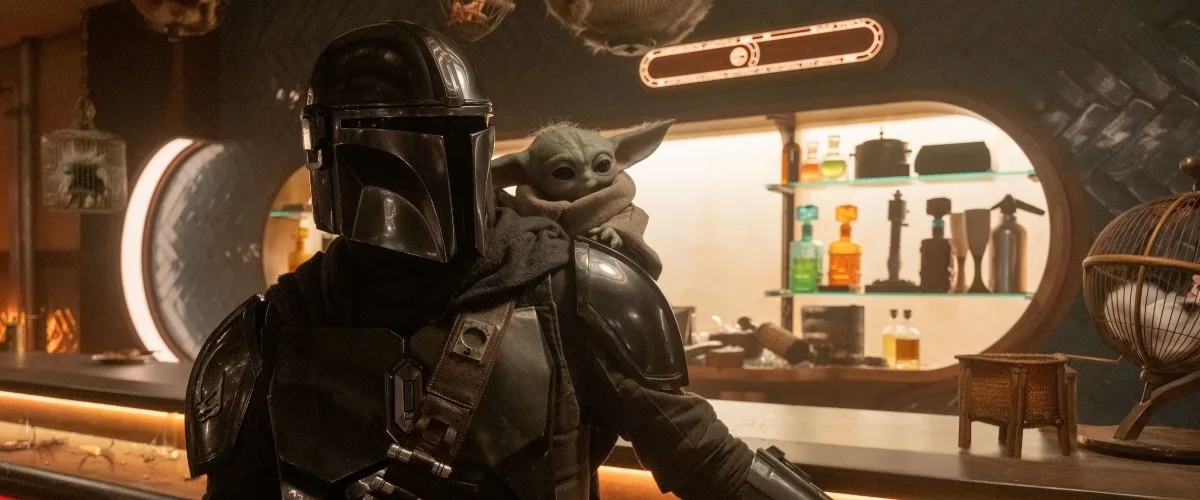
“The Mandalorian,” the series about the Mandalorian bounty hunter Din Djarin, aka Mando (voiced by Pedro Pascal), and his adorable Force-gifted ward Grogu, aka Baby Yoda, has a built-in audience, though not on the level of Marvel circa 2019. And of course, this is not a movie that wraps up an ongoing cinematic narrative, but essentially two-and-a-half episodes of a TV show strung together and released to theaters, where Disney+ subscribers don’t even get a discount on tickets, much less a freebie. The first pop culture franchise to try this was “The X-Files,” which released a feature film in 1998 while the show was still making new episodes. That there wasn’t a second movie until 2008 tells you how good the idea was.
Set a year after the Empire’s defeat in “Return of the Jedi,” the new movie starts with what could’ve been the blowout ending of a Disney+ season finale, with the blaster-slinging bounty hunter busting up a hive of Imperial holdouts and destroying two AT-ATs (or “walkers,” those gigantic four-legged armored vehicles introduced in “The Empire Strikes Back”). Upon returning to New Republic base camp, Mando is assigned his next task by a new franchise character, Col. Ward (sci-fi queen Sigourney Weaver): travel to the home planet of Jabba the Hutt—Han Solo’s onetime gangster slug creditor, choked to death by Princess Leia in Episode VI— and rescue Jabba’s son Rotta the Hutt (Jeremy Allen White), who is being held hostage there. Mando agrees to do it in exchange for a bit of information that’s important to him. And we’re off to the races.
OK, actually, we’re back on the treadmill. There’s no reason for anything in this movie except the wish to make even more money. The director here is Jon Favreau, who started out in the 1990s making hilarious, independently funded comedies costarring himself and his talented friends (including a then unknown Vince Vaughn). He somehow drifted into Disney’s orbit and became one of their most valued employees, directing the first “Iron Man,” which set the template for the MCU’s smirky humor; consulting on various theatrical films and shows; and spearheading the mostly pointless and mostly dreadful run of “live action” Disney remakes of their hand-drawn animated features (though I’m in the minority in loving Favreau’s version of “The Jungle Book”). He has now become more of a mini-mogul and tester of the newest motion picture technology than the eccentric, warmhearted auteur he once seemed on track to become.
I’m on record as despising the word “content,” which was pushed by early tech moguls to devalue art as interchangeable goo in a virtual pipeline, but this washed-out, video-game-looking movie, with its murky night scenes and lack of visual depth, deserves the word. You’ve seen everything in it before, from the equipment, spacecraft, armor, and tactical maneuvers to the species and various types of terrain (earthlike, but cartoony).
It’s also another example of the franchise’s inability to resist tying everything in Lucas’ allegedly vast galaxy back to the same extended family, the Skywalkers, most notably by centering the plot on the fate of Jabba the Hutt’s son, who inexplicably looks like he’s been spending a lot of time at Crunch Fitness. Even Grogu taxes our patience. Some of his cute bits could’ve ended with him facing the camera and doing jazz hands.
What made the first season and most of the second feel fresh was the way it confidently restored the “Star Wars” universe to its original factory settings, which—to quote my good friend, the filmmaker Kristian Fraga—was “a band of losers saves the galaxy.” But if we’re being honest, “Star Wars” creator George Lucas is primarily responsible for the dramatic wrong turn that led us down this very lucrative path, as he is the one who impulsively decided, during the 1979 production of “The Empire Strikes Back,” to change Luke from a Force-gifted farm boy whose dad was murdered by an Imperial bigwig to one of two twin offspring of said bigwig. It’s been dynasty this, dynasty that ever since, in the prequels and sequels as well as the kajillion adjacent properties that were built around tertiary or barely-glimpsed characters.
Luke made a godawful, CGI-masked guest appearance at the end of Season Two of “The Mandalorian,” tying what initially seemed like a fairly laid-back episodic program reminiscent of 1950s shows where nomads wander from place to place solving problems (like “Have Gun, Will Travel” and “Route 66”). Boba Fett, the first Mandalorian bounty hunter in the franchise, was a mostly silent contract freelancer for Vader in “Empire,” but got additional scenes in the next film because a cartoon short that aired during “The Star Wars Holiday Special” made kids demand more Boba. He ultimately got his own live-action show on Disney+. So did the Jedi warrior Ahsoka, introduced in Dave Filoni’s “Clone Wars” cartoon series (not the earlier one by the great Genndy Tartakovsky). Disney+ even brought back Obi-Wan Kenobi, in a tedious, weightless series so badly shot that it looked like a daytime telenovela from the ’90s. Darth Vader has made enough guest appearances across various TV and film properties that his mystique has been ground down to nothing. How can we fear him when he won’t go away? Sy Snootles’ solo album, when?
There have been so many “Star Wars” shows on Disney+ in the past decade that it seems puzzling that the studio apparently ignored its own former CEO Bob Iger’s conclusion about Marvel circa 2023, when he stated that the large number of “Marvel”-themed streaming shows “diluted [the] focus and attention” of the Marvel fanbase. That certainly happened with “Star Wars.” It’s been a long time since we saw a band of losers saving the galaxy. Unless you count the “Guardians of the Galaxy” movies, which somehow managed to exist within the Disney empire while preserving most, though not all, of their integrity. Yet the thirst for new riffs on old things continues unabated. “Star Wars” has become the punchline of that old joke where two guys are complaining about a restaurant, and one says the food is terrible, and the other says, “Yes! And such small portions.”