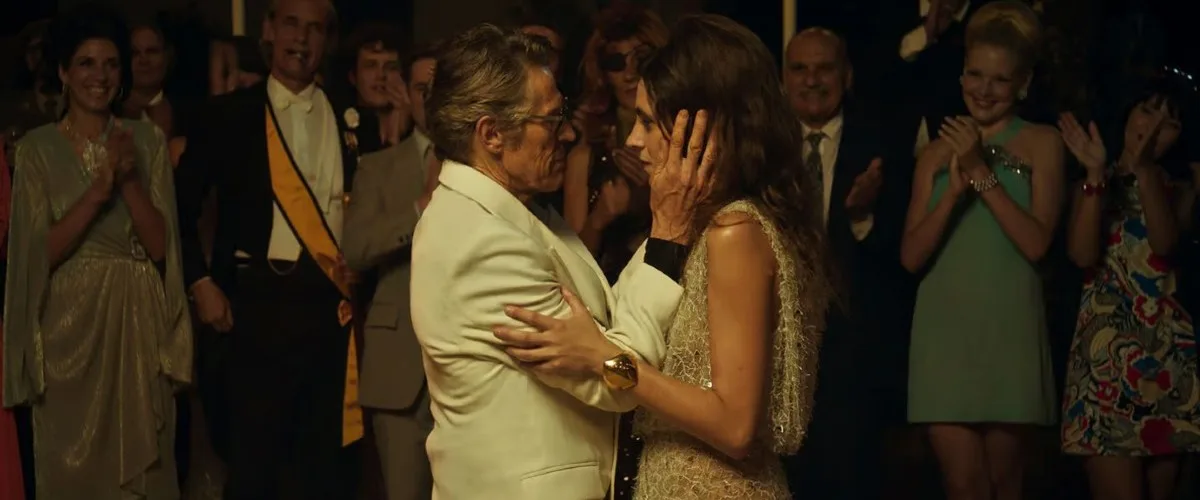
Sometimes you see a movie so dull, it’s a struggle to string words together about it. “The Birthday Party,” Miguel Ángel Jiménez’s meandering snooze fest, which premiered at the Locarno Film Festival last year, is the prime example of one such movie. It shouldn’t be this way. After all, this film, which was adapted from Panos Karnezis’ same-titled novel, stars the always-engaging Willem Dafoe as the Greek billionaire Marcos Timoleon, who decides to throw a celebration for his daughter’s upcoming 25th birthday. But this putrid, unfocused narrative is so pointless, it manages to dampen even Dafoe’s presence.
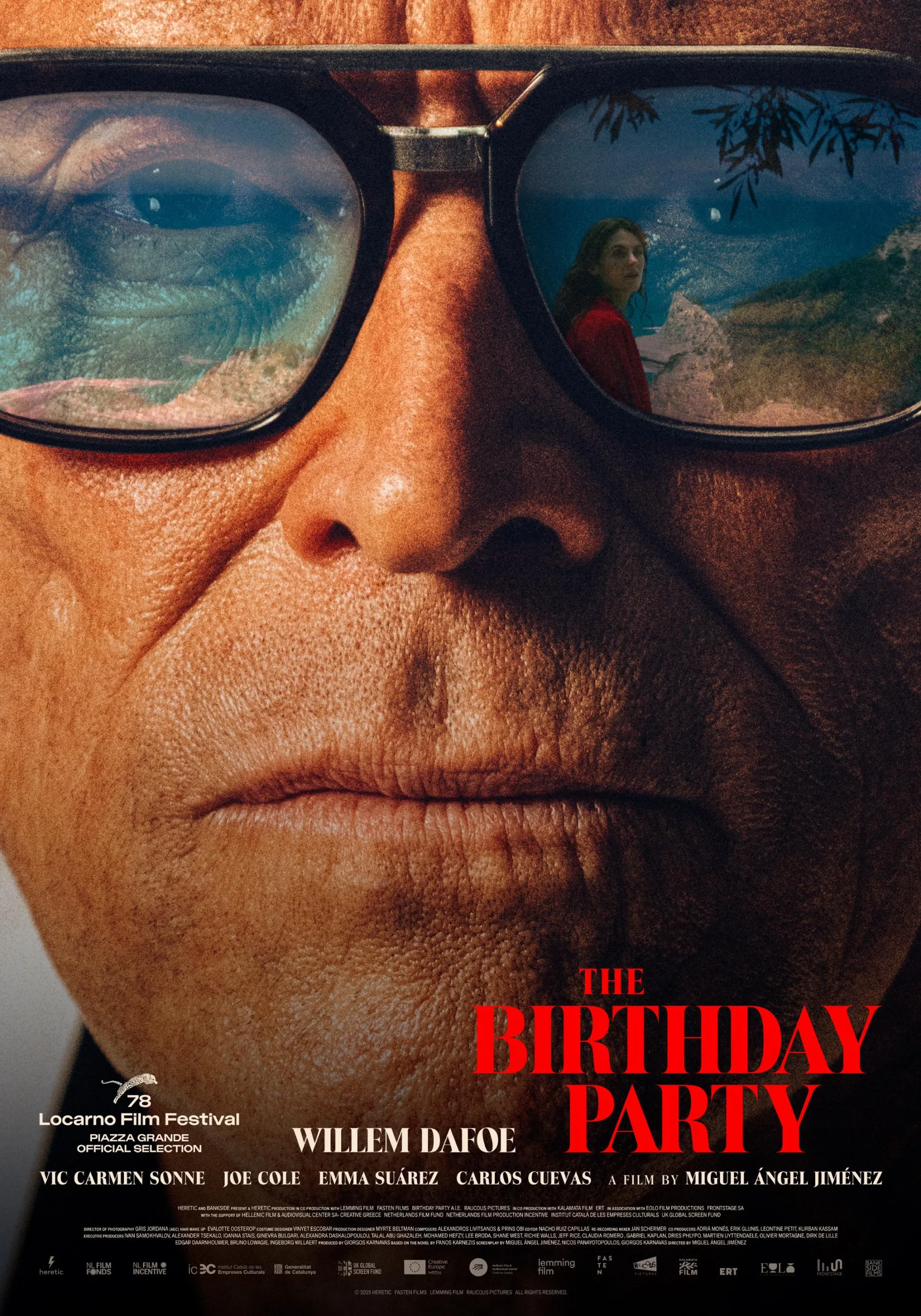
A sporadic narrative that persistently switches perspectives, “The Birthday Party” must’ve been fun to shoot. It takes place on a private Greek island whose endless summer rays aren’t even interrupted by the cloudiness of Marcos’ dark plans. Over the course of a single day, we watch several key players arrive at the destination: Marcos’ dutiful doctor and friend Patrikios (Christos Stergioglou), his estranged wife Olivia (Emma Suárez), his English biographer Ian Forester (Joe Cole), and his rebellious daughter Sofia (Vic Carmen Sonne). These figures are flatly portrayed. They’re too overshadowed by the over-the-top Marcos, who styles Dafoe in big-collared suits and butterfly sunglasses, to be anything more than narrative pawns, which is exactly how Marcos likes it. Unfortunately, Marcos remains a mystery to us, too.
The protagonist played by Dafoe bears a passing biographical resemblance to Aristotle Onassis. Marcos’ private island recalls Onassis’ Skorpios and the sudden death of his son, which opens the film, and also alludes to the real-life Greek shipping magnate’s own brush with tragedy. Apart from those scant details, Marcos is a bundle of cliches. The dialogue, for example, is rote, with robotic lines spoken by Dafoe to Sonne, like: “Everything will be fine. It’s for your own good.” Marcos speaks so often about his deceased angelic son compared to his wayward daughter, he might as well just hold up a cue card that reads: “The wrong kid died.” Marcos also can’t shut up about his legacy, seeing Sofia as a continuation of his name. So he uses his wealth to brutally control those closest to him, attempting, in one instance, to stop a relationship between Ian and Sophia that’s resulted in a pregnancy that Marcos wants to see terminated.
Dafoe struggles under these demands. Though the film would like to be a commentary on the cruelty and emptiness of rich men, Jiménez gives us and Dafoe nothing to grasp onto. Instead, he pursues a garish filmmaking aesthetic at all costs. We often cut to a tape recorder that plays Marcos’ inner thoughts, which is lit in Argento red. And yet, those thoughts merely foreshadow rather than reveal anything about him. As we slip into the birthday party itself, the editing becomes frenetic, unable to carve a coherent arc from disparate moments meant to depict the island’s sun-bleached excess.
There are a couple of instances where Dafoe gets to sing, such as the moment when Marcos invites Eric Burton and the Animals to perform at the celebration (this movie might’ve been more entertaining as a straight-up musical with Dafoe as a song-and-dance man). But these joys are fleeting in such a self-serious work. This film is simply a boring project, one without perspective, rhythm, or ideas. Only Jiménez could make a movie that makes one want to leave a party thrown by Dafoe before the open starts pouring.