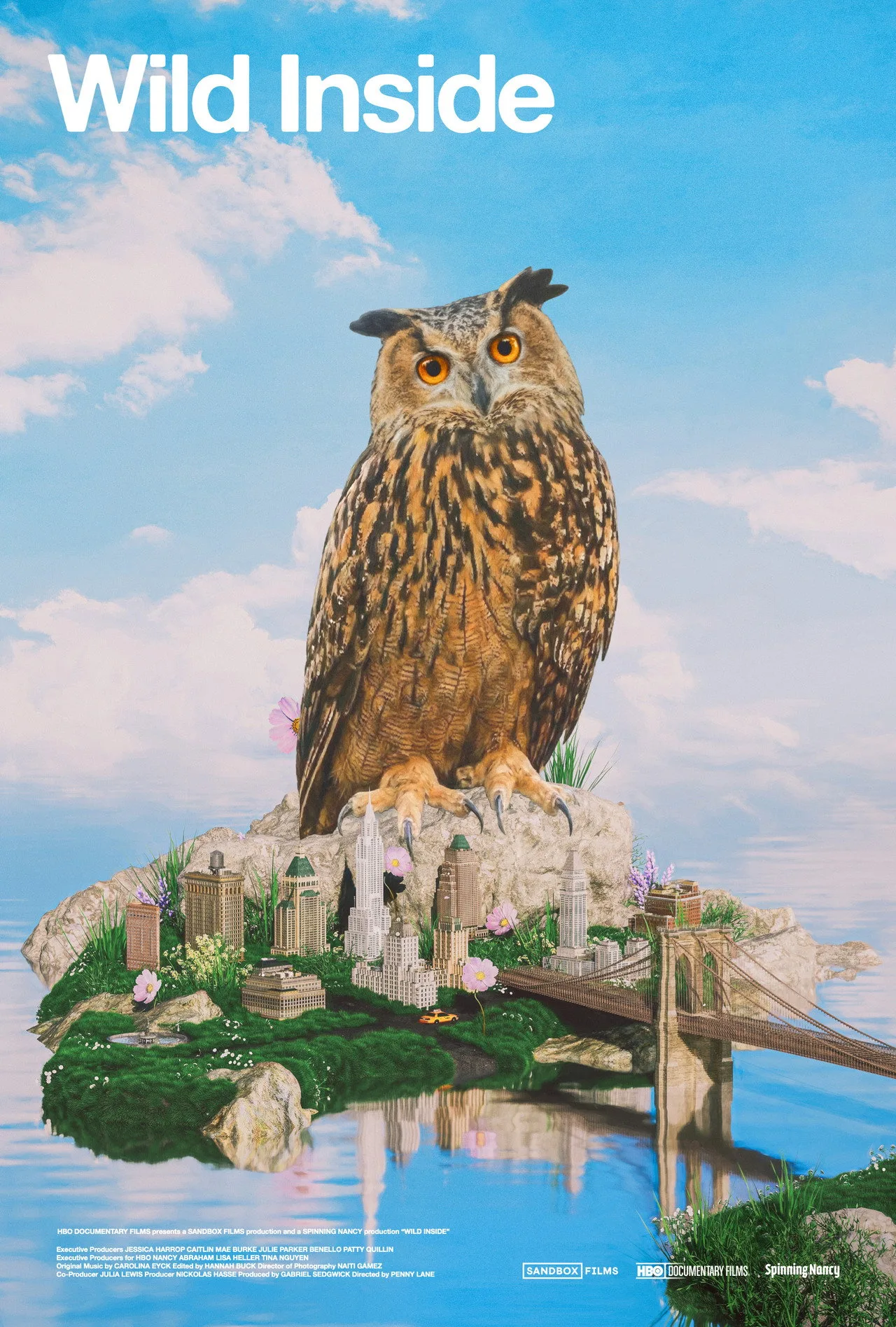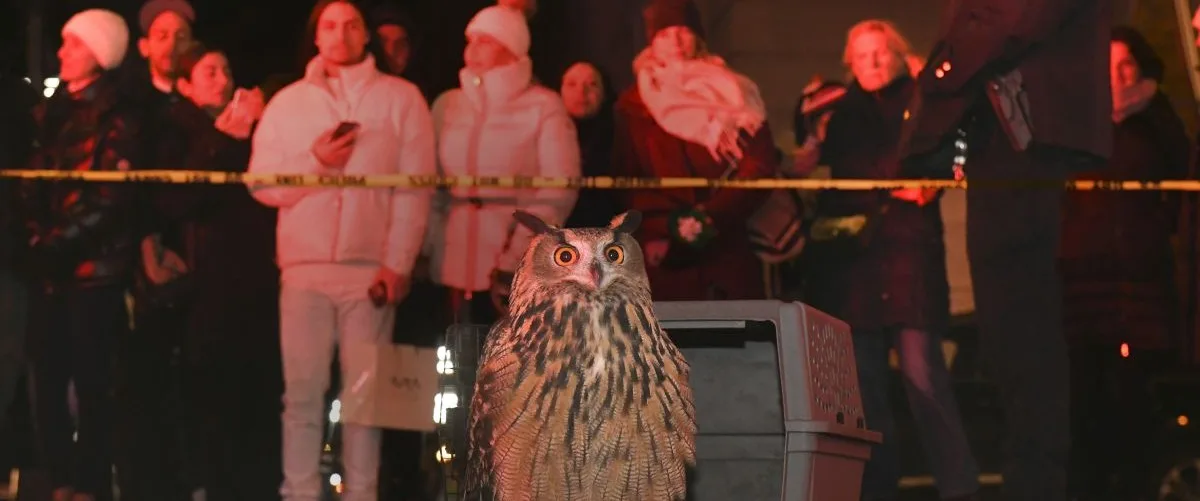
Across her feature documentary work, director Penny Lane has carved a career out of asking uncomfortable questions in such a humorously disarming way to her subjects that it elicits honest responses we otherwise wouldn’t hear. Her latest work, “Wild Inside,” fits snugly in her oeuvre, channeling the best of the likes of “Hail Satan?” and “Confessions of a Good Samaritan” but with a much cuddlier main subject: Flaco, the Eurasian Eagle-Owl.
Adorable animals have been key fixtures of internet and meme culture for a long time, but with her documentary, which traces Flaco’s odyssey from New York’s Central Park Zoo to the Lower East Side and everywhere in between, interrogates the larger ideas behind the icon. She raises thorny questions around the irreversible ways human beings’ livelihoods and infrastructure have damaged animals’ lifestyles and whether, in an age of distraction, human beings have the capacity to still be in awe of the world around them.
It’s understandable that Lane saw the story of what happened to Flaco as worthy of documentary treatment. As Edmund, one of the interviewees in the film, shares, “An escaped zoo animal is like a plot from a movie. It’s too much to believe that you might be standing in front of one.” After unsuccessful attempts by police and animal control to get Flaco back to the zoo, authorities let him be. Miraculously, after spending thirteen years in captivity, Flaco learns to hunt for himself and find shelter, perched high up in trees far enough away from the loud sounds of the city. It’s a marvel to watch him embrace dormant instincts, and Lane and cinematographer Nati Gámez present Flaco in his winged glory without an overly didactic human touch. In one particular cinematic sequence, as Central Park rangers close in on Flaco at night, ready to capture him, before they can even get close, he flies away, the camera in a subtle slo-mo capturing the length of his wings and the beauty of his escape.
It might sound like glorified Ring camera footage of a bird doing its rhythms, but it helps that Flaco is so watchable and captivating; Lane and editor Hannah Buck feature long sequences of Flaco in flight, eating a rat, or simply observing the world around him, eyes widened, and beak furrowed as the bustle of the city continues. One wonders what a version of this story might have looked like that consisted entirely of footage of Flaco himself, without any talking head interviews.
Yet Buck does stellar work in stringing together the various footage of Flaco, telling a narrative, especially as the seasons change and with it, come new obstacles. Even when other human voices are peppered in, Flaco remains the main event. It’s a testament to Lane’s work and philosophy that she’s willing to let so much of the film’s runtime be dedicated to our wordless, fierce protagonist, who might offer some occasional hoots, but is otherwise fairly laconic.
In many ways though, the inclusion of the human element, from the birders who diligently track Flaco’s every move to the random passersby who have shared how his story has inspired them, is fitting framing. Lane weaves in the various perspectives around Flaco’s release in a way that doesn’t feel like reading off of a checklist. Each new stage of Flaco’s own homecoming to himself opens up a natural way to explore other questions. For example, when Flaco first escapes and is free, people are happy that he’s escaped his confines and want him to experience liberation. Yet as the months grow colder, there becomes a concern about whether Flaco will be able to find food and shelter, but also if the food he’s eating–mainly rats–could make him get sick because of the intense presence of rodenticide. Later, when Flaco moves to the East Village, puffing out his chest and hooting in a way to indicate a desire to find a mate (“We’re all looking for love in the East Village,” someone quips), it raises more concerns, as there is no bird in North America for him.
Lane makes her biases known as well, evident in the incisive questions she asks Daniel Cone, Assistant Executive Director of the Wild Bird Sanctuary in St. Louis, Missouri, who is a proponent of keeping birds in captivity for their safety. Yet even as she pushes people like Daniel on perspectives she disagrees with, she allows her opponents to speak uninterruptedly and freely, which shows grace on her part as a director. If we want a world where birds like Flaco can be truly free, it would require more upheaval of existing infrastructures that I think many wouldn’t care to admit, and Lane makes space for these conversations as well. The harder questions go down easier when they’re interspersed with glam shots of Flaco, though.
G.K. Chesterton writes, “The world will never starve for want of wonders, but only for want of wonder.” That sentiment is deeply felt in the film’s opening moments where busy NYC passersby walk by Flaco without giving the avian a second look. Given how we never are going through one crisis at a time, it’s understandable that people might ignore nature, but if you walk away with nothing else, Lane’s cry for people to pay more attention to the marvels around them poignantly rings true. There are wonders all around us, who can inspire simply by existing. As one person who is getting a Flaco tattoo says in the film, “I think that there’s something real about his story. He just said ‘Fuck it’ and flew.” May we all be so lucky to take flight in the same way.