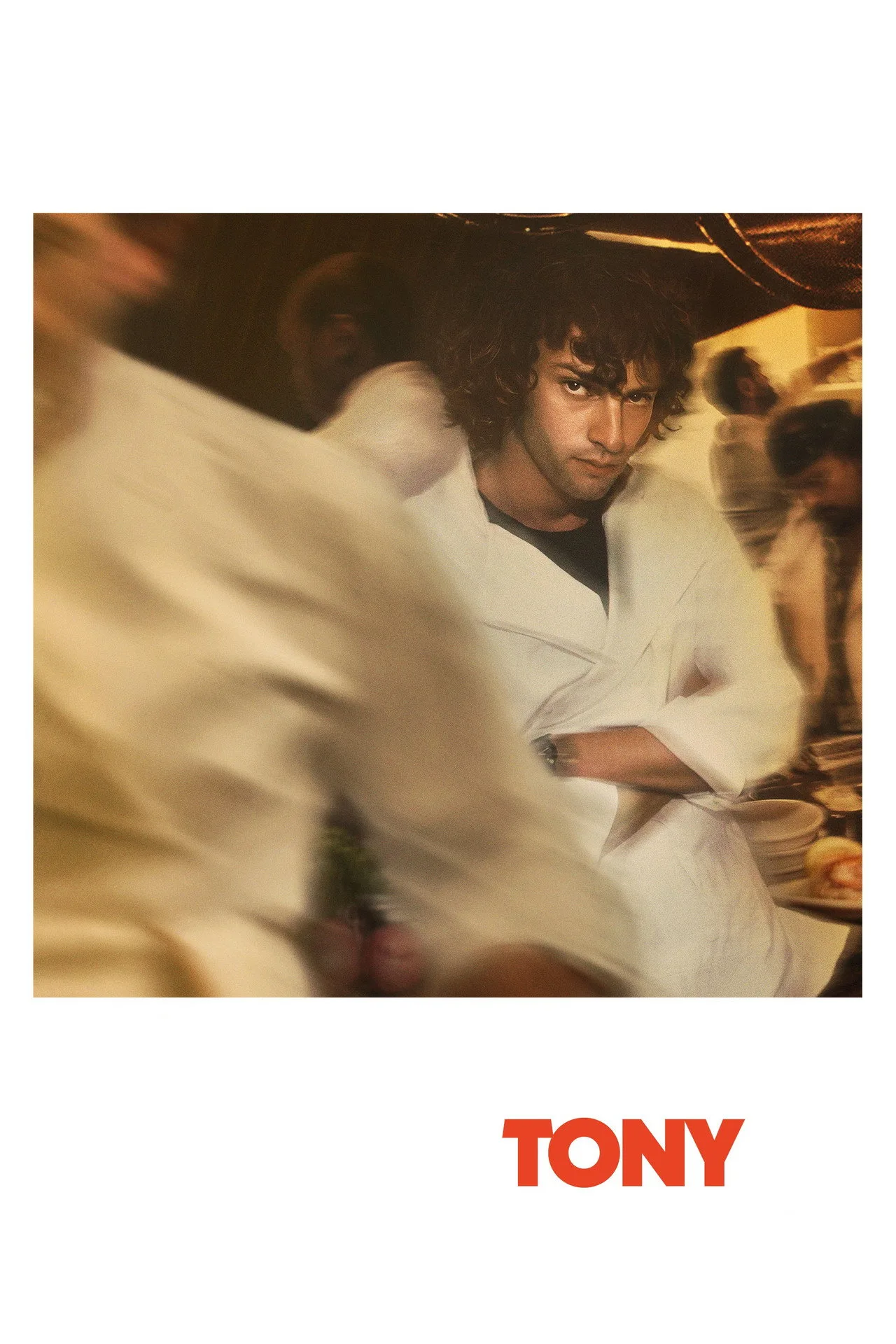
Despite what motivational posters with hanging cats would have you believe, people are shaped and defined by what they do more than what they say. If you want to tell people you’re a writer, you better actually write. And if you spend all day cooking, well, you’re a cook. The idea that experience molds characters, especially at a young age, is at the core of Matt Johnson’s excellent “Tony,” an A24 mini-biopic of the brilliant Anthony Bourdain that adapts a couple early chapters of his formative Kitchen Confidential into a study in providence. The director of “BlackBerry” and “Nirvanna the Band the Show the Movie” shifts gears again for this intimate, captivating character study that almost works better if one divorces it from the known future of its protagonist, even if it’s fun to watch “The Holdovers” breakout Dominic Sessa wrestle with Bourdain’s innate confidence, deep intellect, and forming morality.
“Tony” opens with an already-cocky Bourdain pitching his idea for a novel to a fellowship committee at Vassar College. Ultra-confident that he got the grant that will push him to become the next great American novelist, a half-drunk Bourdain works up the courage to talk to a high school crush named Nancy (Emilia Jones) and learns that she’s spending the upcoming summer in Provincetown. A quick scene with Bourdain’s pretentious mother (Dagmara Dominczyk) both clarifies the origin of his love for big words and the likelihood that his dream of becoming an author was fueled by a desire to impress an unimpressible mom.
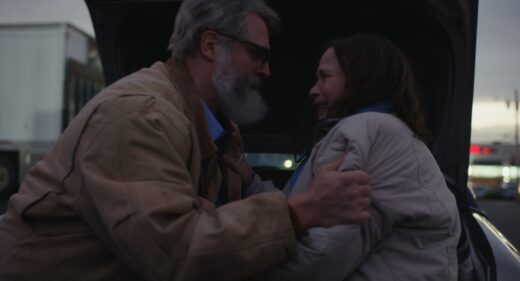
Of course, Bourdain didn’t get the fellowship, which sends him spiraling off to Provincetown to find Nancy, but “Tony” is not a traditional romantic drama. One of its greatest strengths is how many of those predictable tropes it dodges from scene to scene. A coming-of-age story set over “one crazy summer” is a concept nearly as old as filmmaking, but Johnson’s script— co-written by Matthew Miller, Todd Bartels, and Lou Howe—never lingers too long in any of its admittedly familiar beats, allowing Sessa’s nuanced performance to do the emotional lifting instead. Sessa finds the rhythms of a boy whose outward confidence often masked awkwardness and uncertainty. This vision of Bourdain is one who lies to get his foot in the door in work and love, but Sessa is careful to modulate his performance in just such a way that we still root for his Tony. It’s the kind of performance that could have gone so wrong: turning Bourdain into a cocky jerk on one end or a puppy dog in need of love on the other. Sessa is up to the task of finding both the deep uncertainty and brash confidence in this complex young man, sometimes in the same beat.
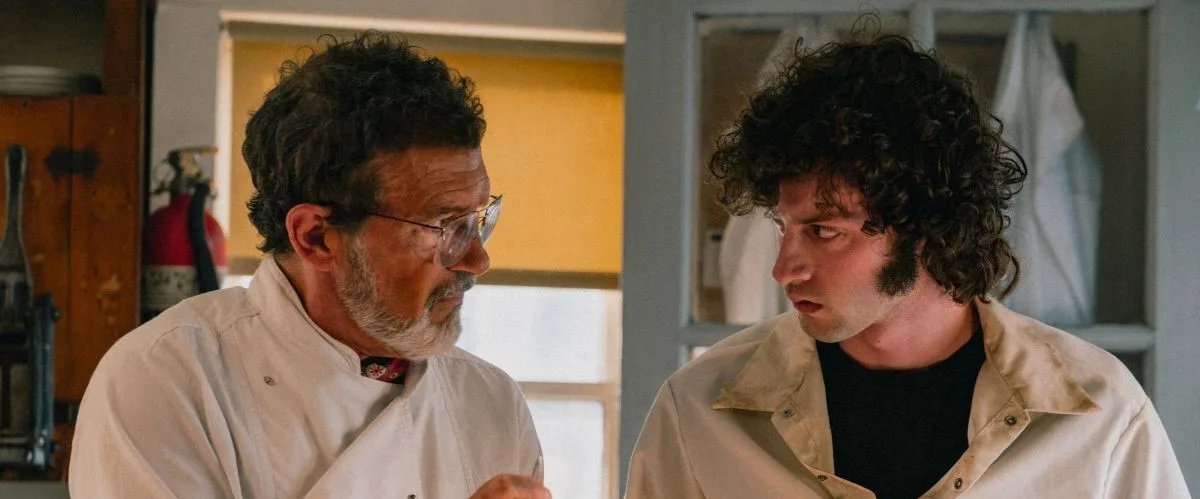
He does most of that acting in the kitchen of a Provincetown restaurant, the kind of place that serves only a handful of things based around what its owner caught that day. Waves of tourists ordering oysters haven’t exactly challenged the culinary acumen of the unnamed chef (Antonio Banderas) who runs the place, but it does keep the kitchen busy enough, including workers like Dimitri (Stavros Halkias) and Sal (Leo Woodall), who kind of takes Tony under his macho wing. Sal is the kind of abrasive jerk who takes a chip out of a door every time he sleeps with another local or tourist and uses incredible amounts of cocaine to get through a shift. He is the alpha male on one end of the kitchen, countered against Banderas’ subtle portrayal of a gentle soul who believes in discipline and God. As “Chef” will eventually tell Sal, he’s the “Sin Eater,” the one who takes on the sins of the rest of the kitchen staff. Again, Johnson and his co-writers are playing with formative portrayals of manhood in Sal and Chef for a young Tony, but not in a way that overly draws attention to itself.
It helps “Tony” a great deal to have the incredible Michael Bauman behind the camera. The Oscar-winning cinematographer of “One Battle After Another” gives “Tony” such a defined-but-subtle visual language. Working with Johnson, the pair are constantly making interesting choices, such as how often they nearly block a reverse shot with an unusual angle, or how they find the light of Cape Cod in a manner that feels gorgeous but never unnatural. You can smell both the captivating scent of the ocean and the stomach-turning one of the kitchen in this film, a movie that somehow feels both tactile and like half of it was shot at magic hour. Fluid, remarkable editing by Johnson collaborator Curt Lobb deserves praise for that blend of realism and memory, too.
Sessa will get most of the acting attention for “Tony,” but it’s a film that doesn’t click without the counterweight that is yet another great performance from Banderas, who does some of his best recent work. Johnson and Banderas find so many minor beats for this character, one who reached the heights of culinary sophistication before realizing it wasn’t what he wanted in this life. In a sense, that’s the lesson that “Tony” learns in this film, one that’s related to the concept of how experience forms character: Life is about discovering that it’s not always about what people say or think or even dream as much as finding the value in what they do. Young people often spend so much time thinking about tomorrow. “Tony” reminds us that it’s the meal we eat today that satisfies us.