The title “To the Black” has one stated and one unstated meaning in this documentary about a scrappy start-up rocket company called Firefly: the stated goal is successfully launching a rocket into orbit. The unstated meaning of “to (or in) the black” means becoming what accountants call a “going concern,” meaning that the business is financially stable enough to continue operating for the foreseeable future. While those goals can align, the skills and expertise involved do not often overlap. This film benefits from access to the key players over eight years.
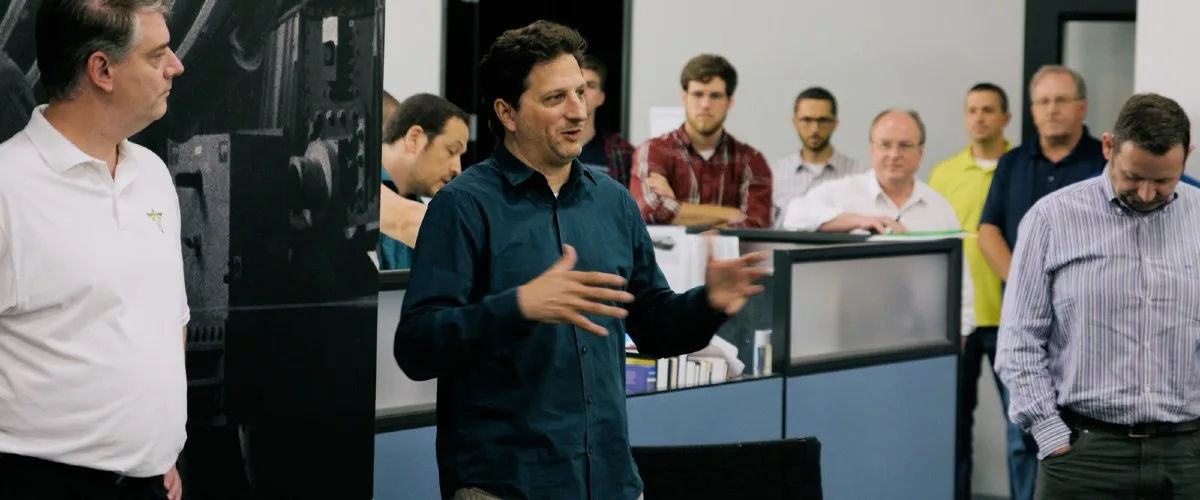
Tom Markusic is a PhD aerospace engineer who founded Firefly in a rural Texas town. The small group of devoted people who followed him saw Firefly as a calling. They considered themselves very different from the “hobby” rocket companies created by billionaires Elon Musk, Jeff Bezos, and Richard Branson, all of whom Markusic worked for before deciding to go off on his own. We are present from 2014-2022 for Markusic’s company, or rather two companies, because the first one went bankrupt. We see engineering and financial triumph and disaster, explosions and lay-offs, and many people looking intently at screens.
It is easy to see why the Firefly employees, especially co-founder Eric Salwan, are true believers in Markusic’s vision. He is a very decent guy who worries about letting them down. Some of them see both stars and dollar signs, one noting that if it succeeds, many will become very wealthy. We learn that the “three commas club” is not about how many miles a rocket climbs but how many zeros are behind the number in the bank account.
Nothing in the film makes us true believers or helps us understand why the employees are so committed that, after they are laid off when the first company goes bankrupt, they all agree to come back for minimum wage. Markusic does not tell us why he could not achieve his dream at the three extremely well-funded companies he left or how his vision is different. Is there some engineering innovation the billionaires’ companies would not let him pursue?
Does Firefly have some distinctive goal for who will use the rockets or what they will carry? If so, we never hear about it. And that makes the stakes, other than rooting for the underdog who believes in his dream, too vague to capture our emotions. Late in the film, the depiction of a significant figure’s departure that is not quite a departure also raises more questions than it answers.
There is a mention of a lawsuit filed by Branson’s Virgin Galactic, alleging that Markusic stole some of his employer’s intellectual property. Markusic complains about harassing lawsuits from ultra-wealthy competitors, and his colleague tells us Markusic cannot have stolen anything because he created it while he was there. Unfortunately, even if he did create it while employed there, it does not belong to him; it belongs to Virgin Galactic. Presumably, that is why Firefly had to drop its development of the contested design, but that is never discussed.
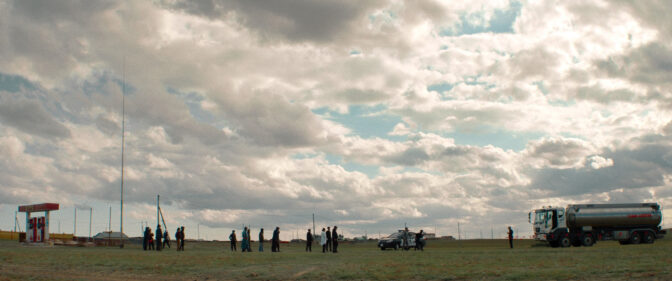
Director and EP Scott Edwards clearly gained the trust of the people at the company over the eight years of filming. He is there for many of the company’s most significant moments and gets interviews with many of the key players. There are dramatic events. One key funder pulls out because of unexpected business reversals created by Brexit. A Ukrainian investor who owns just under 50 percent of the second version of the company is forced out when Russia attacks Ukraine because the US government considers him a national security risk. A test rocket explodes. The explanation that the problem was “a wire” seems to diminish the seriousness of the failure; after all, the explosions on the Challenger and Apollo 13 were caused by a small rubber ring and a wire. Again, this lack of detail keeps us from understanding what the problem was and the pleasure of seeing how it was solved. At least the Firefly rockets do not have any humans on board.
A key moment in the film is when Markusic and his wife, Christa English, who is very involved with the company, disagree over his decision to live stream their most important launch attempt. She says, “SpaceX didn’t do that…we’re like throwing a royal wedding.” Edwards films her in the bathroom, where she is so upset she is sick to her stomach. But Markusic insists. Whether it goes up or blows up, he wants people to know what they have created. That kind of transparency is refreshing, and it makes us wish the film reflected that equally.