“The Lord of the Rings: The Rings of Power” is one of the streaming era’s most impressive and frustrating creations. The most expensive television series ever made, it is ambitious in scope, beautiful in execution, and clearly made with a deep love and respect for its source material. And while showrunners J. D. Payne and Patrick McKay have certainly made a fair amount of changes to the letter of author J.R.R. Tolkien’s fictional world, the show has managed to remain remarkably true to its spirit. But as the series enters its third season, it’s also increasingly weighed down by the scope of its own ambition.
With just eight episodes to work with and a tremendous amount of Second Age history still to cover, “The Rings of Power” sacrifices nuance for expediency, embracing a darker, more uncomfortable tone as Sauron’s power over Middle-earth grows. But while this season delivers several key losses and devastating setbacks, it also struggles to explore what its major twists mean to those who experience them.
Five years have passed since the dramatic events that closed Season 2, which means “The Rings of Power’s” third outing is something of a soft reboot. Its opening episodes involve a lot of table-setting, including a “The Fellowship of the Ring”-esque Galadriel (Morfydd Clark) voice-over that lays out the new stakes of the ongoing War of the Elves and Sauron and the two human kingdoms (Ruhn and Númenor) that have yet to choose a side.
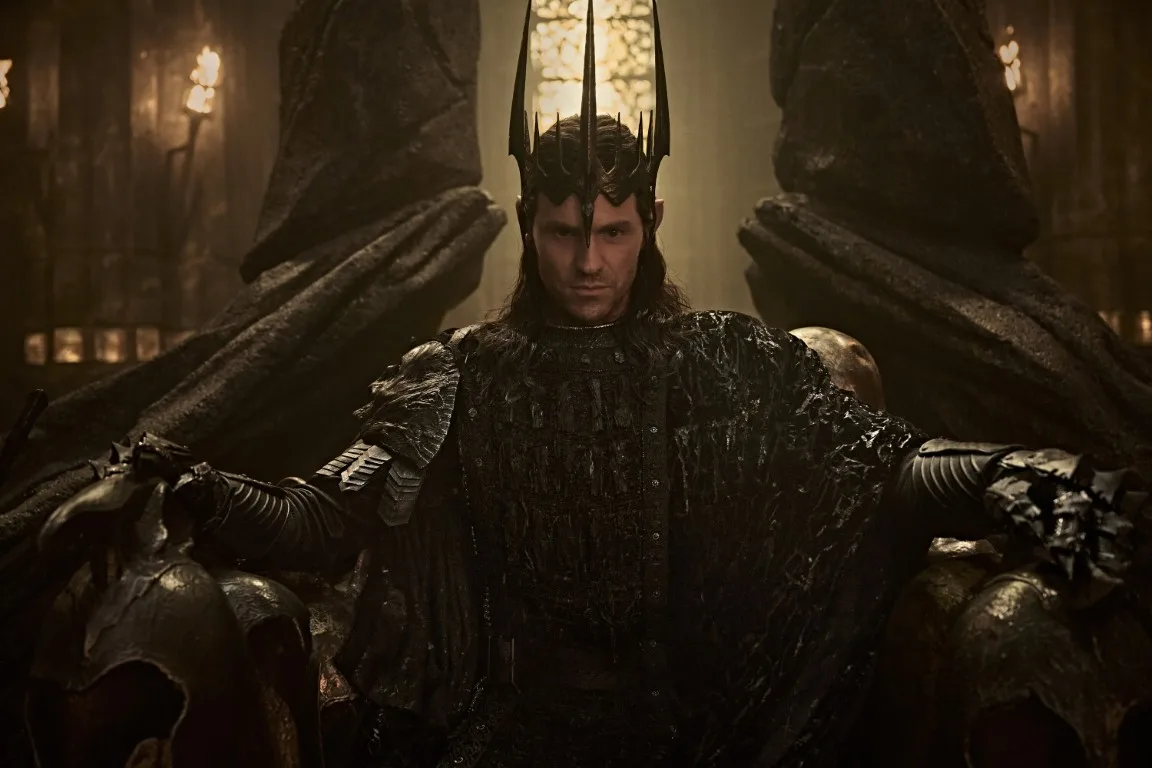
In Mordor, Sauron (Charlie Vickers) attempts to forge a master ring—One to Rule Them All, if you will—and is repeatedly frustrated by his inability to crack the secrets of the now-dead smith Celebrimbor’s (Charles Edwards) elven rings. Tempting various human rulers with the promise of rings of power of their own, he uses his newly created Nazgnagôl to scour Middle-earth for those who might know the elven smith’s work as he frets over his repeated failures.
In the Elven strongholds of Lindon and Rivendell, Galadriel, Elrond (Robert Aramayo), and Gil-galad (Benjamin Walker) attempt to find a way to thwart Sauron’s ambitions, ultimately turning to a strange orc, Marnûkh (Adam Young), who insists he has left the Dark Lord and can provide them with the key information they seek.
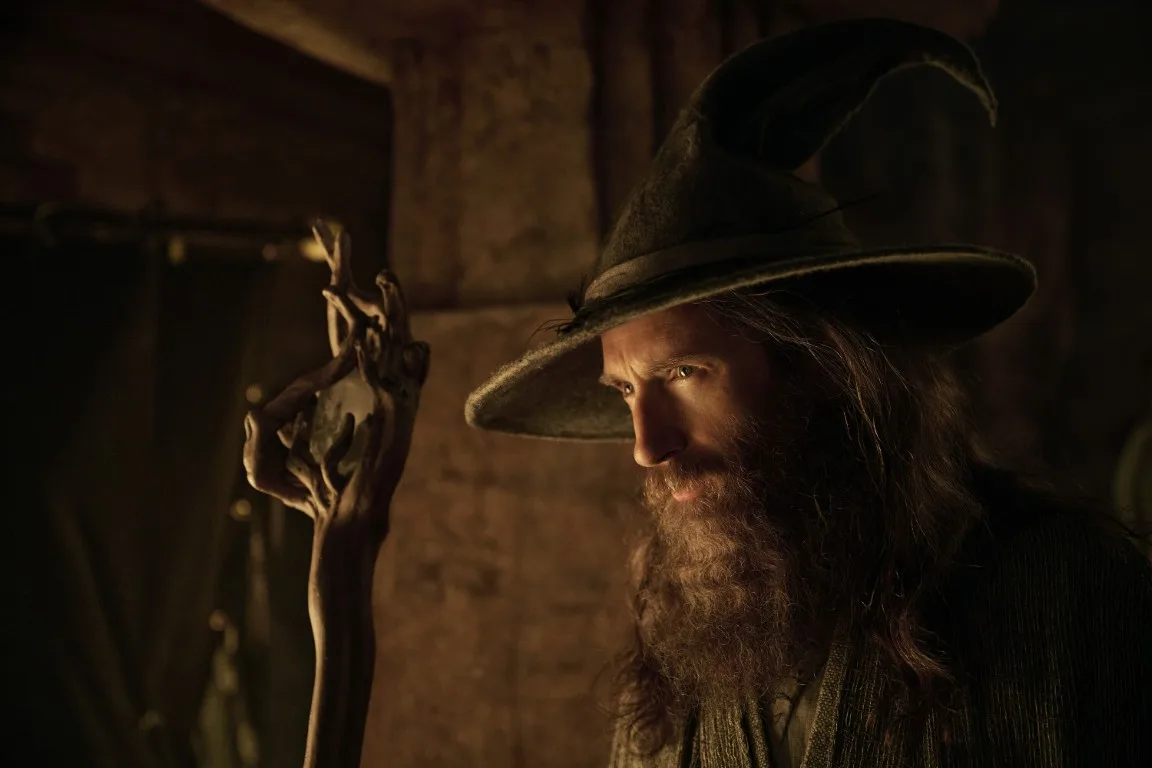
Among the dwarves, Durin’s (Owain Arthur) rule in Khazad-dûm is threatened by the arrival of his brother Thrain (Eddie Marsan), and the political wrangling in Númenor has burst into all-out civil war amongst Ar-Pharazôn’s (Trystan Gravelle) controlling faction, and the exiled Faithful led by former queen Míriel (Cynthia Addai-Robinson) and legendary warrior Elendil (Lloyd Owen) who are attempting to mount a resistance. Finally, Gandalf (Daniel Weyman) learns his true identity and tries to figure out what to do about the still-unnamed Dark Wizard (Ciarán Hinds) in Ruhn.
To say this season has a lot going on is maybe the understatement of the year. To its credit, “The Rings of Power’s” third season has learned from (some of) its earlier mistakes. It rejects the puzzle box storytelling that plagued Seasons 1 and 2, jettisons several characters it never really knew what to do with, and even retcons some of its more questionable earlier narrative decisions. And the spectacle is as impressive as it’s ever been, from bloody fight sequences to the sheer scale of some of its visuals. The Rings of Power has always excelled at depicting the scope and majesty of Tolkien’s world, and it continues to do so here.
Yet Season 3 is repeatedly hamstrung by uneven, disjointed pacing. With over a half-dozen major subplots and twice that many main characters, multiple episodes can pass without an update on a specific arc or storyline. Left to develop in fits and starts, characters lack depth, and the season struggles to build anything that really feels like narrative momentum or cohesion. (There is also, admittedly, just too much focus on political strife in Numenor and Khazad-dûm, which simply isn’t as interesting as the show wants it to be.)
Still, “The Rings of Power” has some satisfying tricks up its sleeve, along with a couple of genuine surprises as alliances shift, break, and reforge across the seven episodes available for review. The series’ ensemble remains game for anything and is better than much of the material they’re given. Vickers is delightfully menacing throughout, letting an occasional flash of self-doubt color his otherwise unhinged attempts to create the One Ring, which feel as much about forging him into the monster we recognize from Tolkien’s trilogy as about creating a fancy piece of jewelry.
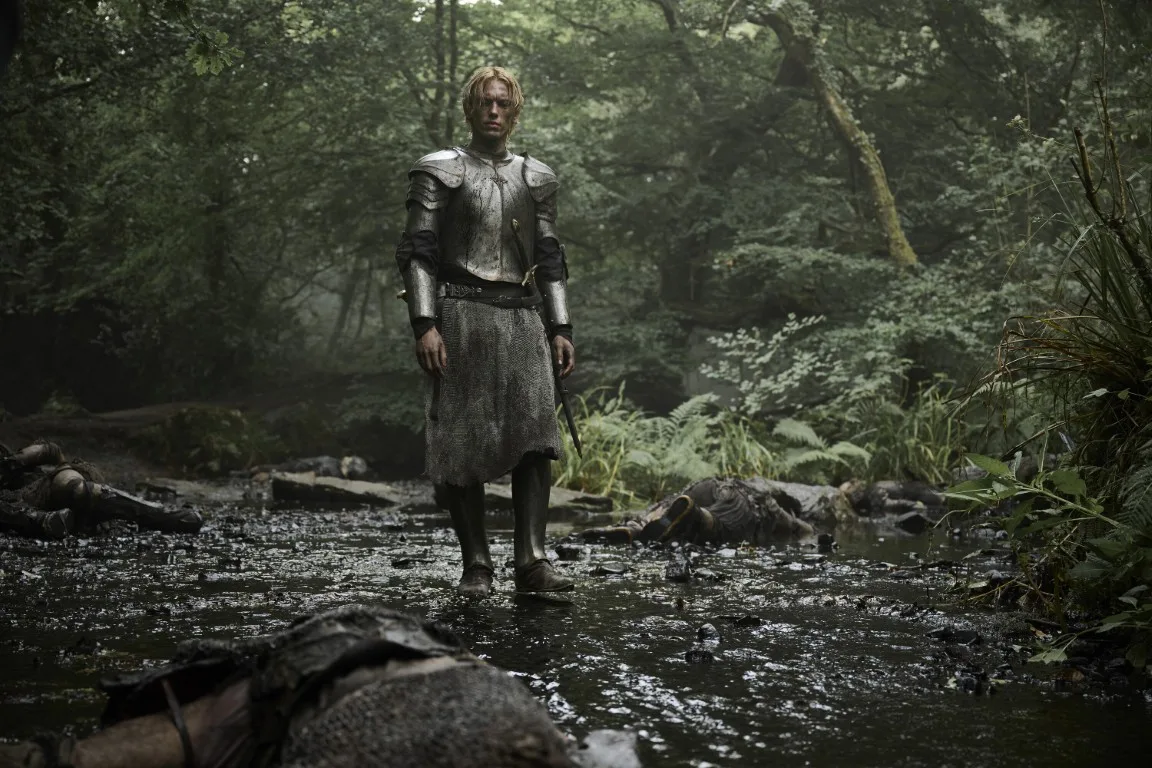
Clark, for her part, deftly portrays an increasingly wan Galadriel, ground down by the stresses of war and haunted by her own failings, including her temptation at Sauron’s hands. And, finally freed from the multi-season deception meant to hide his character’s true identity, Weyman comes into his own as Gandalf, exuding a warmth and determined goodness that makes it apparent why he was chosen for this role.
New cast member Jamie Campbell Bower adds a welcome jolt of energy as Galadriel’s presumed-dead husband, Celeborn, though he doesn’t get as much screen time as some of us (read: me) might like. Still, he and Clark have lovely chemistry, and it’s surprisingly nice to have something that feels like a genuine romance on this canvas. (I’m not sure we’ve ever seen Clark get the chance to smile as often as she does in her scenes with Bower.)
Unfortunately, the sheer size of its cast means that many of “The Rings of Power’s” best performers are left with little to do. Lloyd Owen looks every inch a hero, but despite wielding Tolkien’s most famous weapon, Elendil is barely present in Season 3. Aramayo’s Elrond has matured as a leader in the five years since Eregion fell, but the actor’s most impactful moments come from playing opposite himself as his twin brother Elros. And while Gravalle is clearly having a blast playing Pharazôn in his dictator era, the Numenor plot spins its wheels for most of the season, until a significant event in its penultimate installment finally shakes things up.
Of course, the season finale could still bring all these disparate plot threads together in a way that feels both purposeful and satisfactory. (Or that at least ties some of them together in more concrete ways.) But while “The Rings of Power”’s third season is made with love—no one could craft a world that looks this close to Tolkien’s descriptions otherwise—it also no longer feels confident about what it’s trying to say.
Seven episodes screened for review. Premieres November 11 on Prime Video.