The parasocial relationship between radio host and listener is central to two recent releases: the Theo Rossi psychothriller “Come With Me” and the MGM+ psychological crime thriller series “American Hostage.”
In the searing, provocative “Come With Me,” Theo Rossi plays a troubled man consumed by the rhetoric of a right-wing radio host (played by Rossi’s “Sons of Anarchy” castmate Ron Perlman). The solid procedural “American Hostage,” based on a true story, is a 1977 period piece starring Jon Hamm as an Indianapolis radio newsman who becomes an ad hoc negotiator when a disgruntled real estate speculator (Giovanni Ribisi) takes his mortgage broker hostage. (The same story was the basis for Gus Van Sant’s far more fictionalized but equally compelling “Dead Man’s Wire.”)
I have a particularly keen interest in television and cinema portrayals of radio because I’ve been behind the microphone on and off for nearly 40 years. As someone who grew up listening to legendary talk show hosts and famous DJs on Chicago stations such as WGN, WLS and WCFL, I still marvel at the good fortune that has found me hosting or co-hosting or contributing to shows on WLS-AM, WLS-FM, AM-1000, WLUP-FM and WGN before I made the move to podcasting.
There’s something so cool (and anxiety-inducing) about trying to achieve that intimate, unique, elusive alchemy that lets a single voice connect with an audience—and makes each member of that audience feel as if you’re talking to them.
It’s a workplace world filled with program directors who will inspire you but also make your blood boil, salespeople who can be your best friends but drive you crazy, and co-workers who become like family, for better or worse. We’ve seen that environment depicted on screens big and small through the years—sometimes with essential truths combined with poetic license, sometimes in laughably cartoonish fashion.
In chronological order, here are some of my favorites (and a few duds) in each medium.
The best movies about radio
“Play Misty For Me” (1971)
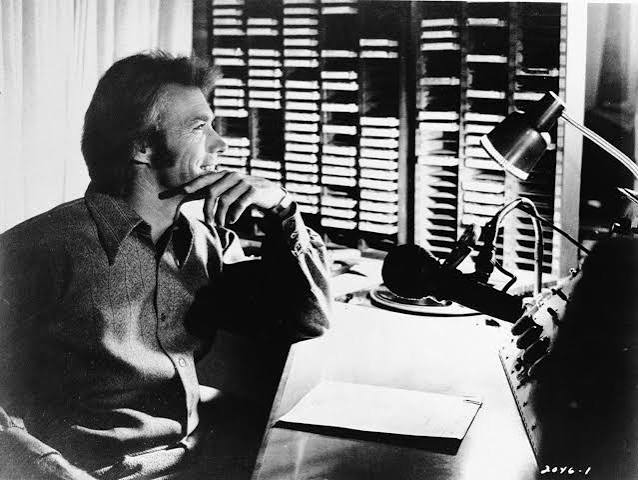
Clint Eastwood’s directorial debut has an immediate authenticity due to Eastwood shooting the broadcast sequences at real-life KRML in Carmel-by-the-Sea, CA. Eastwood also delivers an underrated, quietly calibrated performance as he captures the midnight cool of a late-night jazz host named Dave Garver, whose devoted listeners include a woman named Evelyn (Jessica Walter, so chilling) who repeatedly asks Garver to play “Misty.” The film captures that one-dimensional and sometimes unsettling dynamic between a host who whispers sweet nothings into your speakers and a listener whose infatuation turns into obsessive behavior that shatters the invisible wall between them.
“Good Morning, Vietnam” (1987)
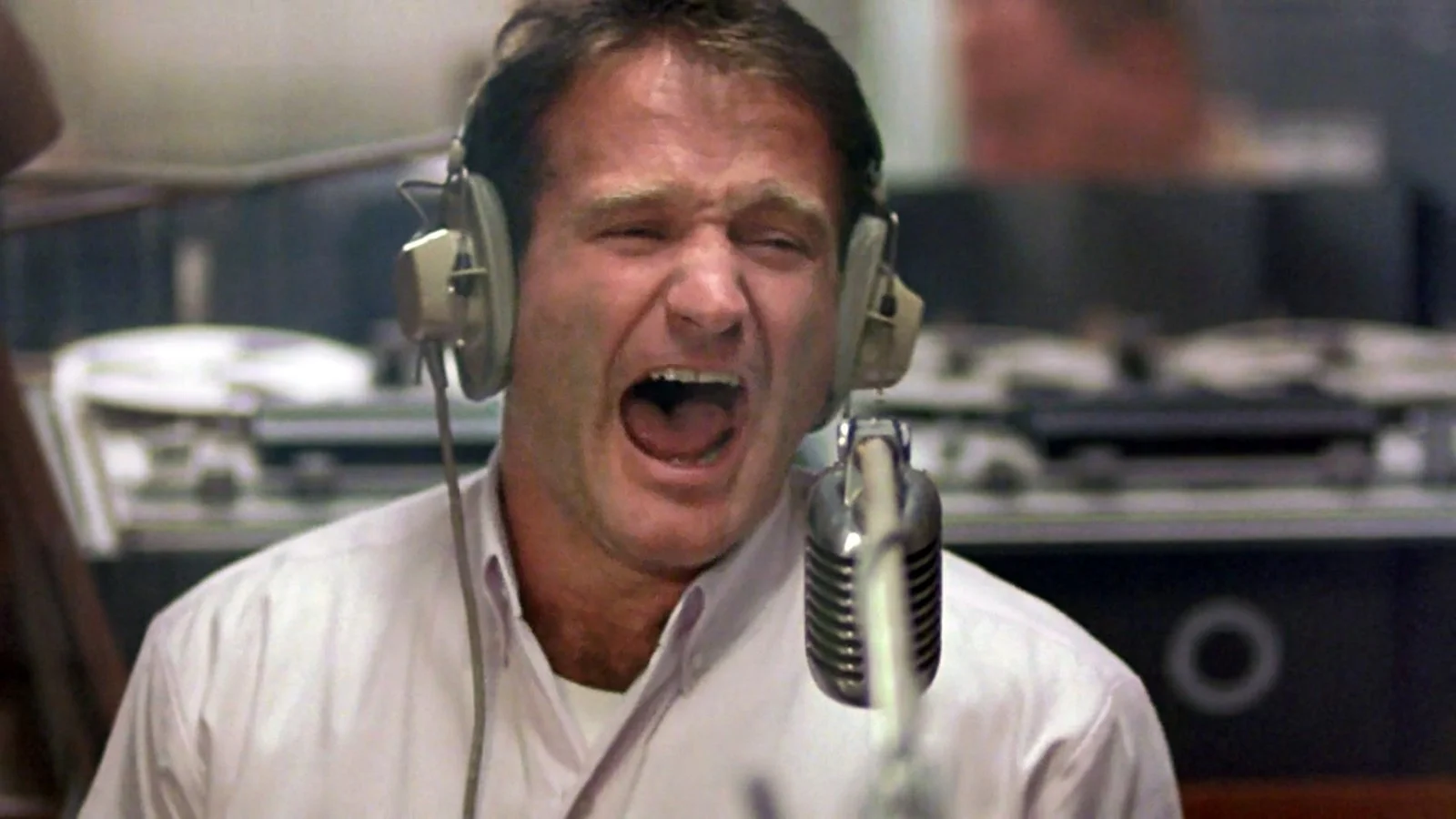
The real-life Armed Forces Radio Service DJ Adrian Cronauer was based in Saigon during the Vietnam War, as was the fictionalized version of Cronauer played by Robin Williams in Barry Levinson’s film.
It would be an overstatement to say the similarities ended there, but most of the major events in “Good Morning, Vietnam” are pure constructs. Williams also famously ran wild with improvised riffs—and that’s what makes the film so memorable. The brilliant comedic scenes, with Bruno Kirby doing priceless work as the humorless comedic foil Lt. Hauk (“I know funny!”), feel true to the spirit of rebel vs. establishment radio in the 1960s. There’s also something healing and inspiring about a clever fellow with a microphone providing laughs and escapism to soldiers in desperate need of moments when they can forget, even for a little while.
(Note: Williams struck very different but resonant notes as a late-night call-in host in the 2006 gem “The Night Listener.”)
“Talk Radio” (1988)
Another powerful drama inspired by real-life events, in this case the murder of Denver radio host Alan Berg. In Oliver Stone’s fictionalized tale based on Eric Bogosian’s play, Bogosian is unsettlingly good as a gifted wordsmith and provocateur.
“Private Parts” (1997)
Obviously, this one is also based on a true story: Howard Stern plays himself! The great surprise here is that while “Private Parts” takes us through Howard’s raunchy rise to early fame, it’s also a sweet and insightful comedy/drama about a very funny but emotionally fragile man who perfected the art of mining his personal life, and the behind-the-scenes machinations at his various stops on the dial, for radio gold.
Sidebar: The real-life inspiration for the rabid and controlling “Pig Vomit” character took me to dinner twice in 2008 to court me for a morning radio gig. He was charming and self-deprecating, and I enjoyed his company—but at the end of the second dinner, he admitted he had zero intention of hiring me and was trotting me out to get his first choice for the job to sign for less money. Classic radio exec move. I had to admire it, and then make sure he picked up the check.
“Talk to Me” (2007)
Another story rooted in true events, with Don Cheadle playing Petey Greene, the real-life Washington, D.C., radio host who overcame drug addiction and a prison sentence for armed robbery to become an important and influential radio voice in the late 1960s and early 1970s. Director Kasi Lemmons teams up with Cheadle to deliver an electric drama that shows how the combination of man and microphone can go beyond entertainment and serve as a voice of reason.
Also of note: “Radio Days” (1987), “Pump Up the Volume” (1990), “Pirate Radio” (2009).
Radio movies that lose the signal
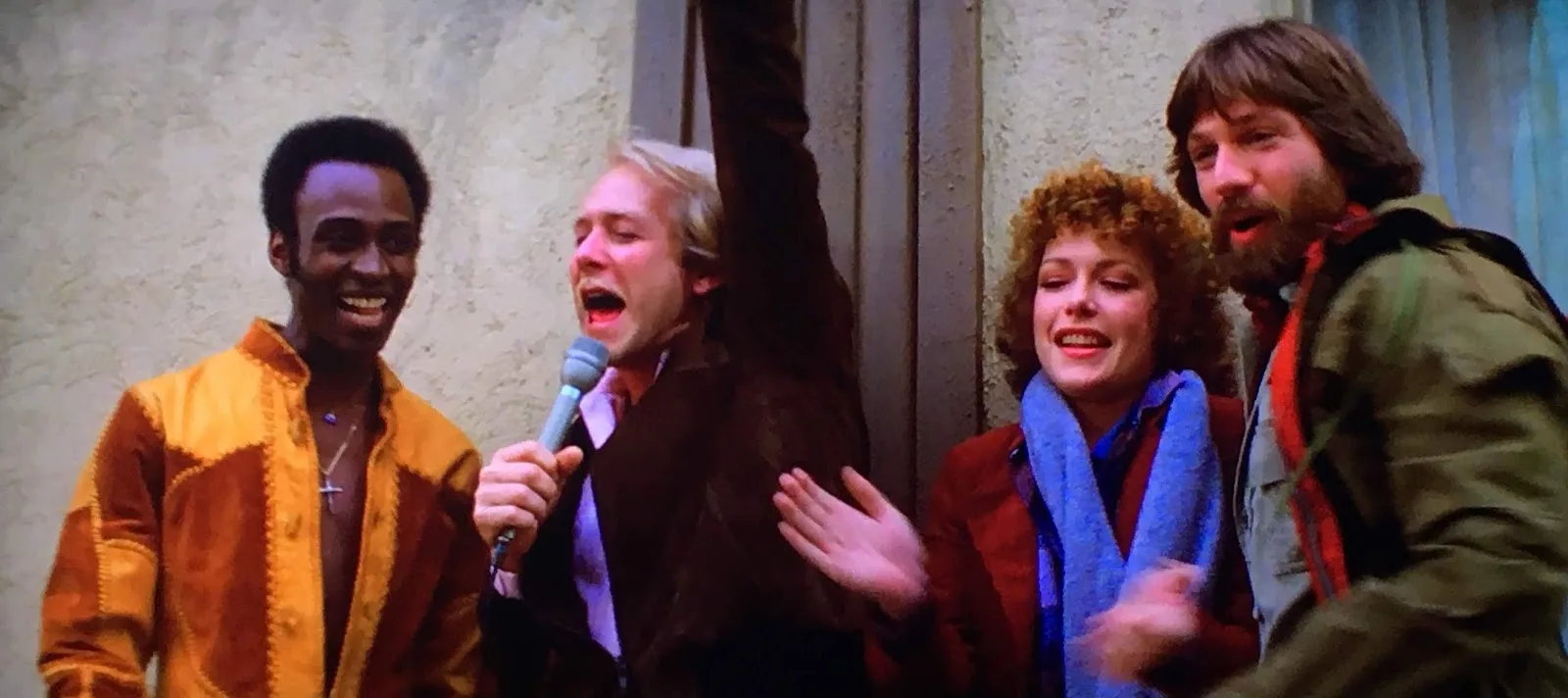
“FM” (1978)
This movie knows as much about radio as “Caddyshack” knows about golf.
I take that back. “Caddyshack” knows WAY more about golf than “FM” knows about radio.
The scenes set in the fictional Q-SKY FM are awkwardly staged, and the so-called “rebellion” portraying the DJs as counterculture rebels utterly ignores the advent of punk and New Wave.
But hey, the soundtrack featuring Steely Dan, Tom Petty & the Heartbreakers, Queen and Joe Walsh is pretty great.
“On the Line” (2022)
Mel Gibson plays the ridiculously named Elvis Cooney, an abrasive overnight radio host who gets embroiled in a high-stakes hostage crisis we don’t care about because this is a poorly filmed, badly acted, repetitive snooze-fest that goes from merely mediocre to truly awful at the Big Reveal. “On the Line” never feels true to the great medium of radio.
TV: Top of the charts
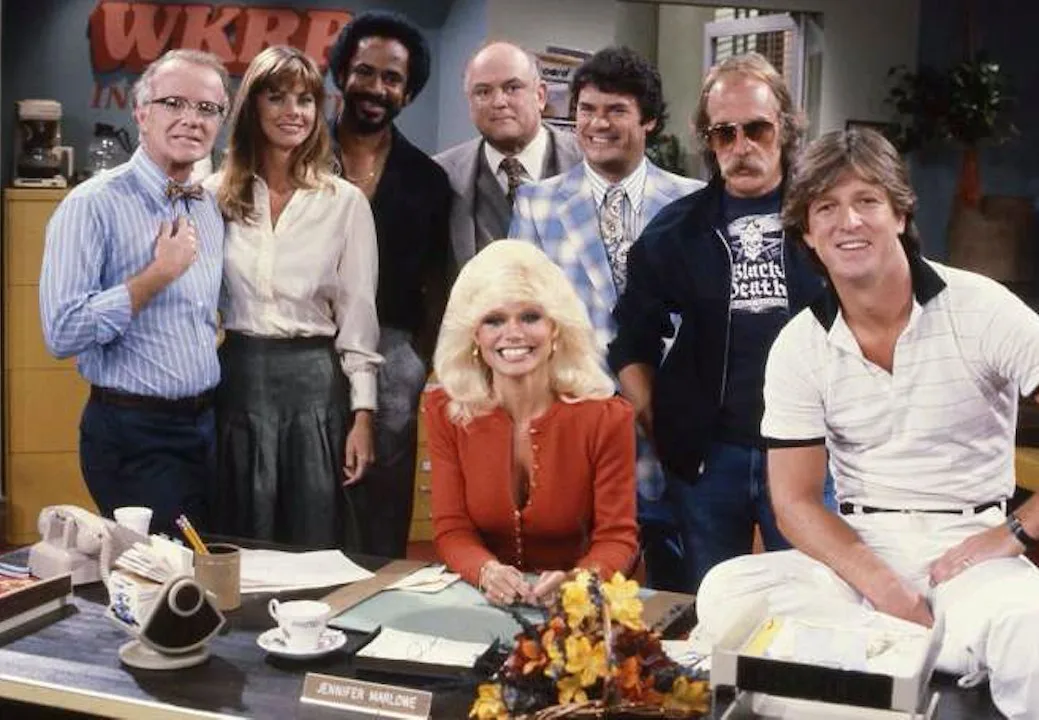
“WKRP in Cincinnati” (1978-1982)
“As God is my witness, I thought turkeys could fly.”
The famous Thanksgiving episode of “WKRP” is an all-time classic—and yet the absurdity has a ring of truth for those of us who have worked at radio stations that loved promos and giveaways; the splashier, the better.
Created by Hugh Wilson, who mined his own experiences in radio sales, “WKRP” was filled with familiar radio archetypes, from earnest program director Andy Travis (Gary Sandy) and burnt-out DJ Dr. Johnny Fever (Howard Hesseman) to Tim Reid’s cool and contemplative Venus Flytrap to Frank Bonner’s boisterous sales rep Herb Tarklek and, of course, the hapless newsman Les Nessman.
Sure, they were at times borderline caricatures, but anyone who has worked in radio has known an Andy or a Johnny Fever or a Venus or a Herb or a Les.
“Newsradio” (1995-1999)
What a cast! Dave Foley was the news director at all-news WNYX in New York, with a supporting ensemble that included some of the best character actors of the time, including Phil Hartman, Stephen Root, Maura Tierney, and Vicki Lewis. The humor often took a surreal, satirical bent, but “Newsradio” still had an affectionately bent take on the business of radio.
“Frasier” (1993-2004)
Of course, this classic sitcom was more about the whimsical chaos of Frasier Crane’s family life than his gig as a talk show host on fictional Seattle station KACL—but the scenes where Frasier dispensed advice to callers (voiced by more than 130 celebrities over the years) had me feeling this guy was actually pretty good at his job. He certainly had a voice for radio.
“Northern Exposure” (1990-1995)
See above. This wasn’t a show about radio per se, but John Corbett’s KBHR 570 AM host Chris Stevens was like the Stage Manager in “Our Town,” acting as the narrator and philosopher for Cicely, AK. Unlike the major-market radio stations portrayed in most TV series and movies, KBHR was an independent, low-wattage station in a small storefront. It’s more of an extension of the community than an entertainment powerhouse.
TV: A couple of misfires
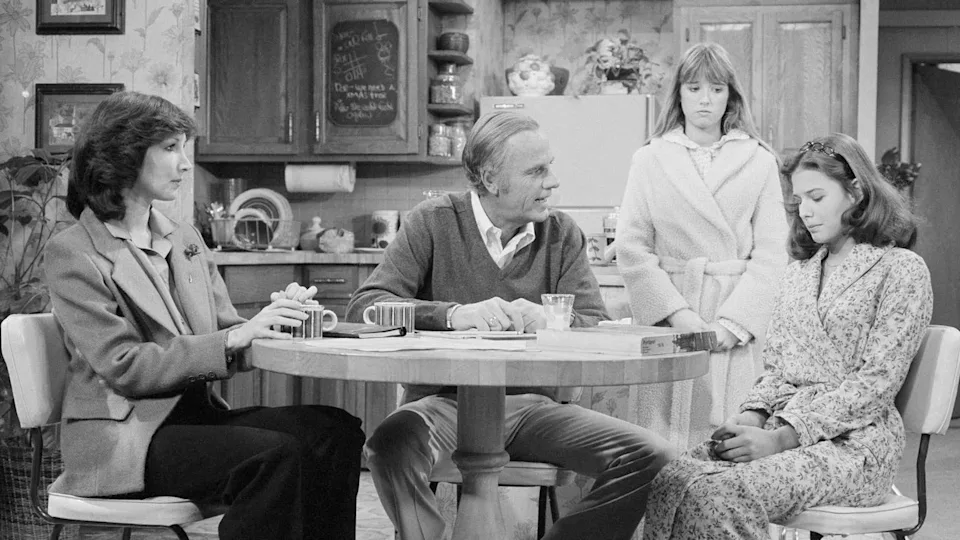
“Hello, Larry” (1979-1980)
Poor McLean Stevenson gave new meaning to the term “dead air” in this lifeless and dreadfully unfunny sitcom about a divorced radio host who relocates to Portland, OR, to take care of his two teenage daughters. The fictional KLOW seemed to operate in a vacuum, and the radio-station setting was so irrelevant that it disappeared by the start of the second and final season. “Hello, Larry” was so bad that Johnny Carson routinely made fun of it on “The Tonight Show,” even though both programs were on NBC. “Hello, Larry” only made the charts when TV Guide ranked it Number 12 on its 2002 list of the 50 Worst TV Shows of All Time.
“Rhythm & Blues” (1992-1993)
For a handful of disastrous episodes, nestled between the coveted Thursday night “Must See TV” time slot between “A Different World” and “Cheers,” we were subjected to a clueless, borderline offensive sitcom about a Black-owned Detroit urban radio station that hires a new DJ named Bobby Soul (comedian Roger Kabler) to boost ratings—only to learn he’s, get this, a white guy. Wacky! Yeah, because that’s how major market stations hire on-air personalities. Not only did “Rhythm & Blues” have no idea how radio works, but it also doubled down on the terrible concept by leaning into its cheap, one-joke premise.