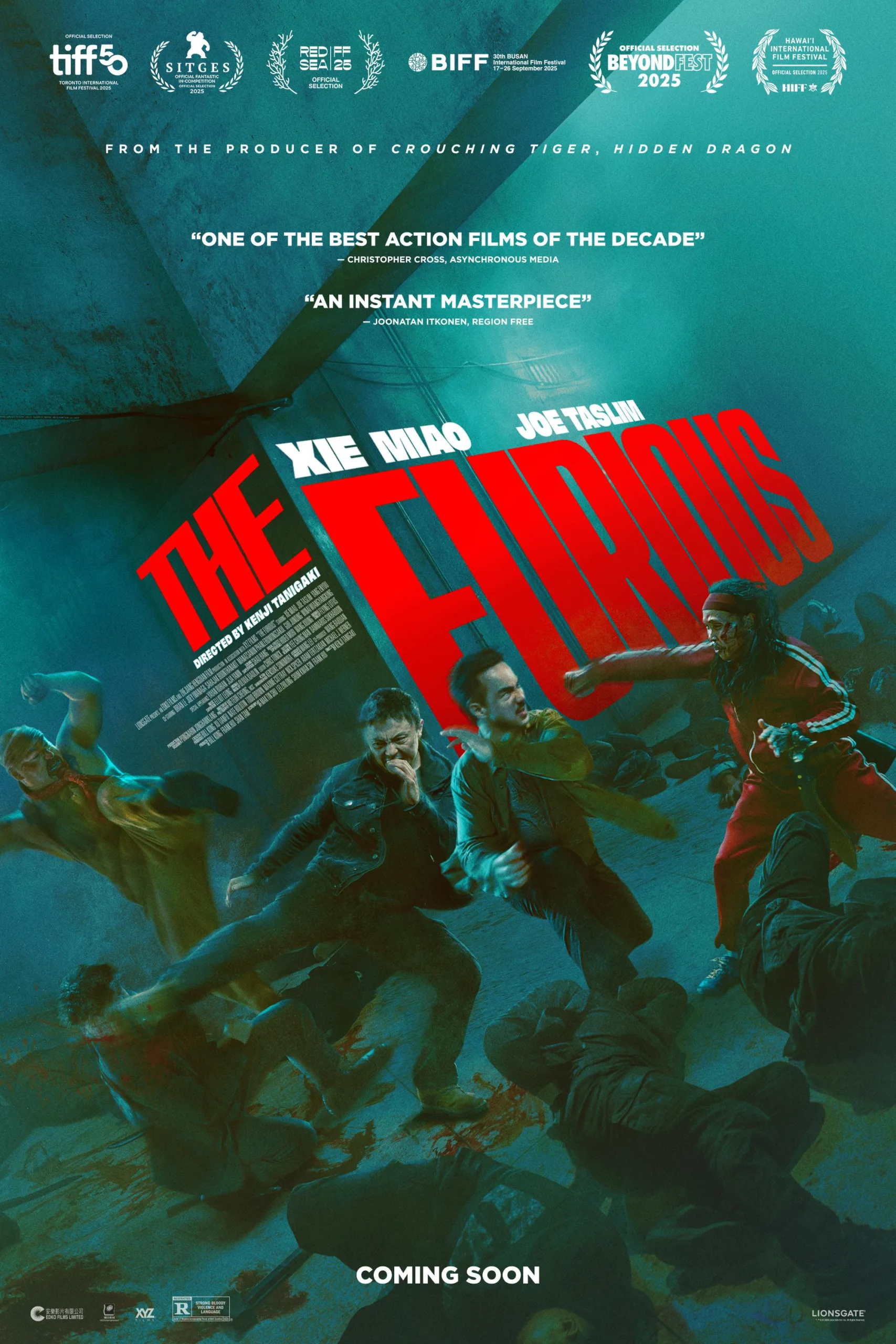

If you love action movies, don’t mind if they’re gory, and live near a theater showing “The Furious,” by all means go—preferably on a weekend, when the crowds tend to be bigger and more raucous. The more packed the house, the better the experience will be.
This thriller about a mute father trying to rescue his young daughter from child traffickers is not the kind of movie where you’re supposed to sit in silence and contemplate the richness of the artist’s vision of life. It’s a movie that expects you to make noise. In fact, it’s the kind of movie that will make you make noise, even if you didn’t intend to. At the screening I attended, there was applause for the characters’ athletic feats, the plot’s perfect reversals of fortune, even for the thunderclap preceding a five-way fight in a rainstorm.
A truly international production, “The Furious” showcases martial arts performers from China, Hong Kong, Thailand, Japan, and the United States, among other places. The director Kenji Tanigaki (Japanese), his fight choreographer Kensuke Sonomura (Japanese), and his cinematographer Meteor Cheung (of Hong Kong—and wow, what a name) seem to have gone beyond collaboration and into mind-melding. The camera rises and falls, twists and turns, tilts and whirls to complement the performers’ movements. Editor Chris Tonick (USA) chops the shots into jagged moments that amplify the impact of every attack and defense.
The prologue takes us straight into the heart of darkness, a filthy dungeon full of abducted children, but thankfully leaves what we know of that obscene reality in the shadows, because just imagining what’s happening to these kids is nauseating enough. We hear a child elsewhere in the dungeon screaming in pain, and there’s a brief, reactive close-up of a client who’s tormenting him, a man in a leather mask with a ball gag in his mouth, and that’s all we need to establish that the bad guys are the absolute worst of the worst, and that their deaths shouldn’t be mourned for a millisecond. There’s a rescue attempt by an adult woman with primo martial arts skills (Jeeja Yanin of Thailand). It does not succeed. We don’t find out what happened to the would-be rescuer until later in the movie.
Our stalwart hero’s name isn’t spoken until halfway through the movie, and I don’t want to run that lovely moment, so for review purposes, let’s call him Dad (Mo Tse). Dad is mute and has a mysterious past, but he’s a regular working guy who lives in a small, cluttered apartment in the poor part of town. (Which town, you ask? Nobody can say; the opening title says the action occurs “Somewhere in Southeast Asia.” Dad loves his young daughter, Rainy (Yang Enyou of mainland China), an iron-willed smarty-pants who resents her father’s constant urging to practice her fighting skills.
Rainy is lured into the clutches of the same trafficking ring glimpsed in the film’s prologue and gets packed into a black contractor bag and heaved into the back of a truck, one of many primordial metaphors suggested through physical action: this harsh world treats poor children like garbage. A distressed neighbor tells Dad that Rainy is missing. He sprints to the abduction site just as the kidnappers are about to leave and hurls himself into a lengthy battle with the thugs who grabbed Rainy. One is a bald, thick-necked, sweat-slicked dynamo played by Chinese actor and stunt performer Brian Le, whose primary artistic influences appear to be Curly Howard and Mongo from “Blazing Saddles.” Ho is my favorite character in a movie packed with great characters. You can’t physically hurt him, but you can hurt his feelings. Make him cry, and he’ll make you die.
The truck-and-foot chase is the first of many extended set pieces that dazzle and appall in equal measure. The aesthetic is Looney Tunes in a slaughterhouse. Dad literally runs barefoot through broken glass to save his child, but is doomed to fail only because if he succeeded, the film would be 20 minutes long. The explosive energy unleashed by the choreography and camerawork prepares us for the elemental storytelling logic that follows. Just when you think the heroes are about to prevail, whammo, the movie knocks them down and makes them start over.
Dad, a street-savvy vigilante, tracks the criminals to a seedy casino lorded over by a grinning, cackling, cowboy-hatted gang boss named Mr. Song (Sahajak Boonthanakit). He’s taking a meeting with a wry, inquisitive fellow named Navin (Joe Taslim of the new “Mortal Kombat” films, the sequel to “The Raid,” and the Cinemax series “Warrior”). Navin claims he’s also a trafficker and wants to check out Song’s stable and compare the operations’ per-child costs. As you’ve guessed, Navin is not what he appears to be. His wife is a journalist who vanished while investigating the traffickers. He’s determined to rescue her, or at least learn what happened to her. “The Furious” gives Navin and our guy a getting-to-know-you fight scene—if it hadn’t, it would have been storytelling malpractice—but they’re natural allies, and soon begin to act like it.
Eventually, we met The Guy Behind the Guy, Paklung (Japan’s Joey Iwanaga), whose elderly, super-rich father is the kind of arch-criminal who uses a pen instead of a gun. At first, Paklung appears to be a soft-spoken, physically unthreatening white-collar crook who’s grown rich from child trafficking while presenting himself as a respectable businessman who adores his pregnant wife and can’t wait to be a daddy. But when he takes those glasses off, watch out. With his intimidating height and bouncing, dancing, crazy-legged attacks, he’s like a kangaroo in a suit. Get too close, and he’ll kick you into the next life.
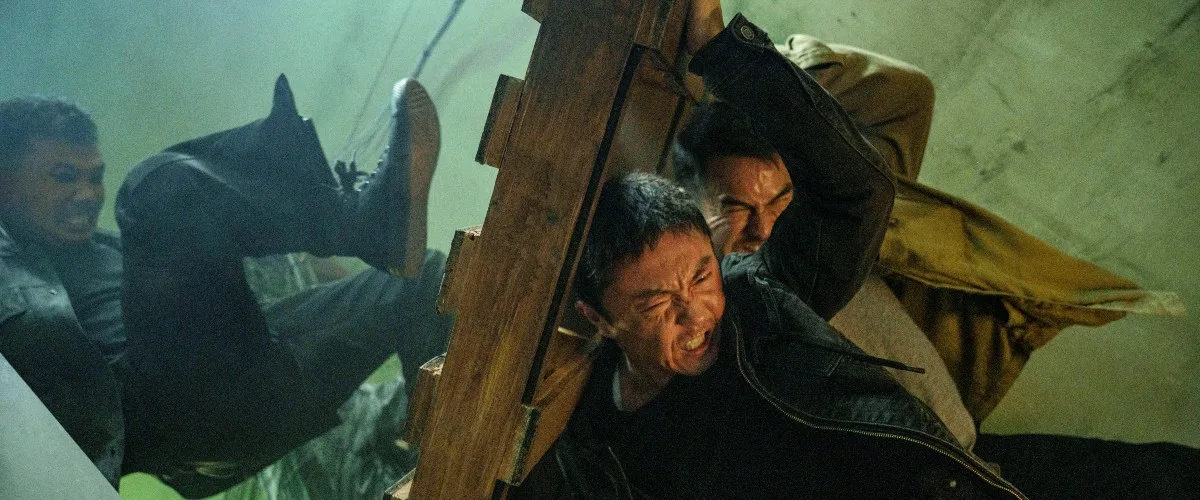
Although knives, swords, and guns are plentiful, the most enjoyable, relentless fights involve one or more opponents using items that aren’t meant for combat: an ice pick, a ball-peen hammer, a sledgehammer, chairs, tables, beer bottles, a crystal decanter, or even bicycles. In one fight scene, Le uses another man’s body like a push broom. The fights are inventive and ferocious but inelegant. The goal is always to kill but not be killed. Form isn’t a concern, except inasmuch as you want to be better at killing than the other guy. Fighters grapple, wrestle, repeatedly attempt to trip each other, and roll around on the floor, grabbing at each other’s clothing more often than they punch, kick, or flip. Sometimes a group of guys will surround and engulf a single foe, writhing, grabbing, and climbing on each other.
“The Furious” is mainly concerned with kinetic, intense, grimly funny hand-to-hand combat, more so than making obvious statements about modern life. But it’s class-conscious in a way that many action films aren’t, practically Dickensian in its sympathy for capitalism’s castoffs and casualties. And it may not be a coincidence that this movie’s villains are men with a taste for boys and girls who aren’t tall enough for a roller coaster. The baddies get stabbed, sliced, beaten to a pulp, dismembered, disemboweled, shot dead, and worse.
They also get exposed and punished for their unspeakable sins, along with their silent partners in business and government. The entire thing is a pugilist’s daydream, of course, from the conceit that the Epsteins and Maxwells of the world can be swiftly and mercilessly punished by the same institutions that enabled their crimes (represented by a police chief on the bad guys’ payroll) to the pure hearted heroes who can withstand dozens of brain-liquefying blows to the head in the space of two minutes, then spring to their feet and keep fighting. This is a whooping-and-hollering movie. It’s more than satisfying. It’s bloody heaven.