Mass shootings have become integral to the American fabric, and whether it can be saved from further layers of stain is one of the most hotly debated political subjects in the nation. Every time a new event makes headlines, the questions are the same: Why? Who/what is to blame? How could this have been prevented?
While Eric Lin’s harrowing debut feature (written by Marilyn Fu), “Rosemead,” doesn’t attempt to answer these questions in the end, it does facilitate the collision of mental health struggles, stigma, and model-minority pressures within the immigrant experience. It begs parallel questions and damns its own outcomes, inspired by distressing true events.
Irene (Lucy Liu, on fire) is a terminally ill widow with cancer that she’s hiding from her son. She owns a modest print shop in the titular, predominantly Asian locale of Los Angeles, and cares for her son, Joe (Lawrence Shou). He’s a former star student and swimmer who, since his father’s death, has been at a loss for stable ground to stand. His schizophrenia is worsening, and despite this, he’s stopped taking his meds, writing to his blog, “they dull my vigilance.”
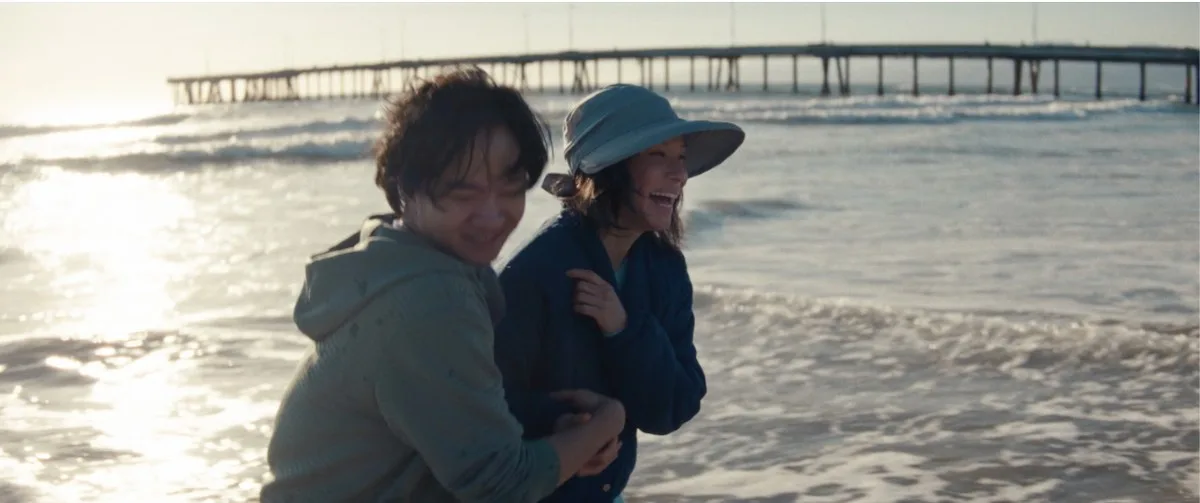
What is certainly true between the two is a tender, protective kind of love. Joe suspects his mother is sicker than she lets on; Irene suspects that Joe’s schizophrenia may be out of either of their control. They embrace each other face-to-face yet watch one another from the corners of their eyes. They’re all each other has, and the deepness of this bond is explored with delicate, anxiety-ridden fervor.
“Rosemead” echoes its thematic predecessor “We Need to Talk About Kevin,” as Joe’s increasingly frequent episodes of detachment are marked by outbursts of violence: shattered iPads, destroyed rooms, and eventually self-harm. As the news cycle covers the ever-common events of mass shootings, Irene turns it off. Joe turns it up, flooding the soundscape of his room with details of victims and weapons. His laptop tabs are filled with familiar faces from events like Sandy Hook, Virginia Tech, and Aurora, Colorado. All of the signs are there, a mother’s worst fear, and the question for Irene becomes: what can be done?
Yet the cozy intersection of pride and shame disrupts the path to resolution. Whispers from their fellow Asian-American community speak of prescriptions poisoning his brain or a dark spirit that has possessed his soul. Irene initially seeks to keep everything quiet and under the rug, refusing to attend his therapy appointments. Over the course of the film, as her concern grows, this changes, and the seeds of trepidation give way to preventive actions. She participates in the sessions, providing photos of his open tabs to the therapist and asking the local gun shop owner to call her if he sees her son browsing.
Lin’s film handles the subject matter with a refreshing level of candor, straightforward but delicate in delivery. It neither tiptoes around the consequences of mental health nor further stigmatizes it (especially as psychotic disorders in particular are among the most socially vilified). It measures the humanity of trying to love someone through volatility. Irene goes through all the channels she knows how to try to circumvent a nightmare, but as her cancer progresses and the arrival of Joe’s 18th birthday looms, she is cornered by the clock.
The uncertain swallows her whole, and Liu’s timid performance, deftly measured and vulnerable, is what keeps “Rosemead” afloat through to its gut-wrenching, bombshell conclusion. But Shou’s performance (a debut) doesn’t mesh with Liu’s, and Lin’s overall handling of his side of the film feels disparately heavy-handed. The film shines when it tackles emotional treachery with nuance, as in the evidence of events past or in long shots of portraiture. But in Joe’s case, so many scenarios lean into explicit over-the-top telling. Yet tenderness and persistent love remain at the fore, made all the more tragic by Lin’s near-helpless atmosphere.
And the film understands that to label violent offenders with the familiar epithets, such as evil or monster, is to distance them from personhood, and therefore, undermine symptomatic aspects of the human and sociocultural experience. The film does not offer excuses for violence, and neither should we; instead, it prompts reflection on where compassion and control are needed and where the pursuit of them falters.