
Julia Loktev’s “My Undesirable Friends: Part 1 – Last Air in Moscow” was the best documentary of 2025, a stunning document of what a country’s slide into fascism does to journalism and the people fighting back. The project returns this year—at Venice, Telluride, and New York Film Festivals before a theatrical rollout next month—with the nearly equally devastating “My Undesirable Friends: Part 2 – Exile,” a continuation of this essential chronicle of human resilience. If the first part was about impending doom, this one is about instability, people who want to shine a light on the war crimes being perpetrated by a country that has not only labeled them criminals but exiled them from everything they’ve ever known.
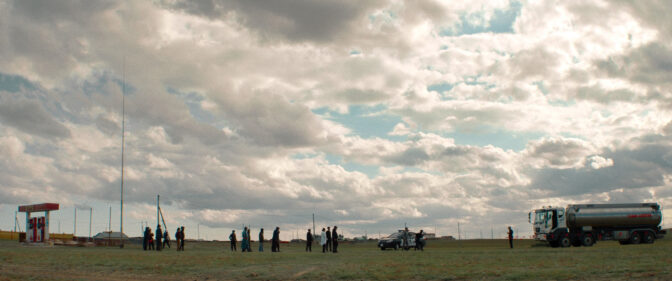
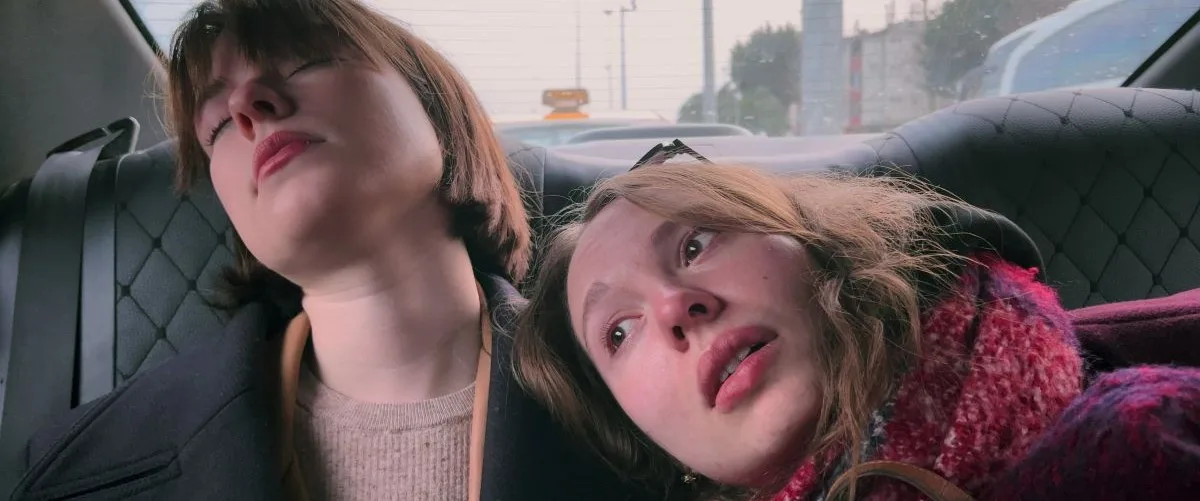
“Last Air in Moscow” ends with some of the most remarkable documentary footage in years as reporters at TV RAIN have to flee the country they love or risk being sent to prison camps. Just getting that footage out of the country in March 2022 was a terrifying journey for Loktev, who then caught up with her subjects two days later in Istanbul, the first of many stops in this world-hopping film, a story of people with a purpose but without a home. Istanbul was one of the few places that these people could go without a visa and that planes were still flying to from Moscow. She will follow them around the world, documenting ups and downs from March 2022 to early 2024, when Alexei Navalny died, a historical blow to the resistance.
Immediately, the warnings of the first film have become more like tornado sirens. Uncertainty has been replaced by abject fear, and a deep sense of melancholy at the realization that these people may never be able to go home again, at least as long as Putin is in power. And yet there’s still a strong sense of perspective espoused by these reporters, one of whom points out they’re not in the same danger as the people of Ukraine. “I have no money; they’re being bombed,” one says. “My country is bombing them.”
As the subjects of “Exile” end up scattered across the globe—TV RAIN eventually restarts in Latvia, but other people end up elsewhere, one even doing a podcast from Vienna perfectly titled “Fuck the War”—Loktev is careful to keep viewers updated on how conditions for journalists are getting worse in Russia—the main focus of the project in the first place.
Before long, reporting on anything not approved by the Russian government first is punishable by up to 15 years in prison. That’s in the second hour. By the sixth, one of the subjects will have been poisoned by a government trying to silence her. Taken as a 10-part whole, it’s one of the most remarkable studies of the amplified rollout of fascism in film history. More than once, some of the smartest journalists in Russia comment on how they didn’t think it would happen so fast. It always happens faster than we think.
Naturally, with a 6-hour runtime—like the first film, it’s cut into two presentations at festivals and on release—Loktev weaves multiple themes through her remarkable editing. One is where journalism and activism interact. Several people talk about wishing they could have done more to inform the public before Ukraine, possibly even shifting the tide in their country, and even more talk about a responsibility they feel now to do whatever they can to speak truth to power. These exiles naturally become part of Russia’s story in the 2020s themselves, guesting on podcasts and writing books, which influences how they do their jobs.
It also develops into a study in the delicacy of resistance. A gaffe in the fourth hour threatens to destroy everything TV RAIN has worked for over two misinterpreted words: “Our army.” The rising fear of the first part has now given way to how displacement affects activism and journalism. If the first part was a warning to countries about what can happen when the people who report the truth are silenced, the second exists in the uncertain space in which so much of the world has resided during the 2020s. Where do you go when your country labels you an enemy for reporting the truth? What does that mean for the rest of the world?
Admittedly, this one feels longer than part 1, but not for the reasons you might think. So many of the scenes in “Exile” speak to the specifics of each subject’s situation that it can feel almost a bit expository at times as people explain what just happened, where they are, and their plans for what’s next, clearly put in a position of “reporter” in front of Loktev’s camera.
Of course, that kind of constant clarification has to be the bulk of a project this scattered, but both parts are grounded through the mundanity that Loktev often captures, too. Yes, you still order pizza during a crisis; you still sing along to Miley Cyrus while you’re grieving. If there’s a criticism, it feels like this part could have actually used more of that personal detail and less big-picture commentary. We often learn as much through fearful eyes as we do from a clarifying speech.
Watching “Exile,” one is struck by the idea that, especially in places like Hamburg, Vienna, and New York (more than politically complex ones like Latvia and Georgia), these people could have just, well, moved on. They could have turned away from the country that abandoned them and, in at least one harrowing case, seems to have tried to actually kill them. Get another job. Report on other issues. Let Russia get away with it. And so “Exile” becomes less a story of running away from something and more a story of refusing to let evil win. If only more journalists in this world were willing to be so brave.
This review was filed in conjunction with the world premiere at Venice on September 4, 2026.