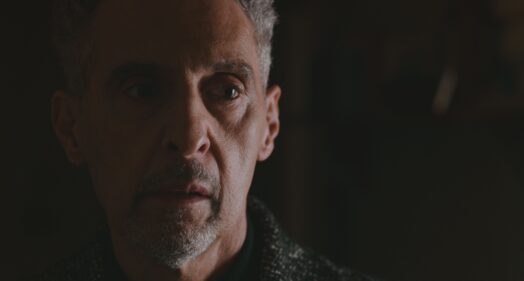

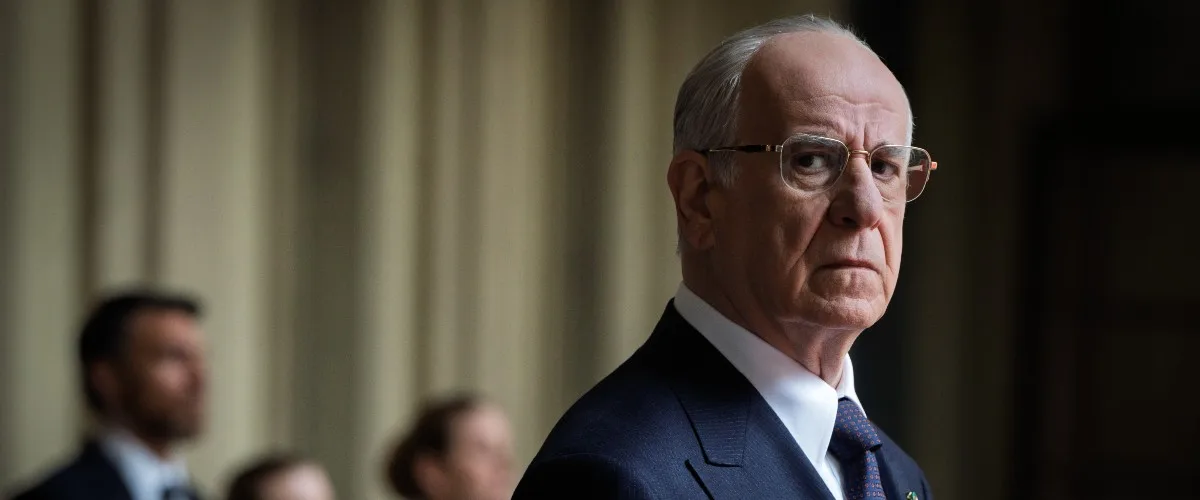
The corridors of power have gone silent in the new movie by Paolo Sorrentino. “La Grazia” reunites the director with his longtime virtuoso leading man Toni Servillo, who did not figure in Sorrentino’s diverting “Hotness and Its Discontents” novelty number “Parthenope” last year. Servillo plays Mariano De Santis, a fictional Italian Prime Minister with six months left to serve. He’s in the December of his life, and he is, as is usual for such characters, haunted.
Haunted largely by the infidelity of his late wife. For as staid as he is in his personal dealings with those around him, and as unwavering as he is in his political decisions—his nickname is “Reinforced Concrete”—he is feeling the vulnerability that accompanies heightened awareness of mortality. So in his quieter moments—when he’s not listening to loud Italian rap music on his headphones, for instance—he speaks to her in an interior monologue, stressing out on events forty years behind him.
As for the future? In six months, he will step down from his position to be replaced by the somewhat more dynamic Ugo Romani (Massimo Venturiello). As for the present, the Prime Minister is compelled to watch his diet (a lot of quinoa, except on his birthday), takes multiple opportunities to sneak cigarettes, and ponders giving pardons that will excite public disapprobation. (His close advisor on these matters is his daughter Dorotea, a lawyer played with warmth and tact by Anna Ferzetti.) He also attends the opera (La Scala, of course) and sits for a film of a teenage dance troupe—inexplicably (or so it seems) standing in front of the screen before it concludes.
The slow motion red carpet walk of a visiting head of state in the pouring rain, with a techno glitch insistent on the soundtrack—we learn that this prime minister likes to listen to rap music on his headphones, making the electronics of the score that much more apt—is one of the many instances in which “La Grazia” becomes actively if low-key funny.
But what’s the point? The movie’s story, such as it is, doesn’t even begin to take shape until about a half hour into the movie’s two-hour-and-change runtime. The point is indicated by the title, which translates as “Grace.” Grace is what De Santis is waiting for, even if maybe he doesn’t quite believe in it. He harps on the idea of zero gravity, and at one point even watches a closed-circuit video transmission of a space engineer trapped in that condition. Helpless, the astronaut sheds a tear, which begins floating toward his camera. De Santis reaches out to touch it on his flatscreen display, but of course, he can’t.
It’s a startling image, in a movie full of startling, sometimes unexpected ones (like that of a robot dog making a late entrance in this picture). Sorrentino and cinematographer Daria D’Antonio color coordinate each and every frame to a fare-thee-well. Even scenes set in an Italian prison have real visual flair. This implies that the grace the Prime Minister seeks is, in fact, all around him if he can only let go of the past and embrace it.