
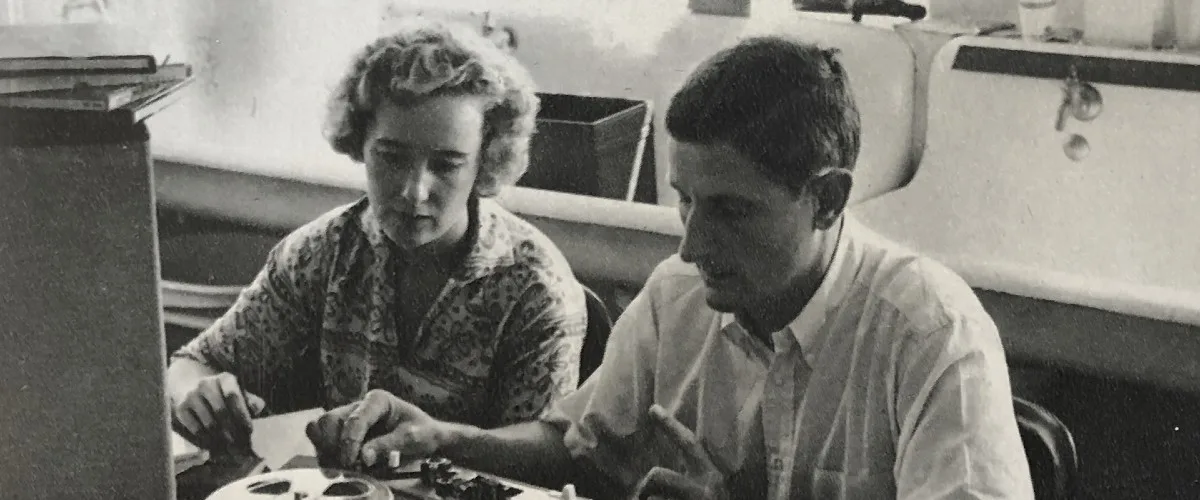
If you’ve ever wondered why the 1980s and 1990s were replete with calls to “save the whales,” and shows like “Flipper” and “SeaQuest DSV” placed so much emphasis on the innate intelligence of dolphins, you can thank John C. Lilly. Pioneer or kook, who can say? As much as his early work popularized the notion that dolphins have the capacity for self-awareness and communication with humans, he was also deeply involved in the psychedelic movements of the 1960s, and he allowed his obsession with dolphins and self-exploration to reach unbelievable lengths.
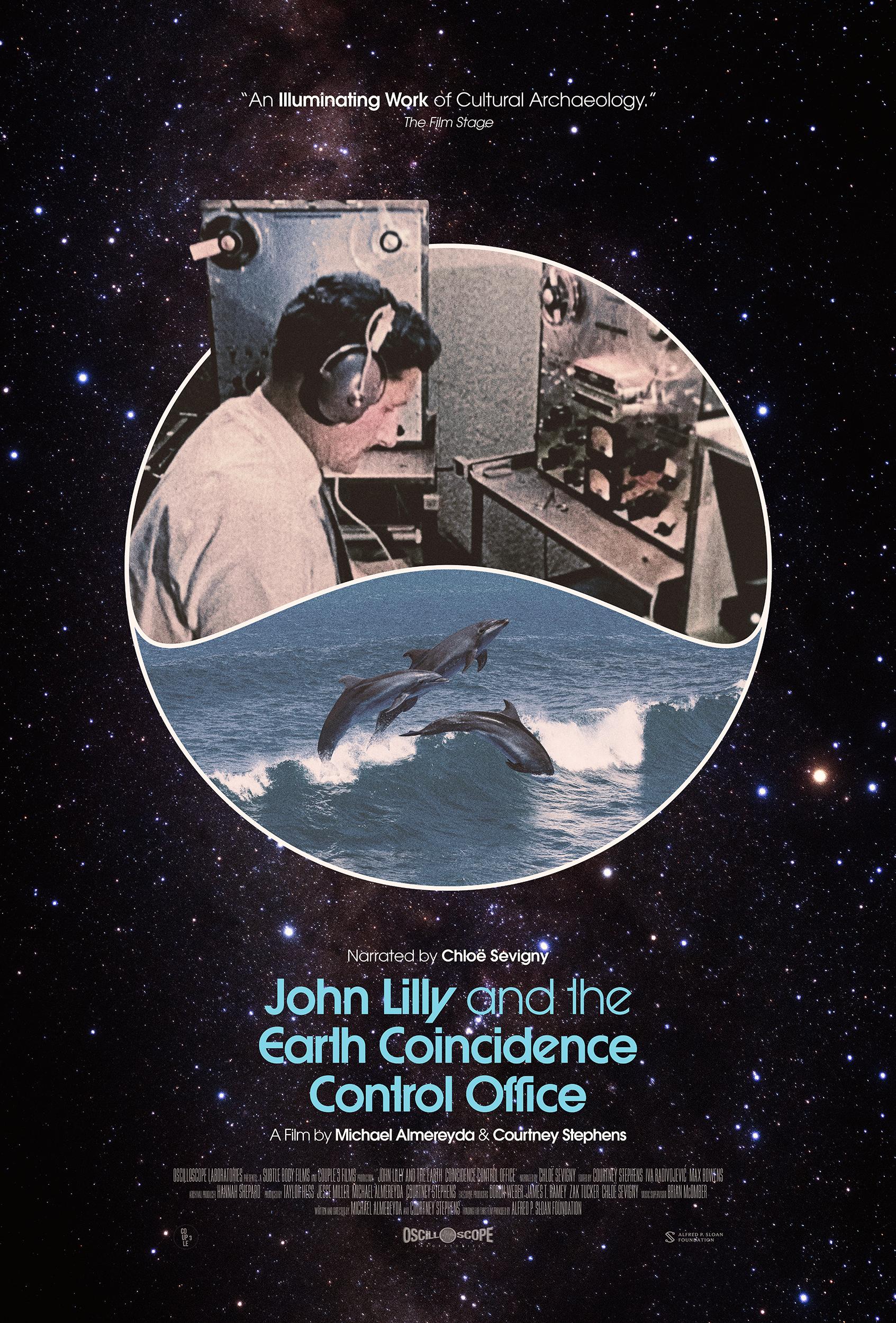
That’s the focus of Michael Almereyda and Courtney Stephens‘ new doc, “John Lilly and the Earth Coincidence Control Office,” a curious work of deadpan collage that feels the closest you could come to actually experiencing Lilly’s experiments in documentary form. What’s more, it’s less a hagiography (or a takedown) of the man than it uses him to chart how outrageous ideas become mainstreamed, tracing his life, work, and ideas through the 1950s into the 1970s and beyond. And in so doing, Almereyda continues his work probing the nuances of difficult scientific geniuses, which he’s done in previous narrative masterworks “Experimenter” and “Tesla.”
Much like in those narrative features, Almereyda and Stephens keep their distance from Lilly himself, looking dispassionately (though not with great fascination) at the man’s eccentric notions. Coolly narrated by Chloë Sevigny, Lilly’s story begins by depicting him as a buttoned-up scientist who would calmly explain his ideas on “The Jack Parr Show”; humanity, he claimed, was merely ten years away from communicating with some other form of life. While it could be alien, he was more convinced it would be marine. And so he flooded his own pool and set up his own research institute to study dolphin communication, listening meticulously to their clicks and responses to discern meaning.
Like so many real-life visionaries, Lilly’s work teetered on the line between science fiction and animal torture. As much as we joke about “talking dolphins” now, Lilly’s work genuinely tried to coax communication and relation out of these creatures, often involving injecting them with the same LSD and ketamine he himself was taking to achieve his own form of transcendence. (A particularly curious chapter mentions one dolphin taking a sexual interest in his female research partner.) But the doc is never interested in excoriating him for these outrageous tactics; it matter-of-factly explains the effect these actions had on him and those around him, while still expanding our understanding of these creatures.
Really, the grander throughline of “Earth Coincidence” is how Lilly’s ideas started to seep out into the broader consciousness, as the kooky science of the 1950s became the counterculture rebellion of the 1960s and the environmentalism of the 1970s. Archival footage mixes with clips from films and shows and even video games that you never realized were inspired by the same man: “2001: A Space Odyssey,” “Altered States,” “The Day of the Dolphin,” even “ECCO the Dolphin” (whose name now makes total sense, so named after Lilly’s titular institute). As much as Lilly’s work feels like, and probably is, quack science, the appeal of his ideas becomes clear in his cultural footprint. That’s the hypothesis “Earth Coincidence” spends its time proving.
For a film about a man obsessed with the line between stimulus and deprivation (so noted in his patenting of the isolation tank, initially a tool for brainwashing but which Lilly used to fuel his own psychedelic explorations), “Earth Coincidence” frequently inundates you with information, however patiently it does it through Sevigny’s oratory. It can be overwhelming, and the solution can be, ironically, to let it wash over you and see what ideas you can absorb. Famed director and “fellow surrealist” Alejandro Jodorowsky, who spent time in one of Lilly’s tanks to achieve his own nirvana, gets an interview in this, where he confesses that “it’s very difficult to be a human being.” That’s probably the true mystery Lilly was trying to solve, even as the doc itself wavers between the man and his legacy.
Frequently in the doc, Almereyda and Stephens play audio out over total darkness, as if we’re submerged in one of Lilly’s patented isolation tanks. It’s a curious, immersive feeling, one that helps you get into the mind of a man like Lilly, who sought a “feeling of weirdness” in the classical sense—a kind of metaphysical awakening that lives somewhere between brainwashing and transcendence. “Earth Coincidence” carries that surreality through its 87-minute runtime, and even as it grows monotonous, its consistent tone is hypnotic in its own way.