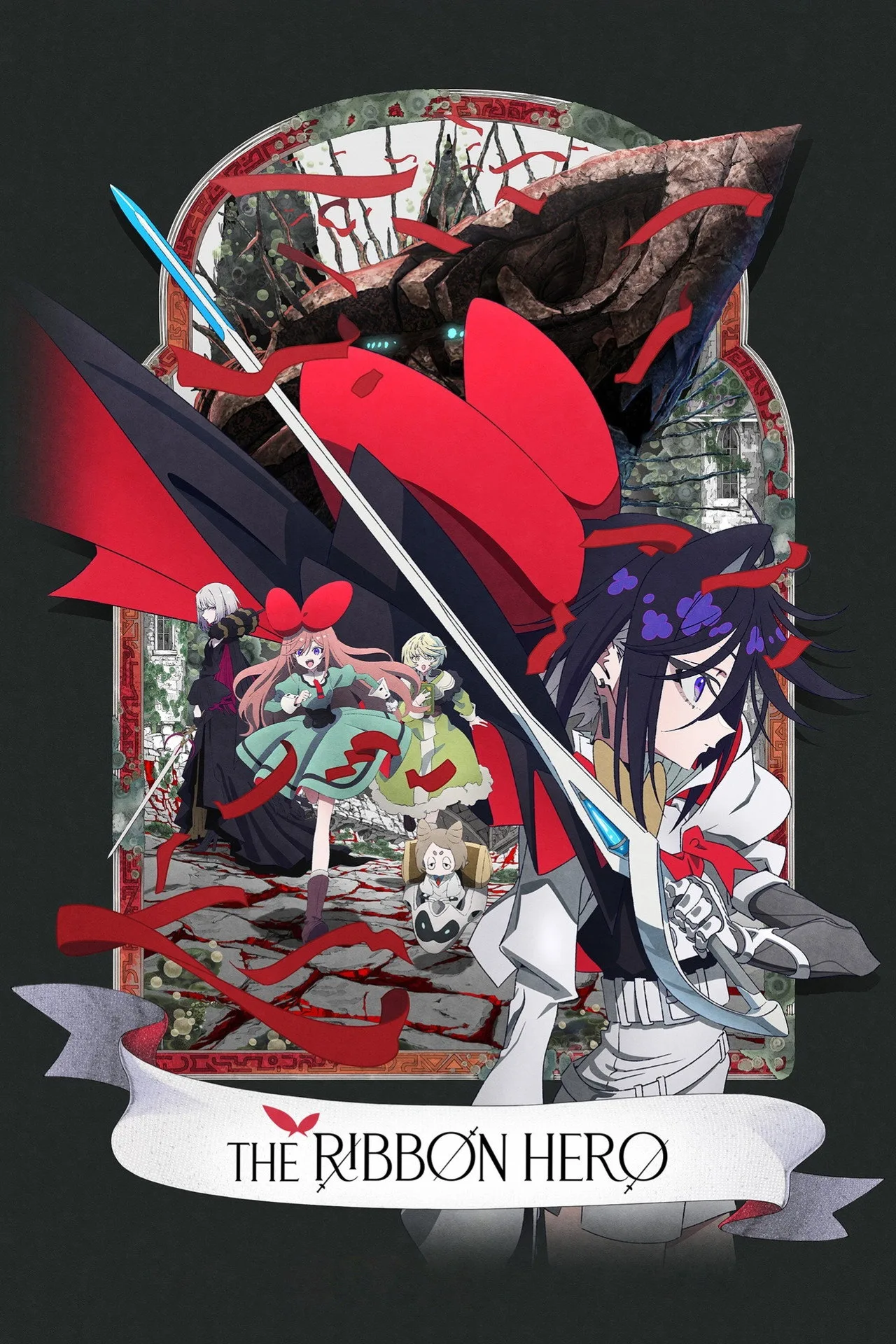

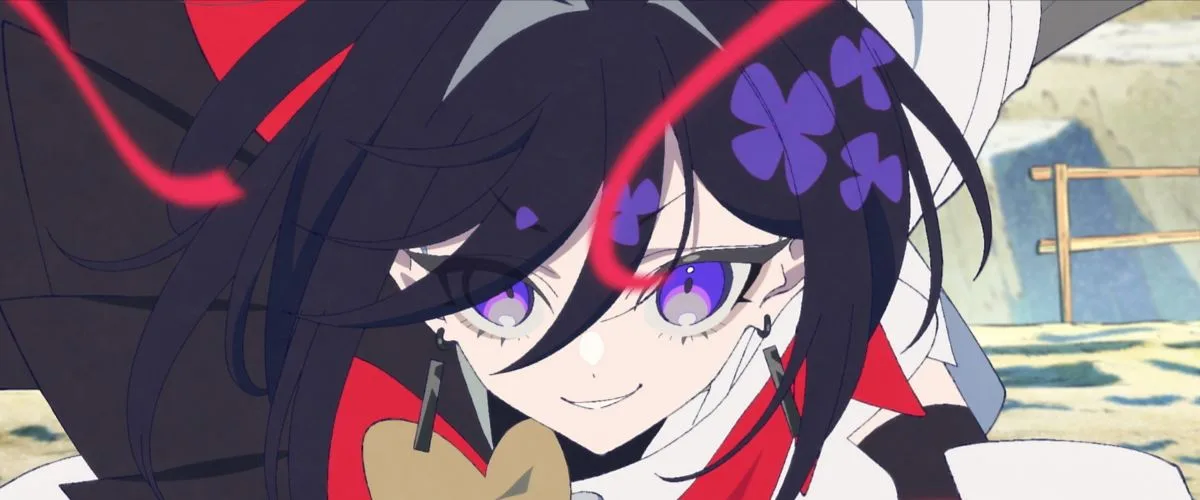
Before there was Sailor Moon, before there was Revolutionary Girl Utena, there was Osamu Tezuka’s classic 1953 series Princess Knight, the tale of a gender-bending princess named Sapphire, who defends a fantasy land by transforming into a sword-wielding warrior. While there was an anime series that ran 52 episodes in the 1960s, Netflix (and animation studios Outline and Twin Engine) have built their own loose adaptation of the manga, a two-hour adventure titled simply “The Ribbon Hero.” But where its source material feels transgressive in its exploration of the fluidity of gender, this flashy but misguided adaptation is content to jettison that in favor of stunning animation in service of very little.
In its opening seconds, we’re thrown into a flurry of exposition (illustrated through a mixture of cutouts, paper puppetry, and hand-drawn animation) about our setting: A magical realm besieged by giant creatures called Nergal, who have proved nigh-unstoppable to the forces of man. In the opening minutes, we see the downfall of Silverland, thus necessitating the flight of Princess Sapphire (Saaya Kadokura) and her aide, Zirco (Mayumi Shintani), to the neighboring Goldland. While there, they’re marginalized and treated as unwanted refugees, all while the distant threat of the Nergal grows ever closer. They quickly get work in the crystal mines, and when a Nergal attacks the mine one day, Sapphire falls into a mystical crystal formation. Bing, bang, boom, Bob’s your uncle, and suddenly Sapphire gains the powers of an unstoppable sword-wielding superhero who dispatches the Nergal with relative ease.
The people are bolstered by this newfound hope, but Sapphire runs into problems with Goldland’s religious orthodoxy, including a Pope (Haruhiko Jō) who feels it’s wrong to fight the Nergal lest they anger their terrifying god, the King of Ash. Still, Sapphire powers on nonetheless, gathering a cadre of friends along the way to assist.
Granted, the images that fall in front of your face are, indeed, remarkable: Yûki Igarashi, the director of the “Star Wars: Visions” short “Lop & Ocho,” seems dedicated to hurling one fluid movement after another in front of the audience’s face with nary enough information to make sense of it. Twin Engine, in particular, is a studio notable for its innovative use of hand-drawn animation and creative historical art styles: their “Mononoke” movies are particular favorites of mine. “The Ribbon Hero,” however, spins its fantastical adventure into a blender of animation styles that are as numerous as they are incongruous, seemingly there for spectacle more than service to a particular story.
The prevailing animation style is a kind of hand-drawn art that serves the action well; Sapphire moves with incredible fluidity and kineticism, and from beat to beat the action is crisply captured. But then Igarashi slams us into a flashback, or a reverie, or some other kind of vision, that radically adopts another style entirely, without rhyme or reason, which reads more as disorienting than daring. This scattershot approach is reflected in the film’s structure, which arbitrarily splits itself into seven “Acts” marked by an obnoxious buzzer and the opening and closing of curtains (a clear homage to Princess Knight‘s origins as an homage to the Takarazuka Revue, an all-female theater troupe who inspired Tezuka’s androgynous hero). It’d be a cool approach, if it didn’t often stop the pacing cold and ripped you away from what momentum you were starting to get into the actual story itself. (To say nothing of the film’s tone, which snaps between slapstick girl’s comedy and self-flagellating ode to despair in a matter of seconds.)
It doesn’t help, of course, that Igarashi’s version of the tale strips away a lot of what made Tezuka’s original manga so remarkable. Gone is the transgendered heart of Princess Knight, who (in the books) carried both a male and female heart, and switched gender presentations depending on what ruse or strategy she needed. The Sapphire of the Netflix film is purely presented as femme, with little thought to queerness outside of a very chaste slightly-more-than-friendship with the doe-eyed Pine (Seiran Kobayashi), who, well, pines for Sapphire’s attention in ways that feel sapphic but stop short of anything explicitly romantic. One character, an enforcer-turned-ally named Velvet (Koki Uchiyama), is the closest we come to this kind of androgyny, with his booming male voice coming out of a body clothed in black leather Gothic Lolita gear, complete with tall high heels and a silver bob.
Even then, it’s only this surprising hint of genderpunkery that lends him, or any of the characters, much personality; the plot moves with such whirling-dervish speed, and with so many characters to pack in, that no one really gets a chance to shine. This is true, most tragically, of Sapphire, who feels like such a passive character until those moments where she gets to henshin and adopt the nimble invincibility of the Princess Knight. The original manga established all of these action-fantasy tropes, to be sure, but “The Ribbon Hero” refuses to even highlight what few elements made the Princess Knight so unique in the first place. Instead, it just feels like a pale, frustrating imitator of the magical-girl stories it would go on to inspire.