
“They paved paradise, put up a parking lot.” –Joni Mitchell
There is a special place in Heaven for the owners of independent movie theaters who are struggling to survive in the age of multiplexes and streaming yet continue to operate their theaters as a labor of love. Movie theaters have weathered one challenge after another over the decades. In 1929, there were 22,000 theaters in the United States. Now, there are fewer than 3,000. The fate of the drive-in movie theater is even more precarious. Once numbered in the thousands, there are now just 300.
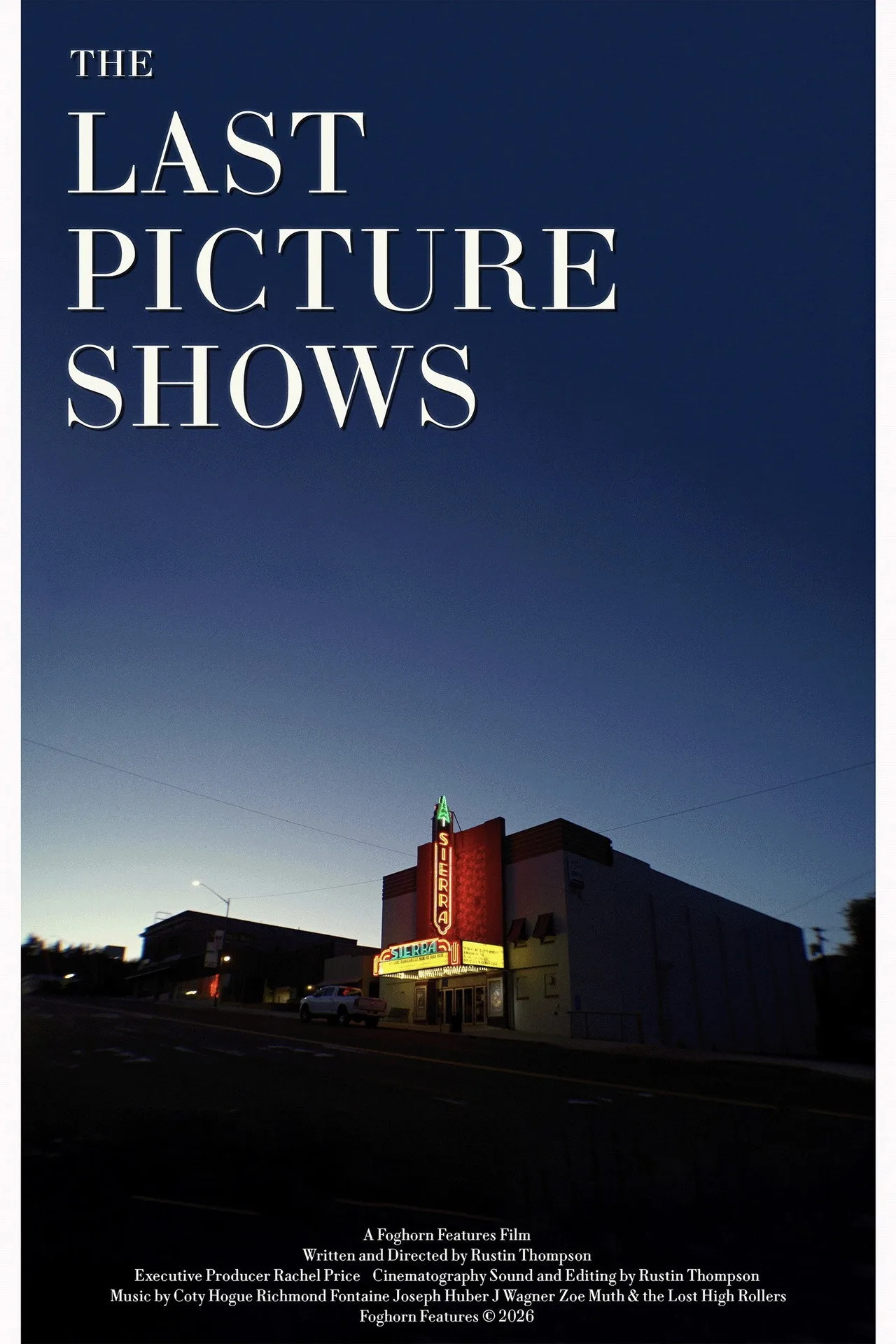
Rustin Thompson’s “The Last Picture Shows,” then, is at once a cautionary tale and a love letter to an era before it becomes bygone. To meet the intrepid entrepreneurs still fighting the good fight, Thompson embarks on a journey worthy of Odysseus—10 western states, 10,825 miles, 123 theaters. At a time when multiplexes are largely interchangeable, these treasured movie houses bear names and marquees woven into the fabric of their towns. The Eltrym in Baker City, Oregon, which opened in 1940, was named for the original owner’s wife—Myrtle spelled backward. The Ruby in Chelan, WA, which has been operating since 1914 and is the oldest continuously run movie theater in the state, was named for the original owner’s daughter. Others have classic, evocative names such as The Desert, The Gem, The Lyric, The Sage, and the Auto-Vue drive-in that serve as hubs for their communities, where, as one theater owner notes, there are scant places young adults can go for a night out.
The owners themselves are lovely. “Everyone in the world calls me Tiny,” one folksy gentleman greets Thompson. His story is typical: The previous owner approached him and his wife about buying the theater. “There was a banker dumb enough to lend us the money,” he says. “We hadn’t been to a movie for four years.” He still has a full-time job along with running the theater. “The community needs it,” he matter-of-factly states, “and I support the community.”
Many of these theaters represent continuity for their communities. One drive-in featured in “The Last Picture Shows” has been in the same family for more than six decades.
The owners are not cockeyed optimists; they are nothing if not pragmatic about their Quixotic enterprises. One couple reveals that their theater has lost $100,000 in each of the last two years. Others recall the hardship of being forced to close for 72 weeks during the pandemic. They are also savvy about studio distribution and booking practices that can force them to run films not in sync with their audiences for weeks. An amusing montage depicts several theater marquees across the region playing “Shazam 2,” a box office bomb.
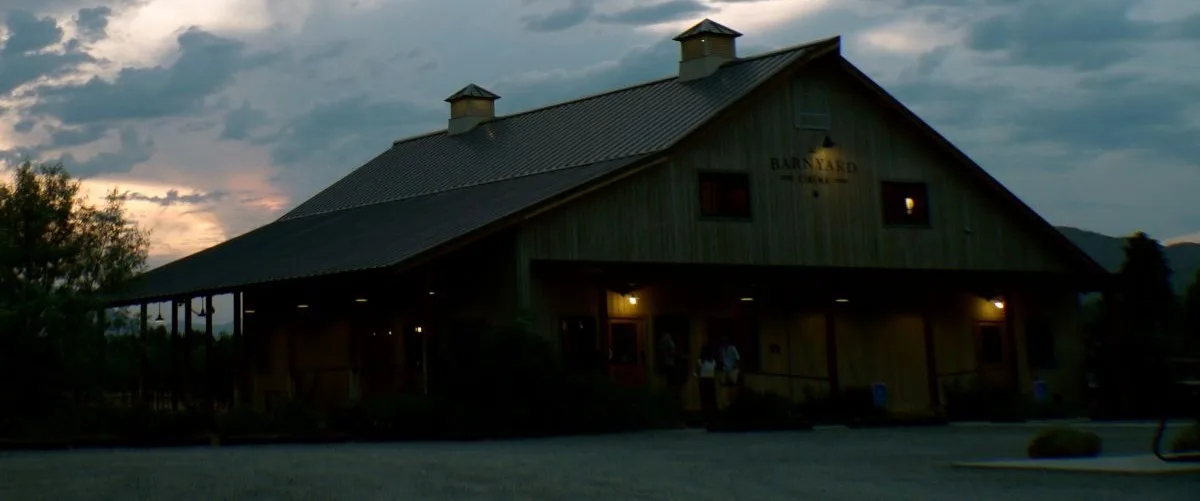
But there is hope. Winthrop, WA was without a movie theater for 60 years until founders Steve and Genevieve Cole opened Barnyard Cinema in 2016. It is single-screen, against the advice of their mentors. They lean toward independent and arthouse fare, also against conventional wisdom. The current owner of the O.K. Theatre, in the aptly-named Enterprise, Oregon, notes that the theater’s construction began in 1918, but was delayed by the Spanish flu epidemic. The O.K. celebrated its centennial in 2019 “just ahead of another pandemic,” the owner ruefully laughs.
“The Last Picture Shows” boasts a lovely acoustic soundtrack of traditional and original songs. They might have played even better if the documentary was in black and white à la Peter Bogdanovich’s classic “The Last Picture Show,” which is referenced in on-the-nose clips about the loss of the town’s decrepit Royal Theater. (“Nobody wants to come to shows no more. Kid baseball in the summer. Television all the time”).
Credited as cinematographer, Thompson captures exquisite nighttime, neon-lit images of small-town main streets whose theater marquees shine like lighthouse beacons, but the lingering shots of long, empty highways and panoramic vistas undercut the economic and cultural challenges these theater owners face. As Roger Ebert wrote in his review of Peter Bogdanovich’s “Texasville,” the sequel to “The Last Picture Show”: “The color makes things seem more picturesque, and takes the edge off the real suffering that’s going on here.”
Recurring montages of theaters abandoned, torn down or disappeared evoke memories of the long gone childhood theaters that stoked my love of movies: The Alcyon in Highland Park, Illinois, where I attended Saturday afternoon matinees for kids, like “McHale’s Navy Joins the Air Force”; the Highwood, where I saw “The Graduate” for the first time and which became an adult film theater before it transitioned to Spanish grocery; and the Twin and Waukegan drive-ins, where I thrilled to less elegant fare such as “Terminal Island” and “Son of Blob.”
And these memories of wide-eyed wonder in the dark instantly conjured my favorite scene in Joe Dante’s “Matinee”: Leonard Woolsey (John Goodman), a William Castle-adjacent producer of gimmicky B-movies, explains to a young fan the primal appeal of visiting your local movie house: “Your ticket torn in half; too late to turn back now…The stuff laid out on the candy counter. Then you come over here where it’s dark. Could be anything in there. And you say, “Here I am; what have you got for me?”
That experience is disappearing as theater owners struggle to stay in operation. Today, Ross Melnick, founder of cinematreasures.org, notes in “The Last Picture Shows” that there are ever-widening “cinema deserts,” places where there are no movie theaters within 5, 10 or even 50 miles. The loss to filmgoing culture is incalculable. As Genevieve Cole remarks, “There is no culture if you’re sitting at home watching a movie by yourself.”