
“I used to be the youngest person in every group,” says poet Ed Saxberger, “Then one day, I became the oldest.”
In “Late Fame,” a finely crafted character study starring Willem Dafoe, Ed learns that being the oldest person in the room is fun if you fall in with the right group of young people—but also that it’s tough to know if the group is right until you’re in it.
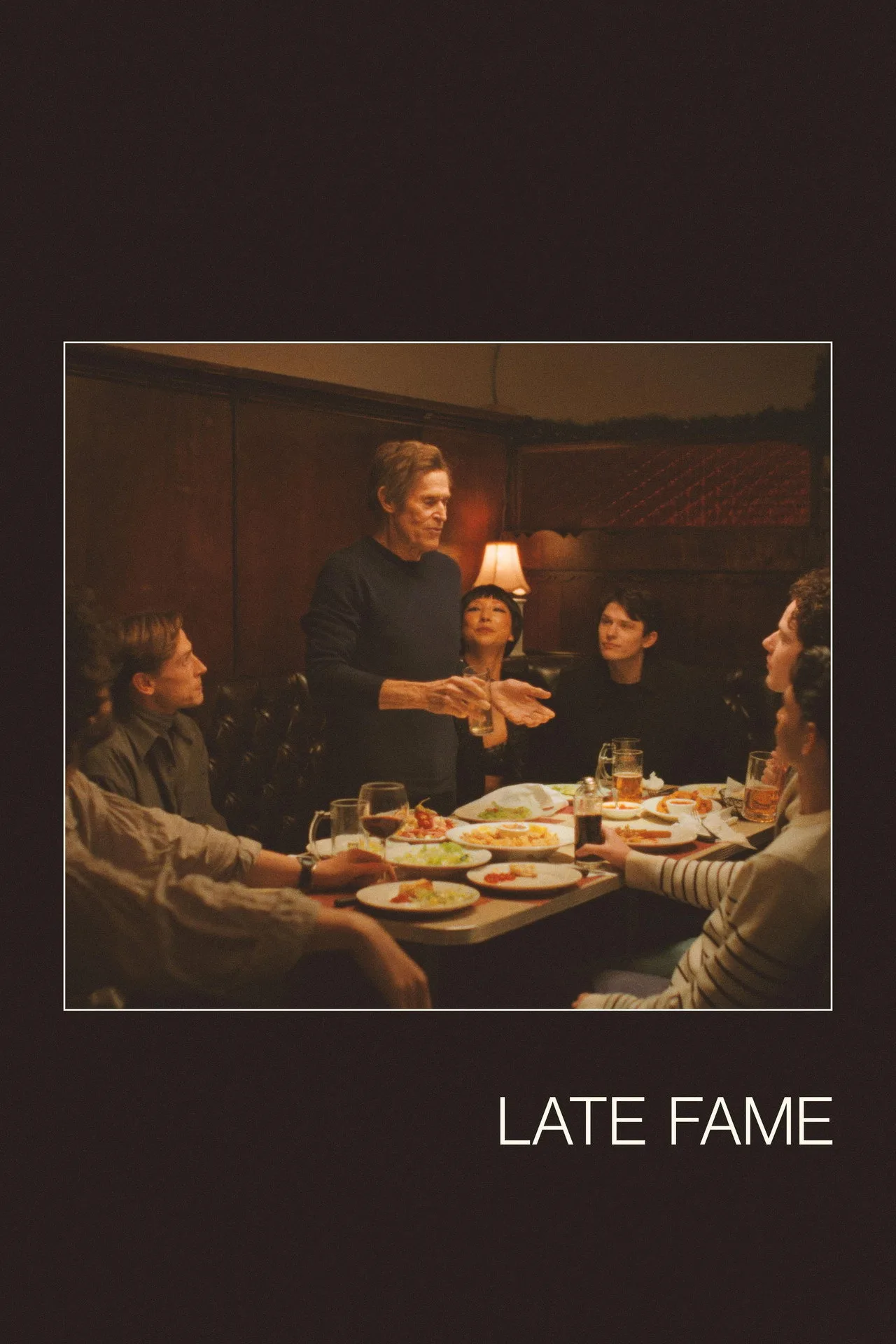
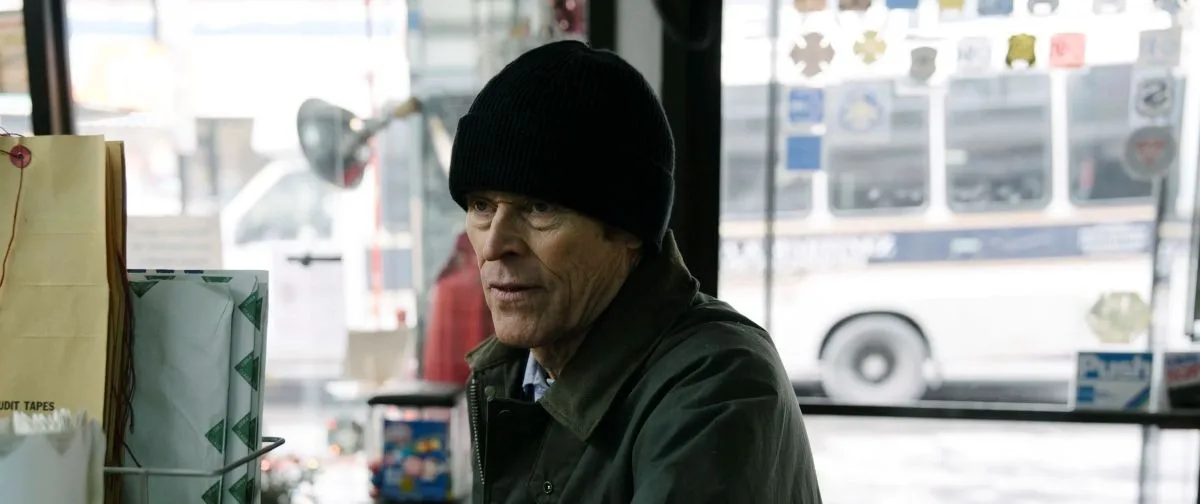
If you asked Ed what he does, he’d say he’s a postal worker. He’s worked in the same Manhattan mailroom for decades. That self-image begins to change when he’s approached on the street in front of his downtown apartment building by a twenty-something man who calls himself Meyers (Edmund Donovan). Meyers considers Ed’s obscure 1979 poetry collection a neglected masterpiece and wants to introduce Ed to his like-minded circle of writing-obsessed twenty-somethings, which meets regularly at a nearby restaurant.
They call themselves The Enthusiasm Society. The membership consists of current or recent college students with literary specialties: poetry, novels, plays. It’s a very male group, but there are a few women wandering in and out. The most intriguing is Gloria (Greta Lee), who’s slightly older than the young men but much younger than Ed. Gloria is vaguely described as a person involved in New York theater. She might or might not be in a relationship with another group member. She talks to Ed like she’s flirting, and even sidles up next to him on a coffee shop sofa as if she’s already his girlfriend. But Ed’s not the only man to experience this.
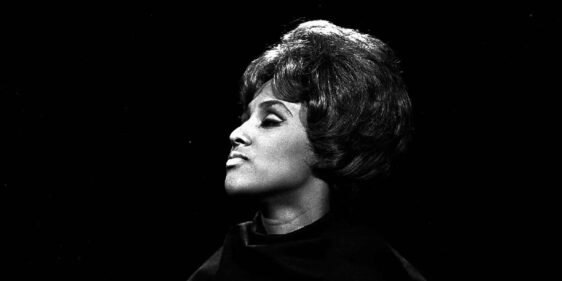
Gloria is the most striking person in a movie stocked with vivid, thoughtfully written characters. She embodies an urban type that’s been around as long as the city itself: the streetwise nymph who can appear comfortable in any setting, from highest to lowest, and whose overly familiar language and gestures suggest availability without confirming it. Lee embodies that type to perfection while building Gloria into a fully dimensional woman.
The group’s name, Meyers tells Ed, “says we’re standing up against negativity, vulgarization, the modernization of everything, the coarsening of culture.” Soon Meyers is asking Ed to participate in an upcoming reading that he’s organizing, and be the closing act. Ed thinks he’s being asked to read from some of his existing poetry until Meyers asks, “What about something new?”
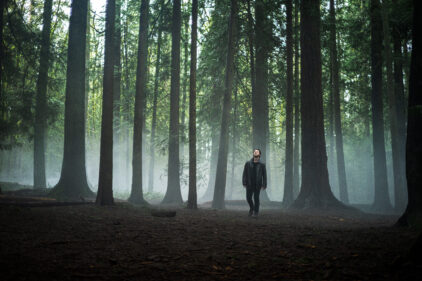
The first part of “Late Fame” is a wary dance of ambition and manners. Soon enough, Ed starts regularly hanging out with The Enthusiasm Society, bonding over dinner and drinks and talking about art as if it’s a noble pursuit. These young people excavate something buried deep within Ed. By day, he sits at his desk and writes reams of notes. By night, he strolls around Manhattan, thinking. He feels so young that he even starts smoking again and is stunned by the price of cigarettes.
Meyers treats Ed as a pet project, hoping to make him a literary star in the autumn of his life. Meyers even hooks Ed up with a high-powered literary agent (regular HBO ensemble player Jake Lacy) who is under the false impression that Ed is there to sell a memoir set against the 1970s Lower Manhattan arts scene. This is not what Ed wants, but he says he’ll think about it. The agent’s poker face doesn’t fool us, or Ed. He’s insulted, and this is the last time Ed will sit across from him.
Nevertheless, the language Ed uses to portray the New York of his youth is so evocative that it might make you wish he’d said yes to the agent — or that, somehow, a novel about this character’s youth existed and could be purchased and read, because it sounds as melancholy and magical as Christopher Isherwood’s Berlin stories (which inspired the musical “Cabaret”). “Downtown was another world then,” Ed says. “Everyone was an artist. Everyone was poor. Everyone was young, until they weren’t.”
You might be thinking, “Come on, now—does anyone in 21st-century New York care enough about the written word that they’d create a literary society and publicly declare their resistance to social media, digital devices, and the like?” But such pockets of humanity exist, are adamant in their views, and can be found in suburbs and small towns if you know where to look. That being said, the movie does feel mysteriously unstuck in time. This might be because it’s based on a same-titled 1898 book by Arthur Schnitzler, who wrote the novella that became “Eyes Wide Shut.”
Screenwriter Samy Burch, the powerhouse who also wrote “May December” and the long-delayed “Coyote vs. Acme,” tailors the material so that we (mostly) believe in the world we’re exploring. She accomplishes this by connecting Schnitzler’s young idealists with the current, worldwide backlash against digital behavior: like-chasing, endless scrolling, GenAI imagery, ChatGPT word salad, disinterest in truth. When Meyers describes another person in the pub as an influencer, the word is spat, not spoken.
Director Kent Jones lets the dialogue be the true star of the movie, staging multiple scenes as static, unedited shots of two people talking while New York looms behind them. He keeps every scene as short as possible, except when characters experience an event so earthshaking that you want the camera to linger, in which case it lingers.
There are a few bad scenes. In the weakest, Ed’s regular friend group, a pack of wisecracking, ball-breaking older guys who hang out at a local dive and shoot pool, are simultaneously amused to learn that the postal worker is secretly a poet and hurt that they’ve been friends with him for decades and he’s only now telling them. This leads to a subplot about whether the guys will show up at poetry night that’s so rote that the film itself seems bored by it. These guys love Ed, they’ve all encountered poetry before, and at least one of them has a kid in college (likely Brooklyn College) who’s determined to make a living from the arts and refuses to study HVAC repair as a safety net. Why wouldn’t Ed’s buddies just say they’re proud of him and cover his bar tab for the night?
Nitpicks aside. “Late Fame” is a proud new entry of a tiny but notable group of movies about young, privileged, white New Yorkers who are nostalgic for a nonexistent past in which more people were well-read and curious and wore sharper clothes. (See also: Noah Baumbach’s debut “Kicking and Screaming,” the HBO comedies “Girls” and “Bored to Death,” and the entire career of Whit Stillman (“Barcelona,” “The Last Days of Disco.”). A character in Stillman’s debut feature “Metropolitan” named his peer group the Urban Haute-Bourgeoise, UHB for short. “Late Fame” is a good UHB movie—and a good movie, period.
Dafoe and Lee raise the entire project to a higher level. It’s worth seeing “Late Fame” just to watch Dafoe fine-tune his character from one scene to the next, and to witness Lee in action. If the industry doesn’t agree that this is award-worthy supporting performance, the phrase means nothing.
In her first few scenes, Gloria’s arch, capital-D Dramatic presentation may make you worry that the actress is overdoing it or that the character is poorly written. Then you see Gloria on cabaret night at a bar, perched on a stool in a short skirt and fishnet hose and belting out a torch song with dazzling assurance, and you realize she’s a Bob Fosse heroine: Sally Bowles turned loose among retro Beatniks. As Ed gets to know Gloria, he figures out why he instantly felt connected to her: nobody else in their group has struggled. They’re mainly failsons and nepo babies. They’re hypocrites, too, gassing on about principles they don’t live by.
This is a more confident and inviting feature than Jones’ last one, the small-town family drama “Diane,” which had superb acting and a wealth of sociological detail but seemed as numbed by sadness as its title character. Jones makes bold choices and stands behind them, such as allowing a poem recitation or nightclub performance to play out for several minutes without cutting away.
“Late Fame” is most hypnotic in mini-montages of Ed walking the streets at night. Score composer Don Fleming plays combinations of four notes on an electric guitar and lets them fade so gradually that they overlap with the next set of notes, sonically complementing the film’s dissolves and fades-to-black, and creating a visual analogy for Ed’s wandering mind. Time is suspended. Everything is poetry.