Raccoon Nation: The hep cats of the ‘hood

“Raccoon Nation” premieres on PBS’s Nature series Wednesday, Feb. 8, at 8 p.m., 7 p.m. Central. Coming on DVD/Blu-ray March 13.

Let’s be frank: People watch nature documentaries because they want to see wild animals doing the Wild Thing. This can be shown on regular TV because, as Bea Arthur’s Maude famously said, “animals making love is rated G. People making love like animals–that’s R ” An animal documentary serves to showcase how its subjects survive, hunt, eat, play, and yes, get their freak on. There’s a reason the sexiest piece of music Elmer Bernstein ever wrote used to play over footage of animals gettin’ bizzy on “National Geographic.” A Barry White soundtrack would have been way too hot for TV.

Alas, “Raccoon Nation” is a relatively chaste animal documentary, which is unusual but no less interesting. Its focus is on another popular topic of nature non-fiction: man’s effect on the animal kingdom. Our species is usually depicted as destructive, and rightfully so. Forests and wooded areas are disappearing, leaving animals homeless and upsetting the natural balance by misplacing both predator and prey. “Raccoon Nation” takes a different approach, however, suggesting that humans may be responsible for the continued survival of the misplaced animal. The more we try to get rid of raccoons, the smarter they get. It’s side hustle disguised as adaptation.

As more and more development occurs, the animals start living closer to us. The urban jungle is now literally a jungle. Deer have been spotted in my hometown, and 10 miles away, Irvington, New Jersey saw an episode of “Bearz N The Hood” when a city block’s trashcans were set upon by ursine visitors. My current neighborhood is overrun with rabbits, foxes, possums, squirrels and birds who are decidedly NOT pigeons. I walked out of my house this summer, and there were so many animals in my yard I thought I was in “Song of the South.”


December 14, 2012

Walk Away Renee: You’re not to blame

“Walk Away Renee” is available on SundanceNow’s new Subscriber Video-on-Demand Program Doc Club from June 27, 2012.

When you were young didn’t you think your parents were crazy? Did you swear you wouldn’t turn out like them? For filmmaker Jonathan Caouette, those two worries have defined his life because his mother suffers from bipolar personality and schizoaffective disorders, something that he focused on in his award-winning 2003 documentary “Tarnation.” In his new film, “Walk Away Renee,” Caouette brings us up to 2010 with the focus on Caouette driving his mother, Renee LeBlanc, in a U-Haul from Houston to New York.

For a dysfunctional family, road trips can be filled with emotional landmines. For Caouette, this bonding experience starts out well, but early on, they lose Renee’s 30-day supply of lithium. Without her mood stabilizing meds, you know that things can only get worse. For people who have bipolar relatives, this story might seem heartbreakingly familiar.

Caouette’s “Tarnation” begins with overexposed grainy images. The highlights are blown out to white; this isn’t a technical problem, but an expression of panic. His mother has overdosed and the documentary then shows the events building up to this emergency. Caouette began filming his family in 1984 and in “Tarnation” we see him as a young troubled boy, starved for attention and trying to make sense of his world, his sexual orientation and the mother he loves while being raised by his overwhelmed though well-meaning grandparents, Adolph and Rosemary Davis.

December 14, 2012

Norman Mailer: His life in public

“Norman Mailer: The American” is available on Amazon Instant video. It is also available on DVD. Criterion has announced a two-disc Eclipse Series DVD set of Norman Mailer-directed features for release August 28, 2012: “Maidstone” (1970), “Wild 90” (1967) and “Beyond the Law” (1968).

Watching “Norman Mailer: The American,” I was struck by the similarities between Mailer and Charles Foster Kane. And it’s not just that director Joseph Mantegna (not the actor) at one point employs the title card for “Citizen Kane’s” faux newsreel “News on the March” to setup some archival footage. Or the fact that “American” was originally the proposed title for Orson Welles’ masterpiece.

Both films grapple with taking the full measure of a man who had significant influences on his times (Kane is fictional, but he was legendarily based in part on newspaper publisher William Randolph Hearst). As Mailer’s life unfolds in all its glory, controversy and infamy, dialogue from “Kane” ran like a crawl through my brain. “Few private lives were more public… and he himself was always news.” And: “Here’s a man who was as loved and hated and talked about as any man in our time.” But finally: “It’s not enough to tell us what the man did, you’ve got to tell us who he was.”

December 14, 2012

Who forgives the Gonzo?

Opening theatrically in New York. Available now through Comcast On Demand, Amazon, iTunes, Vudu. See TribecaFilm.com for details.

by Odie Henderson

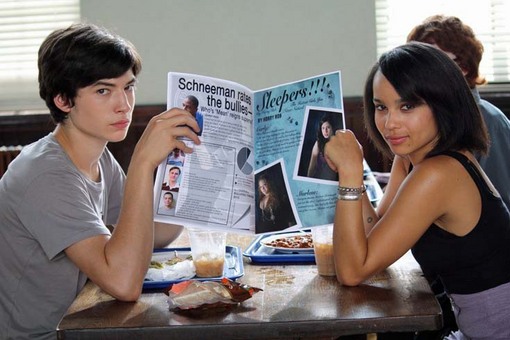
“Beware the Gonzo” begins with one of those flash-forwarded scenes where something from later in the film is presented to us as a means of foreshadowing. Being out of context, the scene has the tricky role of piquing the viewer’s interest while not being a spoiler. It rarely works, and “Beware the Gonzo”‘s opening scene is a big spoiler: a beaten up Eddie “Gonzo” Gilman (Ezra Miller) stares into a video camera and tells us that his actions have cost him his best friends, made him lose his girl, gotten him kicked out of school, and almost caused the divorce of his parents (played nicely by Campbell Scott and Amy Sedaris).

This is supposed to be an apology to all those he has wronged, but instead, it’s one of those politician mea culpas, a whiny “my bad if you were upset” speech that never forgets to be more about its subject than atoning for his wrongdoings. Out of context, it seemed pathetic, but I was willing to grant that I didn’t have the entire speech at my disposal. However, it hung over the movie, and as I met the interesting and trusting characters, dread crept in; I kept waiting for the moment when Gonzo would stop being the likeable character he is for much of the film and turns into this destructive monster.

This is not a bad thing, mind you, but the film’s dark turn treats some rather unsavory matters in eye-rollingly shallow fashion to produce a happy ending. It never makes its case for why we, or anybody in “Beware the Gonzo” should Forgive the Gonzo. If the film were honest, this tale of how power corrupts would have had a bittersweet, life-learning lesson of an ending: The hero learns from his mistakes and carries that lament with him as he moves on. Lacking that courage, director-screenwriter Brian Goluboff should have at least removed the most serious of “Beware the Gonzo”‘s sins from the screenplay. The ending would then be easier to swallow. More on that shortly.

Gonzo works for a prep school newspaper run by principal’s darling Gavin Reilly (Jesse McCartney). Reilly is a jock who not only edits the newspaper but comes from a long line of school attendees and patrons. Reilly’s family has won a prestigious history award for the school two years running, and he is in line to win it its third. Reilly is also a bully (and worse, as we’ll discover) who trashes all of Gonzo’s article ideas. He and his jocks beat up Gonzo’s friend, the wonderfully named Scott Marshall Schneeman (Edward Gelbinovich), giving him an gate-enhanced atomic wedgie. Scott’s predicament leads Gonzo to turn his “first day of school” article into an expose on the bullied kids. Reilly edits out all but two paragraphs of Gonzo’s article, forcing him to start his own underground newspaper. The first article is all about Scott and his run-ins with the jocks.

December 14, 2012

It ain’t over until the postman rings

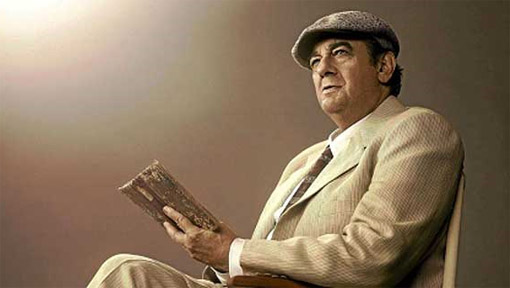
“Il Postino” will premiere on PBS at 9 p.m. ET Fri., Nov. 25 as part of the Great Performances series. Based on the 1994 Italian film, it stars tenor Plácido Domingo.

By Jana J. Monji

The opera “Il Postino” in its name shows its curious lineage. While not a great opera, “Il Postino” does feature the performance of Plácido Domingo, one of the great opera tenors, in a role specifically written for him during the world premiere performances at the Dorothy Chandler Pavilion in Los Angeles.

The opera is in Spanish, not Italian as its name suggests. “Il Postino” is also the name of the much acclaimed 1994 Italian movie that although originally released in the United States as “The Postman,” is now referred to as “Il Postino” to avoid confusion with Kevin Costner’s 1997 post-apocalyptic movie based on the 1985 David Brin novel.

The movie “Il Postino” was also based on a novel, Chilean writer Antonio Skármeta’s 1983 “Ardiente Paciencia” (Burning Patience) which was later retitled “El Cartero de Neruda” (Neruda’s Postman). The Italian movie “Il Postino” (Skármeta directed a 1983 Spanish language movie of his novel) transferred the location from Chile to Italy, changed the time period and the ending. As you might expect, the movie was in Italian.

December 14, 2012

The City Dark: Turn out the lights

Do you love the nightlife? During hot summers, evening comes like a cool blessing with a promise of good company. But just what do we mean by the night life? Usually we aren’t talking about dark streets and even the dimly lit dance venues and bars feature glowing and sometimes pulsing lights. As a woman, I prefer well-lit and well-traveled areas of the city. It’s a mattered of safety. Yet in director/writer Ian Cheney’s illuminating documentary, “The City Dark, ” we learn that having a city that never sleeps comes at a steep price. “What do we lose when we lose the night?” he asks.


For the New York City-based Cheney, who grew up in rural Maine, in a small town of about 4,000 people, his boyhood nightlife was spent gazing at the stars. This 2011 documentary is like a plaintive love song to the night skies of his youth with stunning astrophotography (cinematography by Cheney and Frederick Shanahan). I realized that as much as I love nighttime walks under a full moon, I have never truly seen the sky at night. In most cities there’s too much light pollution.


Cheney’s previous documentary, the Peabody Award-winning “King Corn” also appeared on PBS as part of the Independent Lens series. Directed by Aaron Woolf and written by Cheney, Curtis Ellis along with Woolf and Jeffrey K. Miller, the 2007 “King Corn: You Are What You Eat,” followed college friends, Cheney and Ellis, as they moved to Greene, Iowa to grow an acre of corn and learn about the industrialization of farming and why corn is such a high-demand crop even though it’s subsidized by the government.

December 14, 2012

Shut Up Little Man: An Odie Misadventure

Opening theatrically in select cities and available On Demand through Comcast, Amazon, Hulu and other providers. For more information, visit TribecaFilm.com.

by Odie Henderson

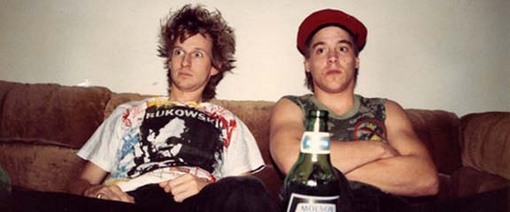
The technological weapon of choice is refreshingly analog: Cassette tapes containing the vitriolic, violent rants of two men living together in an apartment in San Francisco’s Haight-Ashbury district. The men, Raymond Hoffman and Peter Haskett, proclaim their disdain for one another in conversations loud enough to wake the dead. Haskett is an openly gay man, Hoffman a raging homophobe, and both are well beyond casual drinking.

The combination of opposites fueled by days of constant boozing provides enough hate to fuel the furnace that heats Hell, all of it recorded on those cassette tapes. The men become celebrities of sorts after their recordings go the pre-YouTube version of viral in the early 1990’s. Though Ray and Pete provide the content, the reward goes to the men who recorded them, Eddie Lee Sausage and Mitchell D. The documentary, “Shut Up Little Man: An Audio Misadventure” documents their return to the scene of their run-in with fame, a pink apartment complex they affectionately called Pepto-Bismol Palace.

Ray and Pete lived next door to Eddie and Mitchell from 1987 to 1989. After Eddie signs the lease, their landlord warns them that their neighbors can get “a little loud.” When the duo finds out how loud, Eddie confronts Ray. A drunken Ray threatens to kill him before returning his threats to Pete. Neither “Cops” nor “Judge Judy” were on the air in 1987, so the duo didn’t realize they could have their blitzed neighbors dragged out into the street on camera before suing the pantyhose off their trifling landlord. Being from a small town instead of a crime-ridden metropolis, Eddie and Mitchell also seem unaware that, if the walls are thin enough to hear the neighbors, bullets will have no problem getting through them. So, rather than call their landlord or the cops, Eddie and Mitchell decide to record Ray and Pete instead.

Mitchell tells us that Ray and Pete are aware they are being recorded, yet they continue to scream obscenity at each other. After collecting 10 or so hours of material, he and Eddie loan some of the cassettes to friends. The friends find the tapes hilarious, and pass them on to other friends who do the same. Soon, Pete and Ray are underground sensations, and Pete’s constant refrain of “Shut Up, Little Man!” becomes the catchphrase of the cassette crowd. Comic books based on the material are drawn by Daniel Clowes (“Ghost World”). Puppet shows are performed using dialogue from the tapes. A playwright and future nemesis of Eddie and Mitchell named Gregg Gibbs writes a one act play with Pete and a murderous Ray as characters. Even Devo samples the dialogue for one of their songs.

December 14, 2012

Ants in Your Pants of 2006

“The Ant Bully” is now available through HBO On Demand and HBO Go until December 18.

A boy, a wizard and a war–that’s the basic formula for many children’s adventure stories. In “The Ant Bully,” as the name suggests, this story takes place in the insect world, but the bully is the boy named Lucas (voiced by Zach Tyler Eisen). This modest morality tale doesn’t go for big laughs but does deal with situations that young kids will inevitably face.

Based on John Nickle’s 1999 book by the same name, this 2006 feature was the first animated film produced by Legendary Pictures. “The Ant Bully” followed two better known 1998 ant-themed films: DreamWorks’ “Antz” and Disney’s “A Bug’s Life.” All three movies have messages, but are aimed at different audiences.

“The Ant Bully,” rated PG for mild violence, is definitely targeted at young children–preteen kids who might feel powerless, so far outside of the adult world. In the movie, 10-year-old Lucas has no friends and is the target of the neighborhood bully. He turns his frustrations on the anthill in his front yard, causing the ants to scurry about when he floods the anthill.

December 14, 2012

Frequently bloody, occasionally disgusting:A Halloween roundup from the fringes of horror

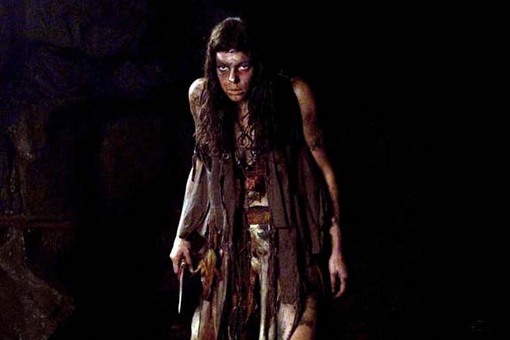
With the exception of “The Woman” (which is still in limited theatrical release), all of the films from “Bloody Disgusting Selects” are currently available on multiple platforms including Netflix (DVD only), Amazon.com and most VOD providers including Comcast, DirecTV, Amazon, iTunes, CinemaNow, VuDu and Verizon FiOS. Check your VoD provider listings, or go to www.bloodydisgustingselects.com for more information about the films and where to find them.

On DVD, all of the foreign-language films reviewed here include an optional English-dub dialogue track for viewers with an aversion to subtitles.

by Jeff Shannon

Historically and statistically, the most abundant, profitable, and creatively expressive movie genre has always been horror. It has consistently been the most viable proving ground for new talent and a focal point for the most obsessive movie fans on the planet. It’s the most purely cinematic of genres, playing to the strengths of an artistic medium that has shock, surprise, dread, fear, and bloodletting built into every molecule of its DNA. It’s a realm of expression that challenges masters and amateurs alike.

Of course, there’s always a downside: The record-setting $50 million opening weekend of “Paranormal Activity 3” (which earned a one-star review from Roger Ebert) — and Paramount’s immediate strategy to keep that franchise booming — provided a stark reminder that, more often than not, horror is where commerce almost always trumps art. It’s the favorite plaything for copy-cats and money-grubbers. The genre’s blood is frequently tainted by fast-buck pretenders and greedy opportunists who care more about profit than the genre’s history, which is the worthy subject of some of the finest film scholarship that’s ever been written.

December 14, 2012

This isn’t your Disney Little Mermaid

“The Little Mermaid from San Francisco Ballet” airs Friday, Dec. 16, at 9 p.m. (check local listings) on PBS’s “Great Performances.” It is currently available on DVD, and will also appear on PBS On Demand.

by Jana Monji

Whenever I say, “Hans Christian Andersen,” in my mind I can hear the voice of Danny Kaye singing out the name of the famous Dane. Kaye played the title role in 1952 musical film, “Hans Christian Andersen. ” For another generation, the Little Mermaid is part of a Disney franchise beginning with the 1989 animated feature “The Little Mermaid. ” Now comes a ballet, recorded for PBS.

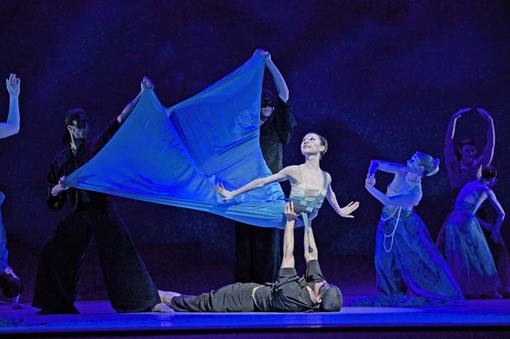
Hamburg Ballet director John Neumeier’s “The Little Mermaid” is a visually rich, emotionally complex ballet that takes the famous Hans Christian Andersen fairy tale from its Hollywood interpretations back to its origins. This is a “don’t miss” production.

In the original story, the Little Mermaid saves and falls in love with a prince. She makes a bargain with a witch, giving up her beautiful voice in order to have legs. The prince likes her, but doesn’t love her and marries another. Given the choice of killing the prince or dying herself, the Little Mermaid dies, but is resurrected in another dimension.

How can you have a franchise if the Little Mermaid dies? You can’t, of course. In the Disney feature, “The Little Mermaid,” Ariel (voiced by Jodi Benson), doesn’t die, and instead, does find love with her prince, Eric (Christopher Daniel Barnes). Roger Ebert gave the movie four stars, and called it “a jolly and inventive animated fantasy” that restored the magic associated with animated Disney features from an earlier era. The Academy voters gave the film two Oscars–one to Alan Menken for Best Music, Original Score and another to Menken and Howard Ashman (lyrics) for Best Music, Original Song (“Under the Sea”)

December 14, 2012

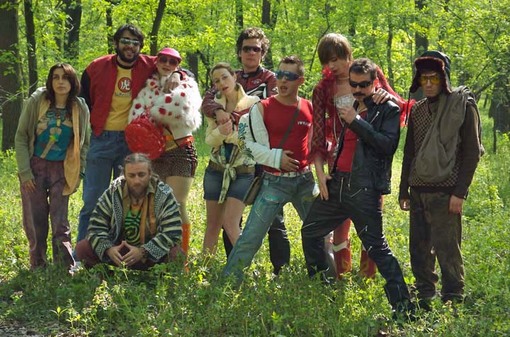
Serbian porno gang takes show on the road

“The Life and Death of a Porno Gang” is available on DVD and Blu-ray from Synapse films.

Cinema, that traditionally aristocratic medium, has always found unlikely ways to commiserate with the working man and the poor. In America, King Vidor’s “The Crowd” showed us a man trapped on the treadmill of lower middle class survival in the big city. A few years later, Frank Borzage’s “Man’s Castle” gave us Spencer Tracy as a street hustler who learns that Depression-era struggle is no excuse to turn his back on a chance at family life. It’s the same in every country, every era: Societies that place the bulk of their economic burden upon the low man’s shoulders often send that man scrambling in the opposite direction of happiness, in the name of happiness. A random spin of the world cinema wheel will turn up great directors whose finest work touches on this phenomenon: Ken Loach, Ousmane Sembene, the Dardenne brothers, Ulrich Seidl, the Italian neorealists, the blacklisted Americans, and so on.

December 14, 2012

Margaret Mitchell: Her own brand of rebel

PBS’s “American Masters” presents “Margaret Mitchell: American Rebel” and “Harper Lee: Hey, Boo,” back-to-back documentaries about two white American women who won Pulitzer Prizes for their first and only best-selling novels, Monday, April 2 beginning at 9 p.m. (Check local listings.) Both will be available via PBS On Demand and are currently on DVD.

If you’re hoping for the whirling of petticoats, a colorful Virginia reel and the coquettish fluttering of lashes on the old plantation, you might be surprised by American Master’s “Margaret Mitchell: American Rebel.” By rebel, director Pamela Roberts doesn’t just mean Johnny Reb. On the other hand, if you hope that the author of Gone With the Wind is burning in hell for conjuring up a romantic fantasy of slavery and antebellum plantation life, you might be surprised. Mitchell was a wild young woman who did some shocking dances in her day, but eventually settled down and did good in ways that benefited the citizens of her hometown Atlanta and beyond.

What could be rebellious about a woman who romanticized a plantation lifestyle in which women were raised to be pretty ornaments and good wives in her 1936 novel of the Old South, “a civilization gone with the wind…”? Today, millions of women still live out their Scarlett O’Hara fantasies at their weddings with hoop-skirted bridal gowns, and through Civil War or Southern ball re-enactments. Not so many line up to portray slaves. The documentary uses many clips from the blockbuster 1939 movie, contrasted with photographs of Mitchell in her own wild youth. Even as one might enjoy the sweeping romance of the motion picture epic and attempt to ignore the racism, I suspect most people are more politically sympathetic with Alice Randall’s 2001 parody The Wind Done Gone, which re-imagined Mitchell’s story from the slaves’ point of view.

December 14, 2012

Cinema O’Paradiso: Stella Days and Hollywood nights

“Stella Days” (87 minutes) available via iTunes, VuDu, Amazon Instant Video and most other VOD providers (check your local listings). It is also playing in limited theatrical release.

by Jeff Shannon

It seems somehow belittling to pigeon-hole the ever-so-Irish “Stella Days” as a comedy/drama or (saints forgive us!) as that dubious hybrid known as “dramedy.” It is, more accurately, a heartfelt, thematically ambitious exploration of fragile faith confronted by rigid dogma, and its dramatic substance is leavened by the kind of wry, tenacious good humor that has defined the Irish character for centuries.

That low-key humor prevails throughout the film but is most evident in the opening scenes, as when Father Daniel Barry (Martin Sheen) arrives at the bedside of an old, dying woman on the outskirts of Borrisokane, the tiny town in North Tipperary that is home to Barry’s parish. He’s there to deliver last rites (not for the first time), but the old lady’s as tenacious as a potato in barren Irish soil, and all she wants is to hear Father Barry’s mellifluous Latin prayer so she can sleep peacefully and live to see another day.

“The last rites are not medicine,” he tells her with fond familiarity, knowing he’ll eventually return to deliver last rites for real. “Doctor Brady’s your man for that.”

“Oh, he could never cure me,” says Peggy. “I don’t know what I’ll do when you go back to Rome.”

There lies the rub: Father Barry doesn’t know it yet, but he won’t be returning to his post at the Vatican any time soon. He’s a Catholic scholar, an intellectual desperately eager to finish his thesis on St. John at the Cross. He’s far less rigid in his thinking than his uptight superiors, most notably Bishop Hegarty (Tom Hickey), a stern traditionalist who finds it necessary to remind Father Barry that “being an Irish parish priest is not a penance.”

December 14, 2012

The Ten Best Larry Sanders episodes

August 15 marks the 20th anniversary of the debut of “The Larry Sanders Show,” episodes of which are available on Netflix Instant, Amazon Instant, iTunes, and DVD. This is the first part of Edward Copeland’s extensive tribute to the show, including interviews with many of those involved in creating one of the best-loved comedies in television history.

by Edward Copeland

Over the course of my lifetime, I’ve watched a lot of movies — an old computer contained a program with an editable database of titles and allowed for the addition of new films. Back when I used that PC, my total hovered in the thousands. “The Larry Sanders Show” produced a mere 89 episodes in its six season run from 1992-1998 that began 20 years ago tonight on HBO. “I know it sounds cliché but — honest to God — it seems like it was just about a week ago. It’s so odd that it’s 20 years,” Jeffrey Tambor said in a telephone interview.

Despite the vast disparity between the quantity of films I’ve viewed and “Larry Sanders” episodes, when I recently took part in The House Next Door’s “If I Had a Sight & Sound Film Ballot” series, I found it far easier to prune those pictures down to my ten favorites than I did when I applied the same task to “Larry Sanders” episodes. (Picking a clip or two from each show proved even more difficult as inevitably I’d want to include the entire half-hour.) Three or four episodes I knew had to be on the list, but then it got tough. I considered making a list of the best episode for each character such as the best Brian episode (“Putting the ‘Gay’ Back in Litigation”), the best Beverly (“Would You Do Me a Favor?”), the best Phil (“Headwriter”), etc. With all the priceless episodes centering on Hank and Artie, I imagined those two characters conceivably filling all ten spots alone.

A series that broke as much ground as “The Larry Sanders Show” deserves a grander tribute to mark the two decades since its birth than just a recounting of a handful of episodes — and I had that intention. Unfortunately, my physical limitations and time constraints thwarted my ambitions. Rest assured though, that salute shall be forthcoming (MESSAGE TO BOB ODENKIRK: YOU STILL CAN TAKE PART NOW). As with any list, I’m certain my fellow “Larry Sanders” fans shall express outrage at my omissions (I already hear the shouts of “Where is the one with Carol Burnett and the spiders?” “No ‘Hank’s Sex Tape!’ Hey now!”). Believe me, I’m as livid as you are and may join in the comments to give myself the thorough tongue-lashing I so richly deserve for these unforgivable exclusions. First, though, I’m going to fix myself a Salty Dog, using Artie’s recipe of course. I want to be able to grab those olives, not fish for them. So, for good or ill, I submit my selections for my ten favorite episodes of “The Larry Sanders Show.” Since bestowing ranks only leads to more trouble, I present these ten in chronological order:

December 14, 2012

Chaz Bono: On Being and Becomingness

“Becoming Chaz” airs Sunday, November 27 6PM ET/PT on OWN before the 8 p.m. premiere of its follow-up, “Being Chaz.”

Not too long ago, I was planning to marry a woman who was born a man, so Chaz Bono’s story is a bit familiar. It’s pretty simple, really, and you’ve heard it a thousand times by now: A transgender person feels trapped in the “wrong” body. Just for acting upon this lifelong impulse by changing their physical characteristics to better represent their true selves, transpeople are being assaulted and murdered in shameful numbers. The movie “Boys Don’t Cry” might have softened a few bigoted hearts around this issue, but the killing continues worldwide.

Chaz, born Chastity Bono to celebrity couple Sonny and Cher, could have lived through his transition from female to male in private, but it’s clear in the documentary “Becoming Chaz” that he knew the true cost of invisibility in such a transphobic world. He let the cameras roll during some unflattering, raw moments–the idea being that this story shouldn’t idealize his experience any more than it should exploit it for freak show appeal. The aim is to show that Chaz, the man, is as real as you and I, not an illusion to be brought off. It’s hard to imagine that the killers out there might be moved by all this candor, but those whose indifference or unawareness helps perpetuate discrimination should at least get a healthy jolt of recognition. “Becoming Chaz” is as much about the kind-faced “Dancing with the Stars” contestant’s relationship as it is about his metamorphosis. That was my way into the film: I know a little bit about being “the partner.”

December 14, 2012

“How to Fold a Flag”: 12 times,for each of a soldier’s virtues

Beginning a new column devoted to films available via Video on Demand in all its forms.

● “How to Fold a Flag”● “We Are the Night”

To say that Javorn Drummond, Jon Powers, Michael Goss and Stuart Wilf come from different walks of life is something of an understatement. If they hadn’t served together in Iraq in 2003-04, they never would’ve met. Now they’re back home, separated by geography, uneasy peace and haunting memories of what they saw and did during a war they determined to be pointless. They might meet again someday — or not — but they share a bond of life, death and military service that they’ll take to their graves.

These are the guys we got to know in “Gunner Palace,” the superb 2005 documentary co-directed by the husband-and-wife team of Michael Tucker and Petra Epperlein. They defended America as soldiers in the Army’s 2/3 Field Artillery Division, never quite sure what they were killing or dying for. There was a fifth “star” in the film, Ben Colgan, who sacrificed his elite Delta Forces post to join the artillery unit in Baghdad. Then he sacrificed his life to an IED.

December 14, 2012

The Electric Dancing of War Babies

Playing in theaters nationwide Thursday, August 4, 2011. Details here.

by Steven Boone

“The Electric Daisy Carnival Experience” captures a dance music scene I tend to find noisy and vapid. But that’s me. If you’re a big fan of DJ-based acts like 12th Planet, Major Lazer, Moby and will.i.am, or just a true devotee of the rave scene, this film is immersive, passionate about its subject and visually striking. Director Kevin Kerslake seems to have as many cameras on hand as the Beastie Boys handed out to concertgoers in their gonzo 2006 music doc “Awesome; I F—-n Shot That!”

It helps that Kerslake is a veteran music video director (R.E.M., Nirvana) whose career is probably older than most of the screaming kids in the crowd. He shows no restraint in dropping the camera deep into the mob like a performer into a mosh pit but doesn’t let the chaos take over. It also helps that, right up front, like Michael Bay showing us a Victoria’s Secret derriere in 3-D at the start of his last Transformers movie, Kerslake crams as many shots of unbelievably gorgeous girls doing cartwheels in clown makeup and lingerie as mathematically possible.

December 14, 2012

Tim and Eric Mediocre Movie, Great Job!

“Tim and Eric’s Billion Dollar Movie” is available for streaming/download on iTunes, Amazon Instant, Vudu and YouTube. In theaters March 2.

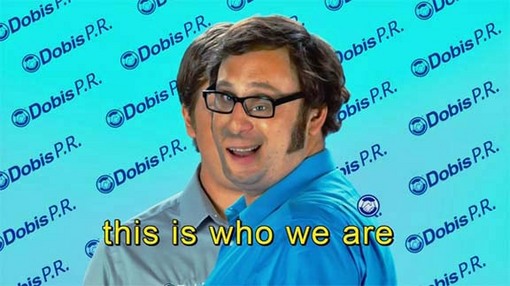
“Tim and Eric’s Billion Dollar Movie” is a lot like “Tim and Eric’s Awesome Show, Great Job!.” They’re both experimental video art posing as sketch comedy. In them you can see DNA from Ernie Kovacs, John Waters, the Kuchar brothers, Robert Downey, Sr., Tom Rubnitz, early Beck music videos, Damon Packard, Aqua Teen Hunger Force (and every other Adult Swim psychotic episode) and Harmony Korine, to name just a random few. But it’s likely that actor-writer-directors Tim Heidecker and Eric Wareheim took inspiration from none of these freaks.

The duo’s work seems to flow directly from three sources: Bad corporate promotional and instructional videos, absurd local TV programming and assaultive blockbuster films. Their collages of chopped-and-screwed sounds with spastic motion graphics and sloppy green screen don’t seem much different (in effect, if not production values) from what’s on cable any given Sunday. It’s just that they put unattractive, demented-seeming people in front of the green screen instead of the usual telegenic emoters. They spout nonsense where platitudes and corporate messages usually go. When celebrities appear on the show, they flub and stutter like robot hologram versions of themselves. It’s as if the show’s editor was a spam bot.

Whether any of it is funny is almost beside the point. The creeping surrealism often takes away your ability to blink, especially, I suspect, when, like me, you have no history with the show.

December 14, 2012

Puppet Nazis vs. the Grindhouse Gang!

● Jackboots on Whitehall (DVD/VOD/Digital cable July 26)

● American Grindhouse (DVD/Hulu July 26)

by Steven Boone

The animated comedy “Jackboots on Whitehall” does its best to tweak every British stiff-upper-lip stereotype ever perpetuated in film and popular culture since World War II. This satire employs puppet animation techniques familiar from “Team America: World Police” and classic George Pal puppetoons, but with exquisite production design more akin to Wes Anderson’s stop-motion “Fantastic Mr. Fox.” Instead of marionettes or stop-motion, however, filmmakers Edward and Rory McHenry employ animatronic dolls enhanced with CGI.

The period detail in this account of Hitler’s alt-reality occupation of London is stunning: a convincing re-creation of Whitehall, the road whose major landmarks comprise the seat of British government; the airship Hindenburg, which, in this reality, never blew up and now serves as a Nazi attack vehicle; Hadrian’s Wall and the hills of Scotland; vintage fighter planes, palaces, tanks, luxury cars… Equally meticulous is the costuming, from Winston Churchill’s pinstriped suit to the Raj soldiers’ blue turbans.

While the McHenry brothers’ puppets aren’t articulated beyond some binary limb and neck movements, they are sculpted with such expressive character it’s easy to suspend disbelief. Exuberant character voices help. Timothy Spall as a gruff Churchill, Alan Cumming as a fey Hitler and Tom Wilkinson as a simpering Goebbels play it lip-smackingly broad. Richard E. Grant portrays a tightly wound priest so perpetually furious that its possible he gave his entire performance through clenched teeth. Ewan McGregor lends the unlikely farm boy hero some warmth. Along the way, some downright filthy jokes fly by almost subliminally, under kids’ radar (including a visual joke last seen in “Boogie Nights”). In fact, so much of the humor is adult, whether in raunchiness or complexity, that Jackboots on Whitehall is less a family film than one for liberal parents and their precocious teens. The DVD includes a fascinating behind-the-scenes documentary that details just how much love went into this handcrafted epic.

December 14, 2012

Sleepless Night: Opening up a sixpack of Whup-Ass

“Sleepless Night” (103 minutes) is available on demand through various cable systems,

Vudu, iTunes and Amazon Instant, starting April 17th. It will be theatrically released in New York and Austin, Texas on May 11, 2012.

by Odie Henderson

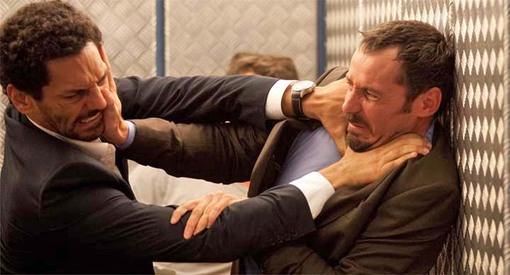
A stolen bag of cocaine, a kidnapped kid, corrupt cops, a shaky camera and a dance club the size of a Super Walmart configure Frederic Jardin’s “Sleepless Night,” a frenetic French action film that will either get your heart or your head pounding. This is a relentless genre exercise, both exhilarating and exhausting. Its numerous showdown set pieces feature foes in gun battles, foot chases and fisticuffs. Our protagonist uses whatever’s handy to subdue his opponents: People’s noggins get hit with doors, bread, dishes, bullets and the cleanest part of the commode. Gendarmes go from corrupt to virtuous and vice versa, film speeds vary from slow motion to sped up, and narrow escapes coexist with near-misses. With this much activity, sensory overload is all but guaranteed.

Vincent (French comedian Tomer Sisley) is a corrupt cop who begins his day by robbing 10 kilos of cocaine from the henchmen of José Marciano (Serge Riaboukine). Marciano’s godson is shot, but not before Vincent is stabbed and both he and his partner are seen by one of Marciano’s men. Marciano knows who robbed him, and he also knows Vincent’s son, Thomas, would make a great bargaining chip for the return of his yayo. The gangster kidnaps Vincent’s son and demands the exchange be made at Marciano’s restaurant-slash-dance club, Le Tarmac.

December 14, 2012
subscribe icon

The best movie reviews, in your inbox