Digital dilemmas: You want pixels with that?

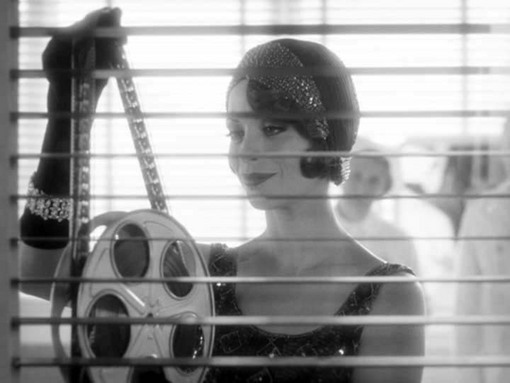
Yeah, you saw “The Artist” so you know it was a big deal when sound technology took over the movies. (Except that really you don’t, because “The Artist” is only interested in the arrival of talkies as an obstacle to its love story. You’ll learn more about the ramifications of the transition from film to video in pornography from P.T. Anderson’s “Boogie Nights” than you will about the technological and aesthetic consequences of the shift from silents to sound in “The Artist.”) David Bordwell concludes his awe-inspiring, in-depth series on “Pandora’s digital box: From films to files” with some observations about the myths, realities and possibilities of digital projection (something the vast majority of moviegoers have yet to notice, I’d bet, although it’s having a huge effect on distribution and exhibition) and finds a fantastic quote from “hacker historian” George Dyson:

“A Pixar movie is just a very large number, sitting idle on a disc.”

That’s not to diss Pixar, it’s just a vivid statement of digital reality.

The ongoing switch from analog to digital movie projection is indeed a big deal, but I was struck by this observation from DB:

December 14, 2012

On love and work: Alexis Tioseco and Nika Bohinc

Film critics and journalists Alexis Tioseco and Nika Bohinc were robbed and killed at their home in Quezon City, Manila, Philippines, earlier this week. David Hudson has collected writings and reminiscences by and about the couple at The Auteurs Daily. I wasn’t familiar with either of the young writers — he, a Canadian-Filipino critic and editor; she, a Slovenian film journalist; both champions of Southeast Asian cinema. But I was moved by the belated discovery of a piece Alexis wrote to Nika in Rogue Magazine last year in which he spoke of his love of Filipino film and his love for her. It’s called “The Letter I Would Love To Read To You In Person,” and it’s a meditation on love and work and doing what one must:

December 14, 2012

Reaching for love above falling dominos

Nearly every frame in this movie is a low-angle shot, looking up in awe and curiosity. At times, we gasp at the complex beauty of galaxies and supernovas. At times we stare closely at expressions of children that seem no less complex, no less beautiful, and no less valuable. At times we look to the sky, hoping to see what our characters see. Terrence Malick’s wondrously abstract “The Tree of Life” has very little dialogue, but is not at all a silent movie.

December 14, 2012

The prom night from Hell

Streaming on Netflix Instant

“Carrie” (1976) was based on standard horror material but became memorable thanks to Brian De Palma’s ability to keep an audience unnerved every step of the way. Think for a moment of the nature of telekinesis, the film’s supernatural gimmick. The ability to mentally transport things is surely not as intriguing or frightening as the gifts of other Stephen King characters, but the director seems to realize that once the public buys it, he can then take liberties and add it to other dimensions related to the protagonist’s fears and obsessions. That’s s what made the picture unsettling. Some of the De Palma’s other films have felt more like exercises in movie craftsmanship (“Body Double,” “Raising Cain,” “Snake Eyes”) but this particular story lent itself particularly well to his usual directorial traits and they felt fresher at this stage of his career.

December 14, 2012

Mister Rogers Goes to the Movies

Why in the world couldn’t we use this thing called television for the

broadcasting of grace through the land? – Mr Rogers

There aren’t many films that have made me cry. “Brokeback Mountain” prickled my eyes. “Toy Story 2” caused a lone tear to escape my eyelids and creep across my cheek. “Dear Zachary” made me discreetly weep with silent despair. And two PBS documentaries about a children’s TV presenter left me red-eyed and runny-nosed, my face swollen and my chest shaking, as I sat clutching Kleenex and trying not to dehydrate.

December 14, 2012

Waiting and waiting for Godot

The prospect of filming “Waiting for Godot” has always fascinated me. Can film do it any justice? Better yet, will it even translate well on film? I believe it could work. However, it depends on who adapts the screen adaptation. I’m not talking about a re-imagining but a direct adaptation. I cannot see anything being changed in “Waiting for Godot” because if anything is changed it will not be Samuel Beckett’s “Waiting for Godot” but [Director’s Name]’s “Waiting for Godot.”

Still, if nothing is changed, it still doesn’t mean it will work as a motion picture. Some of the greatest works of literature have been adapted to the silver screen with a faithful structure and direct character quotations, only to fail miserably. Take Henry James’ “The Europeans” for example. The novel is a perfectly enriched with interesting characters trying to adapt in a sudden clash of cultures.

December 14, 2012

My Life Without Me

After discovering that a cancer will take her life within a few months, Ann, a young 23 years-old, makes two important decisions: to hide the disease from everyone (including her husband and their two young daughters) and to draw up a list of things she wants to do before her death – and her wishes include “making love to another man” and “causing someone to fall for me.” This is the point at which “My Life Without Me,” directed and written by Isabel Coixet, risks scaring away its viewers: the attitudes of Ann show, yes, selfishness and immaturity.

December 14, 2012

Man as a lesser species

One of my earliest and most memorable movie going experiences was Franklin Schaffner’s 1968’s “Planet of the Apes”. It was presented in my grade school’s Cine Club (sort of a small film festival that played one different, semi-recent movie every Saturday during a period of about a month). For weeks prior to the showing I was mesmerized by the publicity artwork which depicted a caged Charlton Heston being repressed by a gorilla. As an eight year old the movie originally struck me purely as a horror piece but it is the other “little things” that still compel me to write about it after all these years.

What’s more, I believe “Planet of the Apes” with all of its different incarnations: original classic, sequels, remakes and TV adaptations, makes for a wonderful example of cinematic “dos and don’ts” At a glance the first entry in the series may seem like just another monster movie but this is hardly the case. It’s too bad neither the majority of the filmmakers involved in the sequels, nor Tim Burton in his remake, were ever able to figure this out.

December 14, 2012

Remembering Bollywood’s Beloved Uncle

Every family has that playful uncle loved for his cuddly silliness. He is that uncle who is a few syllables beyond eccentric, who does not quite follow the rules of appropriate conduct. Kids love him while his peers look down on him. For Bollywood cinema, that beloved uncle is one of Bollywood’s most loved ensemble pictures, Manmohan Desai’s “Amar Akbar Anthony” (1977). It is easily one of the most beloved of all Bollywood films. It is a long melodrama, an action movie, a screwball comedy, a romance, a con film, a religious devotion, and, of course, a musical.

December 14, 2012

Procrastinating the Apocalypse

I have a friend who promised himself over a decade ago never to be at the service of his career, and rather, that his career should be at his service. The result is that his wife left him, his family looks down on him, he earns a fraction of what his peers earn–a fraction of what his aptitude would dictate (I think he’s a genius). He takes most of his jobs on contract, spanning very short periods of time. And, he is one of the happiest, most calm people I know; at least he seems content. In contrast, J.C. Chandor’s “Margin Call” (2011) is the story of a group of high-powered bankers getting set to lose their jobs, and perhaps more.

December 14, 2012

And life goes on as planned

Whenever I saw a plastic bag, a mixed feeling of benevolence and mild annoyance used to bubble up within me. When not neatly stacked by the cashier in a store or filled with stuff, they were usually flapping in the wind making unnecessary noises or worse, trailing in the gutter or sidewalk, being useless. Their life as intended was over, but they seemed oblivious.

These feeling changed after I first read the novel “Never Let Me Go” by Kazuo Ishiguro, which in its almost-casual prose and easy pace, threaded me through the legendary grounds of Hailsham and the damp English countryside with Ruth, Tommy, and Kathy. Along the way I sat beside the girls while they bonded, and stood beside the boys while they yelled. Throughout their lives, I got to know these three people, and they became real to me. By the time the book completed, so had they, but I was not.

December 14, 2012

How to Win an Academy Award

The Academy Award winners for the past thirty years have followed consistent molds, primarily in the categories of Best Actress, Best Actor, and Best Picture. It is a very simple set of templates that I will explain with excessive evidence. This is not to say that the Academy Awards are a conspiracy run by some secret society, although that idea would be quite fun. Rather, at the very least, there is a subtext to American culture that plays out in the ideas and ideals in American cinema, and it plays out consistently. At the very least, I’m illustrating some unwritten ideals in American culture. Whether or not they are healthy or corrupt, they are there in us. So, “Best Picture” is not a great movie; rather, it is a great movie that fulfills the mold.

December 14, 2012

“Zodiac”: Not your usual serial killer movie

With films like “Zodiac” (2007) David Fincher has become Hollywood’s serial-killer specialist and yet his entries from that genre seem to have more in common with “The Insider” than with “Psycho” or “The Silence of the Lambs” He shows a great fascination with the details surrounding each case, than with their heroes and villains. His approach is usually just as meticulous when inspired by fictional works (“Seven”, “The Girl with the Dragon Tattoo”) as by real-life events. Perhaps it is Oliver Stone’s “JFK” that this film most resembles; obsession is at both their cores.

December 14, 2012

Through a swan, darkly

Mirrors and reflections have always been an obsession for filmmakers from all over the world – something that came as a result of the wealth of symbolism that they inspire, of course, but also of the psychological development all of us go through in order to recognize ourselves as individuals. (That led, for instance, to Jean-Louis Baudry’s brilliant analogy of the film spectator as someone regressing to the “Mirror Stage” described by Lacan). From Buñuel to Hitchcock and from Fritz Lang to Tarkovsky, directors from different eras and different styles have used doubles as a thematic basis of one or more of their works — but perhaps it has seldom been used so intensely and organically as in Darren Aronofsky’s “Black Swan.”

December 14, 2012

With great power, comes great responsibility

“With great power, comes great responsibility.” How many times have we superhero fans heard this line, let alone understand its implications? Do we really take to heart how much sacrifice such heroism involves, or comprehend what would be at stake? Superhero films tend to glorify ability over altruism. That is after all the main reason why we flock to the genre, to see amazing sights never seen before. But one film is special in how it focuses on the gravity of selflessness in spite of such might. And it does so not by showcasing its hero’s greatness, but his ordinariness. It’s Sam Raimi’s “Spider-Man 2.”

December 14, 2012

Whip Whitaker drinks because he drinks

Robert Zemeckis’ new film “Flight” (2012) returns us to the terrain of live action after his three consecutive animated films (two of which were happy movies about Christmas). Here, he makes it clear from the very first scene that this is a far edgier Zemeckis. It is far more graphic and far more emotional than anything we have previously seen from him. The result is on the outside a big budget public service announcement, while on the inside, a film far more complicated than it seems.

December 14, 2012

The Pursuit of Powerlessness

One man. Three acts. Three stories. First, he is an aggressive corporate manager, racing against seconds and minutes to do his work and live his life. Second, he is a quiet man in a peaceful land, where time moves in seasons and years. Third, he is a bewildered man at home, where time has slipped passed him, making him miss the most important events of his life, including his own death. This is Robert Zemeckis’ great “Cast Away” (2000). If this were a foreign language film or an independent film with a no-name cast, I am sure it would have received tremendous acclaim. As an American film by a major American director featuring two powerhouse actors (Tom Hanks and Helen Hunt), however, it has been left underrated.

December 14, 2012

Wael Khairy of Cairo, Egypt on “Monster”

I was born in London on February the 29th (leap year) 11 minutes before my twin brother. After birth, I stayed in the UK for five years and then moved to my home country, Egypt. I’ve been living in Cairo ever since.

My passion for cinema started at a very young age when my father gave me an old video cassette of “Jaws” as a birthday gift. The viewing of that movie triggered a movie watching frenzy and I’ve been reading about film ever since. Many people in Egypt simply know me for my film collection for it includes hundreds of titles (which may be normal elsewhere yet is very uncommon among Egyptians).

December 14, 2012

The inspiring 1979 treasure “Breaking Away”

“Breaking Away” is a movie about four working class friends from a college town who are better know as “The Cutters” a term for the stone quarry workers from town who never got to go to college, and how cycling becomes their unexpected ticket into bigger and better things.

It is populated with original characters who feel completely real, they all have their ambitions, their fears and their regrets which are hardly unlike ours. Each of their numerous idiosyncrasies only serve to make them all the more endearing.

December 14, 2012

Running from your memories

Every couple of years I stumble upon a film that transcends its traditional entertainment purposes and goes for something more divine, ambitious and philosophical. When a film like this comes along, it reassures me that film is indeed the greatest art form of our time. Movies that had that awe-inspiring effect on me include: “Last Year At Marienbad”, “The Exterminating Angel”, “Persona”, “2001: A Space Odyssey”, “Dark City”, “Enter the Void”, “The Thin Red Line”, “Eyes Wide Shut” and “Synecdoche, New York”. I like to call them life-changers.

December 14, 2012
subscribe icon

The best movie reviews, in your inbox