Hey, Mr. Fox: Who’s the audience? Who cares?

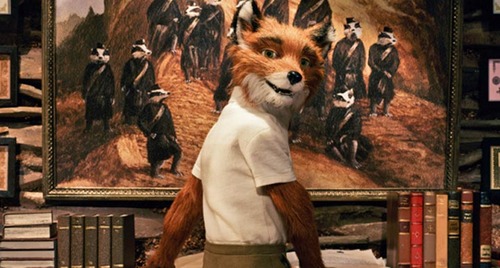
Without making a big deal of it, New York Times critic A.O. Scott slyly slips several sharp observations about the role of movie critics into this paragraph from his review of “The Fantastic Mr. Fox”:

Is it is a movie for children? This inevitable question depends on the assumption that children have uniform tastes and expectations. How can that be? And besides, the point of everything [director Wes] Anderson has ever done is that truth and beauty reside in the odd, the mismatched, the idiosyncratic. He makes that point in ways that are sometimes touching, sometimes annoying, but usually worth arguing about. Not everyone will like “Fantastic Mr. Fox”; and if everyone did it, would not be nearly as interesting as it is. There are some children — some people — who will embrace it with a special, strange intensity, as if it had been made for them alone.

December 14, 2012

Rio Bravo: The superhero movie

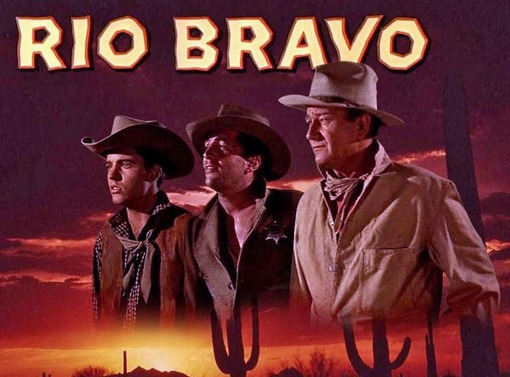
John T. Chance is an enforcer of justice. He doesn’t wear a cape or a mask; he wears a badge and a hat — the latter a well-worn specimen just like the one Duke Wayne himself wore in John Ford’s Cavalry Trilogy. But just because he’s a towering figure and a natural-born leader, the kind of authoritative moral icon ordinary mortals look to — and look up to — doesn’t mean he’s invulnerable. Even the greatest of heroes age, and Chance has to face the limitations of flesh and blood while still keeping the good citizens of the town, those he has sworn to protect and defend, safe from the greedy and less scrupulous elements who would put themselves above the law.

December 14, 2012

Comments & updates

In case you hadn’t noticed: Comments are working, and some good discussions have been started — annotations to particular Opening Shots and (especially stimulating) various reactions to my diatribes against the Slate writer who bashed “The Searchers” for his own anti-intellectual, anti-“film geek” reasons that have little or nothing to do with the movie. (And will somebody please respond to Kevin’s questions about the character of Debbie?) I’ve set it up so that the newest comments are at the top bottom — like the blog itself (or an e-mail thread). Let me know how that works for you.

I’ve got LOTS of Opening Shots contributions backed up, but not to worry: I plan to work through them for as long as it takes. Some people have written asking if it’s too late to submit something. Hell, no! It will never be too late. Even if everybody else stops sending them in, I’m going to continue indefinitely. This is an inexhaustible subject; I can’t imagine I’ll ever run out of opening shots to think about, write about, and savor.

December 14, 2012

Opening Shots: ‘Cutter’s Way’

From Robert Horton, film critic, The Herald, Everett, WA:

How technical do you want to get about “opening shot”? Is the opening shot literally the very first thing that appears onscreen? Or is it the first shot proper, the thing that tells the people behind you to stop talking and pay attention? In the 1931 “Dracula,” the former is a wonderfully archaic credits plate with an art-deco bat, accompanied by a scratchy, mood-setting snippet of “Swan Lake” (without that bat and the music the movie that follows would somehow not be the same); the latter is the post-credits shot of a lusciously suggestive Transylvanian crossroads. Both count in “Dracula.”

View image

Most movies now begin with credits over a shot, making it hard to define the beginning-proper (and making it hard for the people behind you to know when to shut up already). The credits play over the opening shot of the 1981 film “Cutter’s Way” (aka “Cutter and Bone”), a film very people have heard of, let alone seen, but which is nevertheless one of the key American films of the 1980s (a crucial film in connecting the post-sixties hangover and the corporate runamuck of the eighties).

View image

The opening shot is dreamlike, stylized, drained of color—quite the opposite of the remainder of the film—and looks dead-center down a warm Santa Barbara street as an Old Spanish Days parade approaches the camera. It begins in black-and-white and bleeds slowly into color, and it’s in slow motion; the odd music by the late great Jack Nitszche seems to be running in slow motion, too. A band marches, banners wave, and front and center is a blonde in a white dress, like a bride, dancing in the Fiesta. Nothing really unusual about a blonde in a small-city parade, but when you watch the movie, you realize that this might be the kind of pretty girl who could end up dropped in a dumpster on a side street in the middle of the night because she made a bad decision about which rich guy to blow.

View image

The camera has watched this, panning finally to accommodate the blonde’s sideways movement. The whole thing has the drowsy long-lens shimmer of midsummer. The blonde has gotten close enough to the camera to pass out of the frame, but as we peer at the people in the distance, now coming into focus, she abruptly passes by again—and as her white ruffled dress rustles by, the image in the background is wiped away and replaced by a whole new shot…if you like, the first shot proper of the story: an exterior, in the magic hour of dusk, of the outside of an unmistakably Southern California hotel.

December 14, 2012

Judd Apatow: When Penis Met Vagina…and the re-invention of romantic comedy

“Forgetting Sarah Marshall”: Kristen Bell and Russell Brand. P to the V.

Excerpt from an Apatowian appreciation I wrote for MSN Movies, covering “Freaks & Geeks” to “The 40-Year-Old Virgin” to “Knocked Up” and “Superbad” and “Forgetting Sarah Marshall” (with the inconspicuous omission of “Drillbit Taylor”):

Writer/director/producer Judd Apatow, the man Entertainment Weekly recently crowned the ‘Smartest Person in Hollywood,’ has made a solemn promise to put a penis — at least one penis — into every movie he makes from now on. He’s slipped penises into his pictures before, of course: all those obsessive-compulsive drawings in “Superbad,” his own on comically disconcerting display in “Walk Hard: The Dewey Cox Story,” and Jason Segel’s for a humiliating breakup in “Forgetting Sarah Marshall.” Sometimes, too, his films include breasts and vaginas. And there are perfectly good reasons for that. Not the least of which is that all genitalia and externally visible glands are funny.

December 14, 2012

Opening Shots: The 400 Blows

From Gavin Breeden, Charlotte, NC:

When I think of great opening shots, my mind quickly goes to Francios Truffaut’s 1959 masterpiece, “Les Quatre Cents Coups” (aka “The 400 Blows”). I may have to break the rules a bit here and consider the entire opening credits sequence rather than the first shot though I think Truffaut would approve since he broke many cinematic conventions of his day with this film.

December 14, 2012

Ebertfest 2008: Springing forward

Chaz Ebert introduces Timothy Spall (Rosencrantz) and Rufus Sewell (Fortinbras), both in town with the opening night attraction, a full-length (238-minute) 70 mm print of Kenneth Branagh’s 1996 film of William Shakespeare’s “Hamlet.” (photos by jim emerson)

What is Ebertfest without Ebert? Fest? Kicking off the 10th Anniversary edition of Roger Ebert’s (formerly Overlooked) Film Festival, Chaz Ebert passed along her husband’s sentiments that, today, he was in the wrong place at the wrong time — that is, in a bed in Chicago instead of in at the Virginia Theatrer in Urbana-Champaign. But, she reported him saying, you could also say the same thing about the day he tripped on the carpet and fractured his hip. Nobody’s giving up hope, though. Chaz said they were consulting with doctors day by day and that she wouldn’t be surprised if Roger wound up making it here after all before the fest is through. [UPDATE: The next day Roger and his doctors decided that making the trip wasn’t worth the health risk.}

L to R (I hope): Jeff Nichols (“Shotgun Stories”), John Peterson (“The Real Dirt on Farmer John”), Eran Kolirin (“The Band’s Visit”), Chaz Ebert, Timothy Spall and Rufus Sewell (“Hamlet”), Joan Cohl and Hannah Fisher (“Citizen Kohl”), William J. Erfuth and Joseph Greco and Adam Hammel (“Canvas”).

Last year Ebertfest seemed to improve his rate of recovery exponentially, so we can only hope he’ll make it to town. (For a sample of good wishes see the comments at his blog, Roger Ebert’s Journal.)

So, the festival is just getting started tonight, but already I’ve learned some things just from talking to people and reading the program. For example:

December 14, 2012

A contrarian music video

… mostly about movies and music — and with a shout-out to Scanners in the middle! The band is lo-fi is sci-fi, the song is “The Script You Wrote is Terrible” (great line: “The script you wrote is terrible/But I like you anyway”), and the video is clever and funny and magnificently deadpan (as is the one for “March to the Sky”). It would make a good Opening Shot contribution. After all, it’s just one shot. I love the way it starts, with a white screen — and just a little piece of black (the edge of the white background) in the upper left corner. Perfect.

“Hi-fi” version here.

Thanks to Mike for passing this along.

December 14, 2012

Opening Shots: ‘Superman,’ ‘Lost in Translation,’ more

View image: The opening curtain.

View image: A 1936 comic book.

View image: A child reads the comic book.

From Mark Roberts, Calgary, Alberta, Canada:

I am such a fan of movie opening moments (sounds strange I know, but a great opening moment is something I really treasure), that I had to respond to your call for favourite moments (and I’m going to have to see “Barry Lyndon” now too…). They’re all pretty literal… nothing terribly deep in terms of artistic impression… but that shouldn’t disqualify a great opening.

“Superman”

I always get caught up by the opening moments. As the child narrator speaks about the Daily Planet, the curtains pull back to reveal the first issue of “Action Comics,” moving to the “live” shot of the Daily Planet, and then into space and the opening credits. John William’s score draws us through the open curtains and into the other world of the movie. I still get a little leap in my chest when the theme reaches its first crescendo and the title “Superman” leaps into view.

December 14, 2012

Mad Men Mania: Delving deep into some ofthe best movies of the last few years

Please join me and fellow “Mad Men” video essayists Serena Bramble, Kevin B. Lee and Deborah Lipp over at IndieWire’s Press Play blog for a fascinating (if I say so myself) Audiovisualcy roundtable about the show and why it’s such a natural for video-based exploration. I can’t think of another series that offers a fully formed, cinematically sophisticated movie every episode, week after week. A taste of some of the things we get into:

Kevin: (on my video, ” The Long Walk”): As one clip cuts to another, I feel a conversation beginning to emerge between them, which you are orchestrating. I start to feel like I am watching the show through another set of eyes. To do this without any explicit commentary, text, elaborate editing or effects, is remarkable.

In fact, I think it’s because of this non-invasive approach that the viewer can have a special experience. It gives the viewer room to piece together the connections you are making without being told what they are. It’s like playing a puzzle with one’s eyes – a quality that distinguishes Mad Men from most other shows in that it leaves a lot of subtexts for the viewer to piece together on their own. Your video compresses and intensifies that experience.

December 14, 2012

Rob Lowe, Snow White, “Proud Mary” & the Oscars

Lowe does Snow — live!

Oh, and so much more. Here’s the ideal warm-up for Sunday’s Academy Awards festivities: the infamous Allan Carr-produced 1989 Oscar opening number that also features Army Archerd, Merv Griffin, Roy Rogers and Dale Evans, Vincent Price and Coral Browne, Cyd Charisse and Tony Martin, Dorothy Lamour, Alice Faye, Lily Tomlin, and more stars than there are east of Hobart! (Just look at the celebs in the audience trying to conceal their mortification as Snow White touches and bleats to them.) I was just pining for this the other day, and once again YouTube has delivered! This, truly, is the vision of the man behind “Grease,” “Grease 2,” “Can’t Stop the Music” and “Where the Boys are ’84” — all of which he made before the Academy hired him to produce the Oscarcast. No matter what happens Sunday, you can bet it won’t top this, although somehow this mega-production-number almost seems quaint and naive by today’s standards. Almost.

I had forgotten the new “Proud Mary” lyrics they wrote for Rob to sing to Snow (whose voice is more Billie Burke than Adriana Caselotti, if you ask me):

Now you made it big in the movies

Came to Hollywood, learned to play the game

You became a star

Miss Animated Mama

Earned yourself a place in the Walk of Fame

Klieg lights keep on burnin’

Cameras keep on turnin’

Rollin’, rollin’

Keep the cameras rollin’!

They just don’t write ’em like that anymore…

What I wouldn’t give for Ellen Degeneres to begin the show as Snow White and bring on Rob Lowe for a reprise…

(Thanks to Chris for passing this along.)

December 14, 2012

Lunch With David

Hot Blogger and Hot Button colunist David Poland has posted his third, breezy “Lunch With David” vlog over at iKlipz and I think it’s the funniest one yet. This week’s topic: Secrets in Hollywood — who tells ’em and whether they really want anybody to keep ’em. The premise is simple, kind of like an UnCabaret routine (or Johnny LaRue’s Street Beef): one person, one camera, one table. David sits down and tells you whatever’s on his mind about goings on in The Biz, at the box office or behind the scenes. He’s a funny guy (and knows just how to play to the camera for comic effect). David describes the newly launched iKlipz as a kind of MySpace for movie people — in particular, folks who want to distribute their films and videos on the web. So, I went ahead and joined up. (It’s free.) Wanna be my friend? 😉

December 14, 2012

All trails lead to ‘The Searchers’

Ethan Edwards, John Wayne and the ghost of Harry Carey.

I had a favorite lit professor in college, Larry Frank, who said that all of literature could be seen through the looking glass of “Alice’s Adventures in Wonderland.” He made a persuasive case, from Shakespeare to Jane Austen and Emily Bronte. In a beautiful piece about John Ford’s “The Searchers” in the Sunday New York Times, A.O. Scott makes similar connections to Ford’s masterpiece, and particularly the opening and closing shots through the doorway looking out into Monument Valley (where John Wayne’s Ethan Edwards is definitely one of the monuments, solid as a weather-chiseled rock formation but destined to wander forever between the winds — perhaps because he’s too large, too wild, and too peripatetic to be contained within the walls of civilization and family):

Ernest Hemingway once said that all of American literature could be traced back to one book, Mark Twain’s “Huckleberry Finn,” and something similar might be said of American cinema and “The Searchers.” It has become one of those movies that you see, in part, through the movies that came after it and that show traces of its influence. “Apocalypse Now,” “Punch-Drunk Love,” “Kill Bill,” “Brokeback Mountain”: those were the titles that flickered in my consciousness in the final seconds of a recent screening in Cannes of Ford’s masterwork, all because, at crucial moments, they seem to pay homage to that single, signature shot.Scott is a “word guy” — that is, he came to reviewing films from reviewing books. But he gets movies, unlike the abominable Clive James (proponent of the “movies are just the story” theory in last week’s NYT Review of Books).

December 14, 2012

Visit the Official Web Kazakhstan (and America)

View image

Jagshemash! If you are confused about the difference between the fictional Kazakhstan, homeland of Borat Sagdiyev, as portrayed in “Borat: Cultural Learnings of America for Make Benefit Glorious Nation of Kazakhstan” and the former Soviet Socialist Republic in Central Asia, why not visit the Official Web Site of the Ministry of Foreign Affairs of the Republic of Kazakhstan? Here you will find a FAQ (Truth About Kazakhstan) and other helpful resources, from which you will learn that potassium is not even listed among Kazakhstan’s major exports:

Kazakhstan possesses 30 per cent of the world’s proven resources of chromium, 25 per cent of manganese, 19 per cent of lead, 13 per cent of zinc, 10 per cent of copper and 10 per cent of iron. Kazakhstan also possesses about 20 per cent of the world’s uranium resources, with plans to become among the world’s top producers, and contains Central Asia’s largest recoverable coal reserves.Also, if you like America but are confused by the portrayal of the fictional one in “Borat: Cultural Learnings of America for Make Benefit Glorious Nation of Kazakhstan,” you can visit the Official America Web Site and learn about the land of Premier George Walter Bush, where you will discover that “Mainstream Media Reports Inaccurate.” Also, there is this from Imperial Leader Bush: “We have a plan for victory in Iraq…. And I know the people of Montana can count on Conrad Burns to make sure our troops have all that is necessary to do the jobs I’ve asked them to do.” This is the difference between the fiction America and the real one, if you can’t tell. Conrad Burns from Big Sky Country will finally make sure our troops get what they need to do the job Bush has asked told them to do in Iraq! (And wasn’t he the dad on “Diff’rent Strokes,” too? Amazing fellow!)

December 14, 2012

Z is for zed

View image 1. The title of the film and the name of the writer and director. Michael Nyman’s chugging strings and pounding piano build tension and suspense on the soundtrack.

View image 2. Opening shot: The mystery begins. Two children pull a dalmatian (black-and-white spotted dog) toward the ZOO. A guard mans his station, to keep people out or to keep animals in or to direct traffic or for some other reason or reasons. The dog strongly resists being pulled toward the ZOO.

Consider this a kind of expanded “Opening Shots” entry — from the titles sequence of Peter Greenaway’s “A Zed and Two Noughts” (1985), one of the director’s taxonomy films — in a category with “The Falls” (92 mini-bios of people whose names begin with F-A-L-L), “The Draughtsman’s Contract” (twelve architectural drawings), “The Belly of an Architect” (nine months), “Drowning by Numbers” (1-100) — about the ordering and classification of things, including images.

View image 3. A tiger, a striped cat, in a cage with bars, stripes. The feline paces back and forth. On the floor is the head of another black-and-white animal, a zebra, that perhaps provides food for the tiger.

View image 4. Closer view of the above.

There’s a story: Twin brothers Oswald and Oliver Deuce (played by identical twins Brian and Eric Deacon) are shattered when both their wives are killed in a collision with a pregnant swan outside the London Zoo. They become obsessed with death and decay, making time-lapse photographic studies of decomposition, beginning with an apple and continuing through the alphabet to a zebra… and then beyond. They both become sexually involved with Alba Bewick (Andréa Ferréol), the only survivor of the accident, who has lost one leg because of it. The other is later removed for the sake of symmetry.

View image 5. A hand with a counter. Someone appears to be sitting outside the tiger’s cage, counting the number of times it paces from one side of the cell to the other.

View image 6. Wider view of the man with the counter. He is taking notes. There are black-and-white circles of light and shadow within the squares of the cell and the bars.

There also a character named Venus de Milo (Frances Barber, with two arms) and a mysterious, black-clad character called Van Hoyten (Joss Ackland). The film is narrated by the great voice of BBC nature documentaries, David Attenborough.

View image 7. Repetition/continuation of shot #4. Followed by repetition/continuation of #5, close-up of hand with counter, clicking to a symmetrical 676.

View image 8. Repetition/continuation of shot #6. The sounds of a crash and a scream are heard. The man, hearing the sounds, looks up. Glances at the camera?

That’s the skeletal outline. “ZOO” is about ways of processing grief and facing the reality of death, and about photography as a means of recording and preserving the processes of change and decay. It’s also extremely funny (emphasis on “extreme,” in every way), full of visual and verbal puns and puzzles. And it’s a study in mortification (again, in all senses of that word). It is also ravishingly beautiful, in a striking and painterly fashion (photographed by Greenaway’s frequent collaborator, Sacha Vierney, 1919 – 2001). Greenaway’s most recent film, “Nightwatching” (which I unfortunately missed in Toronto), is a deconstruction of Rembrandt’s famous painting, “The Night Watch,” and the murder mystery behind it.

View image 9. The accident. Stripes. Tiger. Woman’s head. White Mercury. Pair of wings. Pair of headlight circles. “Z” for ZOO in background. License plate: 26 (letters in alphabet), B/W (black and white)… Patters upon patterns upon patterns…

At right: The opening of “A Zed & Two Noughts,” by the numbers Some shots are separated by blackouts with film credits on them. A shot or two is left out of the sequence, for the sake of asymmetry…

December 14, 2012

Favorite movies of 2009 movie: The commentary track

The first time I made a year-end list for Scanners, I did it by suggesting double-bills of 2006 films with older films (much like what contributors to The Auteurs did this year). In 2007, I made my first year-end movie, inspired by “L’Eclisse,” as a tribute to the late Michelangelo Antonioni and a commentary on the WGA strike that was happening at the time. Last year, the concept was based on a shot of Hannah Schygulla, Goddess of Cinema, waking up, looking into the camera (in Fatih Akin’s “The Edge of Heaven”) and dreaming fragments of the films on my list.

This year, I’m not quite sure how it came together (see opening title), but I took my cue from my favorite movie of the year, the Coens’ “A Serious Man.” I knew I didn’t want to adhere to any rigid countdown hierarchy this time, but to let the movies converse with themselves through images. I chose the word “conversation” knowing there would be no dialog except at the very beginning and the very end, with the Jefferson Airplane song “Somebody to Love” (recurring element in “A Serious Man”) in between. That gave me approximately 2 minutes and 58 seconds for the montage….

December 14, 2012

Polanski’s Chinatown: A dream analysis

WARNING: Big-time spoilers in the above video.

From the introduction to my fully explicated video, “Chinatown: Frames and Lenses,” at Press Play, Chapter 4 in a week-long series: LIFE’S WORK: THE FILMS OF ROMAN POLANSKI:

Roman Polanski’s “Chinatown” is a Panavision color film noir–a ghost story, really–about flawed vision and the inescapable resurgence of the past, made in 1974 and set in 1937.  Private eye Jake Gittes (Jack Nicholson) thinks he knows what’s going on, but as Noah Cross (John Huston) tells him, “Believe me, you don’t.”  We see what Jake sees, and it’s invariably filtered or blocked–viewed from a distance through binoculars, or from outside through a door or window that obscures a more complete perspective. Photographs–snippets of time recorded on film, one of the tools of the detective trade–are potentially misleading because they don’t–can’t–capture what’s going on outside of the frame, beyond the moment. 

This video montage is a hymn of praise to a film that had a profound effect on me when I first saw it as a 16-year-old in 1974, and that I’ve lived with, haunted, ever since. It’s also an unabashed love poem to the desperate, damaged and determined Mrs. Mulwray (Faye Dunaway). 

Like “close-up,” which I did in 2007, it’s a free-associative critical essay/dream sequence, based on themes and images (and sound and music) from the movie. Although, like a lot of creative pursuits, the process of assembling it (from pieces of film that were already floating around in my head) was largely unconscious, I now (at least in retrospect) think I understand why each fragment is where it is.

So, I thought I’d turn around and look back at “Chinatown” through the lens (or frame or door or window, if you will) of my video essay, using it as a way of translating the film’s images into critical prose. Because, in “Chinatown,” every image is loaded with meanings, associations, resonances. If you’re familiar with the film, you’ll immediately see that this reflection on “Chinatown” isn’t structured chronologically. Scenes, themes, moments and images keep circling back in fragments… not unlike they do in the film, but in a more condensed and less linear form…

December 14, 2012

The lost comedy stylings of Palin & McCain

A comedy thought experiment: You’ve gotta admit, they make it look so easy. Too easy. But they were doing television sketch comedy before SNL and Mad TV and Fox News rediscovered them. Now, as they’re being further exposed to audiences of all persuasions, more and more people are saying: “They were so funny, I may previously have forgotten to laugh!” No longer! We’re in comedy mode!

UPDATE: She’s so quick, I can’t even keep up with her anymore. Now she’s given us new material on her preferred news sources and the Supreme Court! She’s got a million of ’em — and she’ll be here all month! Probably.

Compare and contrast with another famous TV comedy sketch after the jump….

December 14, 2012

LAFCA: There Will Be… more 2007 critics awards

Dillon Freasier (great!) and Daniel Day Lewis (… BIG!) in “There Will Be Blood.”

The Los Angeles Film Critics Association (my former homies) have announced their collective choices for best achievements of 2007 and… well, for now, I’ll just say that I doubt most of them would even be on my short list of runners-up for this year. (I haven’t seen “Sweeney Todd” or “Diving Bell and the Butterfly” yet, though.) I’m glad that some honorees are getting recognition: Milestone Films, Sarah Polley, Glen Hansard and Marketa Irglova (from “Once”: music as dialog/acting), Jack Fisk (to whom I will always be grateful for, among other things, the prom in “Carrie,” the house in “Days of Heaven,” and pulling the lever in “Eraserhead” — yes, that was him), “Persepolis” and “Ratatouille” (tied for best animated feature), Vlad Ivanov (for negotiating the trickiest of roles) and a few others. But I know how misleading these group-ballot things can be. LAFCA’s list does leave the impression that they felt “Blood” (and, perhaps, “The Diving Bell and the Butterfly”) tower the rest of the year’s releases. I wonder if that’s really the overwhelming majority opinion, or if it’s another case of second- or third-choice consensus carrying the day. Too many of these seem like Academy-style picks to me (Most Noticeable Acting, Most Obvious/Intrusive Score, etc.). More about that later on in the month…

UPDATE (12/10/07): LAFCA member Robert Koelher writes to Jeffrey Wells at Hollywood Elsewhere:

“I’ve cited to both Anne Thompson and David Poland the various fictions they’ve written about re. LAFCA’s awards, namely that our pick for ‘TWBB’ had to do with going against National Board of Review (Anne) or the Academy (David). And now you say we were generally flying the contrarian flag. […]

“By a wide margin, LAFCA felt… that ‘There Will Be Blood’ was the best American film of the year. That’s all. No chess work, no calculations, no triangulation — nothing but a matter of taste based on seeing more movies over the year than anybody else.

“And Jeff, the group judgement was based — with perhaps no exceptions, since there was simply no time for most or all of us to view it more than once — on a single viewing of ‘TWBB.’ It’s a great movie on the first viewing.”

[NOTE: In my post I did not surmise that LAFCA was intentionally striking any groupthink contrarian pose. I know from experience that it doesn’t really work that way — and, besides, LAFCA is the first crix group to vote, so what’s to react against? But I wondered about the margin of victory, a legitimate question regarding the results of any balloting or committee decision-making procedure — including the Oscars. Koehler’s letter helps clarify that. I’m glad to know I disagree with some genuine majority sentiments rather than some statistical flukes. I disagreed with some choices when I was a member of the group, too — and I don’t know anyone who didn’t, from time to time. It’s a group of critics, you know….]

The LAFCA 2007 awards:

PICTURE: “There Will Be Blood”

RUNNER-UP: “The Diving Bell and the Butterfly”

DIRECTOR: Paul Thomas Anderson, “There Will Be Blood”

RUNNER-UP: Julian Schnabel, “The Diving Bell and the Butterfly”

ACTOR: Daniel Day-Lewis, “There Will Be Blood”

RUNNER-UP: Frank Langella, “Starting Out in the Evening”

ACTRESS: Marion Cotillard, “La Vie en rose”

RUNNER-UP: Anamaria Marinca, “4 Months, 3 Weeks and 2 Days”

SUPPORTING ACTOR: Vlad Ivanov, “4 Months, 3 Weeks and 2 Days”

RUNNER-UP: Hal Holbrook, “Into the Wild”

SUPPORTING ACTRESS: Amy Ryan, “Gone Baby Gone” and “Before the Devil Knows You’re Dead”

RUNNER-UP: Cate Blanchett, “I’m Not There”

December 14, 2012

Hollywood: Just shut it down

View image “My advice to Hollywood is to shut down….”

MSN Movies received this despairing e-mail regarding my “Open Letter to Hollywood” piece. I’m not sure what to say, but I thought I’d share it as the cri de coeur of one disillusioned man, and a reminder of the chasm that has always existed between art and commerce in Tinseltown — but a canyon that is occasionally bridged:

I was recently at a bar north of Boston, and discovered that the bartender was attending Emerson College, studying film production. He was interested in pursuing a career as a DP and eventually a director, and I asked him what kind of films he viewed in his program, mentioning such names as Fellini, Bergman, Kurosawa, Kubrick, the old great studio system directors such as Hawks, Huston, Cukor, etc. He said that he almost never watched such films, at least not as part of a class, and had only marginal curiosity about their work. He was far more interested in the technical [side] of film and the marketing aspects of the industry. He stated he understood the reputation of all of those people (although he had never heard of George Cukor), but his professors didn’t stress much film history, and he didn’t believe that this old work had much bearing on the reality of the industry today.

I look upon the mainstream films made in the current atmosphere and wonder how many have even a remote chance of standing the test of time. I’ve sat through dozens of viewings of films like “The Maltese Falcon,” “The Quiet Man,” “Who’s Afraid of Virginia Woolf,” “Network,” and none of these films have lost their freshness. “Titanic,” for a while the biggest movie ever, is now ten years old. Does anyone have any interest in it at all anymore, a decade down the line? “Casablanca” is 65 years old. How many Hollywood films made in the last ten years will still generate interest in the years 2062 to 2072?

The film industry as it exists today is no different than any other major corporate enterprise. Corporate enterprises are by nature conservative; their goals are to limit risk exposure and do whatever is the easiest thing within a given business structure. They want to sell you things they know you’ll buy because you’ve bought them already, so the conglomerates that own the studios will keep churning out sequels, franchises, and copycat product until you stop buying, and then they’ll go on to the next thing and bleed that to death.

December 14, 2012
subscribe icon

The best movie reviews, in your inbox