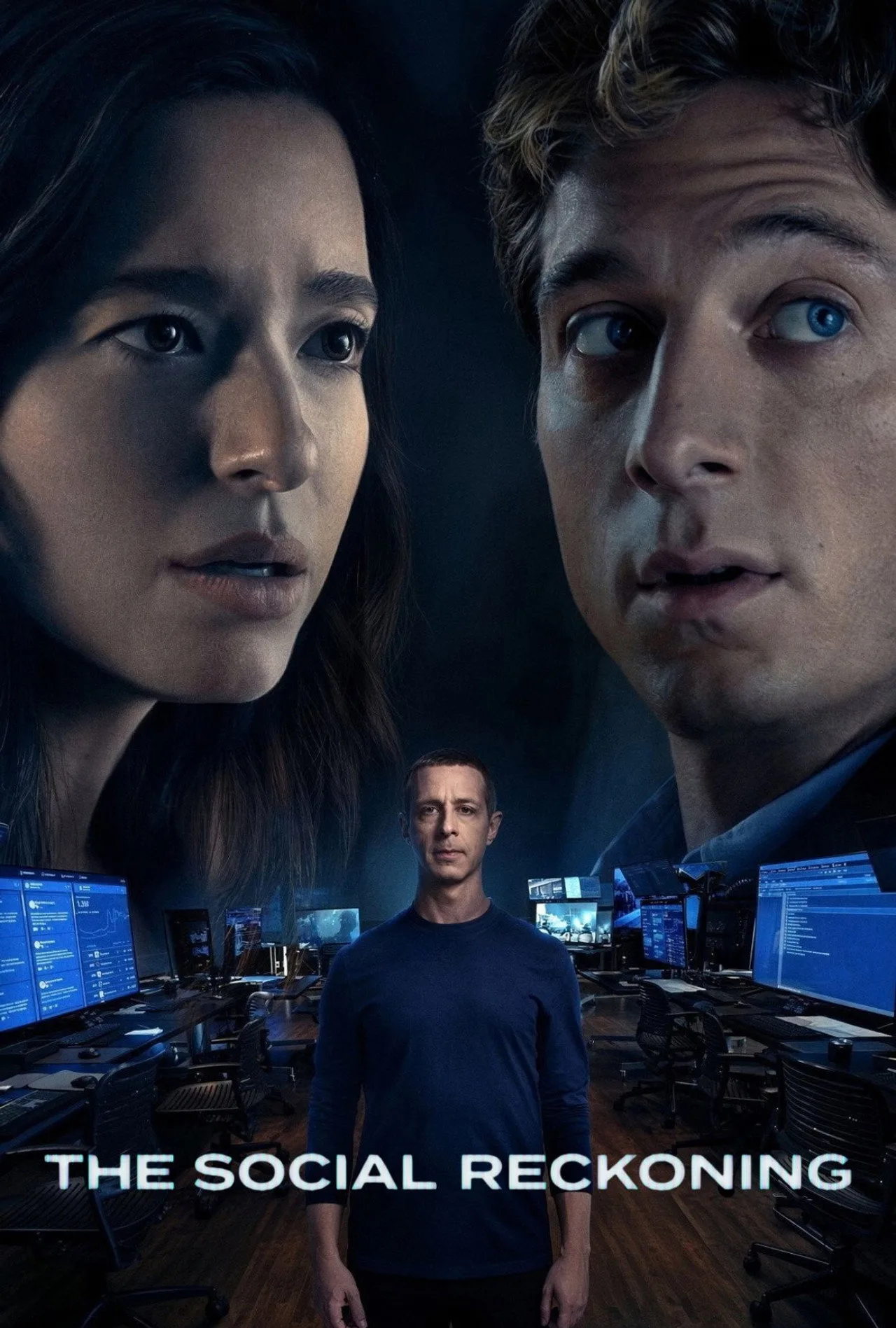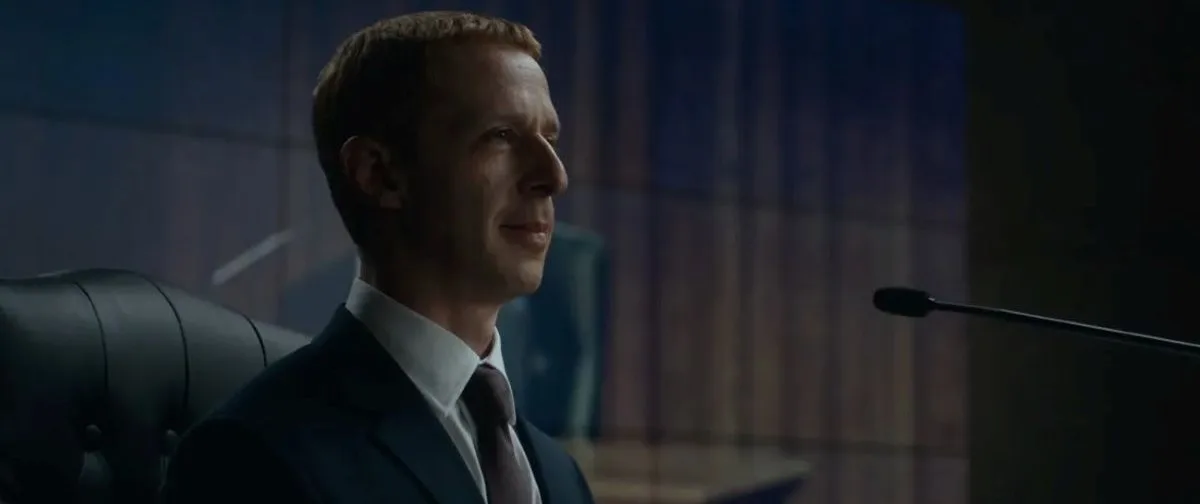
Aaron Sorkin was asking for trouble when he decided to write a second movie about Facebook founder, social media mogul, and fascism enabler Mark Zuckerberg, previously the main character of 2010’s “The Social Network.” David Fincher’s adaptation of Sorkin’s script added mystery, menace, and elegance that wasn’t indicated on the page. That the project was released five years after Facebook’s founding but eight years before the Cambridge Analytica scandal—in which a British consulting firm scraped Facebook data to help elect Donald Trump, leading to Congressional hearings with Zuckerberg as star witness—made Sorkin seem prescient, or at least a keen judge of who really ran society.
It was a given that “The Social Reckoning,” a sequel-in-spirit to “The Social Network” about Facebook’s role in accelerating the fascist takeover of the United States, would get trounced by critics, perhaps mainly because Fincher’s Kubrickian inscrutability and awesome command of directorial craft make him a critical favorite, but Sorkin’s direction prizes dialogue and performance over visuals.
But it’s an involving drama with lots of humor (mostly ironic). And it’s so effective at summing up a maddening tangle of facts and events that it could turn out to be a surprise success with audiences who consider Sorkin’s name an emblem of intelligent, accessible entertainment (even when they end up bailing on it, as many did with Sorkin’s TV series “Studio 60 on the Sunset Strip” and “The Newsroom”). It might even become one of those rare progressive movies that can reach viewers who don’t already agree with Sorkin’s take on Zuck.
The latter could be summed up as “the digital equivalent of a heroin dealer hooks users on the adrenaline rush of their own rage, channeling new recruits into the neofascist movement that now runs the United States.” The January 6 riots are the end product of the machinations the movie lays out. Inspired by multiple nonfiction books (listed in the end credits) plus independent research and insight from actual participants in the story, Sorkin’s “The Social Reckoning” is mainly a whistleblower drama about the necessity of standing up for what one knows is right even if it results in losing one’s job and being smeared and threatened, or worse.
Newly hired Wall Street Journal writer Jeff Horwitz (Jeremy Allen White) is a political reporter hired to cover the intersection of politics and technology even though he knows little about the latter. The whistleblower is Facebook’s Frances Haugen (Mikey Madison), who gives Horwitz the inside info he needs for his scoops and tutors him on tech matters. She went public about Facebook’s multilayered treachery after becoming convinced that the January 6 riots wouldn’t have happened without Zuckerberg and Facebook.
Haugen works in a Facebook department focused on “trust and safety.” She reaches out to Horwitz after seeing a once-progressive friend named Kayleigh (Portia Doubleday) get arrested for insulting and threatening two nonwhite police officers during a traffic incident and posting her own iPhone video of the incident on her Facebook page, a right-wing cesspool called Voice of Reason.
Kayleigh’s racist language is consistent with that of neofascists on Zuckerberg’s platform. The main focus is showing how Facebook’s algorithms funneled users into those spaces, not because Zuckerberg (Jeremy Strong) was a self-identified fascist, but because right-wing politics is anti-regulation and he figured it was a better bet for him as a businessman. (The final season of HBO’s drama “Succession,” also starring Strong, built towards this conclusion as well, but the subject was TV news as practiced by Rupert Murdoch-types.)
Like Sorkin’s script for “Steve Jobs,” “The Social Reckoning” has a cleanly delineated literary structure in which different key events are juxtaposed. A timeline runs along the bottom of the screen, and when the movie jumps from, say, 2018 to 2021, it shifts to show where we are. It’s not graceful, but it’s direct, like online journalism packages that combine writing, still photography, and video. (The timeline also allows for lots of cross-cutting without confusion.)
Sorkin’s style is now widely satirized and dismissed as glib and pernicious, largely because a section of the online political community blames “The West Wing” for neoliberalism’s failures. (You’ll have to research that argument on your own; suffice it to say it’s a more egregious oversimplification than anything Sorkin’s been accused of as a screenwriter.) But it’s hard to watch a Sorkin-penned film with an audience and not come away admitting he’s great at what he does.
The signature Sorkin blend of earnest speechifying and self-deprecating humor is sharply judged here. And there are plenty of super-quotable gems scattered throughout, including Horwitz expressing his exasperation with Haugen’s inability to commit to being the Cassandra of Facebook (“You didn’t give me a story; you told me a story”) and Haugen’s deadpan sign-off to Horwitz after the first conversation (“It was nice meeting you—I’m a fan of some of your work”). The resourceful Strong comes up with an original take on Zuckerberg, defined as a caustic alpha-nerd by Jesse Eisenberg in “The Social Network.” Here, with his power consolidated and exponentially increased, he’s a rotting Shakespearean prince whose one-track brain roams all over the spectrum, treating humor as an offensive weapon not be used except in combat. The ugly haircut, Eloi-esque paleness, cruel eyes, and blank sneer verge on anime villainy.
Also notable is the movie’s “stealth rom-com” structure, which apparently was subtle enough to have escaped notice in early reviews. Haugen and Horwitz meet furtively to exchange information in bars and motels and apartments. In a couple of scenes. Haugen wears striking black cocktail dresses and impeccable makeup and explains her appearance to Horwitz as a way to throw off anyone who might see her about by making them think she’s on a date. When Horwitz is discussing Haugen with his bosses, who are impatient and results-driven, he defends her with the grounded certitude of a devoted boyfriend. Their relationship starts as an entirely platonic mutual seduction, then becomes an affair (still entirely metaphoric, so don’t worry) between smart, driven professionals who are intoxicated by one another’s bravery and ethical solidity.
Horwitz is a bit further along in the Stick It to the Man processt han Haugen when the movie begins, but he doesn’t lord it over his source, who is already mentally out of Zuck’s orbit but hasn’t figured it out yet because she’s been inside the Facebook bubble so long. Zuckerberg-Facebook is one entity here, for dramatic purposes, and fills the role of the abusive or neglectful lover that our heroine slowly recognizes as destructive and tries to escape and bring down, at risk to herself.
Refreshingly, Sorkin’s condescending, Ivy League intellectual brand of misogyny, a persistent drag on his body of work, is mostly absent here, although there’s a dreadful preemptive strike against “mansplaining” charges, and we get a whiff of “The Newsroom” whenever Horwitz’s editor, played by Betty Gilpin, is onscreen, jabbing at her star reporter with verbal needles. (Haugen does this to him as well, but her teasing is hilarious and the unflappable Horwitz acknowledges it’s fundamentally right, so it never seems hateful.) Another driving influence, and a welcome one, is the screwball comedy genre that Sorkin has always loved, with its hyper verbal characters firing volleys of words at each other, and getting high on their own audacity and passion. His people never shut up, but their talk is as musical as the song lyrics and scraps of poetry they quote to each other.
Sorkin might be the 21st-century version of a mid-20th century “problem picture” filmmaker like Stanley Kramer (“Judgment at Nuremberg,” “Inherit the Wind,” et al). Sorkin probably wouldn’t mind the comparison, having adapted “To Kill a Mockingbird,” one of the all-time great mainstream liberal message stories, for Broadway, and written the play-turned-film “A Few Good Men,” which is hugely inspired by “The Caine Mutiny Court Martial,” which Kramer produced for the screen as “The Caine Mutiny.” The fundamental truths that Kramer prized 70+ years ago seem obvious to us now. They might’ve seemed obvious to some long ago. But there were ignoramuses in his time, too; beliefs that briefly seemed self-evident are under attack; and as this movie points out, 43% of the American public gets their news mostly from Facebook, now called Meta.
It’s nice to have a two-hour alternative to that news source that’s every bit as engrossing as an outrage-driven doomscroll, but fact-checked and witty. That Facebook changed its name to Meta soon after Haugen testified before Congress suggests that, as dire as reality has become, one person can still make a difference, however small and fleeting. It’s nice to be reminded of that, too.