
A harrowing documentary from “No Other Land” directors Yuval Abraham and Rachel Szor, “NAZA” is a tricky film to write about and an even harder picture to watch. Executive produced by Jonathan Glazer, the film, which won the Special Jury Prize at the most recent Venice Film Festival, is based on revelations first published by The Guardian, the Israeli-Palestinian publication +972 Magazine, and the Hebrew-language outlet Local Call. It’s further solidified by interviews conducted with 24 Israeli military intelligence officers and soldiers between 2023 and 2025. It is not from the perspective of any Palestinian voices.
The latter is a difficult reality to square because the entire film is about Palestinian voices that are monitored through Palestinian cellphones by an intricate Israeli spying apparatus that went into hyperdrive following the October 7th attack by Hamas in 2023, when 364 civilians were murdered at the Nova music festival and 251 people taken hostage. The documentary interrogates the enormity of the Israeli response, showing how hateful revenge soon morphed into spiteful genocide through the words of the technicians who spent night and day hunting Palestinian men, women, and children. But once again, no Palestinian voices are heard in the 80 minutes worth of interviews compiled by Abraham and Szor.
I often reject films told from the oppressor’s perspective. I couldn’t embrace “Killers of the Flower Moon” because it so specifically attempted to speak to perpetrators and guilt-ridden witnesses. Movies like “Guess Who’s Coming to Dinner” and “Green Book” are the most basic renderings of racial strife supposedly inspiring inward reflection. These films, to varying degrees, are comfortable vehicles that let people see the parts they fear in themselves reflected on screen. But how many stories must be told from the wolf’s perspective before it stops hunting?
Despite “NAZA” solely featuring Israeli voices, I don’t think it falls in line with those pictures. Abraham and Szor aren’t angling for their subjects to experience grand revelations, moments of self-flagellation, or instances of gratuitous sympathy. It would be an oversimplification to call “NAZA” oppressor cinema. There’s no comfort to be had here. Instead, “NAZA” stands as an ontological survey of state-sponsored violence. It’s grim and unvarnished, and it’s presented as a historical document replete with newsreel footage about the formation of Israel and the Nakba.
It’s a journalistic piece rendered in real time. We are not hearing from the participants years and decades after their crime, but from many still carrying out a totalitarian regime’s bloodthirsty demands. We don’t see the interviewee’s faces. They’re anonymous sources whose voices have been altered so they may speak with far more freedom than those living under their oppression.
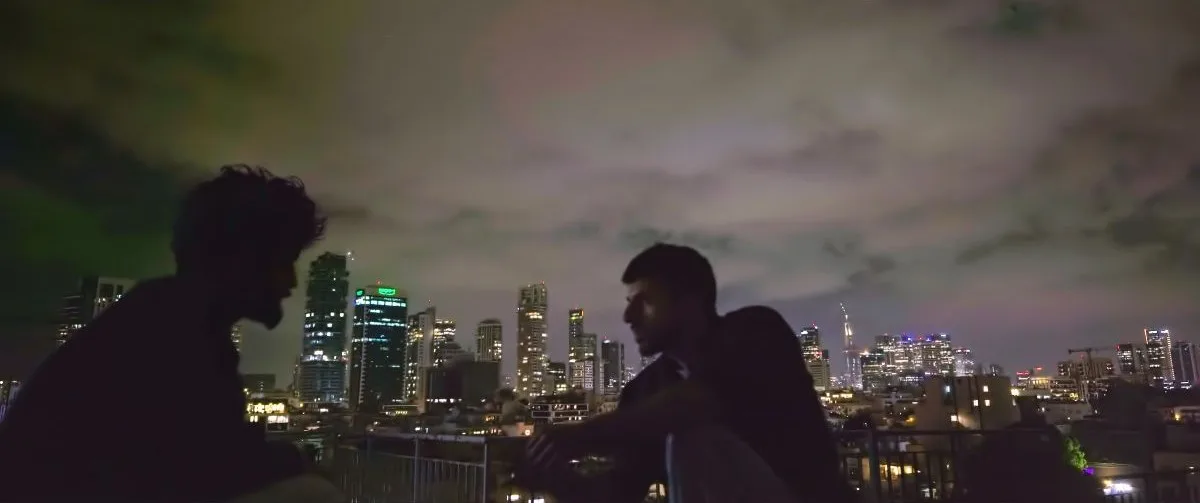
The sit-down conversations between them and Abraham take place on rooftops overlooking Tel Aviv. This telling placement emphasizes the city’s glittering skyline, while bird’s-eye view shots, which look into people’s apartments to capture moments of tenderness, relaxation, and even scenes from Israeli news broadcasts, act as both a kind of surveillance POV and as the distanced angle from which bombs often approach their targets—putting the oppressor in the visual crosshairs of the oppressed. The filmmakers even capture a revealing moment when the camera sees “Shoah” playing at an open-air screening, underscoring the hypocrisy of the crimes this documentary’s oral storytelling reveals.
From these conversations, Abraham mines several truths. For one, the surveillance state’s method for tracking Palestinians involves a complex network that turns cellphones against their owners by listening to conversations, turning on cameras, and using GPS tracking. We all know our phones are instruments of control, but this confirmation is still startling.
Similarly, it’s unsurprising that anyone willing to inflict the full-scale damage seen in Gaza and the Palestinian people-at-large would also be apathetic about said destruction. But the frankness and unblinking certainty espoused by the talking heads here once more validate one’s assumptions. Many of the interviewees dismiss their participation in this genocide by portraying themselves as people simply following orders. Only a couple grapple with their actions, offering a rare glimpse of self-awareness in this bleak accounting.
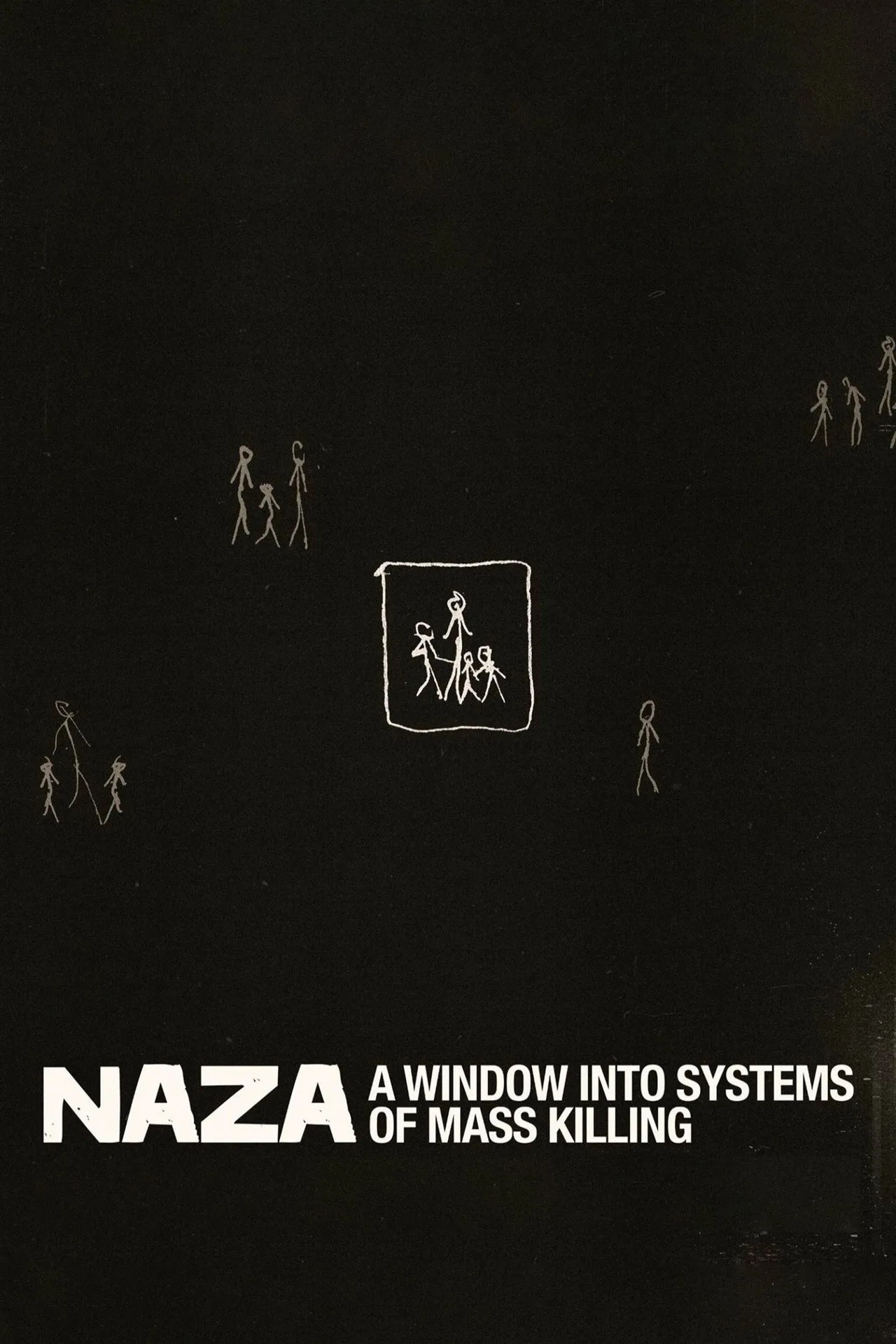
Tellingly, the filmmakers have each subject hand-sketch how the Israeli surveillance apparatus works, and, in each drawing, they depict Palestinians in different ways. Sometimes it’s stick figures; sometimes the sketches are more elaborately designed. Part of the variation, of course, comes from each subject’s artistic skill. But it’s also an outgrowth of how they actually see Palestinians: Are they rudimentary, conceptual, or actual?
“NAZA” won’t fulfill everyone’s expectations. Israel and the IDF have already pushed back against the validity of these revelations, while Palestinian groups will be understandably vexed by a documentary about their pain and deaths being told solely from the perspective of their Israeli oppressors. “NAZA,” however, which finds its name from the unit of measurement Israeli forces use to count the Palestinians they kill as “collateral damage,” is attempting to refute genocide deniers in the same way that footage of the Holocaust and later the Nuremberg trials attempted to counter any antisemite who would’ve relied on subjective arguments to deny its occurrence.
“NAZA” is another confirmation that genocide is happening, but the film’s stamp of validation in an ideal world shouldn’t be needed. We should simply believe those from Gaza who’ve lived through this hell. Documentaries told in their voices and from their perspective should suffice, including works by contemporary filmmakers like Kamal Aljafari and Rasheed Masharawi, and classical directors such as Mustafa Abu Ali. In fact, at Venice last year, the documentary “Who Is Still Alive” premiered to significantly less widespread acclaim than “NAZA.” That film, which is Switzerland’s Oscar submission this year, isn’t made by a Palestinian filmmaker, but it’s built on refugees from Gaza, who recall in their own words the devastation and loss they’ve faced at the hands of people like the subjects highlighted in “NAZA.”
If you took “Who is Still Alive” together with “NAZA,” you’d find a near-complete picture of not only the last few years in Palestine but also the last few decades. And yet, in this imperfect world, “NAZA” alone is uplifted. Maybe the reality of our post-truth world makes “NAZA” a necessity, a byproduct of news that the public at large refuses to consume unless it’s told in an all-too-familiar voice. In that way, “NAZA” is an imperative picture in its own right.