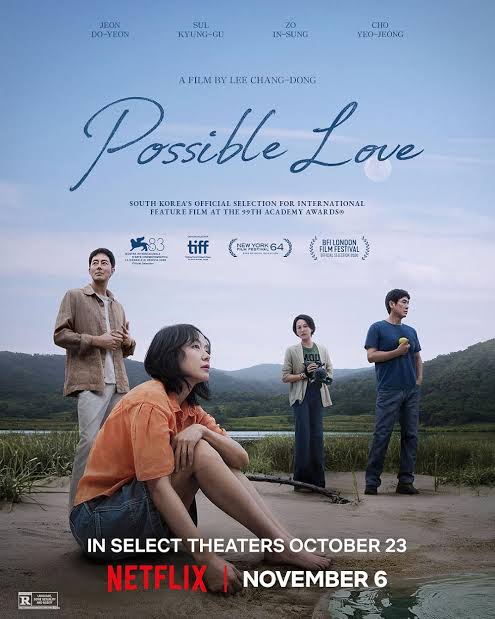
For his first film in almost a decade, Lee Chang-dong (“Burning”) turns to the work of another master, Krzysztof Kieslowski, using the Polish director’s 10th chapter of “Dekalog” as inspiration for “Possible Love,” one of the best films of 2026. Lee opens with the 10th commandment that inspired both projects: “Thou Shall Not Covet.” However, this is no mere tale of envy; it’s a complex character study of how imbalanced dynamics can impact human connection.
The title may sound like a Nicholas Sparks adaptation, but it reads here more like “Potential Empathy,” a bridge between people that can often be impassable. How is compassion impacted by class? And what happens when a camera is put in the center of the dynamic, shifting things even further by making one person an observer and another the observed?
Lee’s film is one of the most thematically rich in a long time, while also working on the surface as a remarkable performance piece driven by character over message. There have been a lot of movies recently that prioritize thematic intent over genuine human behavior, but Lee’s approach is to work backwards: Giving us a quartet of three-dimensional people with back story, agency, and interiority before bouncing them off each other in ways that speak to the entire human condition.
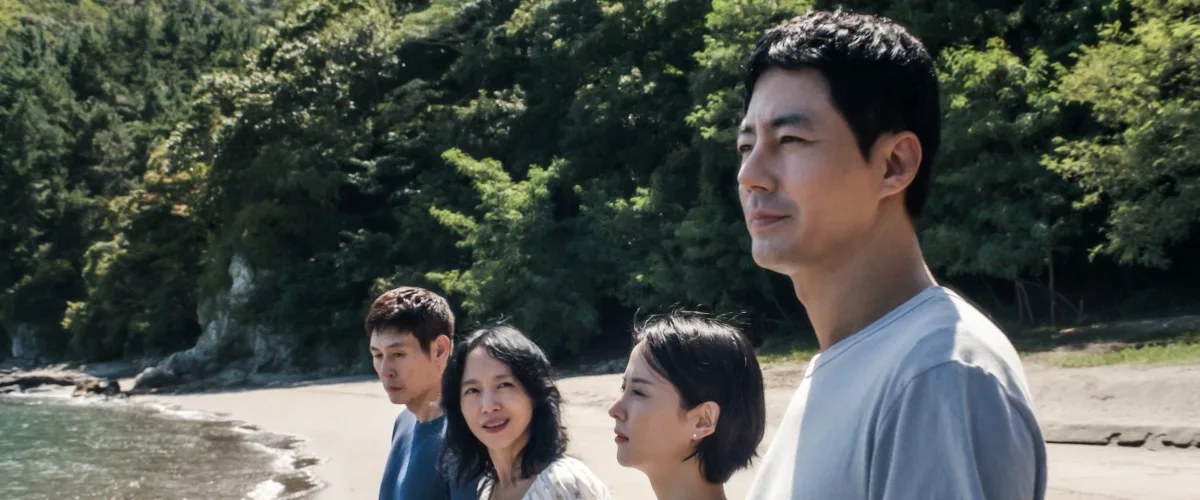
“Possible Love” opens with a family preparing for a funeral. It’s there that two married couples meet, sending them off on an unexpected journey framed by a filmmaking project. Ye-ji (Cho Yeo-jeong of “Parasite“) is making a documentary about a workers’ strike that ended in violence and mass firings. To be blunt, it didn’t work out for the striking workers, who have been left jobless and so traumatized that there are therapy groups to help them.
One of those workers is Ho-seok (Sul Kyung-gu), a ghost of a man who seems incapable of smiling and, according to his wife, makes a scene when he drinks outside of the home. The woman trying to stay by his side is the joyous Mi-ok (Jeon Do-yeon), who befriends Ye-ji despite their significant class differences.
The filmmaker is married to the wealthy power player Sang-woo (Zo In-sung), who Mi-ok claims looks like Steve Jobs, likely comparing his confidence more than his appearance. Ye-ji and Mi-ok become friends, but is it just so the former has an incredible interview subject for her film? She would almost certainly deny it, but Sang-woo compliments her “acting” around the poorer couple, as if they’re forced to shift into a less honest version of themselves.
The friendship between the two women exposes cracks in Mi-ok and Ho-seok’s marriage as they’re surrounded by reminders of the tragedy of the strike, one which was so violently opposed that Ho-seok was hospitalized, and of the other couple’s wealth. There’s a scene in which Mi-ok advises Ye-ji to wear something less expensive to an interview session so as not to show off to the fired workers. She implies that it might make them feel bad, almost not recognizing what it’s doing to her psyche, too. When the two couples go off on a weekend at Sang-woo’s beachside mansion, the simmering plot starts to boil over, leading to confrontations with self and others that are both wildly unpredictable and exactly right for this story.
That’s one of the aspects of Lee’s filmmaking that makes his work so mesmerizing: We’re never quite sure where a story is going, but the destination always feels like the only one it could have ever possibly been. In this case, he takes his time in a very long film (almost three hours) to set up four distinct, believable people with such depth that their choices feel like they come not from a script but from the rich lives they’ve lived.
These are people, especially the stoic Ho-seok, who rarely say what they feel, but they carry it in their bodies and their choices. There’s also something fascinating on a meta level regarding how often Ye-ji is holding a camera, a device that both unearths emotion from people like Ho-seok in a way that therapy cannot—he breaks down in an interview but walks out of a group session—while also serving as a divider between filmmaker and subject.
Roughly halfway through the film, Ho-seok goes to a bakery to get a cake for their son’s birthday. He sees another man there that he might recognize or might just envy, who is also buying a cake and ten candles. For reasons he doesn’t explain, Ho-seok follows the man to a restaurant, where he’s joyfully celebrating with his family.
Cinematographer Kim Ji-yong keeps his camera outside, as if we are observing through the establishment’s window: Ho-seok pacing, sitting, and staring at a family that’s what? Happier? Wealthier? Both? There’s such incredible dread in this moment—remember we’ve been told Ho-seok makes public scenes—but it doesn’t feel remotely manufactured. From that point on, “Possible Love” exists in this space of potential upheaval, devastatingly turning relatable human emotion into possible tragedy.
It helps that Lee is also just a breathtaking director of performance. All four leads are spectacular, but Jeon Do-yeon stands out with the most powerful journey. She’s one of those women who is trying so hard to be there for her husband and son through this difficult chapter that she almost clings to Ye-ji like a life jacket. There’s a scene where they get drunk at dinner and laugh together, and Jeon captures the release of how something so simple in a life of sadness can be a balm.
Sul Kyung-gu takes a role that could have been a caricature of the sunken man and makes it real in a way that’s equally captivating, while Cho Yeo-jeong plays a character who truly doesn’t question how her status might affect both her profession and her friendships. She’s like so many people who say and even do the right things without considering all of the variables.
“Possible Love” is as dense as our best literature, filled with rich character beats that feel of a piece with what came before and where these characters are going next. It leaves these people not with a period but an ellipsis. Some have probably been changed by this brief chapter in their lives, while others might barely remember it. You won’t forget it.
This review was filed from the Toronto International Film Festival. It opens on October 23, 2026 before landing on Netflix on November 6.