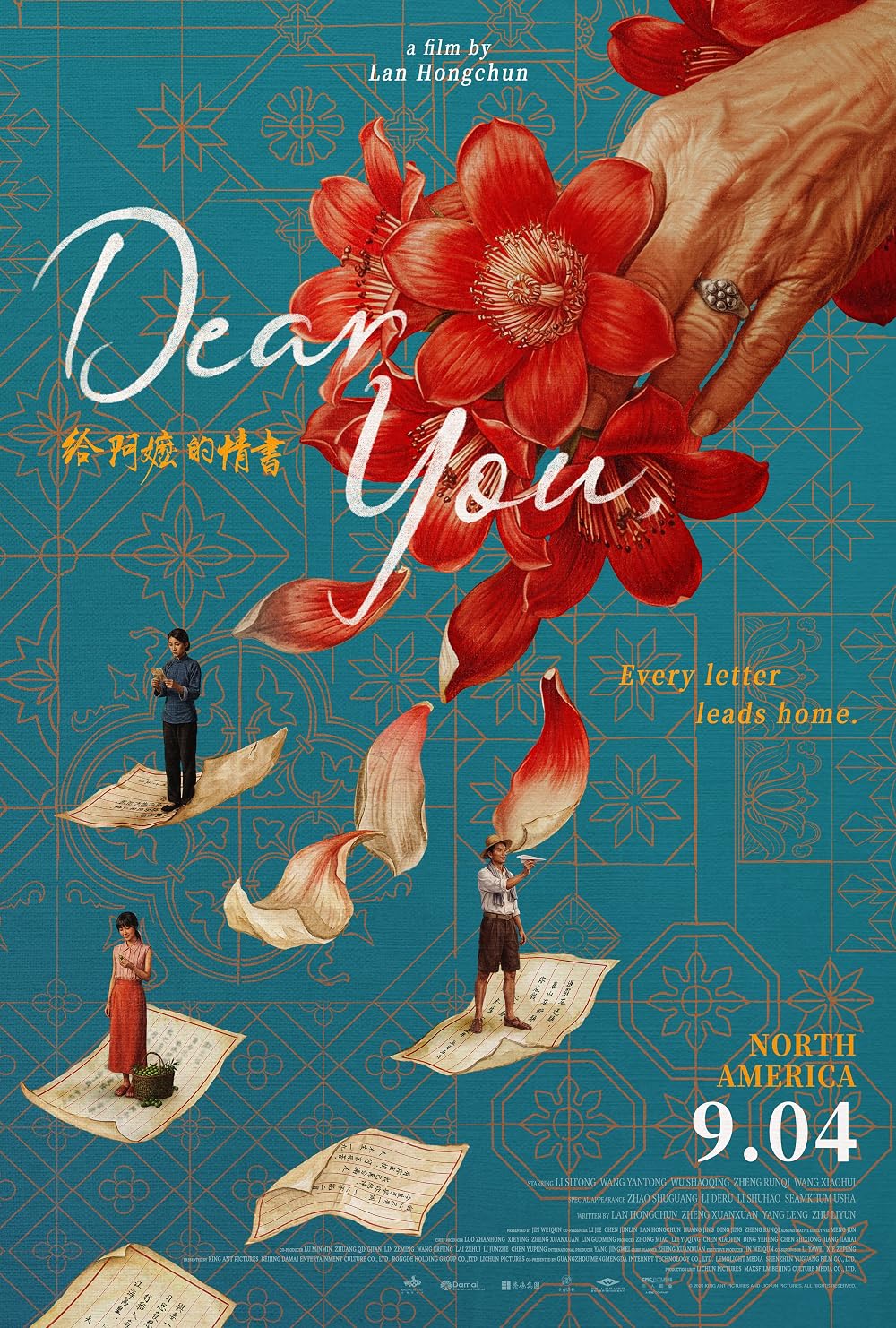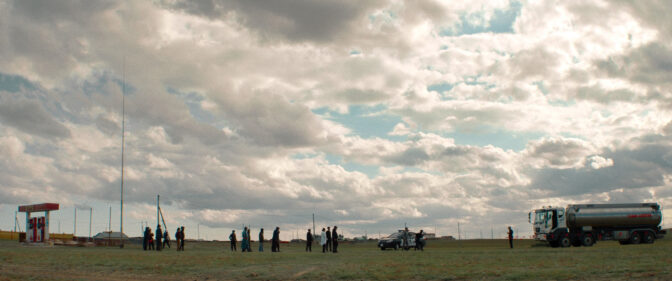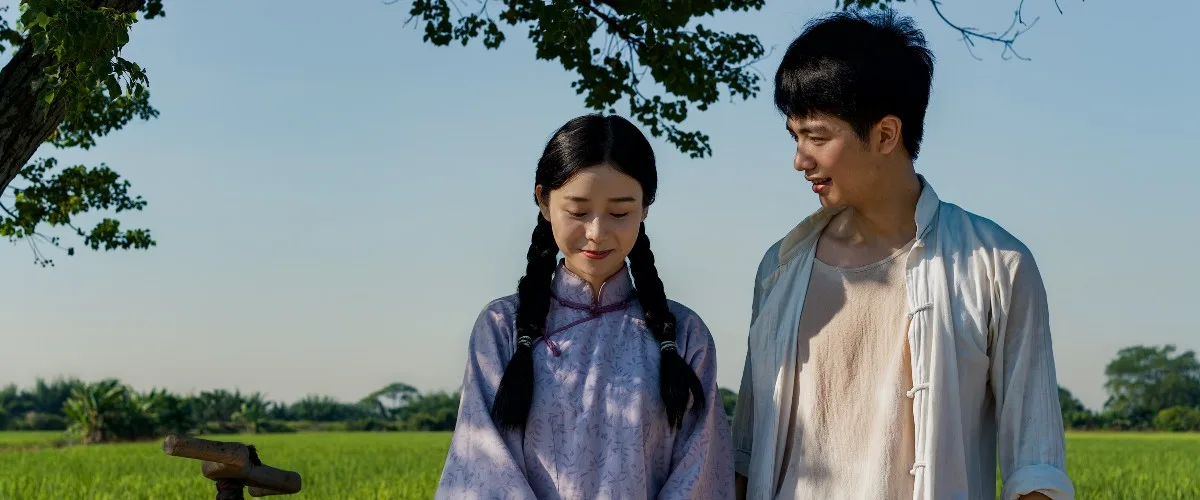
Have you heard the good word about “Dear You”? The modestly scaled Chinese blockbuster will finally receive a nationwide release here in America following its unprecedented theatrical success this past summer. Notably, “Dear You” is also a rare Chinese hit featuring characters who mostly don’t speak Mandarin.
Writer/director Lan Hongchun’s interest in Teochew-speaking Chinese refugees—many of whom relocated to the Philippines and Thailand either during or after the Opium Wars—coincided with a recent TV docuseries that he made about Teochew food and culture. Now “Dear You”, a drama featuring mostly Teochew-speaking characters, has made enough money to become an emblem of diversity in modern Chinese pop cinema—more than 2 billion yuan domestically, or $297 million—and has also become the subject of a few speculative trendpieces.
At first glance, “Dear You” looks like a stodgy but arresting melodrama. The plot’s setup is somewhat reminiscent of the Thai family drama “How to Make Millions Before Grandma Dies,” a connection that’s likely not coincidental. Usha Seamkhum, the Thai/Teochew actress who played that recent crowd-pleaser’s titular grandma, has a small but essential role in Lan’s movie.
In “Dear You,” we follow the Teochew-speaking mainlander Hiou-ui (Zheng Runqi) in his quest to track down his grandfather Den Bhagseng, played by Wang Yantong in an extensive series of flashbacks. Hiou-ui’s reasons for traveling to Thailand are callow and soon forgotten: he’s in debt and assumes that his grandpa was rich enough to leave behind a sizable inheritance since a couple of Thai primary schools were dedicated to Den. But once Hiou-ui arrives in Thailand, he learns that he knows very little about his distant relative, who not only wasn’t rich, but also maybe had a second wife.
Set largely in Thailand during the 1950s and 1960s, most of “Dear You” concerns Den’s surprising relationship with Zia Lamgi (Li Sitong), a fellow Teochew-speaking Chinese émigré living in Thailand. Zia is not, however, Den’s romantic partner. Rather, she gives Den room and board at her father’s inn and later helps him to write letters home to his wife Sogriu (Wu Shaoqing). Den and his wife’s correspondence is fairly one-sided, though, since Den, like many real-life Chinese refugees who sent money and news home via the now-historic qiaopi letters, was mainly trying to reassure his family. So while Den and Zia’s unusual bond is often the focus of “Dear You”, the mystery surrounding his letters home is the most compelling source of dramatic tension.
I admired “Dear You” the first time I saw it, but didn’t really fall for it until my second go-around. I was unexpectedly reminded of the great Hong Kong filmmaker Ann Hui’s recent period dramas, like “Our Time Will Come” and “Love After Love.” In those recent and still underseen gems, the past has a sensuous but lightly held lyricism expressed through small details that, taken together, paint a vivid portrait of marginalized and often unsung protagonists. These stylistic grace notes also give emotional weight to the filmmakers’ limited understanding of their characters’ past lives, which we can now only imagine thanks to precious documents like the qiaopi letters.
You would still be forgiven for confusing “Dear You” with a sappy paean to Hiou-ui’s elders, who apparently not only had different (ie: better) values, but also set a good example for generations to come. Den’s loyal and fiercely protective of his fellow Teochew-speaking immigrants, including Zia’s father (Fang Peisong), while Zia often acts selflessly and without complaint, to the point where her personality sometimes appears to be underdeveloped.
Thankfully, “Dear You”’s time capsule drama is both more affecting and thoughtful once you appreciate the emotional distance that Lan puts between his characters and his audience. The past isn’t necessarily more idyllic, as Lan reminds us every time they drink, smoke, or act out. Like the qiaopi letters, Lan’s drama is inevitably defined by gaps in its subjects’ history, giving “Dear You” a tragic focus that matches its nostalgic mood. We’ll likely never fully understand what Den and Zia meant to each other, and our collective loss should sting a little.
Lan and his collaborators don’t simply approximate Den and Zia’s lived experiences; they also remind us what their material world looked and sounded like through earthy stylistic grace notes and carefully phrased dialogue exchanges.
As a result, “Dear You” is an arresting and surprisingly sensitive window into the past. That sensitivity appreciates once you realize that its abstracted view of the past is calls attention to everything that couldn’t fit within its limited frame. The filmmakers might not be wholly responsible for their movie’s runaway success. But if you judge their work on its own terms, you’ll find that, miraculously, it’s even better than its considerable reputation.