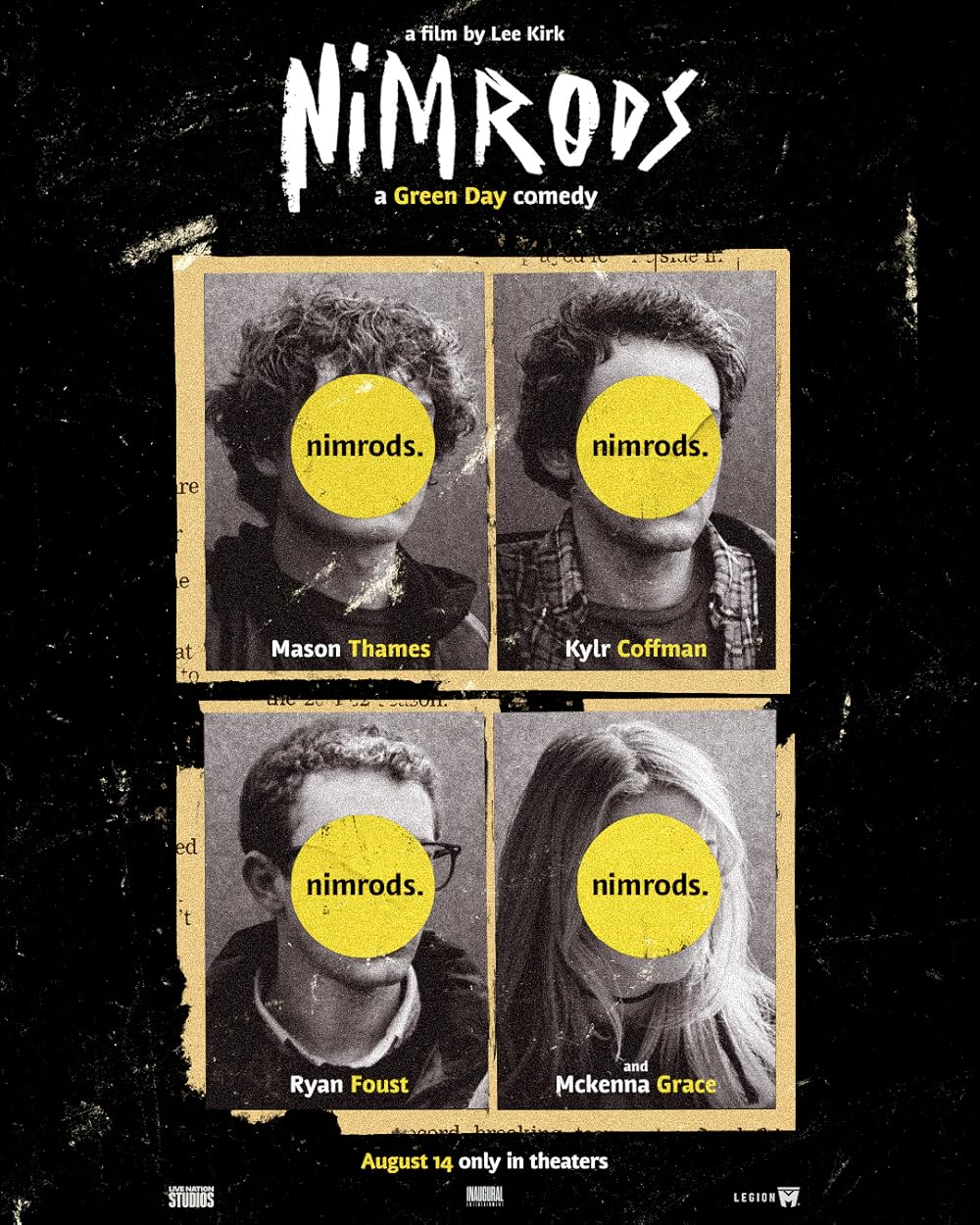

Told with charming eagerness, writer/director Lee Kirk’s “Nimrods” is an uplifting teenage road trip movie based loosely on the origins of Green Day. It follows three friends: a passionate Tommy (Mason Thames), a dim-witted Chad (Ryan Foust), and the wonky Fred (Kylr Coffman)—who desperately want to be heard in all the facets of that feeling. They want their music to be listened to, they hope their parents see them, and most of all, they dream of being acknowledged by their rock heroes. Like most high schoolers used to be, they’re in a punk band together called Analog Dogs (often mistaken for “Anal Dogs”) that sounds exactly like Green Day. So when Tommy’s angry brother Wayne (Keen Ruffalo) pranks them by saying that Green Day has invited the trio to be their opening New Year’s Day band in Los Angeles, they swallow the lie whole.
While that premise might tease “Nimrods” as a kind of comedy that punches down at its clueless subjects, the film thankfully doesn’t stoop to those levels. Instead, it genuinely understands what it means to have a dream so near you that you’re willing to do anything to make it happen. To accomplish their mission, which sometimes resembles the “Blues Brothers” in its arc and even scenes, Tommy, Chad, and Fred, without their parents’ knowledge, steal Wayne’s cab in a bid to drive from their hometown of Kansas City, Kansas to LA. Along the way, “Nimrods” hews closer to being heartfelt than parodying super fans. It’s wholly invested in the humans at the center of its absurdity.
That interest begins with the tangible emotional stakes it assigns each character. The analytical Fred loves absorbing the impulsiveness of Tommy and Chad precisely because he wishes he had the same spontaneity. Chad would be lost without Tommy’s guidance, finding in him his lone friends amid a sea of classmates who probably only see Chad as an imbecile and not as a dedicated partner in crime. Tommy, meanwhile, lives an unfulfilled life with his widowed mother (Jenna Fischer). Years ago, Tommy’s father died. Ever since then, Tommy’s been trying to live out his dad’s musical dreams via the 4-track recorder, mixtapes, and leather jacket that once belonged to him.
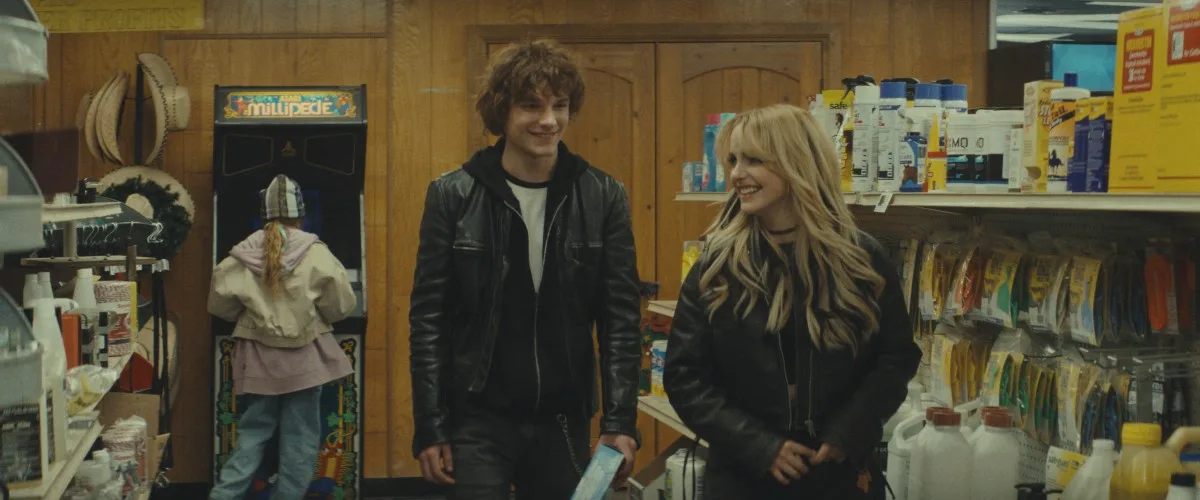
Kirk’s attentive script tests the limits of this trio’s bond through more than a few obstacles. Along the way, their car will break down, Tommy will fall for a fellow punk-rocking girl (Mckenna Grace), Fred will continually question whether he can be as rebellious as his friends, and they’ll even play a few gigs—like an open mic at a Country-Western bar where they perform Green Day’s “Dominated Love Slaves.” As you’d guess from that tidbit, the actual punk band’s music features heavily in the film (Green Day is listed as a producer), and the members also appear as themselves. Oftentimes, Kirk shows keen restraint by not playing the most obvious needle drop, though he can walk up to the line, like one encounter in a creepy motel with Fred Armisen that ends with “Brain Stew.”
Kirk, for the most part, understands that this film—somewhat like the Springsteen-inspired coming-of-age movie “Blinded by the Light”—is best when it relies on its endearing characters as they explore their interpersonal connections for wholesome revelations. As the eleven days of the road trip pass, not only does this trio grow closer, but also Tommy’s brother Wayne looks in the mirror. Kirk doesn’t overwhelm this maturation with seriousness, but he accomplishes it through playful humor; a running joke about putting diesel in a gas tank gets plenty of mileage, and quips about overbearing mothers take on a certain universality.
The only time “Nimrods” falters, surprisingly, is in the final act, when Green Day appears with greater frequency. Kirk allows his movie to slip into a straight-up concert film, causing one to lose the intimate threads laid amid the clashing chords of the band’s biggest hits. It’s a startling lack of confidence. By the end, we’re not waiting to see Green Day; we want to see these characters. If Kirk had only seen that he accomplished what he wanted, he might’ve gotten out of his own way.