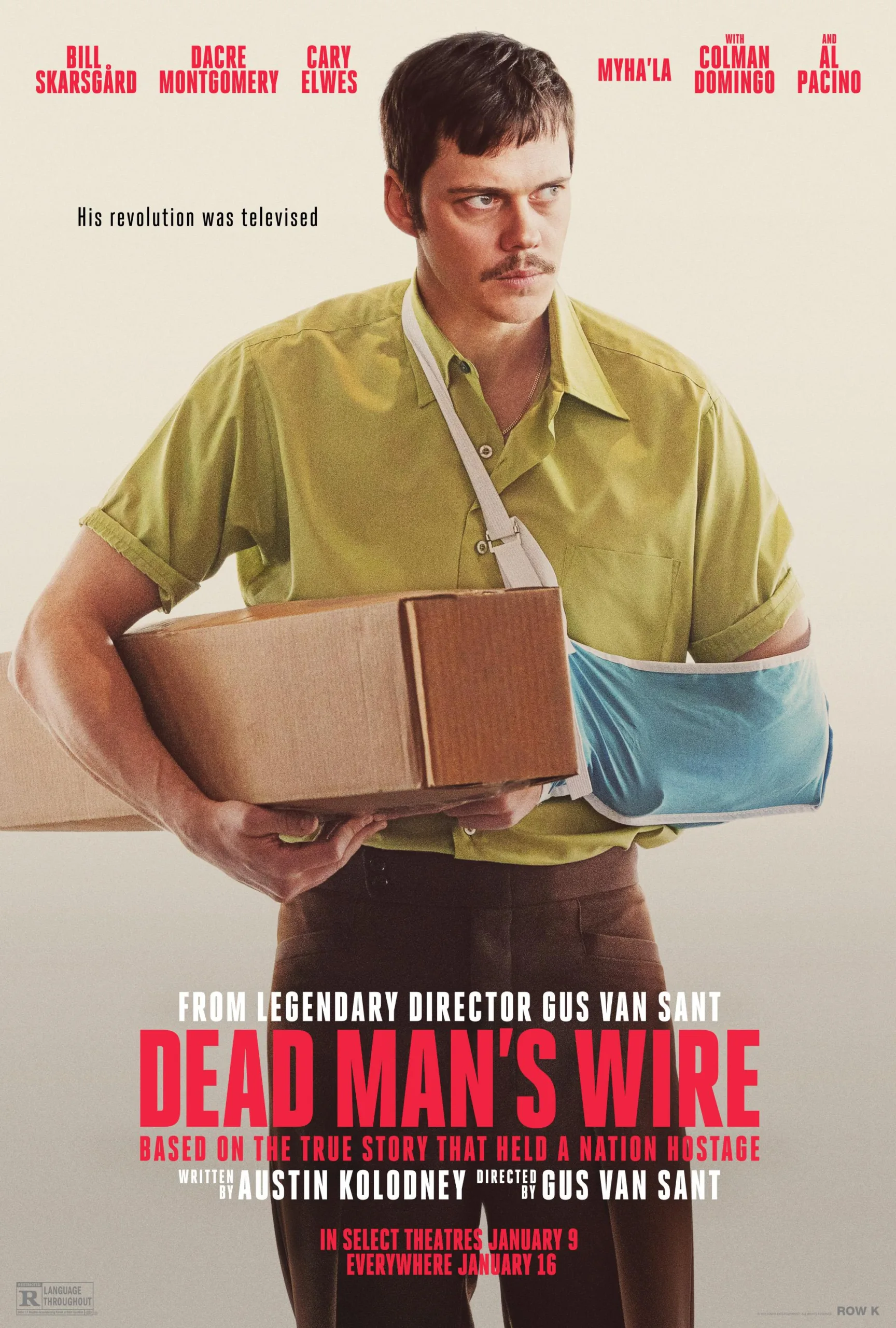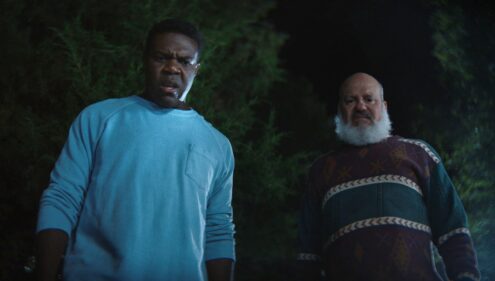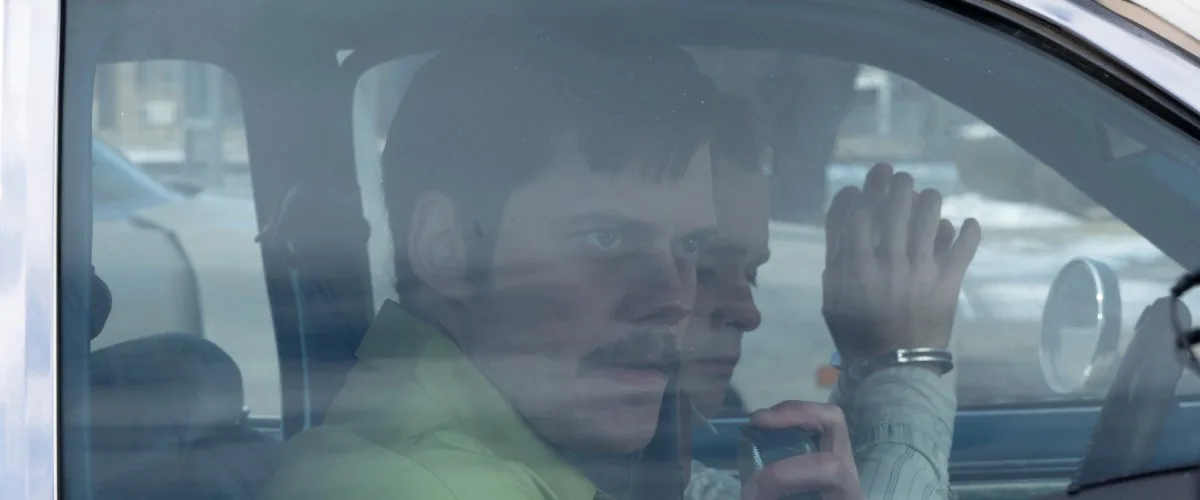
In 1977, Tony Kiritsis fell behind on mortgage payments for an Indianapolis, Indiana, property that he hoped to develop into an affordable shopping center for independent merchants. He asked his mortgage broker for more time but was denied. This enraged Tony because he suspected that the broker and his father, who owned the brokerage, aimed to defraud him by letting the land go into foreclosure and buying it for less than market value. Tony showed up at the offices of the mortgage company, Meridian, for a scheduled appointment with his broker Richard O. Hall and took him hostage, demanding a settlement for his trouble and a public apology by Hall’s father. Tony brought a long cardboard box with him. Inside it was a shotgun with a so-called dead man’s wire, which Tony affixed to his hostage as a precaution against police interference: if either of them were shot at, tackled, or even made to stumble, the wire would pull the trigger, blowing Hall’s head off.
That’s only the beginning of a story that has inspired many retellings, including a memoir by Hall, a 2018 documentary and a podcast starring Jon Hamm as Tony Kiritsis. And now it’s the best current movie you likely haven’t heard about—from director Gus Van Sant (“Good Will Hunting”), starring Bill Skarsgård as Tony Kiritsis and Dacre Montgomery as Richard Hall. It’s unabashedly inspired by the best crime dramas from the 1970s, including “Dog Day Afternoon,” “The Sugarland Express,” “Network,” and “Badlands,” and can stand proudly alongside them.
“Dead Man’s Wire” is a nostalgia trip of the best kind. From the pre-heist prep montage scored with Deodato’s groovy disco version of “Thus Spake Zarathustra” being played on the radio by local soul DJ/philosopher Fred Temple (Colman Domingo); through the expansive middle section, which establishes Tony as part of a community that will see him as their representative in the war between labor and capital; through the ending and postscript, which leave you unsure how to feel about what you’ve seen, but eager to discuss it, this is a work of substance as well as style. Rather than superficially imitate a specific type of ’70s drama—a down-and-dirty character study about real people making bad choices—Van Sant and his collaborators connect with the essence of what made those films powerful and memorable: their connection to issues that weighed on viewers’ minds fifty years ago, and that have only grown heavier since.
Tony is far from a criminal genius or a potential folk hero, but thinks he’s both. The shotgun box with a weird bulge, barely held together with packing tape, is a correlative for the mentality of the man who carries it. Tony’s home is filled with counterculture-adjacent books, but he’s a slob who gripes during a brief car ride that his “shorts have been ridin’ up since Market Street,” and has a vanity license plate that reads “TOPLESS.” His eloquence runs the gamut from Everyman wisdom to self-canceling nonsense slathered in profanity. He sums up the mortgage company’s practices as “a private equity trap” (a phrase that looks ahead to the 2008 financial collapse, which was sparked by predatory lending on subprime mortgages) and hopes that his extreme actions will generate “some goddamn catharsis” for himself and his fellow citizens, and “some genuine guilt” among Indianapolis’ lending class.
He’s also intoxicated by the sudden fame that accrues when the hostage situation relocates from the mortgage company to Tony’s shabby apartment complex, and the property is encircled by beat cops, tactical officers, and reporters (whose ranks include Myha’La as Linda Page, a twenty-something, Black local TV correspondent looking to move up). Tony himself inflames the situation by calling Temple’s radio station and flattering the DJ by telling him he’s the only media person he trusts. Temple is curious but cautious, so tapes his first phone conversation with Tony and previews it for police before settling on a course of action. To his surprise and unease, they “request” that he continue his “dialog” with the kidnapper, so he plays the first recording and subsequent ones on his morning show. (Temple is based on Fred Heckman, the news director of Indianapolis radio station WIBC-AM whom the real Tony Kiritsis held in similarly high esteem. Changing a reporter-editor to a DJ closes off avenues of inquiry into journalistic ethics; but it also opens the movie up culturally, and allows for a seamless blend of images, monologues and music in the spirit of “Do the Right Thing,” in which a community radio host doubles as narrator.)
Despite the avenues for redress that Tony has been offered, he can’t stop his inner petty schmuck from erupting and undoing any advances that he’s made. He vacillates between treating Hall as a cardboard representative of the financial elite (when Hall, Sr. finally agrees to speak with Tony via phone from a tropical vacation, Tony sneers to Hall the younger, “Your daddy’s on the line—he wants to know when you’ll be home for supper!”) and connecting with him on a human level. When he’s not bombastic, he’s needy and fawning. “I like you!” Tony keeps telling Fred—as if a Black man who’d built a comfortable life for himself and his wife in 1977 Indiana craved the approval of a guy like Tony.
Ultimately, however, making perfect sense and effecting lasting change are no higher on Tony’s agenda than they were for the protagonists of “Dog Day Afternoon” and “Network”—unhinged audience surrogates whose media stardom turns them into human megaphones for anger at the miserable state of things, and gives their audience the nudge they needed to get radicalized. In “Dead Man’s Wire,” the list of failed institutions includes a police force that—to quote “Dog Day Afternoon” bank robber Sonny Wirtzik—wants to kill Tony so bad they can taste it. The discussions between Indianapolis police brass and the FBI (represented by Neil Mulac’s Agent Patrick Mullaney, a straight-outta-Quantico robot) are mainly about how to take him out. Other options are not in play.
The aforementioned phone call from Richard Hall, Sr., who had previously sent one of the brokerage’s vice presidents to apologize to Tony on his behalf, evokes a key moment in another spectacular ’70s case, the kidnapping of John Paul Getty III: when hostage-takers called the original John Paul Getty, their victim’s miserly grandfather, they learned he would rather lose a grandson than a penny of his fortune. Similarly, the elder Hall is concerned but not panicked that his son is in danger. He’s secure in his belief that he and his company did nothing wrong, and views his own flesh-and-blood as another asset he can write off. This horrible man is played by “Dog Day Afternoon” star Al Pacino—inspired casting that not only officially links Tony to Sonny Wirtzik but proves that, at 85, Pacino can still bring the heat.
With his frizzy grey toupee, self-satisfied Midwest twang, and punchable smirk, the onetime ‘7os superstar is skin-crawlingly perfect as an old man who built a fortune on being good at one thing and believes it makes him an expert on all things, including the conduct of Real Men holding the line against women and sissies who’ve rebranded weakness as vulnerability. After watching coverage of Tony getting emotional while keeping his shotgun trained on Richard, Jr., he beams with pride that Tony shed tears but his own son did not. (Kelly Lynch, who costarred in another classic Van Sant film about American losers, “Drugstore Cowboy,” plays Richard, Sr.’s trophy wife, who is visibly uncomfortable with her husband’s monstrousness but won’t say a word against him.)
Van Sant was 25 during the real-life incidents that inspired this movie. That might partly account for the physical realism of the production, which does not feel created but observed, in the manner of ’70s movies whose authenticity was strengthened by letting dialogue overlap and compete with loud environmental sounds, shooting in pre-existing locations, and putting the actors in clothes that looked like they’d been hanging in closets for years. Peggy Schnitzer did the costumes here, Stefan Dechant the production design, and Arnaud Poiter the cinematography, presumably while wearing gold chains, bell-bottom pants and platform shoes. The believably busy soundscape was overseen by Leslie Schatz, who gives the ear a lot to process while making sure important bits are understood. It should also be mentioned that the film’s blueprint is an original screenplay by a first-timer with working class credentials: Adam Kolodny, who wrote it while working as a custodian at the Los Angeles Zoo.
More impressive than the film’s behind-the-scenes pedigree is its vision of another time that seems uncomfortably similar to ours. It is both a lovingly constructed time machine highlighting details that now seem as antiquated as buckboard wagons (the film deserves a special Oscar just for its phones) and a wide-ranging consideration of indestructible realities of life in the United States. The latter are highlighted in such a way that you notice them without feeling as if the movie pointed them out to you.
For instance, consider Tony’s infatuation with Fred Temple, which peaks when Tony honors his hero’s influence by “soul dancing” for his hostage. Fred and Tony are a pre-Internet example of what we now call a parasocial relationship. An awareness of racial dynamics is baked into it, and into the film as a whole. Domingo’s performance as Temple captures the tightrope walk that Black celebrities have to pull off, reassuring their most excitable white fans that they understand and care about them, but without cosigning their fantasies, or seeming to invite further contact that might evolve into harassment. Consider, too, the matter-of-fact presentation of how easy it is for violence-prone people to buddy up to law enforcement officers, especially when they inhabit the same space—such as the local bar where Tony first met Indianapolis police detective Will Grable (Cary Elwes), the officer assigned to kill him.
There’s an economic, political and cultural framework for the characters’ decisions. That’s rare for a dramatized true crime tale. Van Sant and company build the tale as delicately as a ship in a bottle. “Dead Man’s Wire” depicts an analog world in which crises like this were treated as important local matters involving local people, businesses, and government agents, rather than topics for a global agitprop industry posing as news media and a parasitic army of clout-chasing influencers. The filmmaking insists on the uniqueness and value of every life onscreen, from Tony and Bill, Jr. to minor characters like Fred Temple’s excitable Asian-American coworker (Vinh Nguyen), who talent-scouts to demos in a closet-sized office filled with pot smoke, and the unnamed citizens watching coverage of the standoff on television.
All this is drawn together by Van Sant and editor Saar Klein in pop music-driven montages that show how every member of the community depicted in this tale is connected even if they don’t realize it. As John Donne put it, “No man is an island/Entire of itself/Each is a piece of the continent/A part of the main.” The struggle of the individual is summed up in one of Temple’s sign-off lines: “Let’s remember to become the ocean, not disappear into it.”