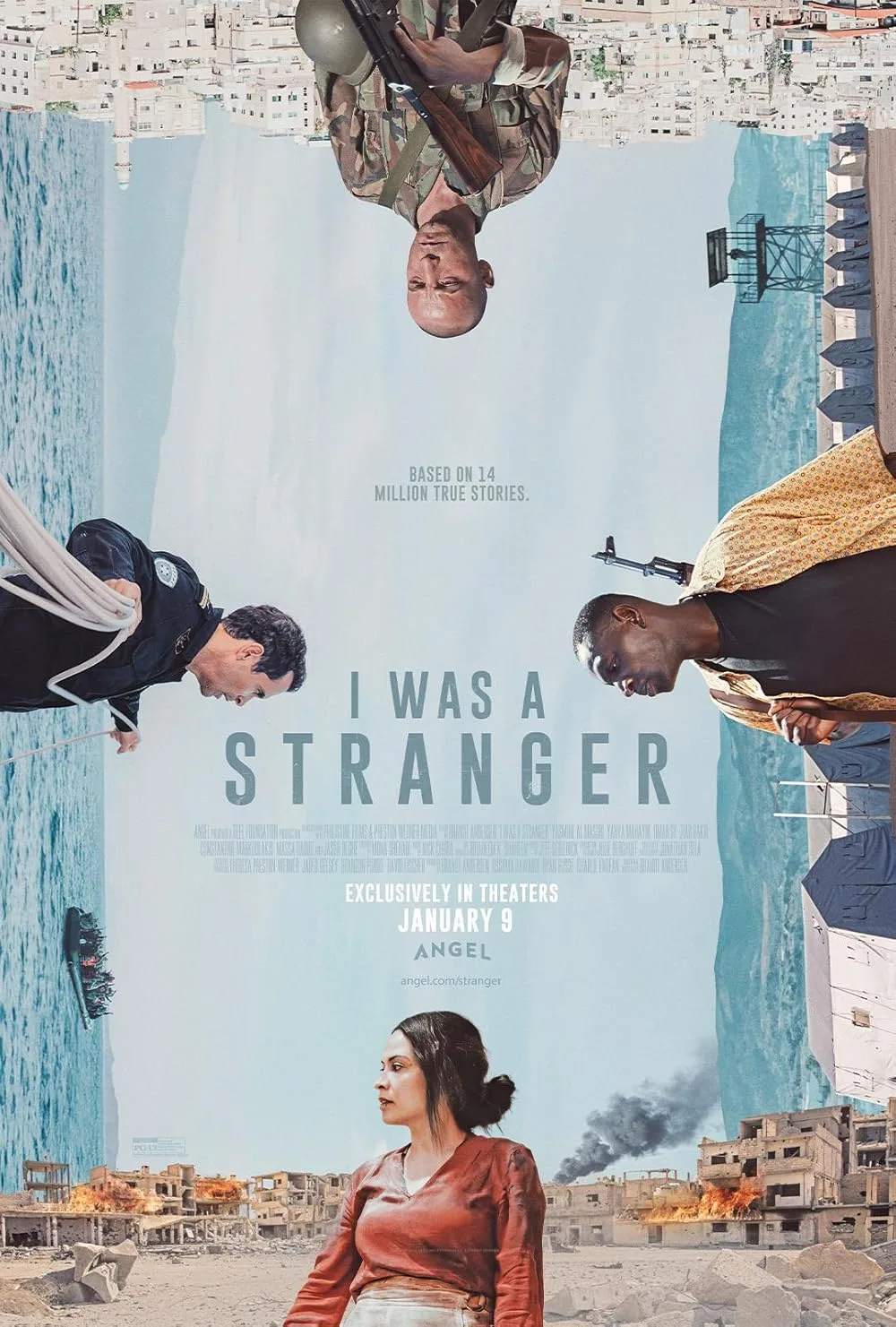

For much of human history, people moved around the world in search of new opportunities, resources, and freedom. But over the last few centuries, governments have stepped in to limit that movement. News about immigration is never far from the headlines, and Brandt Andersen’s feature debut “I Was a Stranger” is an impassioned look at the struggle of families looking to survive no matter the cost.
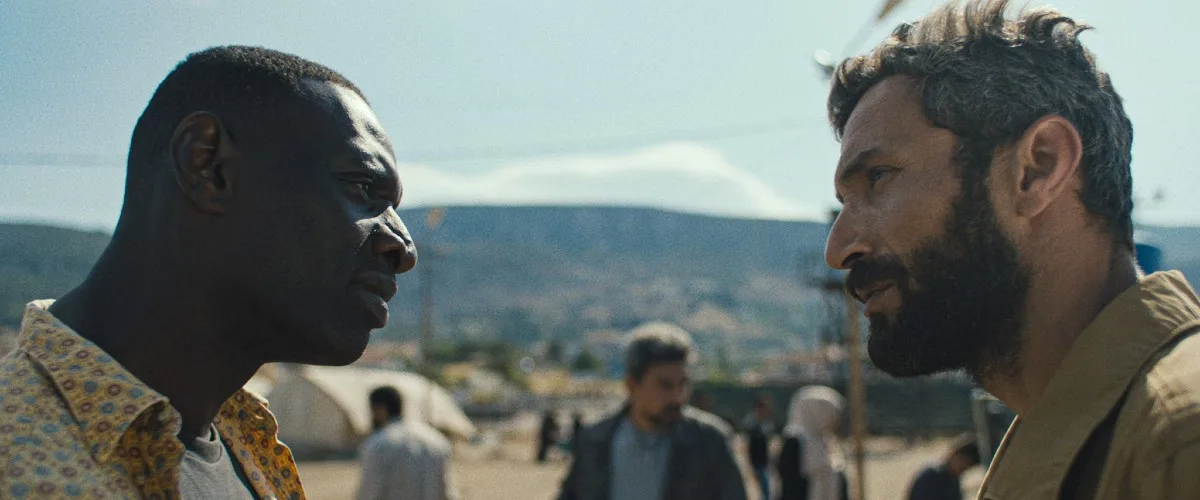
It begins with Dr. Amira Homsi (Yasmine Al Massri) arriving at a bustling hospital in Chicago in 2023. A phone reminder transports her back to her memories of Aleppo, Syria, eight years before, when she was in the middle of a stressful time triaging patients on both sides of the conflict. After work, she picks up her daughter for a night with family, but just as festivities are starting, a bomb destroys their home, leaving only Dr. Homsi and her daughter as survivors. They must flee the area before they’re captured by the enemy, leading them to the path of a conflicted soldier Mustafah (Yahya Mahayni), and down the road to a smuggler Marwan (Omar Sy), a fellow patriarch leading his family to safety named Fathi (Ziad Bakri), and a sympathetic captain, Stavros (Constantine Markoulakis), haunted by the pain he has seen in the faces of those risking their lives at sea. The memories end, and both Dr. Homsi and the audience are returned to a Chicago hospital with a better understanding of what it took for her to get there.
Based on his 2020 short “Refugee,” Andersen expands on the story of a mother desperately trying to flee Syria, adding more backstory to their struggle. Theirs is a fraught journey that sometimes leaves the audience with questions, as one story pauses to let another story abruptly begin every 25-ish minutes, giving the film a somewhat jagged feel that disrupts the narrative. Andersen, who also wrote the film, seems to loosely draw inspiration from 2004’s “Crash” (in which the narrative jumps back in time through various interweaving story threads to tackle a difficult topic), which, in the case of “I Was a Stranger,” is immigration.
There is no short supply of emotions in “I Was a Stranger.” Andersen takes great pains to capture the sacrifice and uncertainty of every step of these refugees’ journeys as they cross national boundaries and checkpoints. A young girl must leave her beloved puppy behind so her family can make the dangerous crossing at sea. Later, she’s hurt trying to escape from the refugee camp. Dr. Homsi watches helplessly as her family is obliterated, and within what seems like just a few hours, must hide in the trunk of a car with her daughter with only a gun for protection. The stakes are high and never lowered, although, given the film’s story structure, its emotional core is constantly uprooted as new characters and problems are introduced.
Andersen, reuniting with Al Massri and Sy from his short “Refugee,” assembled a solid cast invested in telling this heartwrenching story. As Dr. Homsi, Al Massri keeps cool in the face of danger, and Sy brings a complex touch to his smuggler character, who’s a kindly father at home and an imposing hustler making money off the desperation of refugees trying to make it to Greece. Markoulakis also turns in an impressive performance in his brief screen time, carrying his character’s internal strife over guilt and heartbreak as a witness to historical events. In comparison, the soldier and father’s storylines feel more like filler, one-note interstitials between the more charged portraits of the Syrian refugee crisis.
In a sense, “I Was a Stranger” follows in the footsteps of Agnieszka Holland’s spectacular, harrowing “Green Border,” which similarly follows refugees on a treacherous journey through Europe. Holland’s story hews closely and intensely to the group, so the audience’s heart only hurts more and more with each painful setback. Andersen’s film, in its attempt to present various perspectives in this story, shifts the viewer’s attention from one character to another, diluting its emotional impact.
In the movie’s drone’s eye-view opening shot of Chicago, the skyline’s Trump Tower looms large over the city’s river—an ominous omen of one of the names who have twisted the welcome on the Statue of Liberty to throw it back at refugees and immigrants who sought to make the United States their new home. It was a strange note to start on, and it was one I had trouble forgiving. Compassion begins at home, and “I Was a Stranger” seems to have missed that part of the journey.