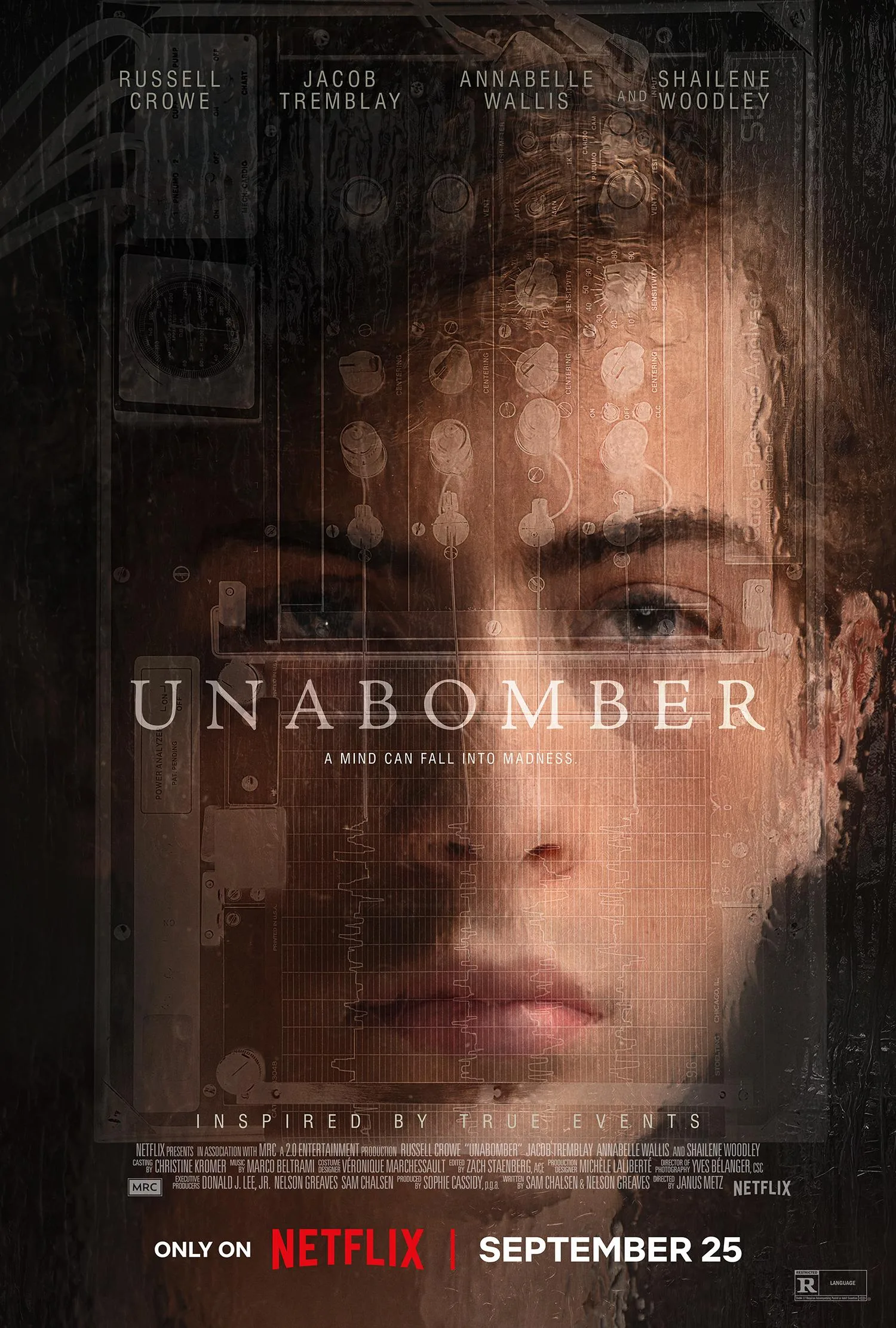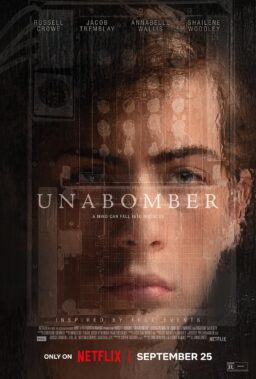

For 20 years, Ted Kaczynski, under the alias “The Unabomber,” terrorized America. He made opening the mail a frightening act with a series of homemade bombs that spanned across the country, ones that mainly targeted tech people, scientists, and thinkers. It makes sense this true story (titled simply “Unabomber”) would appeal to Netflix, considering the four-part docuseries “Unabomber: In His Own Words,” which deploys interviews with Kaczynski and his victims to recount his crimes, already resides on the streaming giant. Also, Netflix has long been the home for other documentaries about serial killers, like Ted Bundy, John Wayne Gacy, Jeffrey Dahmer, and more.
But Janus Metz Pedersen’s scuzzy Kaczynski film is a hackneyed blend of true-crime drama and banal biopic tropes. Penned by Sam Chalsen and Nelson Greaves, it aims to add psychological depth to the domestic terrorist’s upbringing but doesn’t rise above being a shallow made-for-TV movie exclusively composed of tawdry decisions.
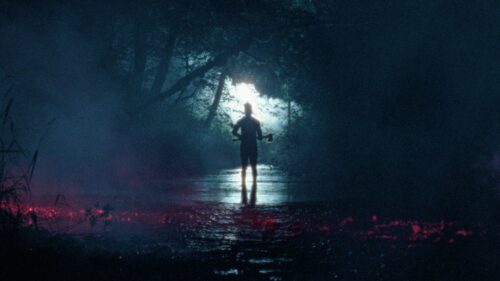
In the opening sequence, for instance, a package arrives in the mail at Thomas J. Mosser’s New Jersey home. His wife takes it inside, and while she plays with their daughter, he goes with the box to a separate room to open it. The camera nearly salivates at the prospect of Mosser’s knife cutting the tape, taking an extreme close-up view of the action. Meanwhile, Pedersen and editor Zach Staenberg intercut between Mosser in one room and his family in another to melodramatically force-feed the impending tragedy that’s mere seconds away. By tastelessly teasing out the trauma of a victim as fodder for high anxiety, “Unabomber” tells you exactly what depth it won’t apply to these real-life people.
Even the film’s structure suggests a labored approach to this story. We ping-pong between two narratives. The first is in San Francisco circa 1995, where FBI Agent Joanne Miller (Shailene Woodley) and her team are at their wit’s end trying to identify the Unabomber. Miller believes the profile they were given about his potential psychological makeup is not only outdated but also wrong. She’d rather use his manifesto, the 35,000-word pro-primitivism paper entitled Industrial Society and Its Future, as their key. She sees the linguistics of his work as a kind of fingerprint, an idea that’s rebuffed, unsurprisingly, by her male colleague Leo (Alexander Ludwig).
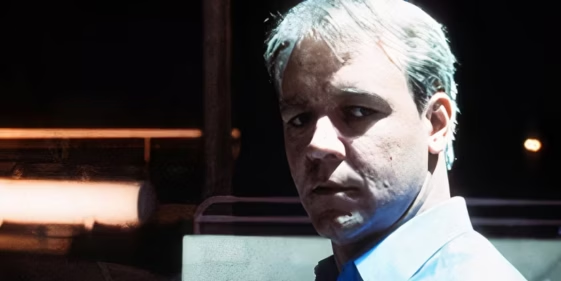
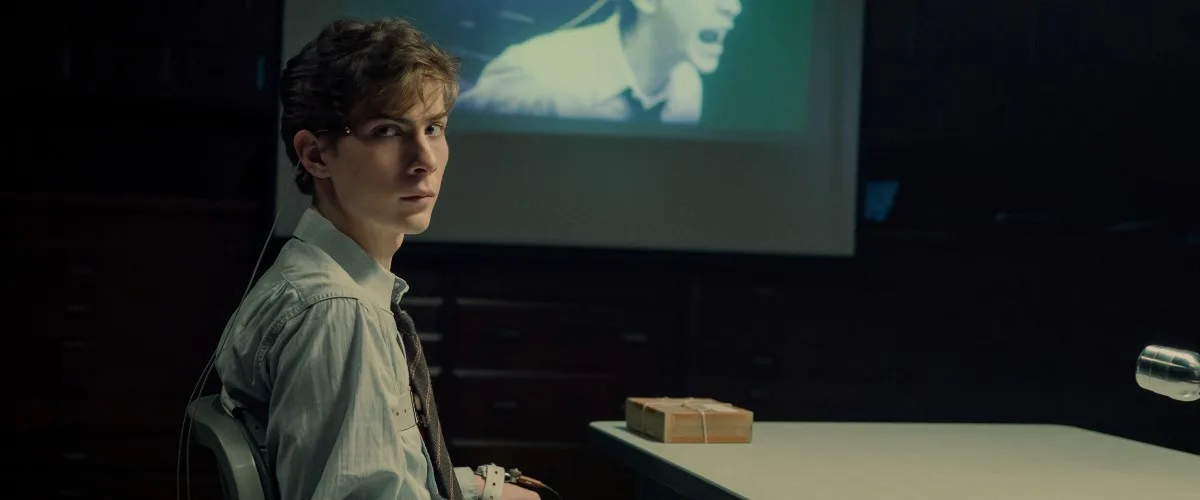
The second portion of the film takes us back to 1958, when Kaczynski attended Harvard as a bright, but socially aloof 16-year-old student. There he immediately falls under the spell of psychology professor Henry Murray (Russell Crowe) and his partner Christiana Morgan (Annabelle Wallis). The pair pioneered the Thematic Apperception Test, an examination that asks subjects to respond to an assortment of ambiguous images, and they’ve got a new experiment that requires fresh subjects. The inquisitive Kaczynski (Jacob Tremblay) volunteers. But he discovers that this supposed philosophy course is something far more sadistic. The sessions are sold to Kaczynski as a philosophy exercise. In actuality, he’s strapped to a chair in an interrogation room with censors as a vicious older student berates his intelligence in a bid to break him.
The flashbacks are meant to set up Miller’s pursuit of Kaczynski, but they do little to bridge the past with the present. It’s not like there’s some mystery about whether Kaczynski did these acts or not, so there isn’t any tension in the identity of one or the other. Also, we barely see the contemporary Kaczynski, so there’s no real connection, at least not on a human level, of where he was then and how he got here, which feels like the supposed thesis of the film. Miller’s own anxieties aren’t exactly brimming with possibilities either.
The film only sticks with the anti-science and misogynistic hurdles she faces for a short time. Likewise, it attempts to critique the CIA, which was backing Murray’s experiments, but drops that thread fairly quickly, too. The agency is merely depicted as a shadow force, pushing Murray for his delayed results. Murray, for that matter, might’ve been the most engaging villain in this—the film posits that his quack experiments turned a socially awkward kid into a violent recluse—but once again, the film projects him as an intellectual boogeyman rather than as a fully fleshed-out person.
Nothing pushes the film forward except a couple of noteworthy performances from a sly Crowe and a temperamental Tremblay (the less said about the wooden Woodley, the better). Both actors rise above the stuffy confines of the film’s hazy cinematography to deliver moments of actual intrigue, especially in a climactic debate between the pair that’s predictable but devastatingly acted. If “Unabomber” was on their level, then maybe there would be the gasp of a whimper on its long slide toward the abyss of the Netflix true-crime library.