As films like “Dawn of the Dead,” “10 Cloverfield Lane,” and Joshua Oppenheimer’s “The End” show, there’s a perverse appeal in stories about everyday life in the post-apocalypse. Sure, the initial fall is horrible, but once the dust settles and you’re where you’re meant to hide out until the fallout (both literal and metaphorical) settles… couldn’t it be kind of cozy?
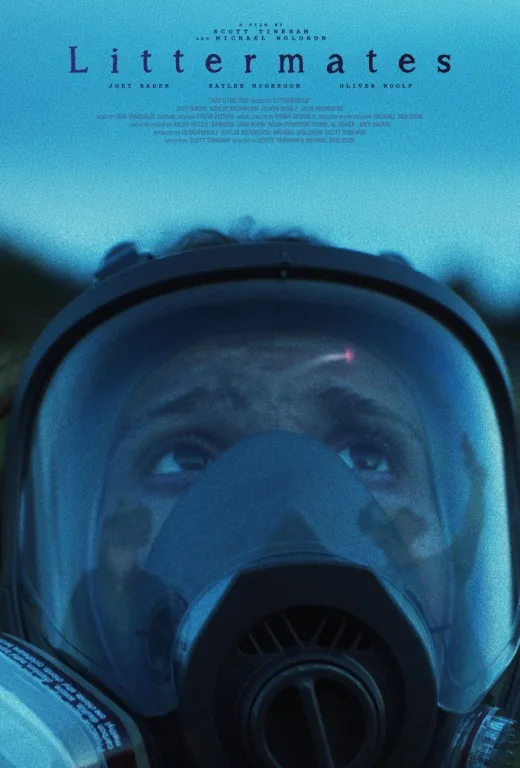
That’s the tack Michael Woloson and Scott Tinkham’s surreal, whimsical “Littermates” takes to the end of the world: a winsome horror-dramedy that feels somewhat like “Dogtooth” with a little of its bite taken out. That’s not necessarily a complaint, mind you, as its microbudget charms and bucolic 4:3 cinematography from Woloson (who also serves as his own DP) help sell a kind of paradise built from its characters’ blank slates. Plus, it finds its own ways to be bleakly funny without needing the typically caustic Yorgos Lanthimos touch.
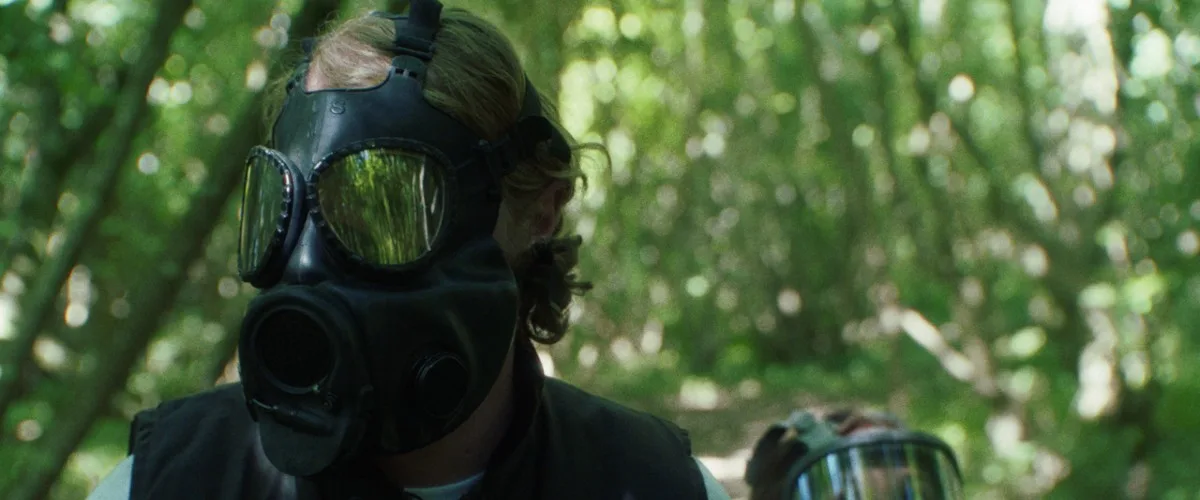
Its opening minutes treat us to a literal snapshot of the erstwhile family we’ll follow throughout “Littermates”‘ intentionally opaque crisis: Chester (Oliver Woolf), Liam (Joey Bader), and Mel (Kaylee MacGregor), taking their gas masks off just long enough to take a Polaroid outside their quaint cottage home in the English countryside. After that, we flash back to Liam, bloodied, disoriented, stumbling into Chester’s property with nary an idea of who he is or how to speak.
Chester nurses him back to health, gets him to speak again, and gives him a new name and identity. Whatever’s happened to him, and to the others outside, has turned them effectively into children; despite Chester and Liam looking similar in age, the former becomes a surrogate father to the latter.
It’s not long before Mel stumbles into the picture as well, and after her own rehabilitation period, these two tabula rasa form quite the pleasant way to sit out the gunshots and chaos heard in the woods just outside their abode. The siren goes off, you run to the shelter; otherwise, you can pass the hours playing tennis, listening to music, or sneaking a drag from Chester’s booze collection when he’s not looking. Chester gives them little coins (called “nifties”) as a reward for good behavior, which they can cash in for everything from hot tub time to karaoke (Liam, naturally, gets competitive with Mel at all these games). But 30 nifties buys you a “forest adventure,” and the curious Mel is eager to see what exactly they’re all hiding from.
In a sense, a lot of “Littermates”‘ setup feels predictable, beat-for-beat, from the get-go: Surely Chester has some trick up his sleeve, or some nefarious agenda that will keep Liam and Mel from learning the truth. But where Woloson and Tinkham (who also wrote the screenplay) zag is in the premise’s comparative wholesomeness—Chester, in all his gentleness and care, is exactly as he seems, making the best of a horrible situation as a surrogate father to two fellow adults who’ve been reduced to a second childhood.
Instead, much of the film is the droll novelty of watching a grown man teach his newfound adoptive sister the quotidian rules of the house, or watching them struggle against real dangers that creep through their fencing. (One scene, a brawl with an intruder in a hot tub set to Beyoncé’s “Diva,” locks in “Littermates”‘s bizarre tone.)
But for the most part, shrinking the world to this single home simply lets Woloson and Tinkham create a strange found-family scenario that sits somewhere between “Flowers in the Attic” and your average COVID lockdown comedy. Bader and MacGregor turn in effortlessly dramedic performances that calibrate nicely between bewilderment and a child’s wild-eyed curiosity. Mel’s arrival sets off Liam’s oldest-child syndrome really quickly, and the filmmakers smartly linger on Bader’s competitive glares as she crushes karaoke or starts to question what’s actually out there.
This adoptive sibling relationship, playing out among adults acting like children, makes “Littermates” feel like a particularly solid episode of “Pen15” set during World War III. See: a confiscated red bra from one of Chester’s clothing runs awakening something nascently sexual in Liam, or the way Mel cakes on the makeup Chester gives her (as, after all, she’s the only girl in a house full of boys, with no one to teach her).
It’s not all fun and games, though, as a third-act turn naturally puts Liam and Mel in the driver’s seat for the first time in their short lives. And Woolf, who projects fatherly calm for so much of the picture, is suddenly put on the back foot as the cozy scenario he’d laid out for his newfound wards starts coming apart at the seams. It’s the kind of closed-off drama you’d expect a microbudget effort like this to aim for. But the performances, its darkly comic tone, and its surprisingly gorgeous cinematography make it punch far above its weight.
In some ways, “Littermates” feels like a high-concept exploration of the kind of shifts that happen when families grow up and grow apart: Parents raise the children, then the children have to strike out on their own. And if you’re siblings, sometimes those paths don’t go in the same direction.