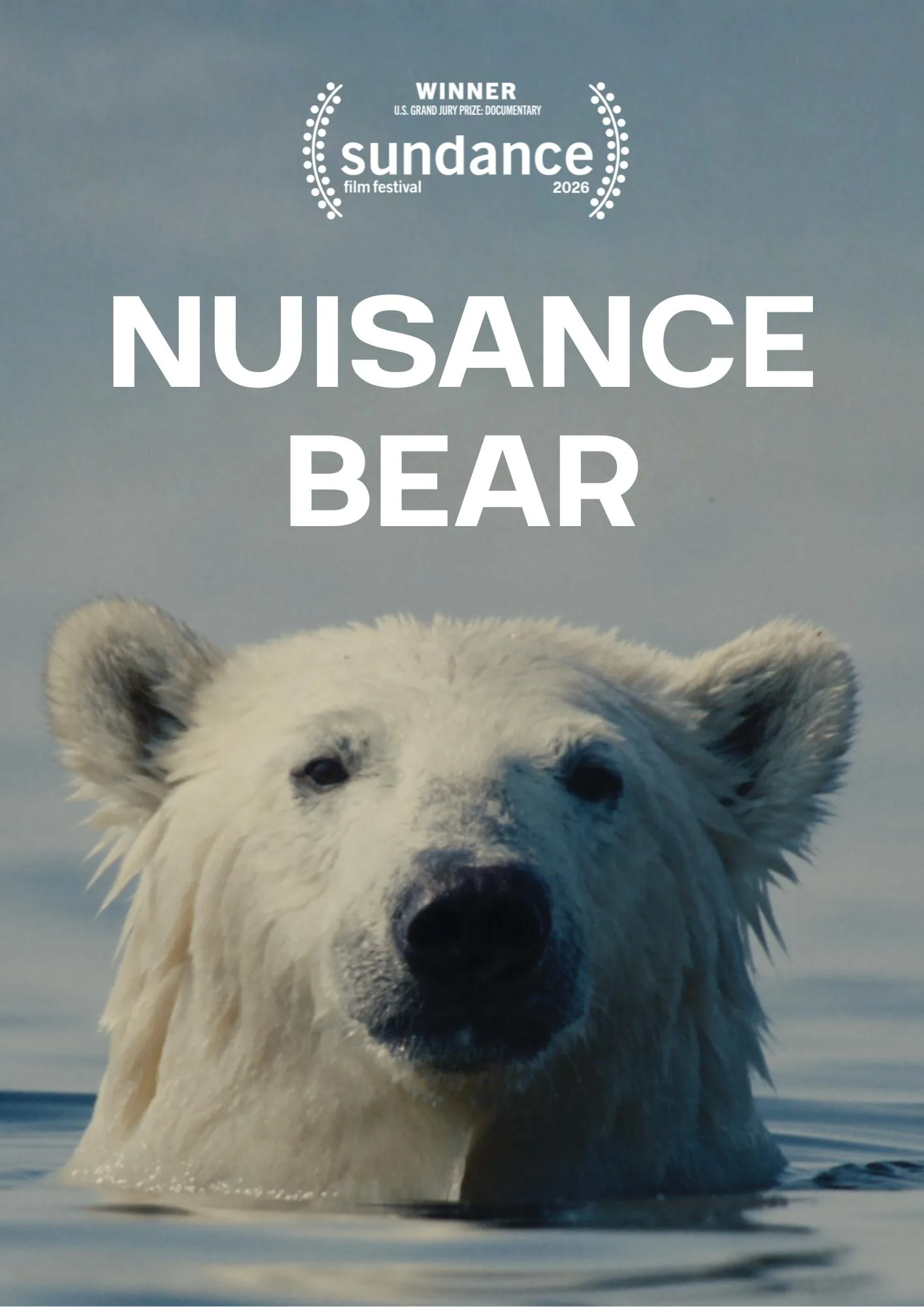
The midterm elections are in our immediate rearview, and funding data centers was one of many hotly debated topics present at the podium. Artificial intelligence accelerates climate change, contributing to water scarcity and other weather disruptions that contribute to the rising prices of food, fuel, and housing. Through its abuse, we’re displacing ourselves. Yet, this phenomenon is not new. Displacement is a pillar of human history, most identifiable in the sphere of colonialism, leaving the animals pushed aside by infrastructure, tourism, and the practices of modernity cast in shadow. “Nuisance Bear,” the documentary feature debut from Jack Weisman and Gabriela Osio Vanden, threads together a local Inuit population with the rogue polar bears who roam into their settlements.
When the film opens, our first view is of a mother bear and her cub, cuddled tightly in the snow. Their eyes slowly blinking, we are given a feeling of calm, sweet intimacy. It is anything but, as the mother catches a sound and breaks from her daze to look out of frame; the film cuts to a line of wildlife photographers, their tripods steadying weighty telephoto lenses, and the capture of their images soundtracking the landscape with the staccato punches of the shutter.
“Nuisance Bear” examines the idea of how implicit ownership muddies the lines of what may be considered invasion. Narrated by the late Inuit elder, Mike Tunalaaq Gibbons, the film uses the voyeuristic framework of a traditional nature documentary while incorporating a soft-spoken intimacy by way of his anecdotes. Gibbons describes the residential schools that Indigenous youth were corralled into, where their abuse and forced assimilation (a history which is evocatively outlined in another former Sundance debut, “Sugarcane”) directly resulted into displacement and generational trauma that the communities are still working to overcome.
He recalls his son’s death–killed by a polar bear while protecting his kids–and his belief that the bear was one that was separated from its mother too early. Raised being indoctrinated with the belief that Inuit knowledge had no value, Gibbons laments the lessons he never passed to his son, and wonders if they would have made a difference.
It is this throughline that holds the weight of “Nuisance Bear,” and yet, even with a tight sub-90 minute runtime, the film basks in its meditative sequences frequently enough to cause a drag. It also spends a significant amount of time sitting in community meetings, being a fly on the wall to discussions about how to handle the encroaching bears as they pose threats to children and property alike. This more straightforward issue carries more runtime than the spiritual and generational dilemmas despite lacking the nuance, interest, and emotion of the latter.
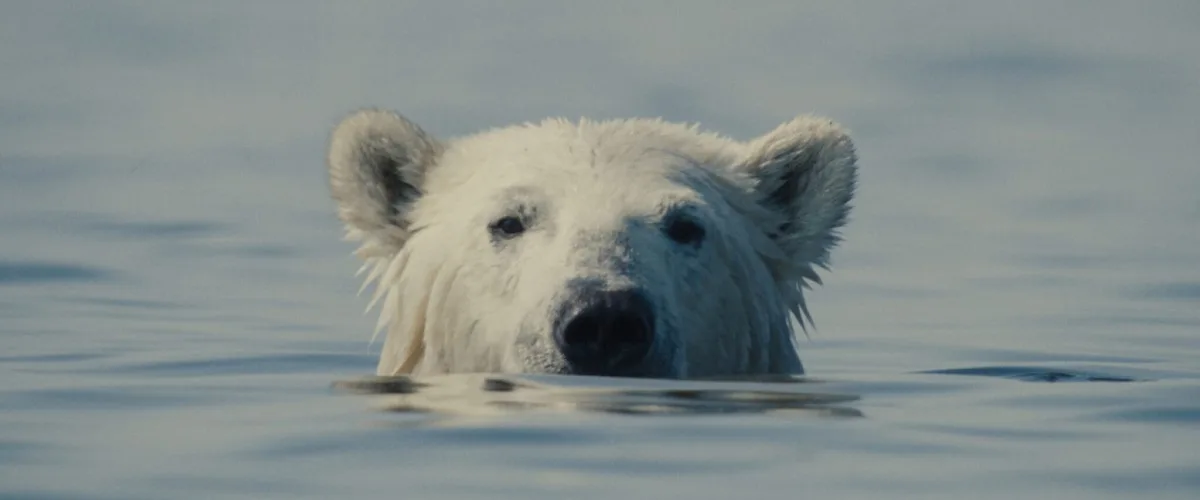
While indulgent, the cinematography is also stunning. Nature shots are from a bear-eyed view, not only putting us in the perspective of the displaced, but also leering in its lowness, providing a feeling that we too are interlopers, squatting to hide while inching closer than we should.
In comparison to the directing duo’s wordless short film, from which this feature is adapted, language plays a major part in connecting us to the ethos of “Nuisance Bear.” Gibbons speaks in his native Inuktitut, gently and unrushed. When the film cuts to shots of him, we are up close. The most notable use of English in the film is on a nature tour, where a bus full of vacationers marvel and exclaim their excitement as a bear nears the vehicle.
So while colonialism is not necessarily at the fore of “Nuisance Bear,” it absolutely informs it. The pacing suffers from indecision and a wandering eye, but the impact of the discussion remains after the film’s end. Breaking apart what we’ve done to the world, each other, and where we now must fit, “Nuisance Bear” does not sit in an answer, but swims in the question.