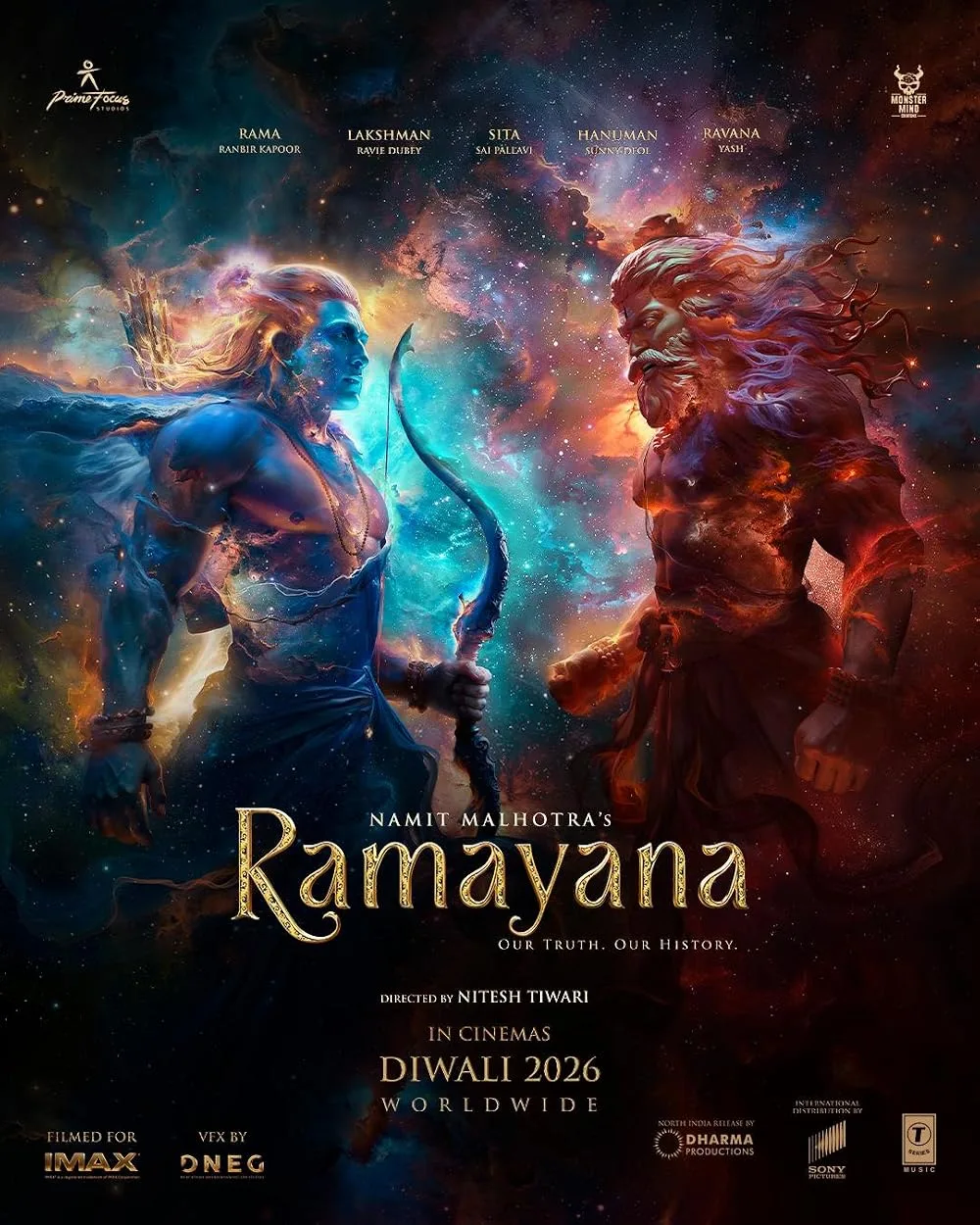
There’s something uniquely disorienting about watching a ton of money thrown at movie screens without any proportionate human warmth or craftsmanship. The Bollywood mythological fantasy “Ramayana: Rise of a Legend” boasts the largest production budget in Indian film history, though its reported 450 crore (or $420 million) budget includes the inevitable sequel since this IMAX-scaled action-adventure is the first entry in a planned trilogy. The movie’s computer-generated visual compositions still look cheap and inert.
The filmmakers claim AI was used only for lip-syncing, since this would-be crossover event will be dubbed in various languages for its gigundo global release on 50,00 screens, 4,500 of which are in the US alone. But the movie’s previsualized, effects-driven scenes look as tacky and prefabricated as AI-generated slop, making it harder to appreciate this overproduced, underdeveloped boondoggle.
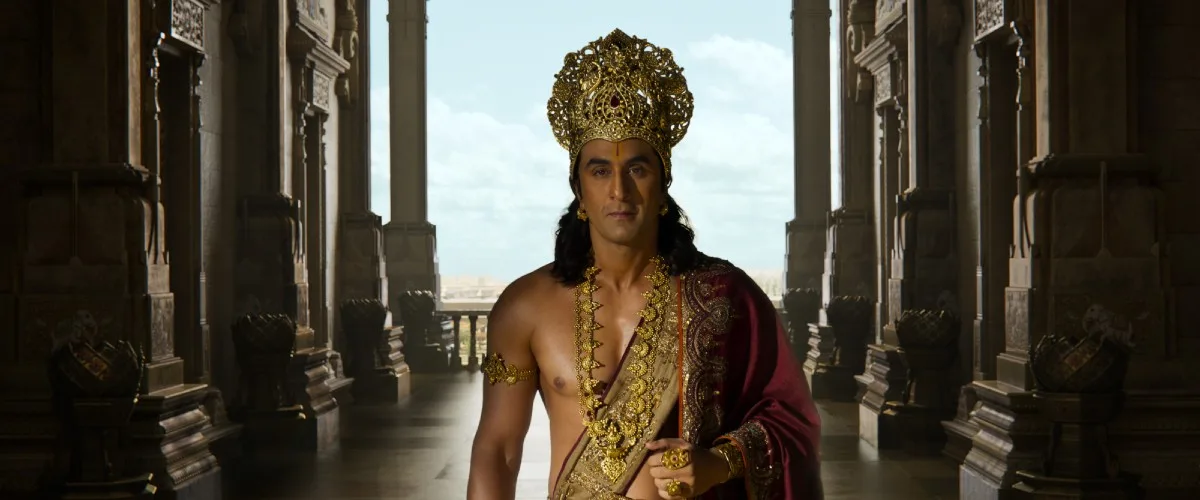
Based on Valmiki’s renowned epic poem, “Ramayana: Rise of a Legend” looks more like an unfocused proof of concept than a cogent hero’s journey for Prince Rama (Ranbir Kapoor), a beloved ruler of the Ayodhya kingdom. Rama eventually becomes the iconic ruler and warrior that he’s known as in Hindu mythology through a series of episodic challenges. That’s his dharma, or righteous destiny, as the movie reminds us throughout.
So Rama’s rather passive throughout this three-hour-plus epic, though that’s presumably only a problem if you get bored with the movie’s busy approximation of his story, which dovetails with the dharma of the evil King Ravana (Kannada star/producer Yash), Rama’s main antagonist. Ravana’s the more interesting co-lead, being a troubled underclass antihero who, through various circumstances, becomes a cruel villain. At the same time, both Ravana’s and Ram’s stories are inexpertly synopsized approximations of Valmiki’s imposing, yet still fairly well-known and frequently adapted/refashioned, source material.
The filmmakers inadvertently short-change a number of key supporting roles in their haste to pack in as many essential plot points as they feel are necessary, particularly Rama’s faithful half-brother and sidekick Lakshman (Ravi Dubey) and his loyal but lesser-than step-brother Bharat (Adinath Kothare). Western viewers might feel disoriented by such a deep bench of side characters, though they’ll never have to wait long before some big splashy set piece draws their attention away from human-scaled melodrama and deeper into plastic-looking animation and unimaginative production design. There’s a lot of everything in “Ramayana: Rise of a Legend,” and most of it appears weirdly diminished because of that over-abundance.
Let’s say that the filmmakers are telling the truth about their limited use of AI-enhanced SFX. I doubt it, based on the inexpressive facial features, glassy lighting, and robotic movements of some actors and extras. There’s also some really dodgy image compositing throughout, as well as an eye-straining motion blur whenever anyone’s fighting each other or simply moving fast across the screen. And don’t get me started on the handful of master shots that fuzz out two or three on-screen actors in order to establish who we’re supposed to be looking at. Not the background art, just the people.
But hey, maybe it’s not AI after all! This movie’s special effects sequences would still look bad for the same reason bad CGI looks phony: they’re lifeless and neither productive nor compellingly surreal.
“Ramayana: Rise of a Legend” delivers so much ersatz grandeur that it’s easy to overlook how thrifty and ungenerous its filmmaking is scene to scene. Choppy editing is unfortunately to be expected during VFX sequences, but it’s more frustrating when characters talk to each other, and their costumes and dialogue both require more patience. Oftentimes it seems like the actors are talking at each other without any interpersonal chemistry. Likewise, the action filmmaking is either poorly showcased or negligibly choreographed, leaving one to wonder how something so expensive can look so drab.
Hardy source material ensures that “Ramayana: Rise of a Legend” is at least more engaging than many other movies like it, including the formulaic 2022 super-mytho-fantasy “Brahmastra: Part One—Shiva”, which also stars Kapoor and showcases a host of generic cliches. But while the movie has some novel elements in its plot and characterizations, it’s hard to imagine anything in its depiction of Rama and Ravana’s rivalry that you can’t find elsewhere.
Your enjoyment of “Ramayana: Rise of a Legend” likely depends on your pre-existing attachment to this story and these protagonists. Kapoor, Yash, and their many co-stars deliver good-enough performances that inevitably get smothered by the Uncanny Valley effect whenever somebody or something tries to look bigger-than-life. At least the last hour or so looks more polished than the preceding two, which is a relief given how much emphasis that concluding footage puts on plot-light fantasy action.
There’s a lot of money on-screen here, and that might be enough to make this new “Ramayana” a box office success. But it doesn’t bode well for whatever comes next.