
Three years into covering the Tokyo International Film Festival, and this was the first time my slate was filled almost entirely with Japanese films. The festival’s programming didn’t change—it’s featured a similar ratio of domestic and international films as long as I’ve been coming to Tokyo. The jury awards favored international selections, bestowing the sardonic, surreal Macedonian “Parasite” riff “Sister Brother Manhole Cover” with this year’s Grand Prix, the festival’s top prize. In fact, there was only one Japanese movie among the winners on the main competition slate.
And, to be sure, there were some non-Japanese films that caught my attention at this year’s TIFF (the Tokyo one, not the Toronto one, as one often has to clarify in conversation). The sweet, bookish Tamil drama “The Paper Flower” stood out, as did “Fuxi: Four Tales of Feasting,” by Chinese contemporary artist Qiu Jiongjiong, “Fuxi” is what you’d call a “big swing,” and it was divisive, at least among the foreign critics with whom I gathered after hours at the many smoky izakayas filled with plastic stools and jars of wooden chopsticks near the festival headquarters. (I’m partial to the one that’s literally underneath the shinkansen tracks, although they all have their charms.)
A Japanese film, “The Intertwining,” was more popular. Director Akira Yamamoto’s style can be compared to that of Ryusuke Hamaguchi, pointing in a roundabout way to another popular topic of conversation in Tokyo: The divide between Japanese popular cinema (mostly consumed domestically) and Japanese arthouse films like “All of a Sudden” (which tend to break out abroad), and how to bridge it.
These talks inevitably came back to “Godzilla Minus Zero,” which managed to have it both ways: Takashi Yamazaki’s “Minus One” follow-up premiered to critical acclaim at the New York Film Festival and then opened to big box office in Japan and abroad. TIFF held a special centerpiece screening in the middle of Hibiya, an area that was basically turned into a gigantic immersive advertisement in the days before “Minus Zero” was officially unleashed. (Not that I’m complaining.)

One reason why this question was so prominent in my mind is that watching 11 new Japanese movies (and three classics) in one week, as I did at this year’s TIFF, gives you a pretty full view of the spectrum of what’s being made in the country today. Festival opener “Sukiyaki” is on one end of the scale, an unabashedly mainstream work of cinema from a director with a background in artsy pink movies. (More on those in a minute.) Given how catchy the original song was, though—I had to restrain myself from whistling it in a packed elevator after the screening—maybe the popular route is appropriate for a movie about its composer.
Speaking of pinku, 2026 marks the 55th anniversary of Nikkatsu’s “Roman Porno” series, a Japanese softcore subtype that was designed to draw adult filmgoers back into theaters amid the rise of television in the early ‘70s. These were typically character-driven, artistically shot works, and “Wet Weekend,” a more obscure but equally challenging (in a good way) entry into the cycle, was no exception. Director Kichitaro Negishi and star Junko Miyashita were present for a post-film Q&A, and although they both joked about how strange it was to watch the film after so long, especially at a film festival, Negishi in particular spoke fondly about the creative freedom he enjoyed on the project.
Like their American B-movie counterparts. Roman Pornos were places where, as long as you fulfilled your quota—here, a sex scene every 10 minutes—you could do pretty much whatever you wanted with the rest of your film. By comparison, the Amazon/MGM “Boys Love” romance “Monster in Sheep’s Clothing” had fewer sex scenes, and took fewer artistic risks. But it was still interesting to see such a distinctly Japanese phenomenon (although it’s gaining popularity abroad—insert mandatory “Heated Rivalry” reference here) in the context of an international festival.
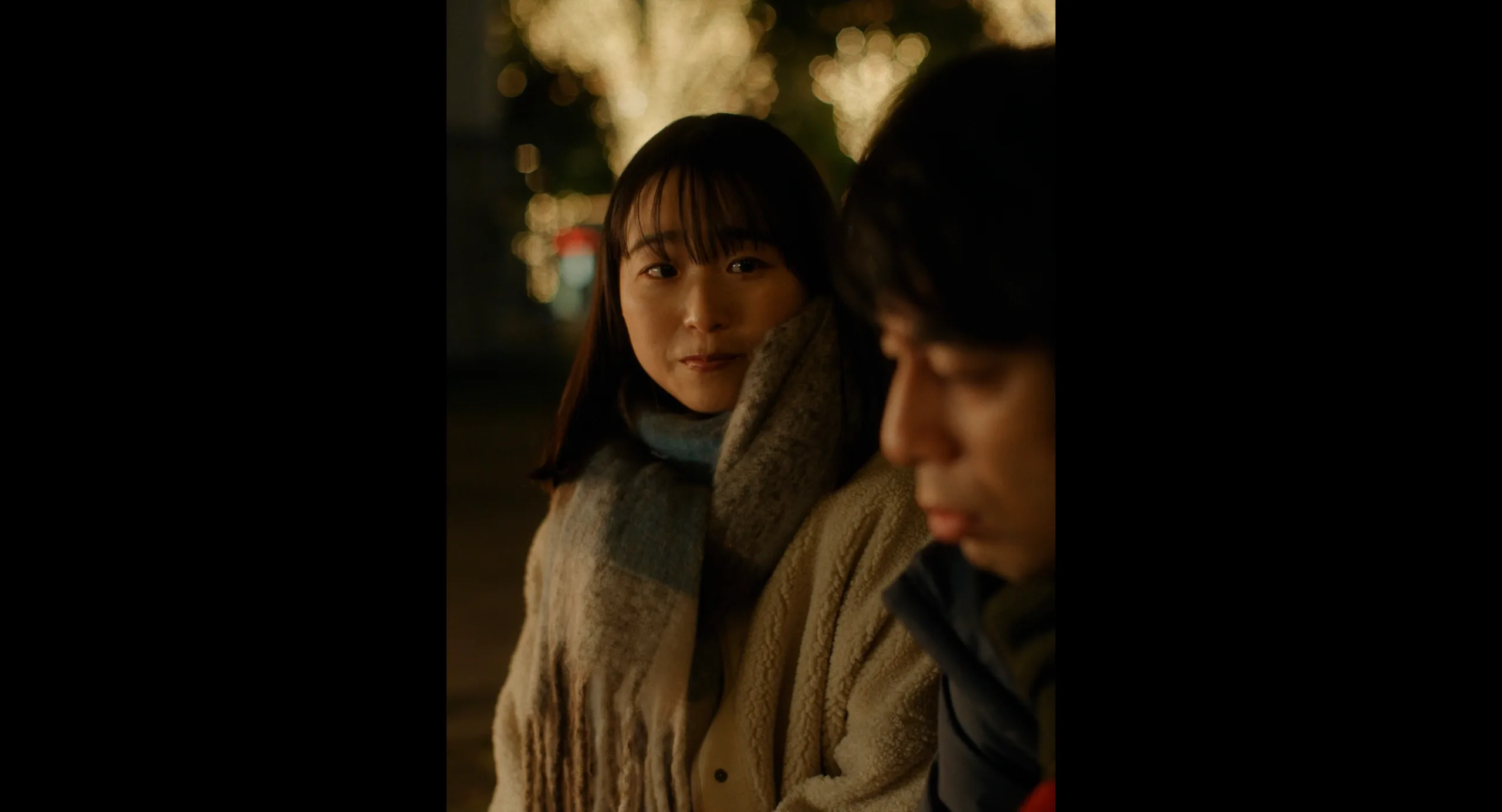
“One Cut of the Dead” director Shinichiro Ueda is a filmmaker who’s accustomed to working independently: His debut feature was famously made on a budget of ¥3 million (currently around $19,000). Since then, he’s expanded into the world of so-called “vertical dramas,” the latest of which was so well received that it was recut and repackaged as a standalone feature film. Despite Ueda’s thoughtful efforts, you never really forget that you’re watching a film that originated on TikTok. But the story, about a film director diagnosed with early-onset dementia trying to recall his first movie—and his crush on the girl who starred in it — is absorbing enough to transcend it. In the end, “Earthlings in Love” is both liberated and restricted by its vertical-format cinematography and twisty, melodramatic storyline.
Although they’re both odd birds, in many ways the Japanese competition title “The Canary’s Lullaby” is an inversion of “Earthlings in Love.” Here, director Akira Ikeda takes the fairy-tale route, telling a story (it’s not quite a fable, as there’s no real moral) about an old woman in a timeless East Asian village who finds what can only be described as a really weird-looking baby threatened by a monster. Ikeda’s style of absurdity is very deadpan—one character’s laugh sounds like a dry cough—which I love. But while it’s controlled and beautifully composed, it never quite comes to a climax.
Another form of Japanese popular entertainment I’ve been trying to learn more about is anime, as it’s an ideal example of an extremely popular type of cinema—both in Japan and abroad—that doesn’t often get the critical acclaim that it should. I had a great time watching “Grotesqqque,” an animated anthology revolving around three different Japanese teen-girl subcultures; the last segment, about a wandering band of Sapphic vampires in post-apocalyptic Japan, gave me all the Halloween I needed in a city that’s been cracking down on visible celebrations of the imported American holiday. (There’s a good reason for it, but don’t worry—the parties continue in underground clubs.)
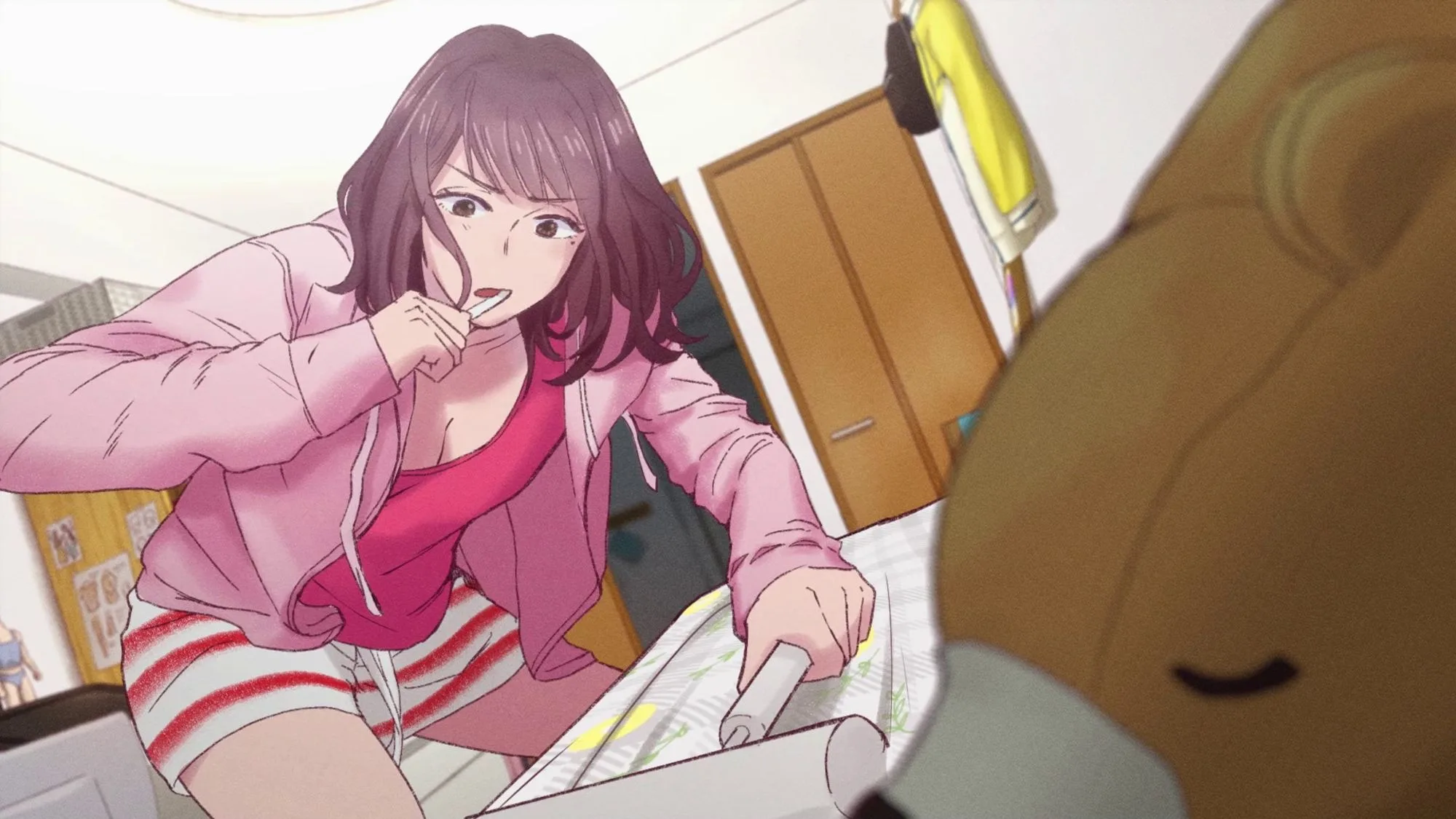
But the best animated film at Tokyo IFF this year—and my favorite movie of this year’s TIFF, period—was “Cherry and Virgin,” which was recommended to me by virtually every critic I talked to at the festival. And it delivered. Director Masanao Kawajiri crowdfunded this rotoscoped feature, about two illustrators—a guy who draws horny manga and a lifelong fujoshi—in their late 20s who meet on a dating app, and who share an embarrassing secret: They’re both virgins. Kawajiri’s direction on the story of these two nerds’ (said with love, of course) halting first romance is outstanding, animating each of the main characters in a different style that reflects their respective creative and emotional worlds. As they grow closer, the styles start to merge. But the visual storytelling, as brilliant as it is, wouldn’t work as well as it does if the story didn’t feature genuine connection and emotional vulnerability.
A similar thread of longing runs through “Two Cigarettes, Three Nights,” whose English title is adapted from the more evocative, but harder to translate, Japanese title “Otoko Tomodachi,” meaning “Male Friend.” In both languages, there’s an implied question: Can men and women ever really be just friends? Our protagonist’s boyfriend doesn’t seem to think so, looking on jealously as she spends first one night, then another, then another, hanging out until dawn with a (male) former college classmate. But while the sexual tension is riveting, what really stands out about director Yukiko Mishima’s filmmaking is the attentiveness she gives to our heroine’s work as an illustrator as well as her love life. It’s also just a beautifully shot movie, one that depicts the internal worlds of women—romantic, creative, or both—with loving care.
The question of tying together the many threads of contemporary Japanese cinema—popular and arthouse, domestic and international—was also very present at TIFFCOM, a parallel content market that took place during the Tokyo International Film Festival. Held in the same week in a different high-rise building by a strain station just a few blocks away from TIFF, the market was full of people on the afternoon when I went to walk around and see some panels, multiple of which were about the possibilities of international co-production and exporting Japanese IP.
These ideas came together at the Tokyo edition of the Fantasia Film Festival’s famous Frontieres pitch sessions, where filmmakers give a presentation in front of a crowd of financiers and foreign distributors about why they should invest in their movie. I’ve attended the Fantasia market in Montreal, so it was surreal—and also exciting—to see that same format unfold in a packed screening room at a Tokyo post-production house. Pitches came from all over Asia, but the most popular one was from a group of filmmakers based in Tokyo (with a little help from a Toronto-based Japanese producer) plotting a sequel to the 1999 rockabilly-zombie cult classic “Wild Zero.”
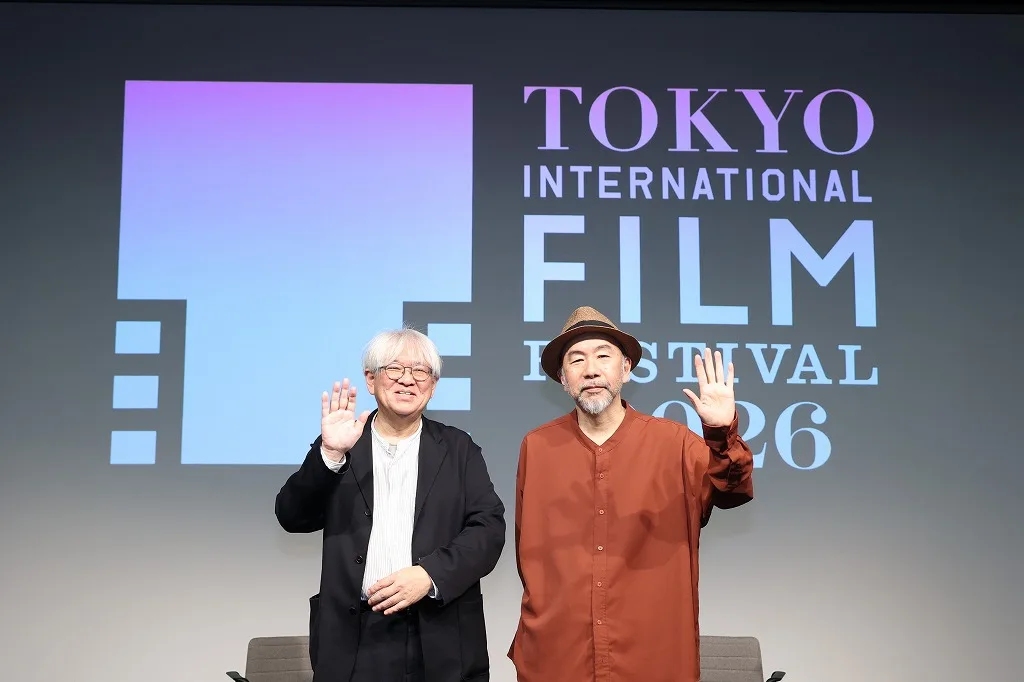
But perhaps the most striking case study in the divergent threads of Japanese filmmaking at home and abroad is Shinya Tsukamoto’s “Mr, Nelson, Did You Kill People?,” which opened to lukewarm reviews at the Venice International Film Festival but has since gone on to become a persistent, if modest, box-office force in its home country. It just entered its sixth week in theaters in Tokyo, and a masterclass that Tsukamoto’ gave at this year’s TIFF spent as much time on the director’s recent anti-war work as it did the cyberpunk movies that made him famous.
At the talk, Tsukamoto said that he wouldn’t have a career without international film festivals, but that his primary focus going forward will continue to be anti-war cinema that’s meant to counter what he sees as a rising tide of militarization in Japan. As a result, he said that he imagines that he’ll remain an independent filmmaker for the rest of his career, but he doesn’t mind: “Filmmaking is the culmination of everything I love,” he said, adding that it combines acting, visual art, and editing, which he sees as a natural extension of the art of storytelling. And when movies themselves are a kind of co-production that takes different modes of expression and weaves them together into an entirely new and different art form, why shouldn’t the threads of cinema be tied together in other ways as well?