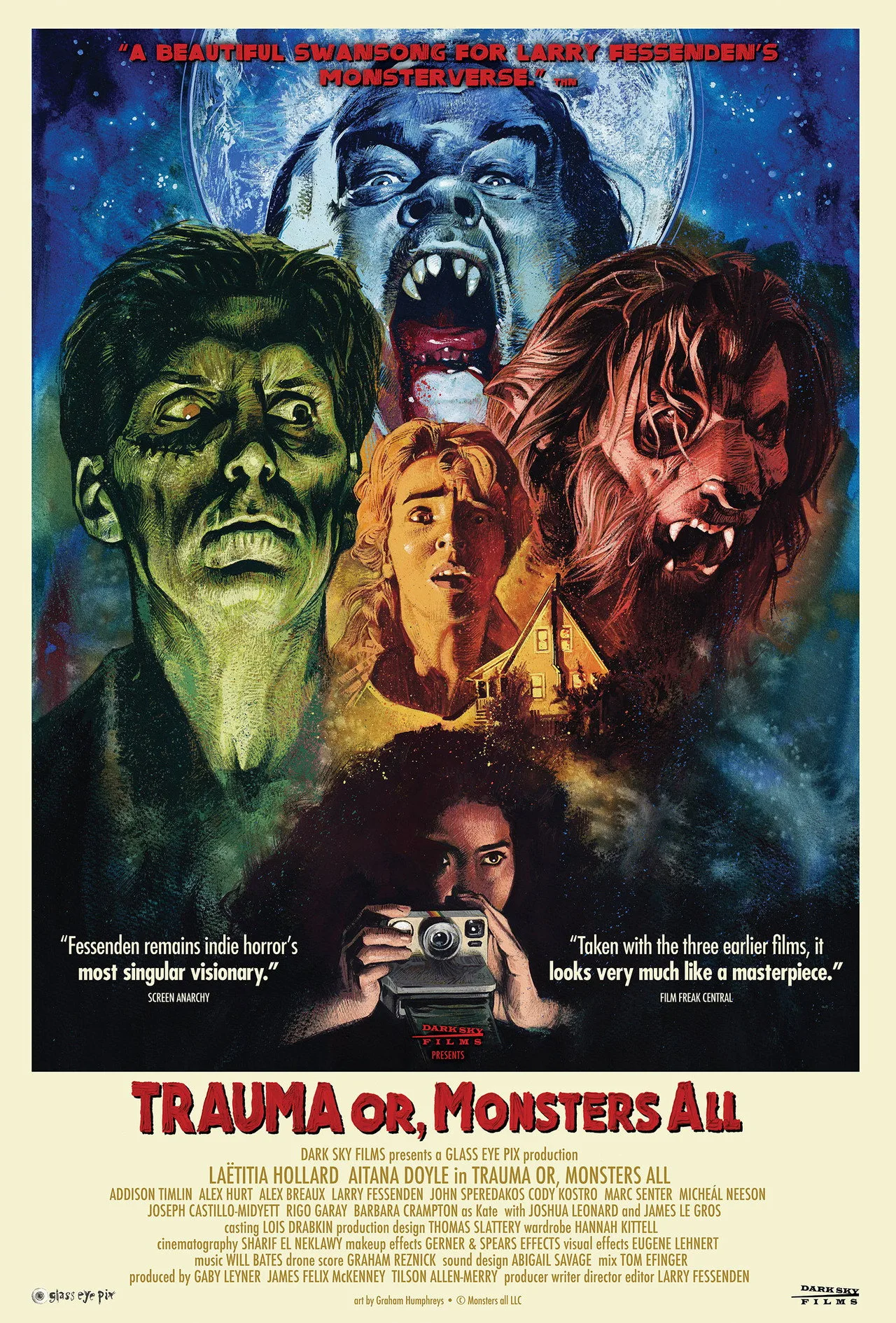
Indie horror figurehead Larry Fessenden turned 63 in March, but he has no plans to retire or slow down. You might think otherwise after skimming reports of recent film festival screenings of “Trauma or, Monsters All,” a melancholy creature feature mash-up that throws together characters from three of Fessenden’s earlier movies. This new movie also feels like an urgent summary of Fessenden’s work as a writer/director (and editor/producer), as well as the founder of the NYC-based production studio Glass Eye Pix.
Thankfully, Fessenden’s confirmed that he’s not actually retiring (and he’s not sick either). More importantly, “Trauma” doesn’t feel like the last gasp for a frustrated creative. Here we find a creatively energized filmmaker shooting the works after years of figuring out what he’s about and how to express himself.
With all that said, you should probably not watch “Trauma” until you’ve seen the other movies that Fessenden calls back to here, specifically the urban vampire character study “Habit”, the neo-gothic “Frankenstein” update “Depraved,” and the moody werewolf drama “Blackout.”
But if you did watch “Trauma” first, you’d still likely be overwhelmed by the sheer force of Fessenden’s personality, which he works into every scene and detail, from its sometimes amateurish line readings and off-kilter camera setups to its generous characterizations and revealing dialogue. Nobody makes horror movies like Fessenden, and “Trauma” might be his best yet.
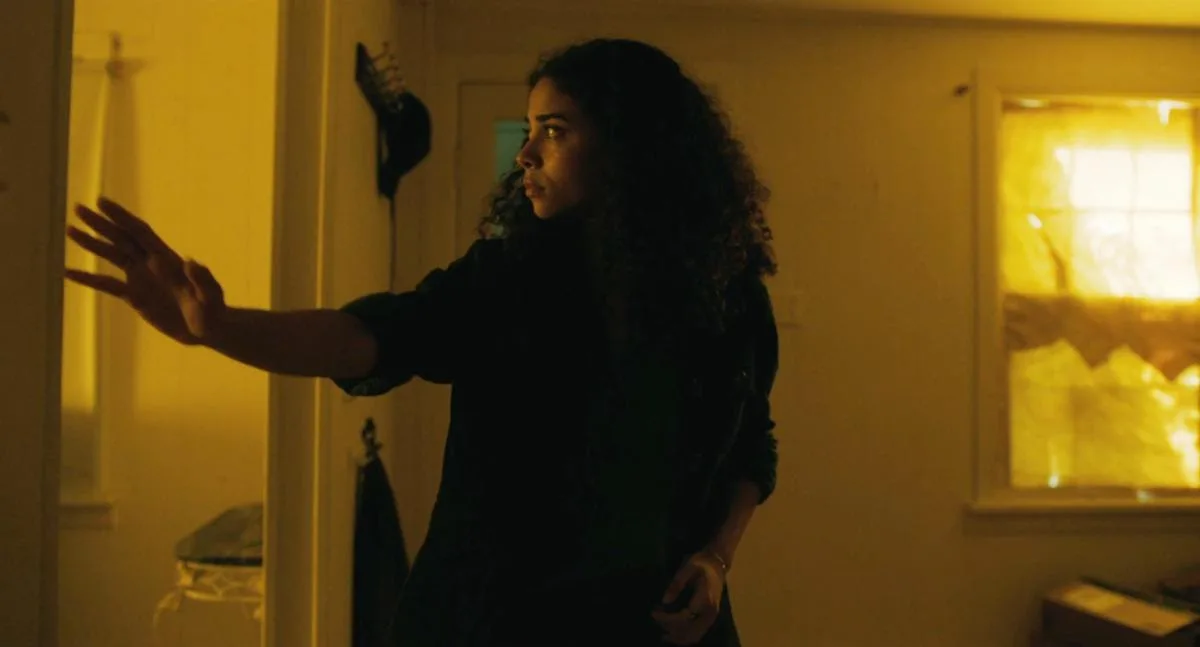
“Trauma” mostly concerns “Blackout”’s aftermath since its story only begins after the precocious college writer Cassandra (Laetitia Hollard) investigates her neighbor Charley (Alex Hurt), “Blackout”’s tortured lycanthrope lead, as well as “Depraved”’s Frankensteinian mystery man Adam (Alex Breaux), who hooked up with Charley at the tail end of “Blackout.”
Cassandra should focus on writing about George Washington Carver, since he’s a better fit for her than her neighbors, as her well-intentioned friend Agnes (Aitana Doyle) repeatedly suggests. Unfortunately, Cassandra’s curiosity gets the better of her, and she applies it to a gossipy newspaper article that brings unwanted attention to Charley, Adam, and a few others from their respective pasts. Even Sam (Fessenden), “Habit”’s sickly bohemian turned bloodthirsty vampire, schleps upstate to Talbot Falls after he reads Cassandra’s feature and learns that other monsters exist.
You’re bound to be disappointed if you’re expecting more of a plot from “Trauma.” It’s more like a dramatized forum and compendium of Fessenden’s idiosyncratic outlook on life, which gives this mob-vs.-monsters pic a metaphysical bent.
Talbot Falls’ residents often talk past each other or change their minds on a whim because they either can’t express themselves or can’t be fully understood by everyone around them.
A variety of tangents soon pile up and indirectly speak to Fessenden’s own irrepressible post-hippie sense of universal empathy. Think about how central Cassandra is to the plot, even though her article not only doesn’t reflect her values, but also inadvertently ruins several lives. She’s told as much by Talbot Falls’ local priest (Glass Eye regular John Speredakos), but still looks more like an antihero than an outright villain since she, like many of Fessenden’s previous antiheroes, is more frustrated and fallible than she is outright bad.
Even an unlovable scoundrel like Sam has sympathetic qualities, though in his case they’re more like moments of hesitation that remind us, through flashback clips from “Habit”, that he used to be young, too. So while it’s tempting to read Cassandra and the inciting fallout from her article as a condemnation of, say, clickbait journalism, it’s more like she’s a frustrated idealist who doesn’t know what to do with herself and he’s a jaded cynic who needs to feed off other people.
“Trauma”’s protagonists are ultimately damned to not see or understand each other in a way that fully reflects their humanity. Monsters like Adam and Charley are consequently not treated like a topical piñata to bat, but rather as a personal expression of Fessenden’s perennial worry that, at a fundamental level, we are either unaware of, or incapable of understanding, how much we lose because we can’t communicate with each other.
You can sense Fessenden’s excitement and engagement in a number of little digressions, like horror icon Barbara Crampton’s cameo or Speredakos’s aside about how King Nebuchadnezzar was basically a Biblical precedent for modern werewolves. You can also hear how much he likes his characters from how much of himself he works into every role, from Mrs. Shultis (Beth Dixon), Cassandra and Agnes’s crabby boss at the Talbot Falls library, to Polidori (Joshua Leonard), Adam’s selfish ex-patron.
Like the best of the director’s earlier work, “Trauma” also shows you how to appreciate it as you watch. The main difference between this new movie and Fessenden’s earlier work is that this movie feels like he could only make it right now. I can’t wait to see what he does for an encore.