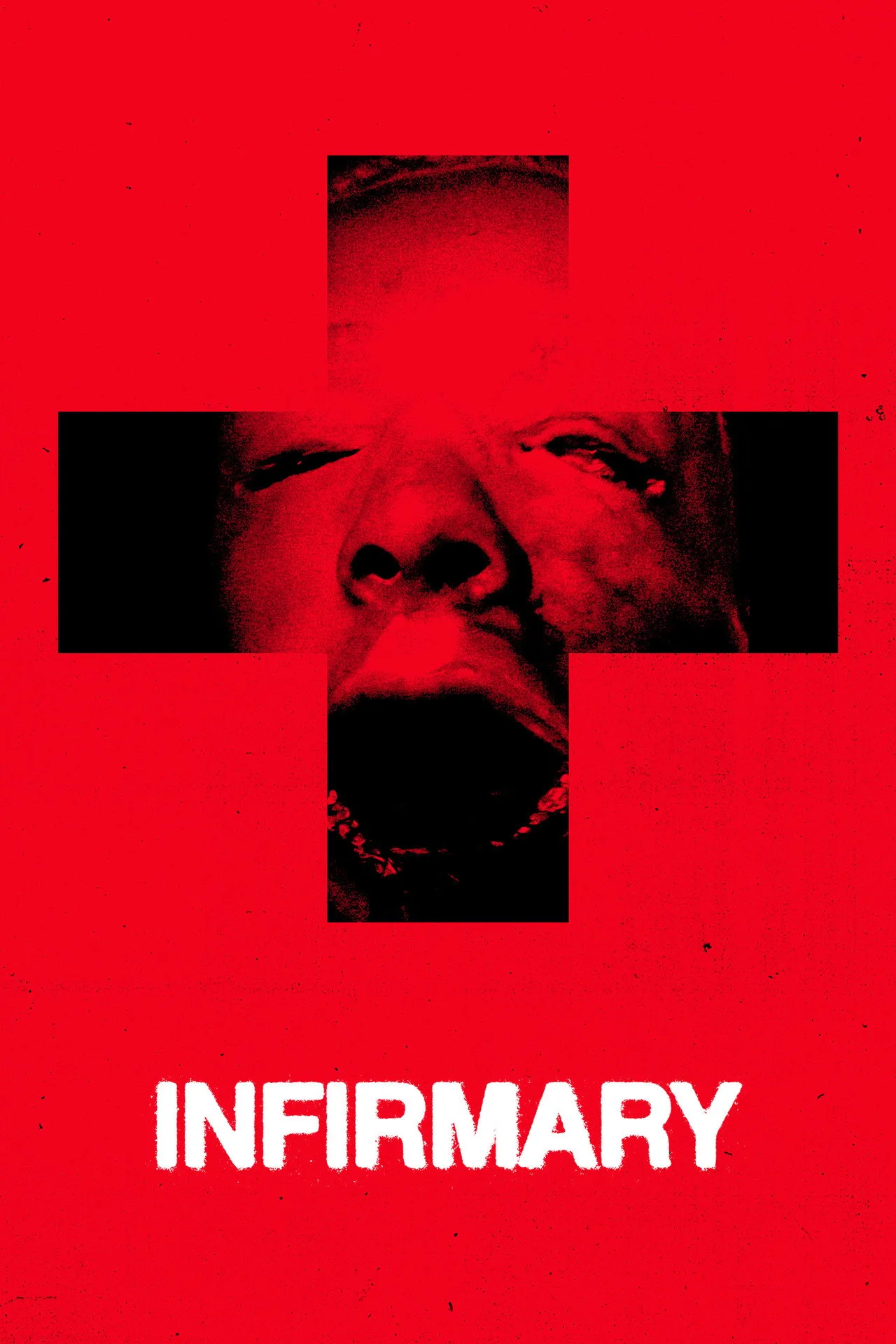

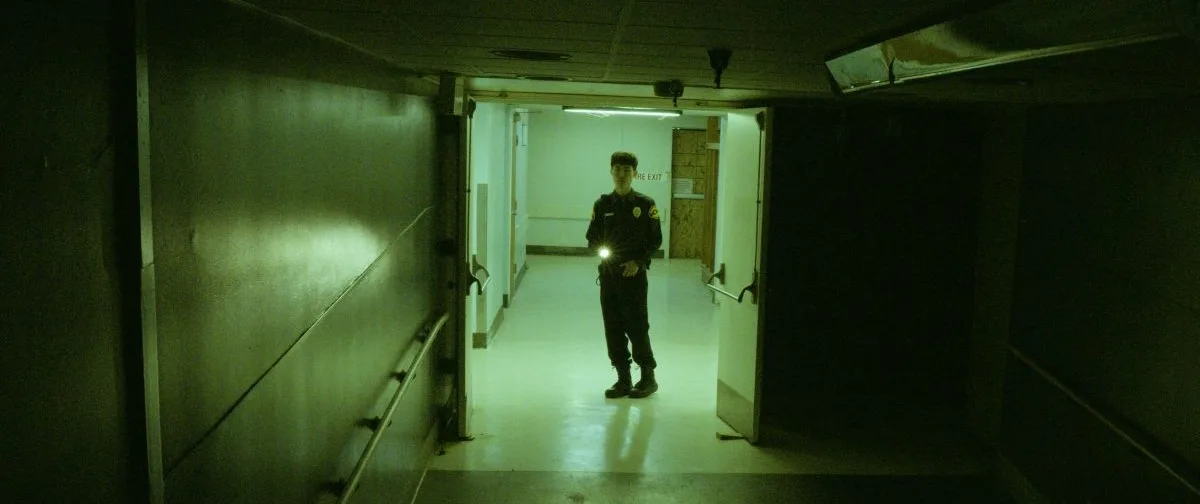
Nicholas Pineda gets a lot of horror mileage out of his undeniably creepy location in the Shudder chiller “Infirmary,” a movie that understands that ordinary hospitals are scary enough, but abandoned mental hospitals might be the most terrifying places on Earth. With just three real characters, Pineda relies heavily on the almost “Backrooms” feel of his setting and the inherent creepiness of mannequins, but his film runs out of fuel before its brief runtime reaches its final minute. There’s just enough mood and tone to make it tolerable, but a promising setup gives way to repetitive nonsense for so long that the final “Blair Doctor Project” scenes can’t bring this patient back to life.
If you haven’t caught on yet, “Infirmary” is found footage, a genre that exploded after “Blair Witch Project” and “Paranormal Activity,” but has lessened in the era of Grief Horror and whatever will come of the Parsons/Barker genre explosion. Horror fans will tell you there’s still a decent found footage film released about once a year—2025 had the memorable “Man Finds Tape”—and “Infirmary” opens with scenes that suggest it could take the subgenre crown for 2026.
Naturally, “Infirmary” opens with a government warning about how the footage you’re watching was collected from a scene of two murders and a missing third person of interest at the Wilshire Infirmary. Cut to surveillance footage of Edward (Paul Syre) arriving for his first night on the job as a security officer at the closed Wilshire facility. He meets two people there: a creepy HR rep named Mrs. Downey (Danielle Kennedy) and his boss, Lester (Mark Anthony Williams), who hazes him so badly he would be dead or in jail in real life. In one scene, he locks Edward in a morgue drawer with a bloodied mannequin head. Let’s just say there would be violence before anything supernatural happened for most people.
We learn a little about Edward: He is a recently discharged vet who signed up after 9/11. (When Mrs. Downey notes he would have been 3, he brushes that off by talking about seeing footage more than actual memories.) That he’s a yes man, someone accustomed to taking orders, feels like it’s set up to heighten the horror to come, but Pineda doesn’t do nearly enough with his characters as the Wilshire gets creepier, making them disposable and forgettable. It’s one of the film’s biggest flaws that we simply don’t care enough about Edward to be invested in what happens to him.
How does the Wilshire get creepy? Long shots from CCTV cameras of the abandoned hallways actually have more surreal mileage than the eventual “action” of the piece. We expect to see a shadow at the end of the hall or a door moving when it shouldn’t be. But Pineda doesn’t even use his space strongly enough, choosing too many of the same angles with nothing in them to keep viewers engaged. When Edward finds some medical mannequins and learns that the Wilshire owners were practicing some supernatural magic to transfer the psyches of patients into the human-sized dolls, “Infirmary” loses all relatability.
Found footage movies always work better when we can see ourselves in them, whether it’s lost in the woods of “Blair Witch” or trapped in the suburbia of “Paranormal Activity.” Getting chased by possessed mannequins through an abandoned hospital? Less relatable. And the lack of characters combined with that lack of connection leaves “Infirmary” inert.
Images and ideas hint at a stronger future for Pineda. There’s a scene when Edward and Lester are trying to figure out if a shape on one of the surveillance cameras is a person or a mannequin someone moved that’s legitimately chilling. The idea of looking at an image and seeing something impossible in it has the weight of a common nightmare. If Pineda returns to this milieu again, he should prioritize those kinds of mundanely creepy images. After all, there’s almost nothing scarier than a shadow that shouldn’t be there.