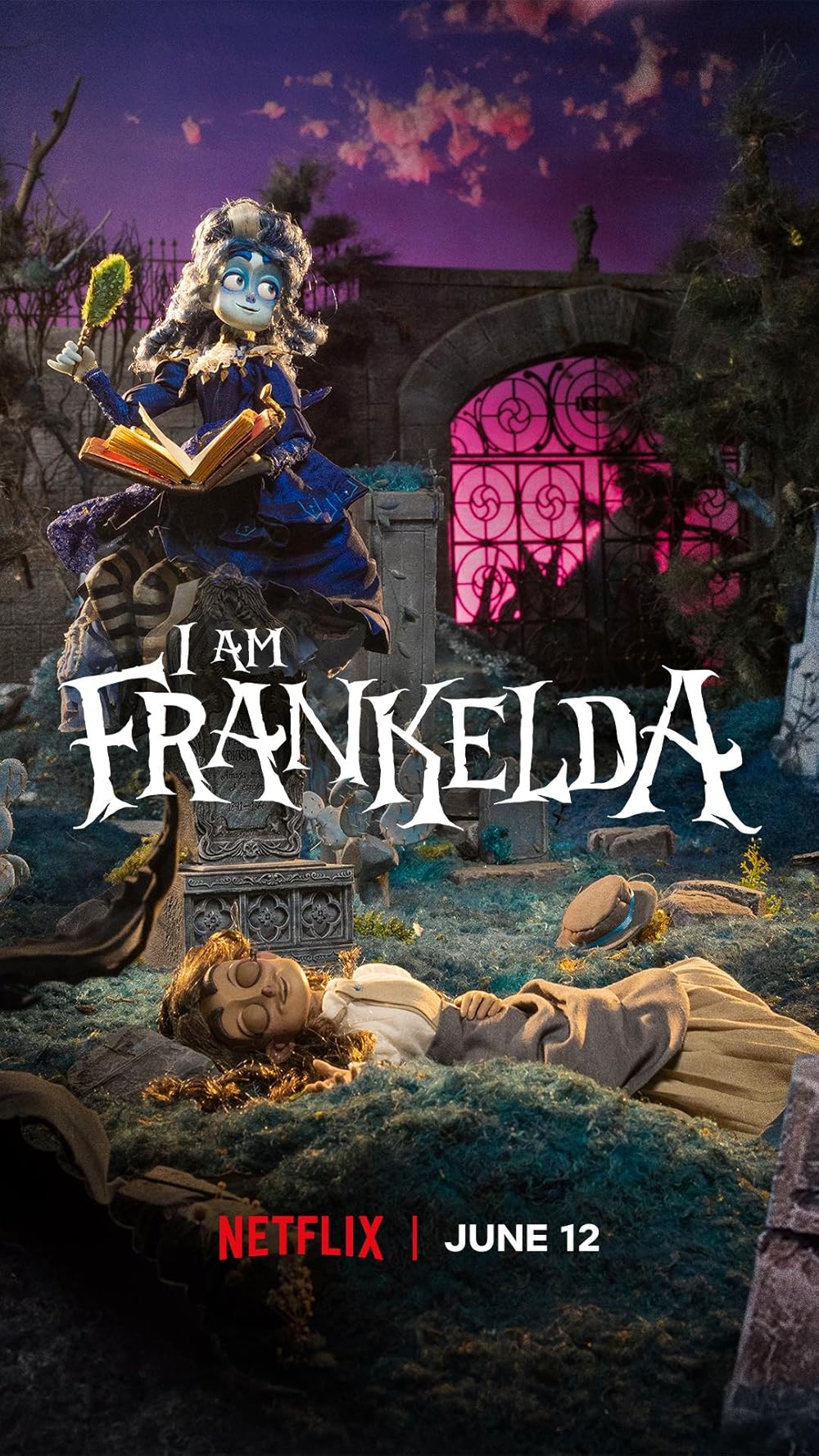

There are two worlds in Roy and Arturo Ambriz’s animated “Soy Frankelda” (translated to “I Am Frankelda”): one that is “real,” a portrait of 19th-century Mexico, and one that is “fictional,” a fantasy kingdom of spirits by the name of Topus Terrentus. The stop motion figurines that populate these worlds often find themselves both questioning and challenging the line between fiction and reality, a sort of existential dread that could tear apart the very fabric of their shared universe. One such woman is Francisca Imelda (later meshing together her name to create Frankelda), a talented young writer whose dark stories are rejected by everyone around her, from potential publishers to her own family.
Though Frankelda and her stories have been the subject of a charming miniseries, “Los Sustos de Frankelda,” the Ambriz brothers’ first feature is at once an ideal introduction to her and a delight of a prequel. Where “Los Sustos” had Frankelda telling some of her tales of monsters ruining human lives, “Soy Frankelda” serves as more of an origin story for the character, as well as for the entire world of terrors that exists alongside her own. Those bite-sized horrors are replaced with a fantasy epic that’s surprising in its scale, as this ends up becoming a motion picture all about how some of the denizens of Topus Terrentus long to cross over to the human world.
Within this kingdom exists a malevolent, fading talent of a writer, Procustes, who seeks to incite an uprising against the King and Queen, who grow weary of how useless his tales have become at haunting humanity. When their son, Prince Herneval, brings Frankelda in to replace him as writer because of the strength of her tales, the very fabric of both realities is further threatened by Procustes. If it all sounds excessive, it’s because, like the best fantasy fiction, it has a wealth of worldbuilding and plotting that unfolds in under two hours. Some might consider it too much exposition, and they wouldn’t necessarily be wrong, but the Ambriz Brothers understand that creating a fully fleshed-out world for them to play in requires making it feel lived in, from sharing the fraught politics of the feuding forces to taking the time to showcase minute character interactions and personalities.
Much like Guillermo del Toro, who is unafraid to wear his influences on his sleeve (and served as creative and logistical support on the project), the Ambriz brothers fold a wealth of references into their aesthetic. It’s almost impossible to track them all, though classical art figures heavily from the very opening: a massive “Frankelda”-themed recreation of Auguste Rodin’s The Gates of Hell that transitions into an impressionist landscape presumably inspired by Claude Monet. The duo also beautifully borrows from surrealist staples Remedios Varo and Leonora Carrington, most directly visible in numerous ethereal character designs and the dreamy and endlessly shapeshifting nature of the world that “Soy Frankelda” offers, occasionally even feeling like three-dimensional versions of paintings like El árbol de la vida and La creación de las aves.
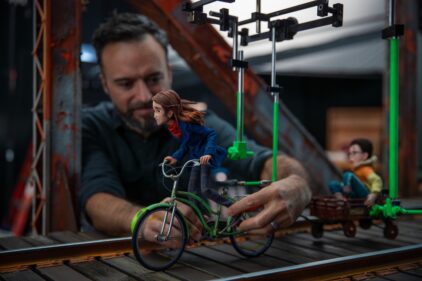
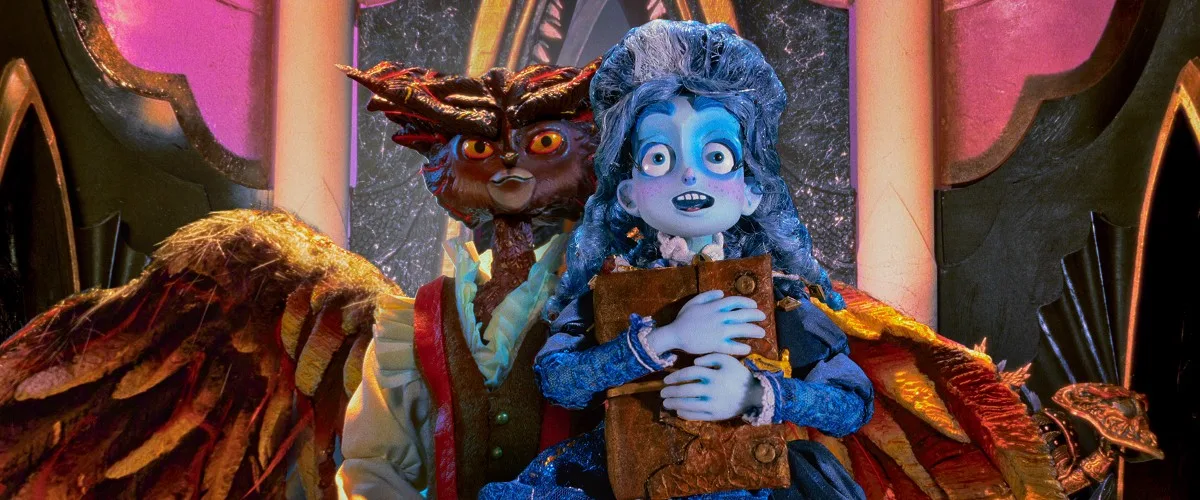
Dozens upon dozens of unique characters, brought to life by a talented cast of voice actors and singers, fill the immense sets crafted for this film (a glimpse of which you get in the impressive behind-the-scenes videos featured in the credits). Each of the endlessly changing mouth and eye designs is so expressive, lending each character as much personality as the frenetic camerawork or blocking of figurines could. The distinctiveness of these puppets and craftwork is especially noticeable in the many materials used to build them from scratch, ranging from cotton balls and doilies to fleshy goop and plastic toys. Every edge and texture is on full display, save for some light digital cleaning, almost begging you to reach out and touch the fuzz on a spider’s legs or the blade of fake grass that seems like it’s actually moving with the breeze.
One might argue that the “imperfections” are on display in the way they have animated these figures, but it feels no different than Henry Selick’s gorgeous classics in the way they embrace both the grotesque and the elegant. So much of the magic of “Soy Frankelda” is the sheer scale and skill with which they present the unreal, at times almost overloading the frame with their menagerie of monsters when the narrative calls for it.
The precious few who have watched “Los Sustos de Frankelda” will experience a Marvel-esque Easter Egg joy in the appearances of some of the series’ best terrors, down to the sparse but necessary reuse of scenes from the show to showcase their respective stories. Perhaps going in cold is better, though, allowing for the beautiful monstrosities on display (the Xochimilco axolotl mermaid, shapeshifting wicked witches, etc) to lure you in without context, only to later heighten one’s appreciation for scenes from the series.
There are moments of “Soy Frankelda” that feel indebted to the Disney Renaissance era as much as the classics of fantasy and horror; structurally and emotionally in tune with films like “Beauty and the Beast” or “The Little Mermaid,” so much so that the only way that Kevin Smithers’ compelling lyrical work and catchy music might be improved upon is resurrecting Howard Ashman himself to work alongside him. “El Principe de los Sustos” (or “The Prince of Terrors”)—one of the film’s showstopping numbers near the end of the second act as the film devolves into a world where nightmares reign supreme—isn’t just a musical triumph, but practically a highlight reel for the Ambriz’s animation chops.
While the rest of the film gestures at the shifting nature of “reality,” even having characters’ body parts turn into paper dolls, this number shifts animation styles throughout verses, with the entire frame shifting from puppets to exquisite oil-based paintings (and even more styles) at multiple points without ever sacrificing its fluidity.
In a world where mainstream animation has gone one of two ways—mimicking the blasé expressions and attempts at realism of Disney or wholesale emulating the playful “Spider-Verse” aesthetic—any stop-motion project is cause for celebration. But that we’re lucky enough to have a studio like Cinema Fantasma creating wholly original works is a real blessing, offering up a fantastic world that promises limitless tales and possibilities. We can only hope that the Ambriz brothers get the chance to let Frankelda tell us dozens more.