
For the second year in a row, I have been fortunate enough to close out the fall film festival season with an absolute bang at the Tallinn Black Nights Film Festival, also known as PÖFF, which took place in the quaint historic city of Tallinn, Estonia, from November 6th through the 22nd. Up here in this Baltic state, the weather is cold and the air crisp; the sun goes down just after lunch, and cinephile wolves roam the streets for three weeks, celebrating the art of movies.
Screening over two hundred films, mostly at the Apollo Cinema multiplex near the festival headquarters in the Nordic Hotel Forum just on the edge of the city’s medieval Old Town, the festival features films from all over the world and is broken up into several competition categories—Official Selection, First Feature, Baltic Film, Rebels With A Cause, Critics’ Picks Competition, Doc@PÖFF International, Doc@PÖFF Baltic—and two sub-festivals: Just Film, which celebrates youth and children’s films, and PÖFF Shorts and Animation.
Last year, between what I saw on the ground and what I watched via their amazing screening platform for accredited attendees, I watched about thirty films across the festival’s various strands. This year, somehow, I watched forty-four feature films and shorts, including everything in the Baltic Docs competition (I love documentary cinema!). Although this included films from about twenty-five different countries, my focus on the Baltic Docs and Baltic Film competitions gave my coverage a distinct emphasis on the Baltic states this year.
In fact, I saw ten Lithuanian films or Lithuanian co-productions, seven from Latvia, and six that were either Estonian or Estonian co-productions. Readers, I found this to be a very enriching experience, as this region is often neglected by other festivals around the world, despite being home to some of the most innovative and thought-provoking filmmakers working today.
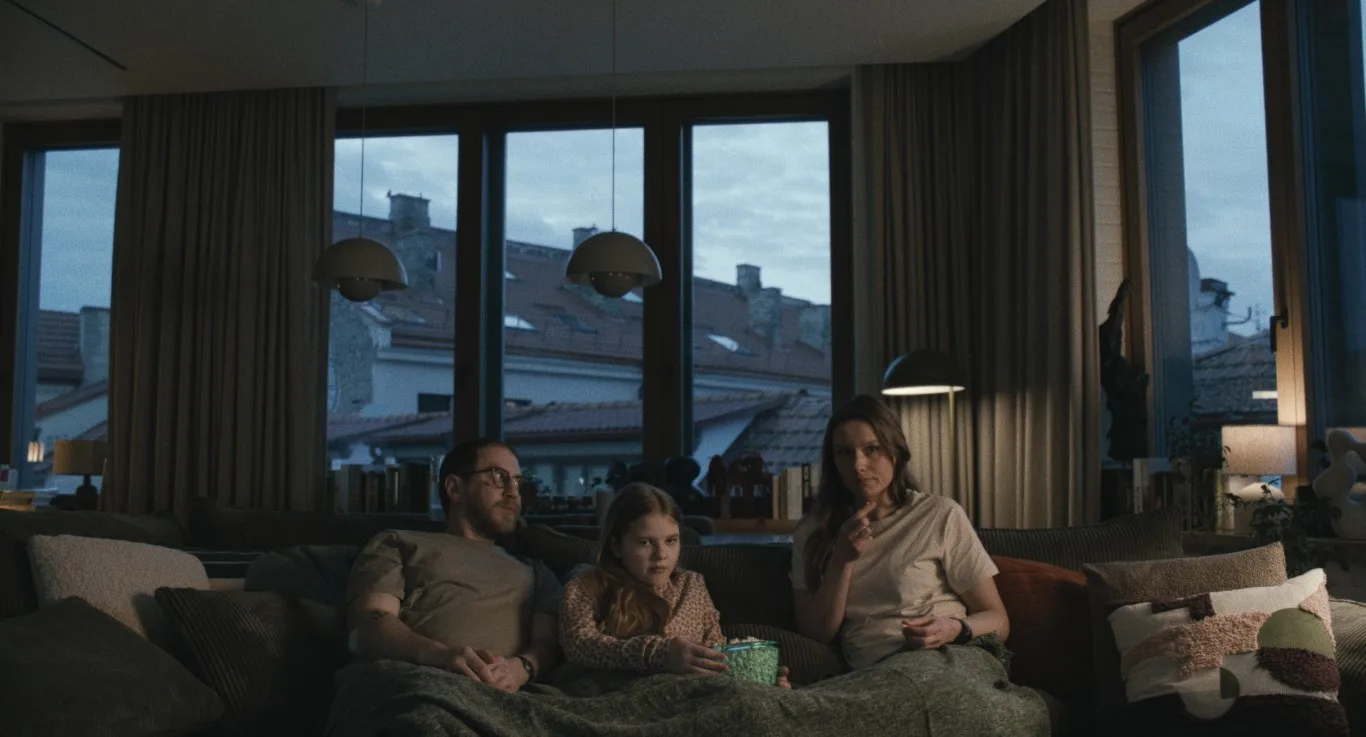
For the second year in a row, a film from Lithuania took the top prize in the Baltic Film competition. This year it was Andrius Blaževičius’s “How to Divorce During the War,” which had its world premiere earlier this year at the Sundance Film Festival, where it won the World Cinema Dramatic Competition Directing Award, and is the country’s entry for the Best International Film at the Oscars this year. The film centers on a married couple (Žygimantė Elena Jakštaitė and Marius Repšys) living in Vilnius whose sudden divorce intersects with the continued Russian invasion of Ukraine and the ensuing refugee crisis.
Along with being Lithuanian, last year’s winner, Vytautas Katkus’s “The Visitor,” shares something else with Blaževičius’s film: both were produced by Marija Razgutė (who also produced Marija Kavtaradzė’s romantic drama “Slow,” one of my favorite films of the decade). Razgutė is a major producer in the region and a driving force behind what I’d call the Lithuanian New Wave: a group of filmmakers in the Baltic country making intimate, character-driven films whose warm, hazy visual style belies the real-world concerns at the heart of this nascent film movement.
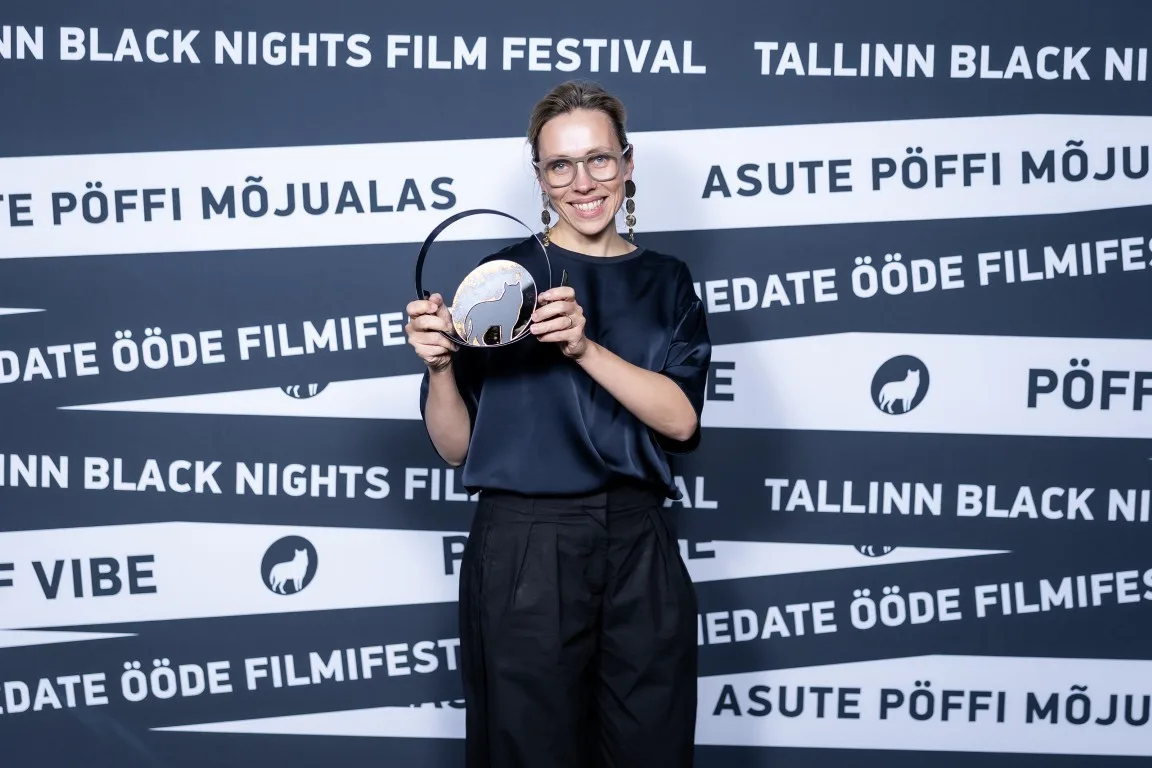
The Best Director prize at the Baltic Film Competition went to Linda Olte for her relationship drama “The Child,” which follows Zane (Agnese Budovska) and Kaspars (Raimonds Celms), a married couple in their late 30s who are desperate for a child. As they try everything from IVF to sauna therapy to conceive, Zane’s drive to become a mother causes friction with her husband, who it turns out is actually pretty content living a childfree existence. While I thought the resolution came a bit too swiftly, I found Budovska’s central performance riveting; she says so much with just her eyes and body language, plunging directly into her bruised and battered psyche.
Another standout in the Baltic competition for me was Georgian director Ana Urushadze’s “Supporting Role,” which takes us on a surreal Ulysses-esque journey through Tbilisi with an eccentric retired film star named Niaz Ninua (Dato Bakhtadze), whose days of heroic glory are well behind him, although women still stop him on the street. Despite his personal life being in shambles, Niaz travels down professional memory lane after a casting session with a young female director (Elene Maisuradze) who wants him for a small, unsympathetic supporting role in her debut film.
A critique of both the male artistic ego and the naiveté of first-time filmmakers, Urushadze, who is the daughter of Oscar-nominated filmmaker Zaza Urushadze (“Tangerines”), crafts a film that offers a unique spin on the current wave of auto-fictitious metatextual films about films that have become so popular as of late.
Unlike last year, I managed to watch several of the winners in the Official Selection competition. This included the period-set drama “On Top of the Cliff” from writer-director Enrica Pérez, which took home the Grand Prix for the Best Film and Best Actress for its star Bianca Bucelli, who plays a sheltered girl in an isolated seaside Catholic boarding school whose faith is pushed to the edge after a new girl named Rebecca (Renata Canales) challenges her leadership position. Like Maggie Betts’ “Novitiate,” Pérez’s film explores themes of repression, exploitation, and abuse through the lens of a strict Catholic lens. I also managed to catch Patrice Toye’s post-WWII Flemish boyhood drama “The Assignment,” for which newcomer Mathisse De Sutter took home the Best Actor award for his tremendous turn as a boy carrying unimaginable grief from his losses during the war; Alison Kuhn’s German-Viet human trafficking drama “The Matriarch,” which won the Best Script prize; and Swiss filmmaker Fred Baillif’s Dardennes-esque social worker migrant drama “A Job Well Done,” which took home the Best Director prize.
I also caught the Best Film award winner from the Critics’ Pick competition, Maya Vitkova-Kosev’s Bulgarian comedy “One Month,” which is about as wry and dark as you would expect from a Bulgarian comedy (complimentary), as well as a few winners from the First Film Competition, including Chabname Zariab’s “When She Hears the Bells,” which stars the always beguiling Golshifteh Farahani as a widow navigating the tumultuous summer of 2021, just as the U.S. begins to pull out of Afghanistan and the Taliban gradually seizes control of the country again; Sonia Orlewicz-Zakrzewsa’s “Exotic,” about a woman learning to love her own body through a pole-dancing camp on the Polish coast which has echoes of both “Fleabag” and “The Worst Person in the World”; and Lithuanian director Danielius Minkevičius’ bleak family drama “Oblivion,” about an exotic dancer/sex worker who reconnects with her father, only to discover a dark family secret she had suppressed as a child.
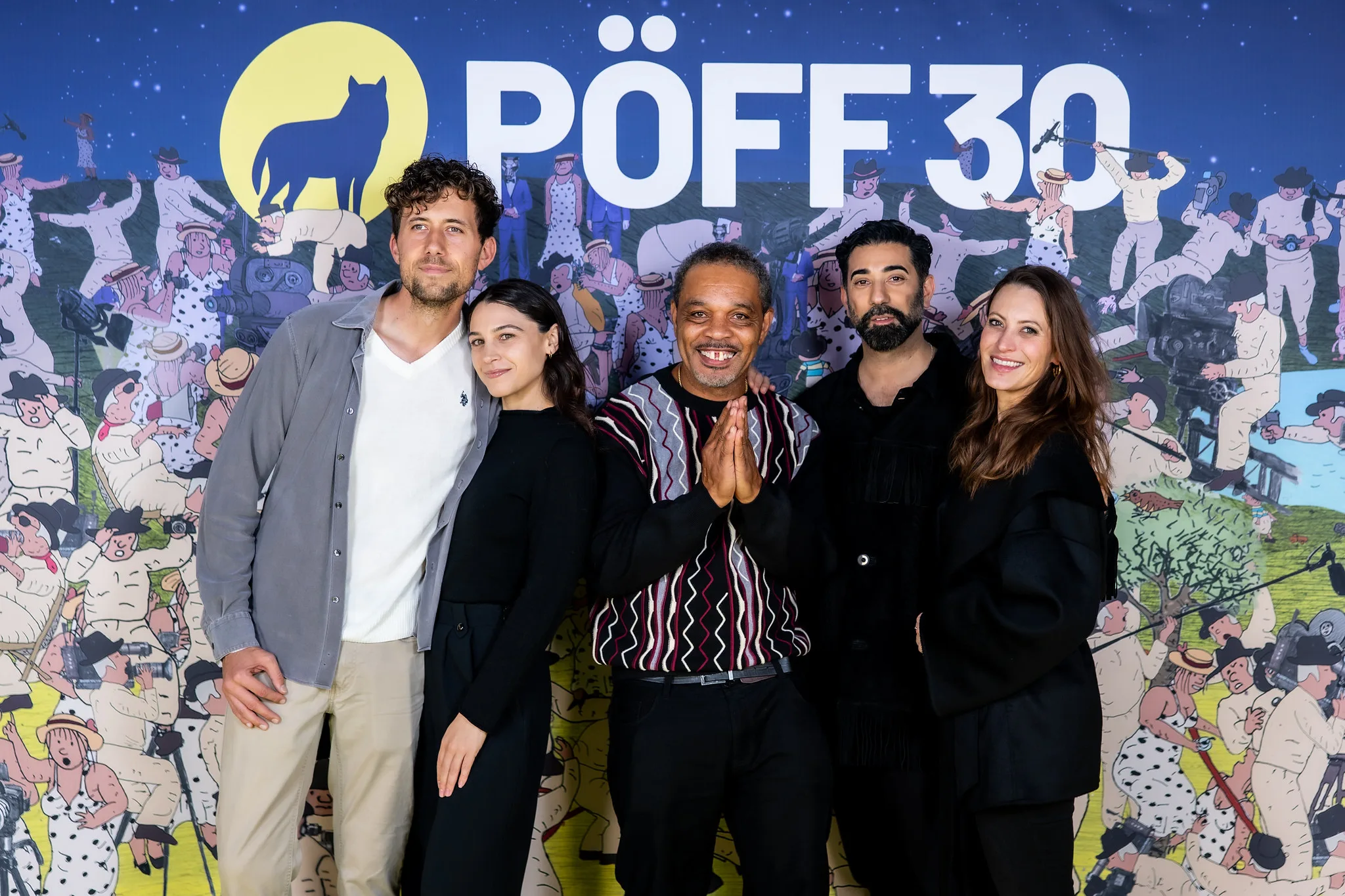
In the First Feature competition, I was stoked to see “Sing Sing” breakout star Clarence Maclin get his first time up to bat in a lead role in actor-turned-writer-director Ray Panthaki’s “In Starland.” Maclin plays a quiet 50-year-old man named Ernie, eking out a life in a small Southern town, whose traumatic past is kept somewhat obscured for most of the film’s runtime, and whose life is turned upside down when a group of influencers known as Zoo House invade the town with their view-seeking antics.
In “Sing Sing,” Maclin held his own against an Oscar-nominated Colman Domingo (and should have been nominated too, as far as I’m concerned) playing a version of himself; here, he could not be more different. He plays Ernie as a raw nerve, often folded into himself, with eyes that see the world with such open empathy. The director shared during the Q&A after the world premiere that it was his expressive eyes, in fact, that led Panthaki to cast him in the lead role.
Also from the First Feature competition, I greatly enjoyed the comedy “Status: Rejected” from Filipino director Vahn Leinard Pascual, which stars living legend Ruby Ruiz as a lonely grandmother who so longs to make it to the United States that she soon finds herself entangled with an American man on Facebook whom she thinks will be her ticket to the promised land, only to find herself caught up with a scammer. It’s one of several films I’ve seen this year that deflate the oversized image of the American Dream, as if the rest of the world has finally caught up with the reality that America is just a fucked up as anywhere else.
One of my favorite parallel competitions at PÖFF is the Rebels With A Cause section, which, like the NEXT section at Sundance, is filled with boundary-pushing filmmaking that transcends the trappings of genre. This year the top awards went to Dylan Stephen Levers’s satirical Gen Z comedy “Pop Pop,” which I admittedly did not see, and Christopher Yates’s “Night Vision,” which I felt was just so-so thematically in terms of exploring grief through art, although I did enjoy its playful mixture of film formats.

From what I saw of this year’s selections, my favorites were Lithuanian filmmaker Emilija Škarnulytė’s sonic Afrofuturist daydream “Sounds of the Desert,” a film about divine, collective, communion explored through the life stories of Marshall Allen and Abshalom Ben Shlomo, two members of Sun Ra’s band The Arkestra; Ma Xue’s oneiric and deeply singular film “Aroma,” about a woman named Yang (Zhao Jiali) whose unusually selective sense of smell allows her to enter the memories, dreams, and desires of a man (Xu Weihao) in a vegetative state who might just be her one true love; and Luiza Calagian’s fablesque docudrama “Arrow For a Stone Heart,” which received a special mention from the jury.
Taking a cue from Nelson Carlos de los Santos Arias’s “Pepe,” this poetic film explores the fight to save the indigenous way of life in the outskirts of São Paulo, where capitalism and pollution threaten the existence of the Mbyá Guaraní people, through the narration of a peccary Rete who shares the traditional story of the river’s sacred guardian, a goddess whose power is becoming invisible.
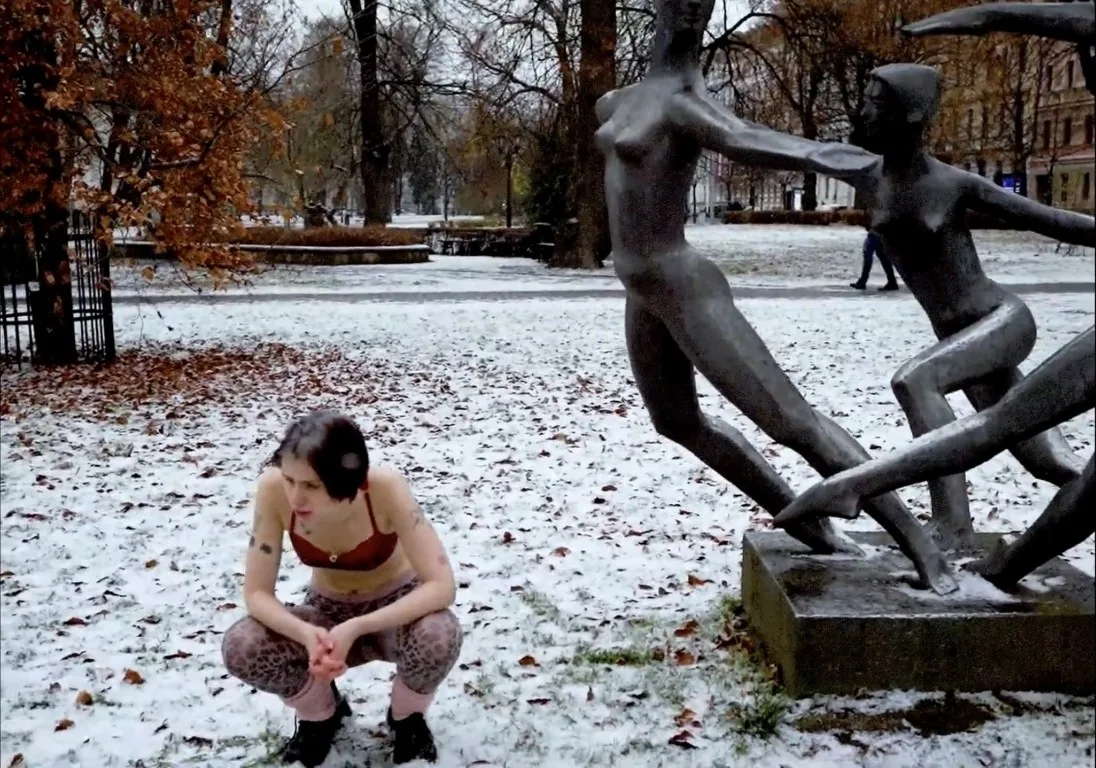
Many of the world’s most pressing political events—from war to the rise of fascism to the decline of late-stage capitalism to climate change—also made it onto the slate of Baltic docs programmed at the festival. My favorite of the bunch was Karolina Peterson’s “Riga, My Love,” which took home a special jury prize. The experimental doc follows the filmmaker’s return to Riga, Latvia, after spending five years attending school in Tallinn. Back in her hometown and living with her girlfriend, the filmmaker documents six months’ worth of protests against the erosion of women’s bodily autonomy in the country, along with the U.S.’s invasion of Iran, among other topics. While Peterson’s film is urgent, it’s also incredibly funny and cheeky and crafted in a handmade style that reminded me of the early video work of Jennifer Reeder.
Climate change loomed large in several documentaries, including Estonian filmmaker Mihkel Oksmann’s “Ice, Men and a Starling,” which follows the final days of his 87-year-old grandfather Vello Jürjo, a champion ice sailor, who has decided to build one last iceboat before he dies.
The sport is waning as ice is no longer forming in the Arctic and Baltic states as it once did, due to climate-change-driven warming. Although a melancholic film at times, Jürjo’s single-minded dedication to his craft reminded me of “Jiro Dreams of Sushi,” and his optimism to the very end was infectious. I know I’ll always try to remember his wise words: “In the end, it’s all about how you finish.”
Melting ice was also at the heart of Pepe Andreu and Rafa Molés’ “La Pietà,” which took home the top prize in the Baltic Doc competition. An elegy for melting glaciers, the doc is a companion piece of sorts to Sara Dosa’s similarly somber “Time and Water.” Both films mourn the death of glaciers in Iceland, and the history that melts with them. I particularly enjoyed how the filmmakers integrated 16mm film and archival photographs from the family of photographer Ragnar Axelsson, whose house sits at the base of Iceland’s largest glacier. Through these tactile archives, we acutely feel the loss of this magnificent and sacred place, as it slowly melts away, possibly forever.
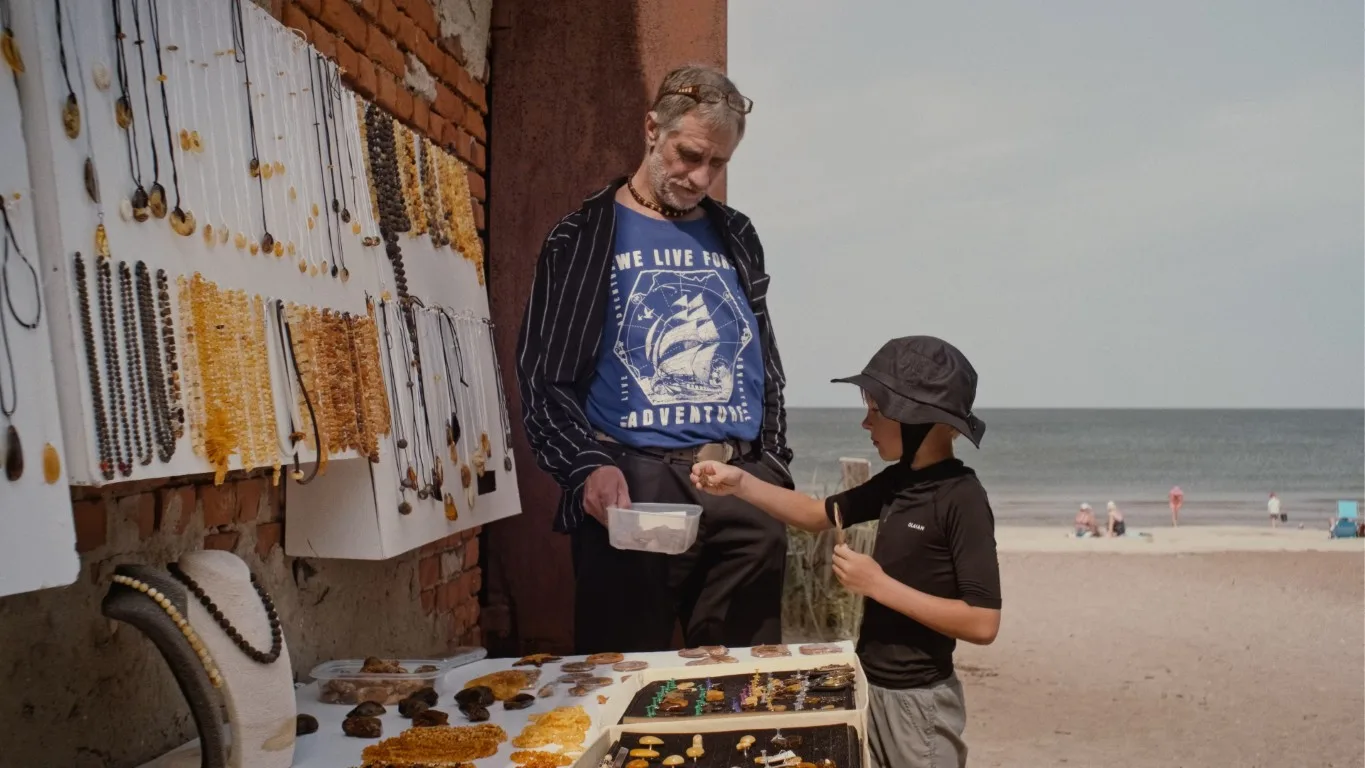
Two meditative Baltic docs contemplate both our slow dive into a worldwide economic depression and the lasting reverberations of a world at constant war. In Francesco Rufini’s “Memory from the Sea,” a fisherman named Arūnas Želvys barely makes ends meet as good fish in the Baltic grow scarcer. His economic plight is made worse by the dwindling market for amber, which has been collected on these shores for centuries. Cut to the rhythm of the sea, Rufini’s poetic edits of the surrounding beachside town often echo Dziga Vertov’s “Man with a Movie Camera,” contrasting the speedy modern world with the fading traditions Želvys hopes to keep alive, while the color-timing of certain scenes wraps the film in a soft, amber-hued glow.
I watched this film back-to-back with Alexander Belinski and Agnė Dovydaitytė’s “Baltic UXO,” which is composed almost entirely of wordless scenes with no narration and sparse dialogue, leaving the edit to guide the viewer toward the story it wishes to tell. Some might find that frustrating given the doc’s weighty subject matter—that 1.6 million tons of unexploded military munitions (UXO) were dumped into the Baltic and Northern Seas after WWII—but I found its format ingenious.
The film lulls you with its beautiful seascapes, then shocks you with footage of the teams whose job it is to locate these dangerously decaying munitions. At one point, the camera holds steady on a beach sign for tourists while an audio alert warns that phosphorus might look like amber and can explode if stored in a jacket pocket. For obvious reasons, this made for quite the double feature.
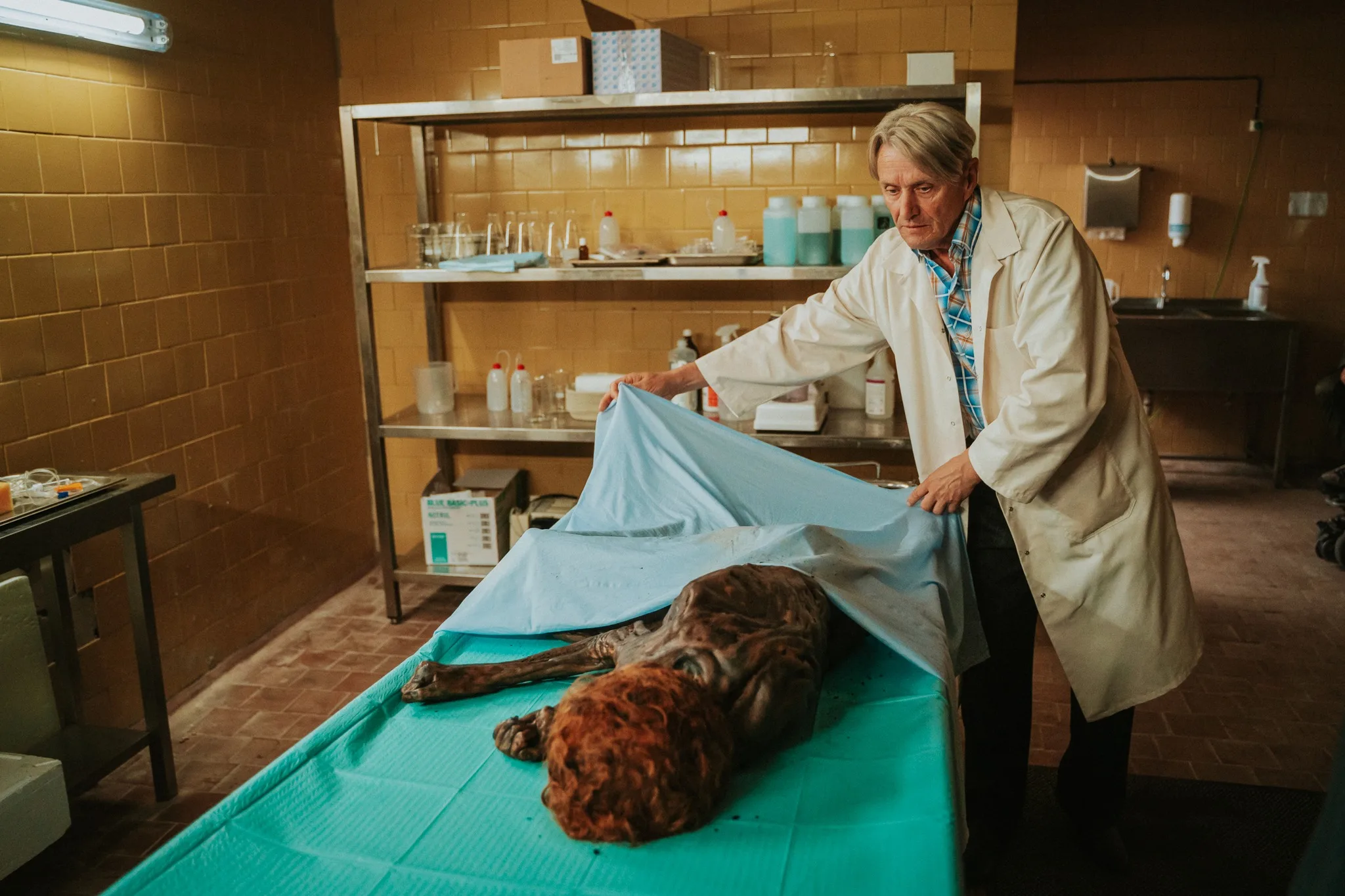
The final film I watched at this year’s festival was Latvian director Reinis Kalviņš’ thriller “The Bog,” because when offered the chance to end the festival with a bog noir, you know I had to (it is Noirvember, after all). Kaspars Zvīgulis is thrilling as a policeman named Brože tasked with investigating the discovery of a body in a bog by the town’s local drunk Ādamsons, who insists it is the body of a boy named Mickey whose mysterious disappearance he, Brože, and a few others may have had a hand in thirty years earlier.
Although the film felt akin to its distant Nordic noir relatives, this film is Baltic through and through, as it explores the way in which the near past, the present, and the historic past are always intertwined within these tight-knit communities, and how grief and guilt each have a way of floating back up to the surface, no matter how hard you try to repress them. It was the perfect melancholic note with which to end my time at this wonderfully dark and brooding film festival.