
Ten years ago, director Ava DuVernay’s explosive documentary “13th” argued that the United States government uses mass incarceration as a way to continue America’s project of subjugating Black people to thwart the success of Reconstruction and the Civil Rights Movement. DuVernay continued exploring racial injustice in America with her 2019 Netflix miniseries “When They See Us,” which tells the harrowing story of the Central Park Five.
In both these projects and her 2014 film “Selma,” DuVernay shows a deep respect for Black history, exploring the trauma our people face in America with both an empathetic and intellectual eye. But in 2023, with the release of her film “Origin,” that began to change: the film’s focus on exploitative historical recreation, rather than fully exploring the book’s ideas, is a far cry from “13th’s” grounded analysis of how the past has shaped the present.
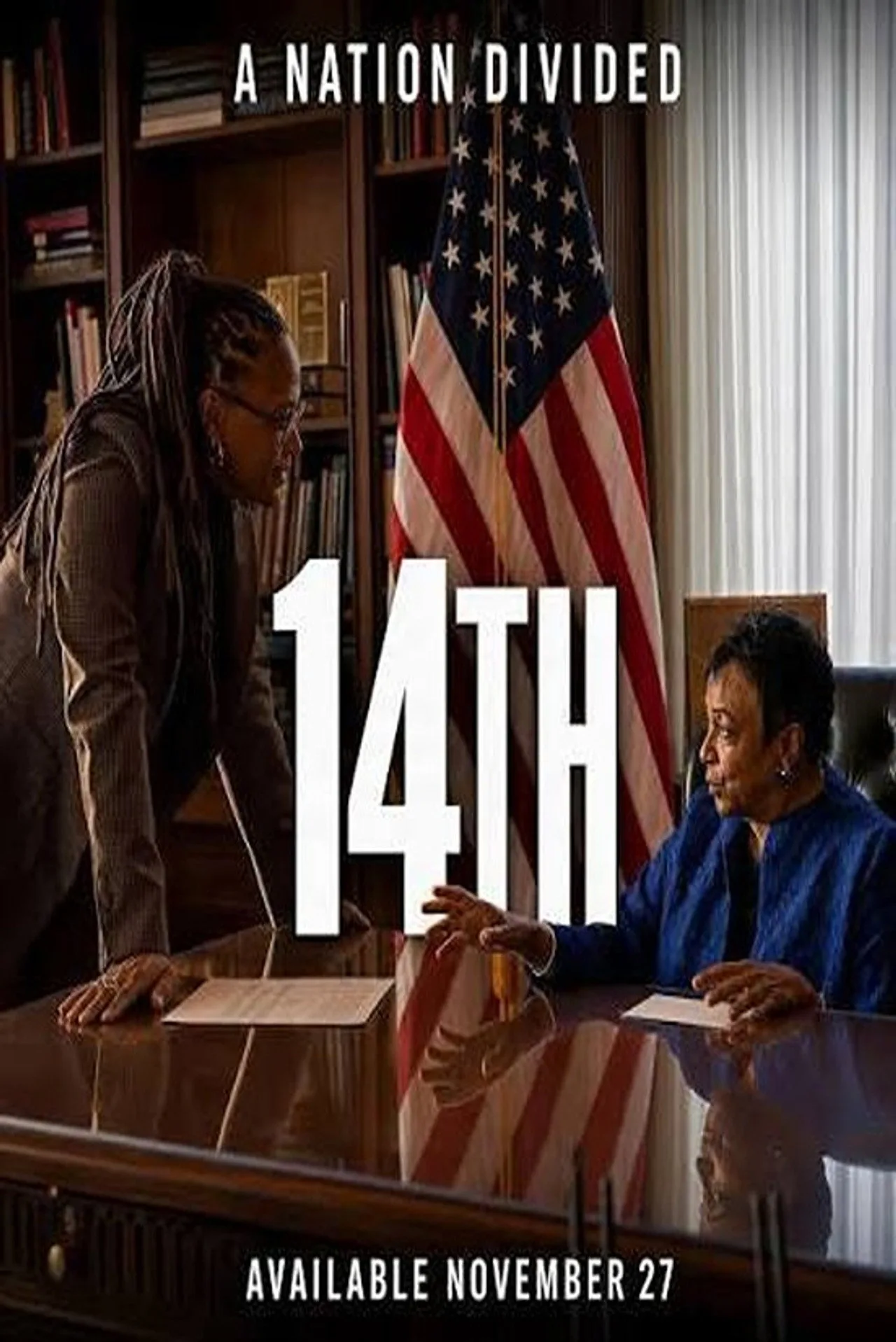
This brings us to her newest documentary, “14th,” her first film in a decade not based on prior source material. The film aims to sound the alarm about the erosion of the 14th Amendment in today’s American political landscape. It points to President Trump as a destructive force in the second term of his presidency, as he continues to attack Birthright Citizenship, mobilizes ICE to terrorize the American people, and reignites countrywide support for the Lost Cause myth and all its racist, white supremacist implications. Essentially, DuVernay is once again arguing against the lingering presence of Jim Crow-era ideology, which continued to thrive even after the efforts of the Civil Rights Movement.
But this analysis is surface-level at best and leans heavily on personal experience rather than research. Worse still, the use of AI undercuts the film, prioritizing making history feel alive for the audience over staying focused on the task at hand. In a move that is already making headlines, DuVernay uses generative AI to bring still images of Black people from the Reconstruction era to life. What stands out about this odd bit of technical manipulation is that it serves no real narrative purpose, nor does it show respect for the unique lives captured in those images. The tastelessness of DuVernay’s decision-making here echoes the many mistakes she made with “Origin.”
In both “Selma” and “Origin,” DuVernay uses actors to dramatize painful historical events. The difference is that “Origin”‘s historical recreation is a superficial dramatic tactic meant to emphasize the importance of author Isabel Wilkerson and the book she’s writing. The most glaring issue in the film is DuVernay’s insistence on casting an actor as murdered teenager Trayvon Martin, whose presence onscreen only serves to inspire Wilkerson and her work. Rather than simply making a documentary that explores the book’s ideas, DuVernay uses the film to mythologize Wilkerson’s writing process into an earth-shattering historical event, akin to movement work.
“14th” has the same problem: it animates history when a straightforward presentation would suffice. The sheen of technology plagues what should be a very serious, human-focused endeavor. At a New York Film Festival press conference, DuVernay expressed excitement about AI-generated images, assuming audiences would obviously be interested in this needless innovation.
But those aren’t the only distractions DuVernay has erroneously included in her film. The central image of “14th” is a black star on a red background, meant to illustrate the five key points of the 14th Amendment to the U.S. Constitution: Citizenship, Representation, Insurrection, Debt, and Enforcement.
Throughout the film, a ripping sound effect is used to illustrate how Trump’s presidency has reduced the overall power of the 14th Amendment by converting our government into a fascist, white supremacist body meant to restore inequality across the country. The ripped star doesn’t carry the weight it’s supposed to, and neither does the restored star that appears at the end of the film. This change is supposed to signify our future collective efforts to restore power to the American people through knowledge and collective action.
How exactly is that an effective call to action? Politicians, scholars, former lawmakers, and basically any American who knows their rights have well documented the erosion of democracy. Additionally, the film does not fully interrogate the role of the Supreme Court in assisting Trump and his administration in rolling back the rights of the American people, including overturning Roe v. Wade with the help of Republican-appointed justices. She instead points the finger back at us, telling the American people it is our job to ensure our rights are enforced.
DuVernay argues that arming ourselves with knowledge, presumably to inform our voting habits, is the only way out of this mess. Her various talking heads, including politician and voting rights activist Stacey Abrams, Congresswoman Alexandria Ocasio-Cortez, attorney and Howard University educator Sherrilyn Ifill, and media personality Van Lathan, argue for this conclusion: knowledge is our greatest power. Ifill especially looks to the framers of the Constitution at the start of America, as well as directly after the Civil War, to inspire her students toward both decency and greatness.
That’s all well and good, until “14th” presents us with footage of ICE pulling citizens off the street, brutalizing and killing them. When viewers hear these people say that they have their documentation and assert that they are citizens, it doesn’t change their fate. So how exactly is telling the American public to study the Constitution supposed to arm them against an increasingly fascist government? And why does DuVernay omit information that would also implicate the Democratic Party for failing to mount a stronger opposition to Trump and the GOP? It’s easy to tell us to vote, but much harder to interrogate how our entire government has failed us in recent decades, regardless of who we elect as president.
“14th” is a documentary with good intentions, but it’s presented carelessly and insults our intelligence. Here, DuVernay simply refuses to rise to the occasion.
This review was filed from the 64th New York Film Festival. Will be released November 27th in limited theatrical engagement, before coming to Netflix December 4th.