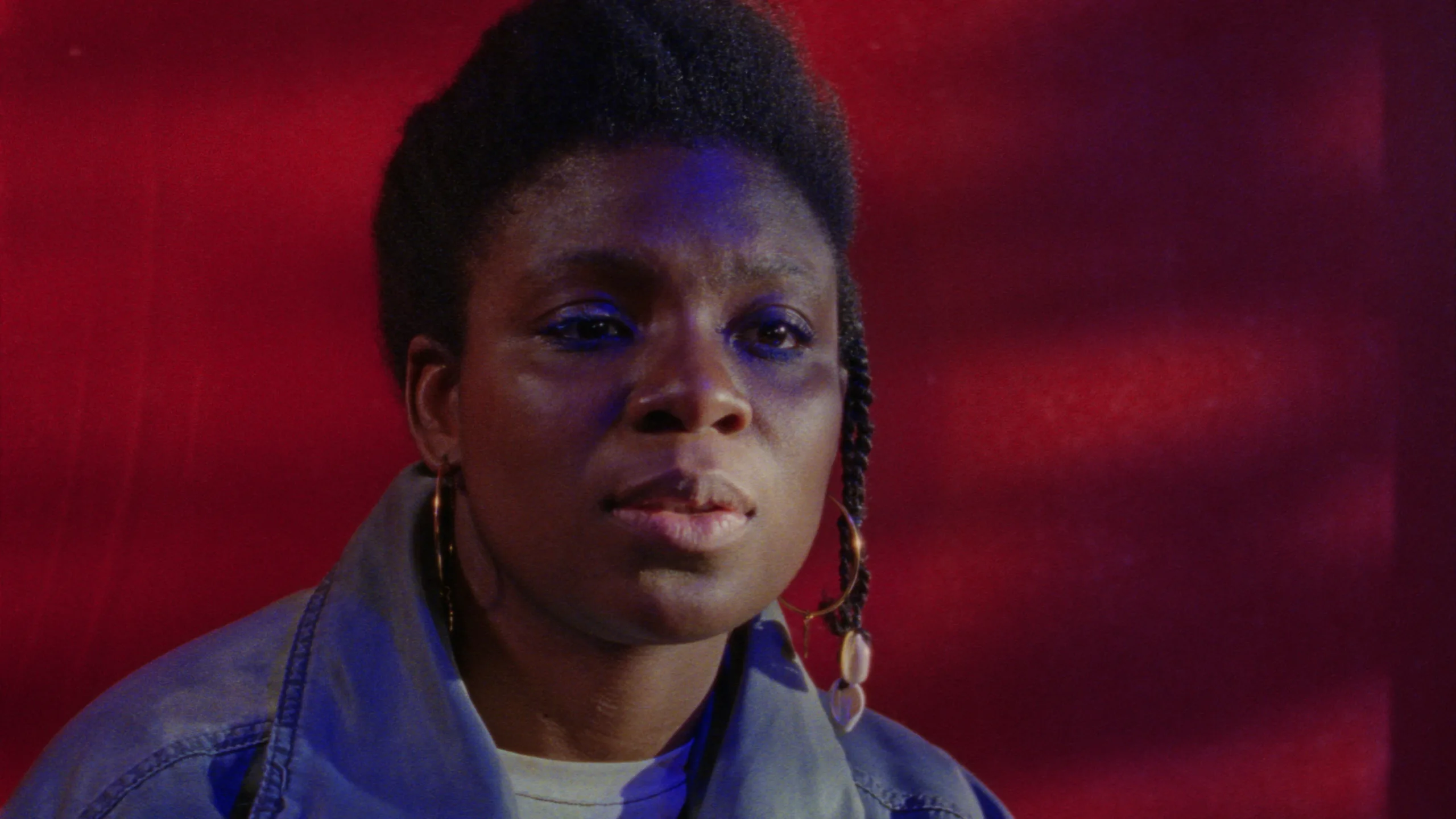
One of my favorites at the New York Film Festival this year is “At Night,” a meditative film from British director Beatrice Gibson. “At Night” follows a group of women over one faithful night in Paris when their lives quietly intersect. The film begins with a quote from the late poet Alice Notley: “I am a tone of voice. Warming, shifting, pausing, changing, including, asserting, exulting, including, including, turning & including.” Those words perfectly describe what it feels like to sit with a film that tries to capture life’s steady pace.
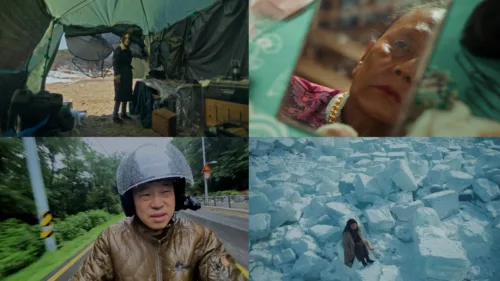
We begin in a dark, still train tunnel. Slowly, the train reveals itself as Gibson’s voice creeps in, recording a message to a former collaborator, Didi. Over time, we learn that Didi not only worked on a previous film with Gibson, but also served as a nanny to her children. Didi has a son of her own and lives in a shelter, trying to build a life for them with few resources or education. Didi feels she doesn’t know anything.
But when she speaks to Gibson, she shows a deep understanding of how the world’s racial rules shape the power imbalance between them. Didi’s Blackness is a fact of life she refuses to let her friend ignore. And are they really friends? There seems to be a disconnect there. This conversation happens in a dark deli, with the power out. When the light returns, Didi is on her way, and Gibson is left alone with her thoughts once again.
We see a poetry reading, followed by a discussion of sex and love among a group of creative women. They agree for a while until a Black woman introduces the complexities of race into the discussion. This woman, like Didi, cannot allow her white cohorts to ignore differences in order to maintain a collective understanding of what it means to be a woman in the world. Through this conversation, Gibson makes her film’s intentions clear; she highlights her shortcomings as a storyteller, informed by her social and racial privilege. And like many white people, she’s not sure what, if anything, she can do about it. But I think this piece is a good start.
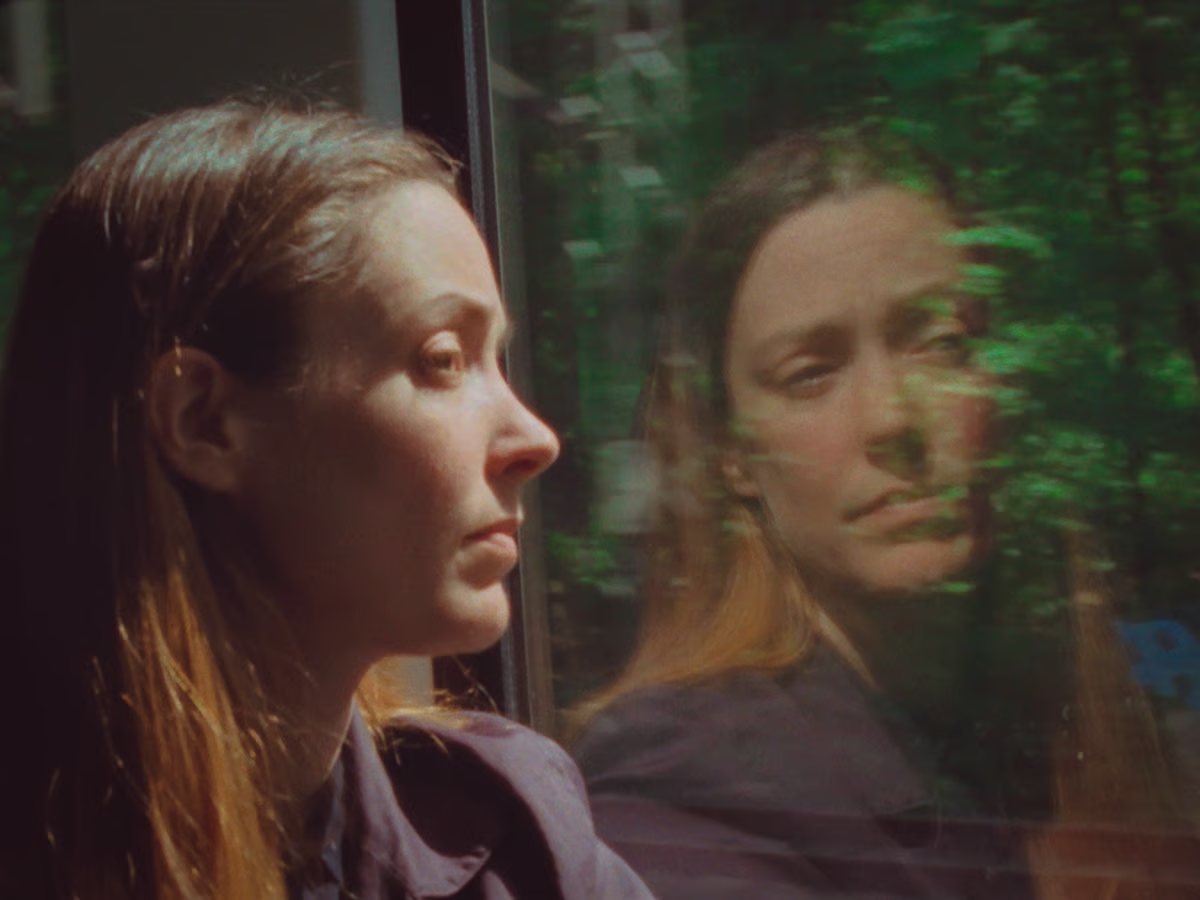
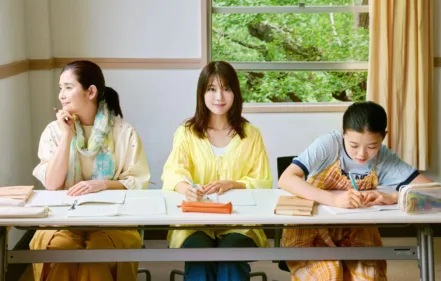
In his newest short feature, “Foreign Travel,” director Ted Fendt quietly observes a young German woman named Leonie over the course of a year. Beginning in May, she reads and contemplates the writing of Italian author Anna Maria Ortese. Much of the film consists of characters reading the text aloud and contemplating its meaning. At the beginning, Leonie reads one of Ortese’s most important works, the novel Il porto di Toledo. She begins in Italian, then gifts a copy to a friend for his birthday. She continues with a German translation and discusses the material’s difficulty with her friends. She agonizes over every line, trying to understand the material as deeply as possible. Her efforts lead to a loose book club focused more on intellectual engagement than entertainment.
Leonie’s quest for meaning and fascination with language mirrors an American critic’s effort to grasp both the German and Italian elements of Fendt’s film through English subtitles and deceptively mundane imagery. It demands your full attention, challenges your comprehension, and encourages you to keep pursuing a deeper understanding of your place in the world. What’s most fascinating about “Foreign Travel” is that it escapes easy interpretation.
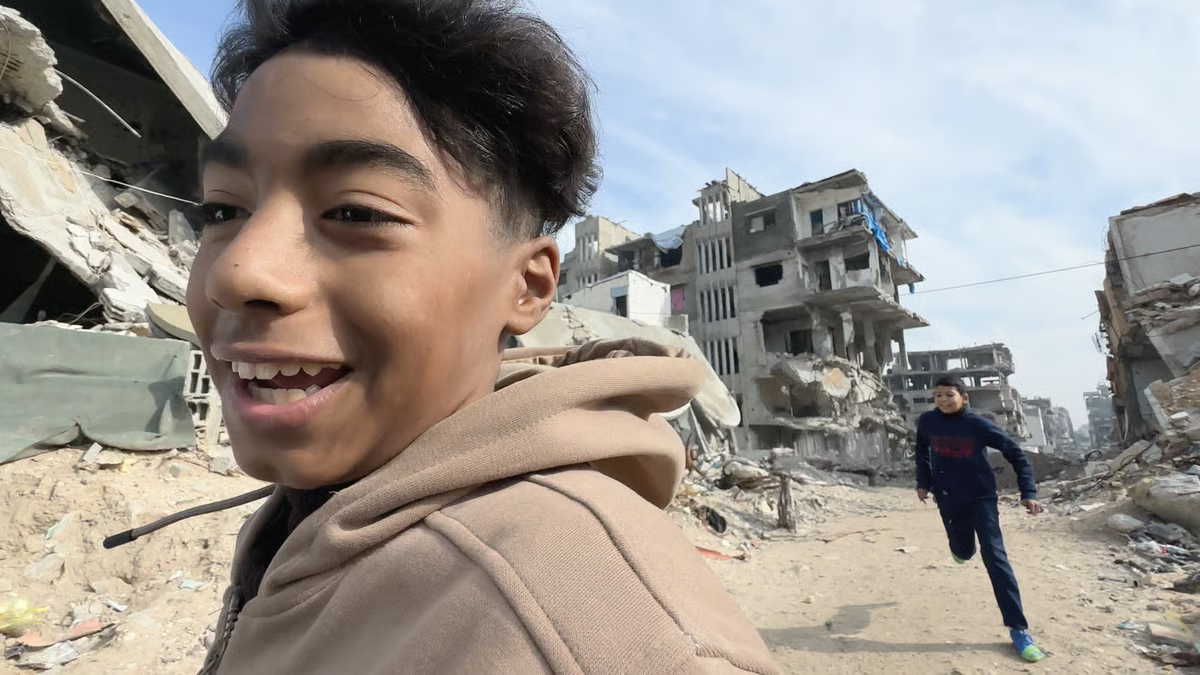
Jonathan Glazer’s short film “Joy of Joys” is much more direct in its intentions, taking us to Abbey Road to experience the recording of HELP(2), a charity album meant to provide aid to children in war-torn areas around the globe. The album includes music from Pulp, Oasis, Arctic Monkeys, Olivia Rodrigo, Cameron Winter and Depeche Mode, among others. In the studio, a number of children are given camcorders to actively capture the process in this legendary recording studio. The film often switches to their perspective as they try to figure out the best way to showcase their experience. Their presence constantly reminds the musicians why they’re recording the album. They also serve as adorable distractions, pulling the adults out of their own heads and into the present moment.
Glazer then takes that point further by including footage shot by children in Palestine, Sudan, Yemen, and Ukraine. The director’s point is simple: These are all our children. They are the world’s children, and it is our collective responsibility to see them, listen to them, and take care of them. The children playing among the rubble in Gaza deserve the carefree lives of the children in the studio, eating snacks and running around. It’s both joyful and heartbreaking to see children around the world making the best of their lives amid unimaginable devastation and suffering. We owe them so much more than this.