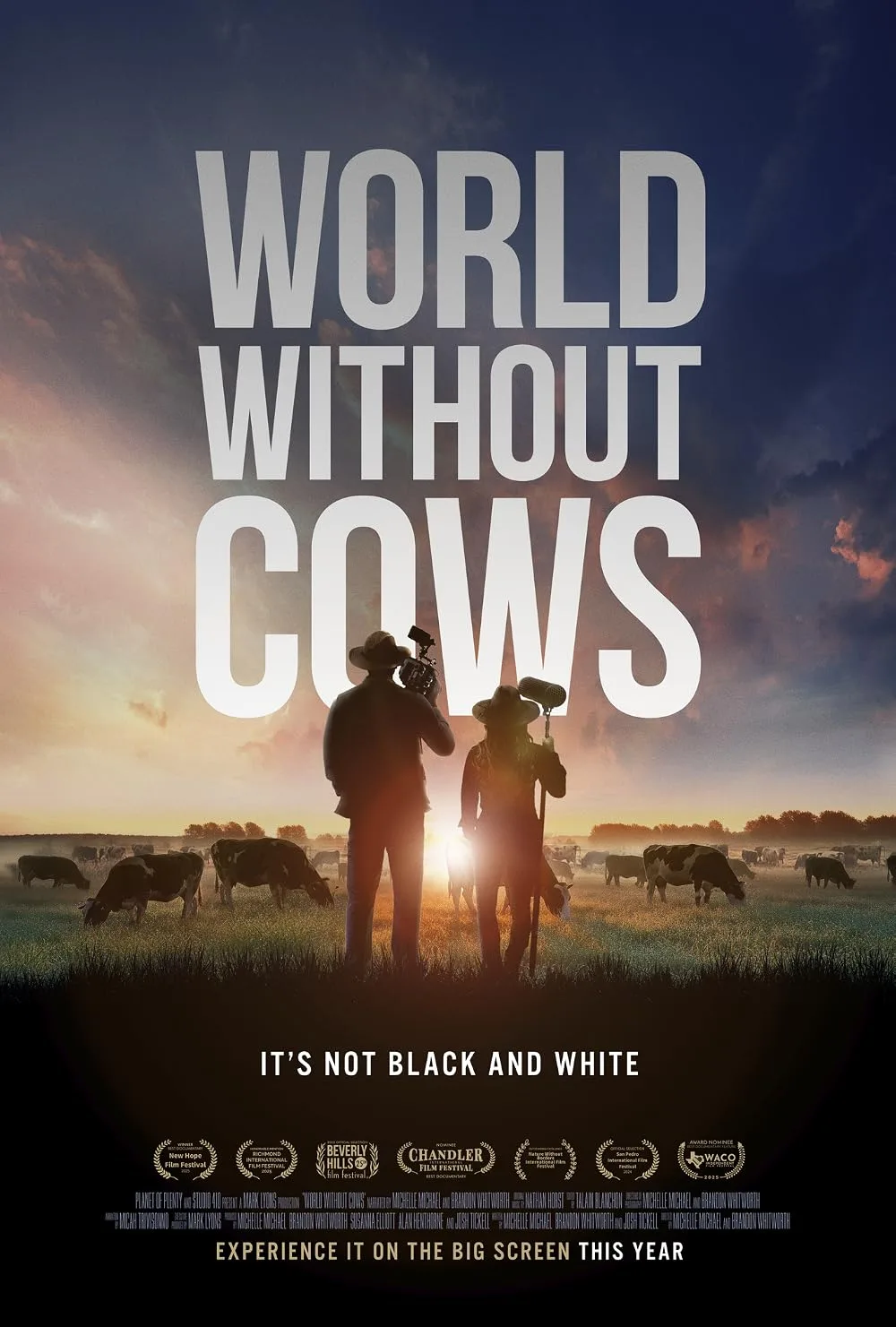
“World Without Cows” isn’t officially an 81-minute cattle-industry advertisement arguing that beef is crucial to humankind’s survival, but skeptical viewers can be forgiven for thinking it is. The big takeaway from this documentary is: yes, as you’ve heard, cows (a catch-all here that incorporates all kinds of “beef animals,” to use the movie’s language) do require a tremendous amount of food themselves, and their care takes up a lot of real estate all over the world, but without them, much of the world would be even hungrier than it is at the moment, and…
We’ll unpack all this in due course. For now, let’s say that, for all its intelligence and sensitivity, watching this movie feels a bit like listening to an automobile dealer explain why we can’t live without cars. The author of this review, while not pro- or anti-cow, is far from a vegan, and in fact took the family to Charco Broiler before watching this movie, and is not likely to lead protests against the cattle industry or the businesses that support them anytime soon, but also wouldn’t stop anybody who wanted to. But many aspects of “World Without Cows” may set off your own b.s. detector, and not just because the movie’s pro-beef arguments focus largely on cows’ consumption and excretion of vegetable matter.
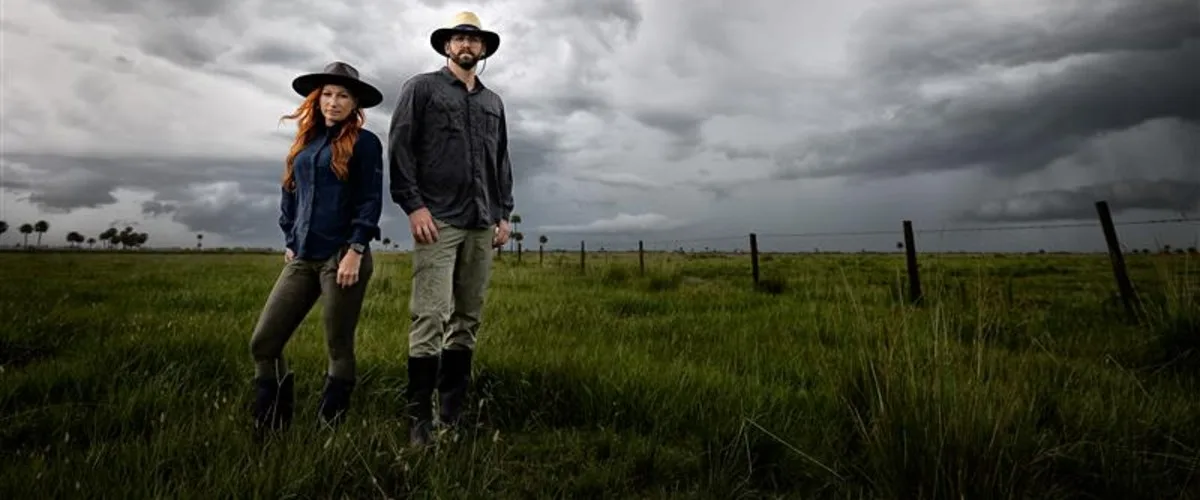
Two former TV news reporters, Michelle Michael and Brandon Whitworth (Michael also did a stint as an in-house, embedded reporter for the Department of Defense), co-directed and shot the documentary almost entirely. Alltech, an agricultural “family of companies,” funded the whole production; its official website says it is “working together for a planet of plenty.” This mission entails developing and selling “specialty ingredients, premixes, feed and supplements for animal nutrition to biological solutions that enhance soil and crop health, Alltech offers an integrated approach to supporting entire ecosystems.” None of that language is in the movie, mind you.
The narration, alternately delivered by Michael and Whitworth, sounds less like the voice-over you would normally find in a journalistic presentation and more like a corporate video aimed at shareholders who may not know much about what Alltech does. Among other choices, the opening narration about the importance of cows in India says that, “In a country with more than a billion people, protein is a big deal,” and calls it “a nation of intense contrasts.” (The classic meme of Bart Simpson faking his way through a report on Libya should have killed that phrase for good.)
Because cows are sacred in India, people often let them out fairly early in life to roam. That’s one of the reasons that India’s cows are “1/5 as protein productive” as the cows of many nations that have less land and fewer people, we’re told. “World Without Cows” then moves to Kenya, where Masai pastoralists manage 40% of the country’s land and cows, and then to Singapore, the center of research into lab-grown meat substitutes.
The latter are not as protein-rich as beef, however well-intentioned the motivation behind developing them. Also, only a small fraction of the planet’s land is arable, meaning it can sustain agriculture, so what can you really do with all the non-arable land besides raise cattle? Plus, beef contains protein that can’t be found in any other food source, animal or vegetable.
Mmmm, beef. Wonder what the daily special is at Charco Broiler today.
The big argument that ultimately comes into focus is something like, “Yes, it takes a lot of food, land, and money to raise cattle, and the return is not as great in terms of protein as some other food sources, but it’s really quite good for humanity.” The close-ups of steaks being cooked and sliced are as sumptuously photographed as the images of beautiful rural and urban landscapes in India, Kenya, and the United Kingdom and Ireland, where a two-year experiment in transforming non-arable land into arable land was declared a failure, and the parcel was declared better suited to raising cattle.
The larger story in “World Without Cows” is the planet’s ruination, which has occurred alongside an exponential rise in the number of humans who need to be fed, especially with protein. The cattle industry sits within this crisis, and much of the movie’s runtime focuses on refuting arguments against the dominance of beef and beef products. The big defense is that cows eat plant matter humans cannot digest, and their excrement provides fertilizer and other useful products. And, even though it takes more pounds of feed to raise a beef animal than other kinds of livestock, the protein yield is richer, so it all evens out.
None of this should be construed as an argument against “World Without Cows” as an example of film craft. It looks and sounds great, especially for what production notes describe as mainly a two-filmmaker project made out of love and idealism over the span of five years. But there’s little here that can’t be gleaned from other sources, especially ones less fraught with the appearance of conflict of interest. The movie looks, feels, and sounds like a sincere educational document. But the more you know about it, the more you may worry that it can’t be trusted any further than one can throw a ribeye platter.