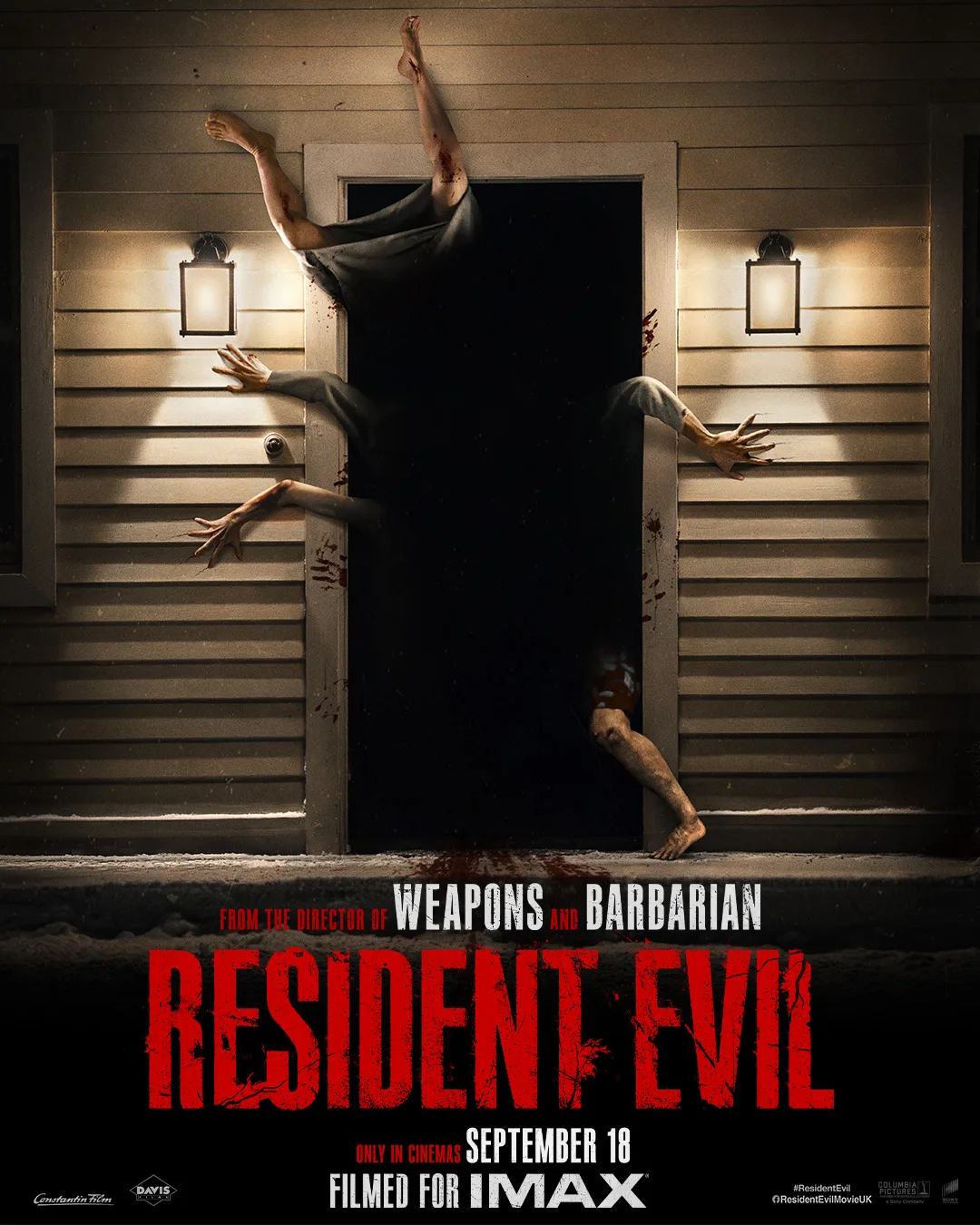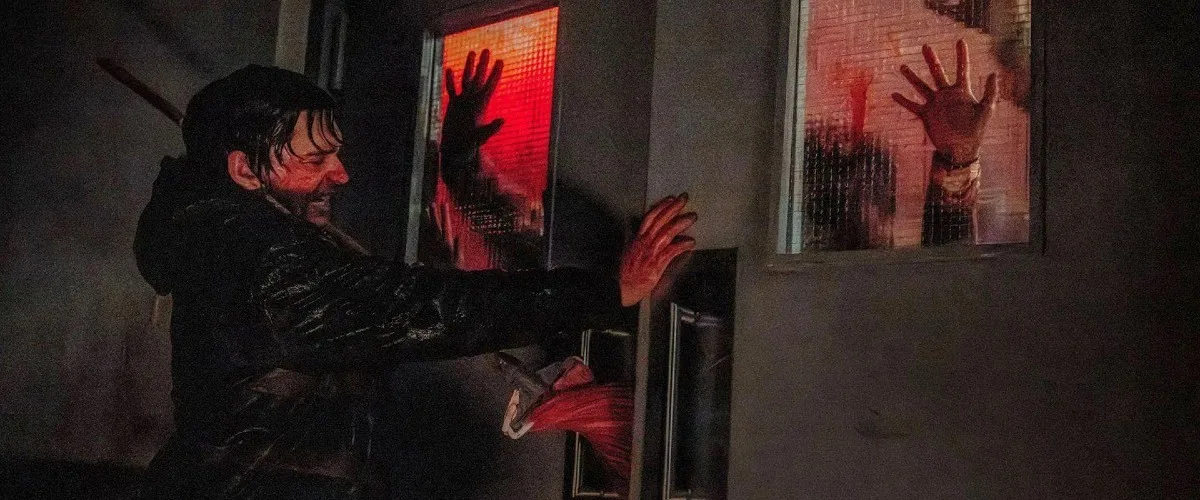
There have been a lot of weird internet uproars in advance of Zach Cregger’s wickedly fun “Resident Evil” that seem upset that it’s not directly based on one of the hit Capcom games. Sure, there’s no Leon Kennedy or Claire Redfield to be found here, but make no mistake: This is one of the most video game-inspired cinematic experiences you could possibly have.
From the dwindling supplies of its protagonists to what feels like a mission-based structure wherein he has to accomplish a series of increasingly impossible goals, this movie doesn’t just take the “Resident Evil” name. Not only does it understand the foundational appeal of a horror survival game experience, but it should work equally well for those who have never picked up a controller. Most of all, it’s a relentless good time, a movie that starts its horror action before the title card and keeps amping up the tension through to the final memorable shot. It may not be as ambitious as either of Cregger’s first two films, but it’s almost more indicative of his skill set given how lean and mean it is from beginning to end.
“Weapons” star Austin Abrams plays Bryan, a medical courier who gets tasked with taking an unknown package from a hospital to a Raccoon City medical facility. On his way up an icy mountain road, he smashes his car into a woman who just walks into the snowy street, leaving her battered and bloodied, but alive. Maybe. Kinda. He puts her in the passenger seat and slips and slides down the trail until he crashes into a cop, who offers to help get them both to safety. Of course, that doesn’t go well. Before he knows it, our hero is being hunted by an unkillable presence, and that’s just the start of the chaos.
“Resident Evil” is basically broken up into chapters or missions, not unlike one of the games. “Get the keys off the severed legs,” for example. In the first one, Bryan explores a remote house after being chased by a dog with some unusual physical abilities. Again, fans of the franchise will appreciate how truly terrifying dogs can be in this universe. While the game isn’t based directly on the Capcom games, it has shoutouts to it, including a shot of Bryan finding an old typewriter in an upstairs room and another of a green plant in an abandoned car. (The former indicated save spots in the games; the latter restored health.) Unlike a lot of movies based on other IPs, these brief asides never feel cheap or perfunctory. They just add to the fabric of the piece as little winks to the fans.
Of course, it’s a piece that gets insanely gruesome as the longest night of Bryan’s life continues. Cregger ups the insanity with each “mission,” bringing in more Lovecraftian bits of nightmare fuel like a girl with a leg that’s turning into tentacles and a being in the sewers that unleashes one of the film’s more terrifying images. Cregger’s approach here is not straight jump scares, but unpredictable surprises built around creatures that aren’t quite human. It’s not unlike riding in a truck with Large Marge in “Pee-Wee’s Big Adventure”: She’s gonna show you something terrifying, and you couldn’t possibly guess what it’s gonna be.
The better comparison to Cregger’s approach might be Sam Raimi, someone else who keenly understood how to intertwine horror and comedy. John Carpenter also feels like an influence, especially with the “Thing”-esque design of some of the creatures. And JS often knew how to blend laughs with screams in a lot of his work, too. There were rumors that Cregger pulled most of the comedy from his final cut here, but so much of it remains, embedded in the way this story unfolds, and in his protagonist’s reaction shots. It helps to have a fully-committed Abrams, someone who sells Bryan’s journey with the same WTF responses that most people would produce upon seeing the impossible. He’s constantly running, breathing heavily, screaming, or even crying. It’s a fantastic piece of work, the kind of physical acting that often doesn’t get enough credit. He doesn’t turn Bryan into an action hero, just an ordinary guy trying to do something important: A gamer.
Cinematographer Dairus Wolski, a regular Ridley Scott collaborator on films like “Prometheus” and “The Martian,” helps give “Resident Evil” a captivating visual language, too. Creepy things often come in and out of the light in this film, but Wolski finds an aesthetic that’s not overly oppressive. It also helps to have an editor like Joe Murphy who knows how to make a 90-minute movie hum.
“Resident Evil” may be one of the rare recent cases where a blockbuster based on a famous IP actually feels like it could have been a bit longer. While the tension is great for most of the short runtime, Cregger likely could have maintained it for one more set-piece or found a way to make some of the connective tissue more engaging. The final scenes also feel like they get away from Cregger a bit, clunkier than the rest of the movie. He seems to be having way more fun setting up the chaos than being forced to conclude it, a complaint that some levied at his first two films as well. He has mastered the set-up at a very young age; the follow-through will come.
Don’t get me wrong: A sleek “Resident Evil” is always preferable to a bloated one, but this almost feels too slight when it ends, leaving viewers wanting just a bit more. Although a video game that ends in a way that makes you want to buy future installments? Don’t tell me this isn’t a loyal “Resident Evil” movie.