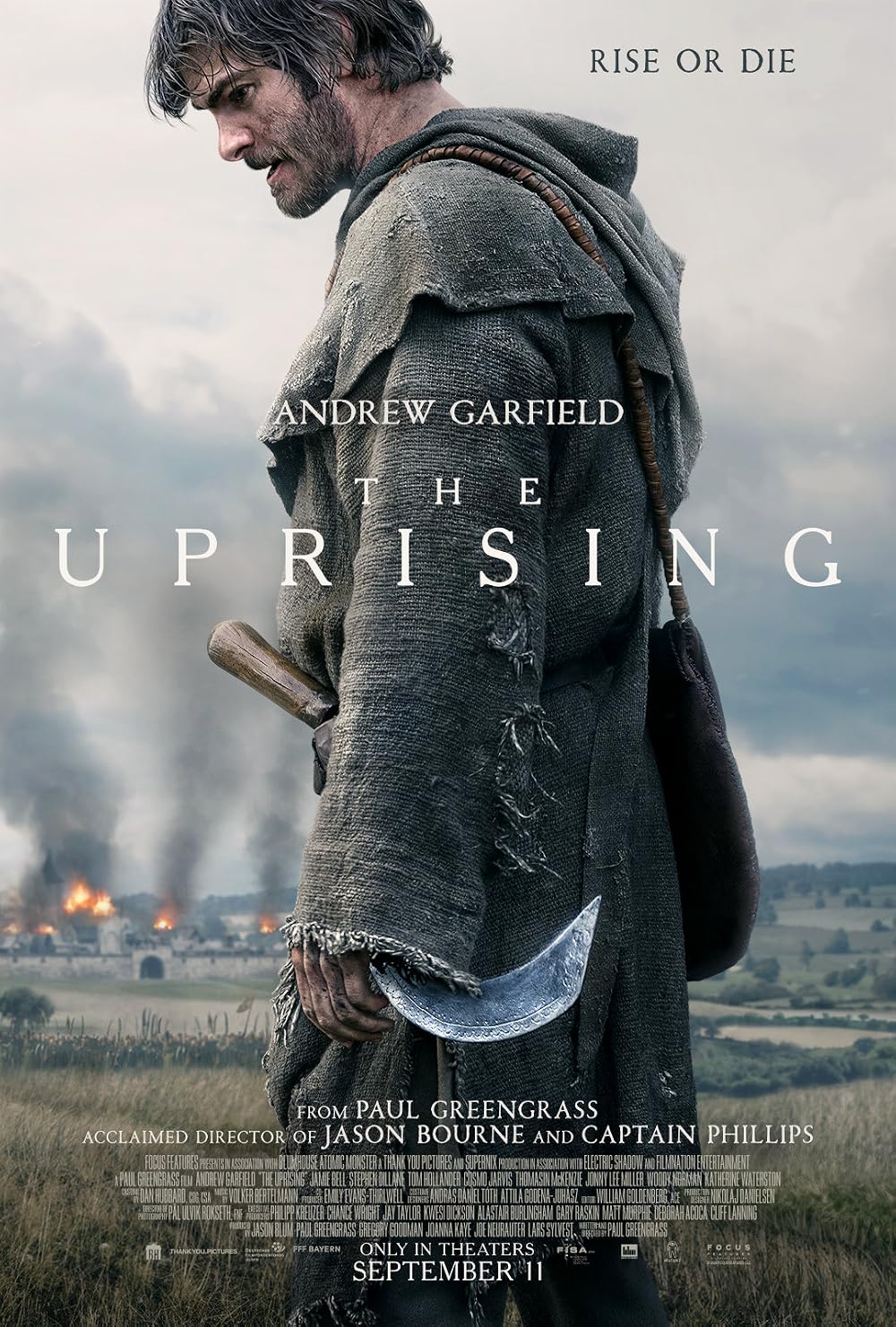

A prestige film with an Academy Award-nominated director wrestles with the aftermath of a once-in-a-generation pandemic, crafting the story of a reeling populace, struggling to come to terms with mass death, economic upheaval, and uncertain, often untrustworthy political leadership. No, this is not a movie about mid-2020s America, though you’d be forgiven for assuming so. It’s “The Uprising,” a dramatization of a rebellion in fourteenth-century England that proves that though history doesn’t often repeat, it certainly does rhyme with startling regularity.
Set in 1381, “The Uprising” takes place in a country hollowed out by the Black Death. (Medieval data is notoriously unreliable, but it’s generally accepted that between a third and half of the population was wiped out.) Surviving citizens are crushed by frequent, steadily increasing taxes to pay for the crown’s ongoing war in France, and forbidden from making the increased pay a smaller labor pool might have commanded by laws that forced wages down to pre-plague levels. A proto-Protestant religious movement known as Lollardy preached equality and rejected clerical wealth and corruption at a time when the Catholic Church’s excesses seemed particularly egregious. And a teenage king is on the throne, governed by a council of wealthy advisers. In short, it is a perfect storm for civil and social unrest.
Director Paul Greengrass goes light on spelling out some of the more detailed beats of this historical context in ways that are almost sure to annoy the medieval historians in the audience. (Cough cough yours truly cough.) Yet his broad approach clearly aims to tie the struggles of fourteenth-century peasants to those of the people watching in theaters today, and, for the most part, the rage, frustration, and desperate longing for a better world that feels just out of reach for regular people still translates.
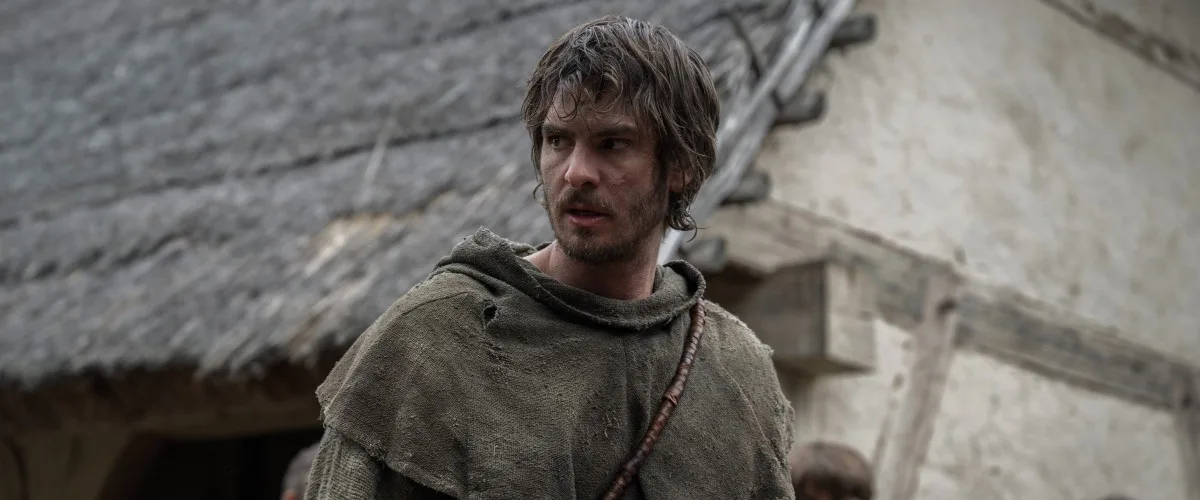
“The Uprising” follows a man simply known as Ploughman (Andrew Garfield), a poor farmer whose wife and children died during the plague and who struggles to manage the land to which he is bound. When a new poll tax is levied on common workers who have been asked to do nothing but sacrifice for the nobility in recent years, Ploughman and many of his neighbors are immediately up in arms (literally), gathering many of their similarly fed-up friends and neighbors to march to London, in the hopes of petitioning the young King Richard II (Woody Norman) about their many grievances. As the uprising picks up steam (and members) on the road south, factions clash about what the movement is attempting to achieve, while the king’s squad of unctuous, power-hungry counselors plot ways to stall until soldiers can be recalled from Scotland.
Ploughman and most of his compatriots are more symbols than characters, and the film stresses the story’s universal nature by giving relatively few characters Christian names. (“I am what I do,” Ploughman intones by way of introduction, which is, in a sense, not that far off from the way many of those around him might have perceived him at the time.) The script features well-known historical figures, including the group’s leader, Wat Tyler (Cosmo Jarvis), and the rebel priest John Ball (Jamie Bell). But most characters are essentially human archetypes whose identities are, like Ploughman’s, tied to the jobs they perform.
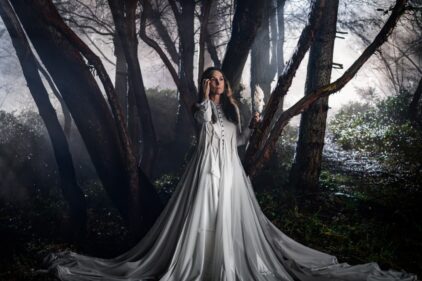
There’s a greedy court treasurer (Robert Hales, played by Tom Hollander), a not particularly Christlike archbishop (Simon Sudbury, played by Stephen Dillane), and the Mayor of London (William Walworth, played by Jonny Lee Miller). Richard’s mother, Joan of Kent (Katherine Waterston), is simply The Countess. Even the King himself is never referred to by his given name, though his rank affords him a few additional honorifics here and there.
Though this particular narrative trick means that it can feel difficult to keep all of the various supporting characters straight, particularly for those with little knowledge of this period of history, it’s a choice that adds a certain timelessness to the tale, a feeling that a lot of this has happened before, and will probably happen again.
Greengrass’s conception of medieval England is bleak and realistic. Hauntingly empty fields speak of the missing population, and the surviving workers shuffle along in what appears to be a state of perpetual grime and exhaustion. Poverty is grinding, and a sense of grief is omnipresent. As yet another noble official appears to demand money and crops they don’t have, the workers’ frustration is palpable. The battle scenes are intense and violent, with Greengrass’s signature handheld shaky-cam style bringing an almost uncomfortably brutal immediacy to these moments. It works less well in non-action scenes, occasionally becoming distracting in ways that don’t benefit the film’s larger story.
It helps that Garfield makes for an appealing everyman, worn down and determinedly hopeful in equal measure. His Ploughman believes in the idea of King Richard, in the justice of kingship, in the ultimate rightness of a system meant to support rich and poor alike. (This isn’t unusual; one of the things the film gets spot-on is the absolute awe with which most of the rebels likely would have viewed the king, a remote, almost divine figure they would never have expected to lay eyes on in life.)
Like the rest of the film, his character is drawn in broad strokes, but his performance is grounded in an earnest vulnerability that gives some occasionally hokey dialogue real weight. (“The laws he writes put honest men in chains.”) Norman also shines as the film’s pseudo-antagonist, portraying a Richard who’s devout, unhinged, and fearful by turns. (To put it another way, it’s very easy to imagine his Richard growing into the decadent, arrogant, and yet strangely poetic king of William Shakespeare’s famous play.)
As with most movies about this time period, “The Uprising” plays somewhat fast and loose with historical facts whenever it’s convenient, from how involved Richard II truly was in negotiations between the peasants and his council to the film’s final bloody confrontation, which is almost entirely fictional save for the location in which it takes place. And although “The Uprising’s” messy marketing campaign has raised questions of whether this is a Robin Hood movie in disguise, it really isn’t. At least, not in the way most people coming into the theater will expect.
Yes, Garfield’s character is almost certainly inspired by Piers Plowman, William Langland’s allegorical fourteenth-century dream poem that contains the first (albeit incredibly brief) textual reference to Robin Hood. But the film’s awkward coda, a one-year-later epilogue which features the appearance of a bow and arrow, as well as a conspicuous amount of green clothing, makes for a sketchy, desperate connection at best. An attempt to put a neat bow on a story that doesn’t lend itself to simplistic moral lessons, it’s an epilogue that feels like nothing so much as a lazy attempt to ascribe a more deliberately uplifting conclusion to a rebellion whose long-tail impact isn’t particularly easy to quantify.
It’s a real clunker of a moment to end the film on, which is otherwise a watchable historical epic animated by the sort of contemporary spirit one rarely finds in this genre. (Fun fact: Connected to Robin Hood or not, the rebels did manage one significant victory: A poll tax wasn’t reintroduced by any government in England again until 1990.)