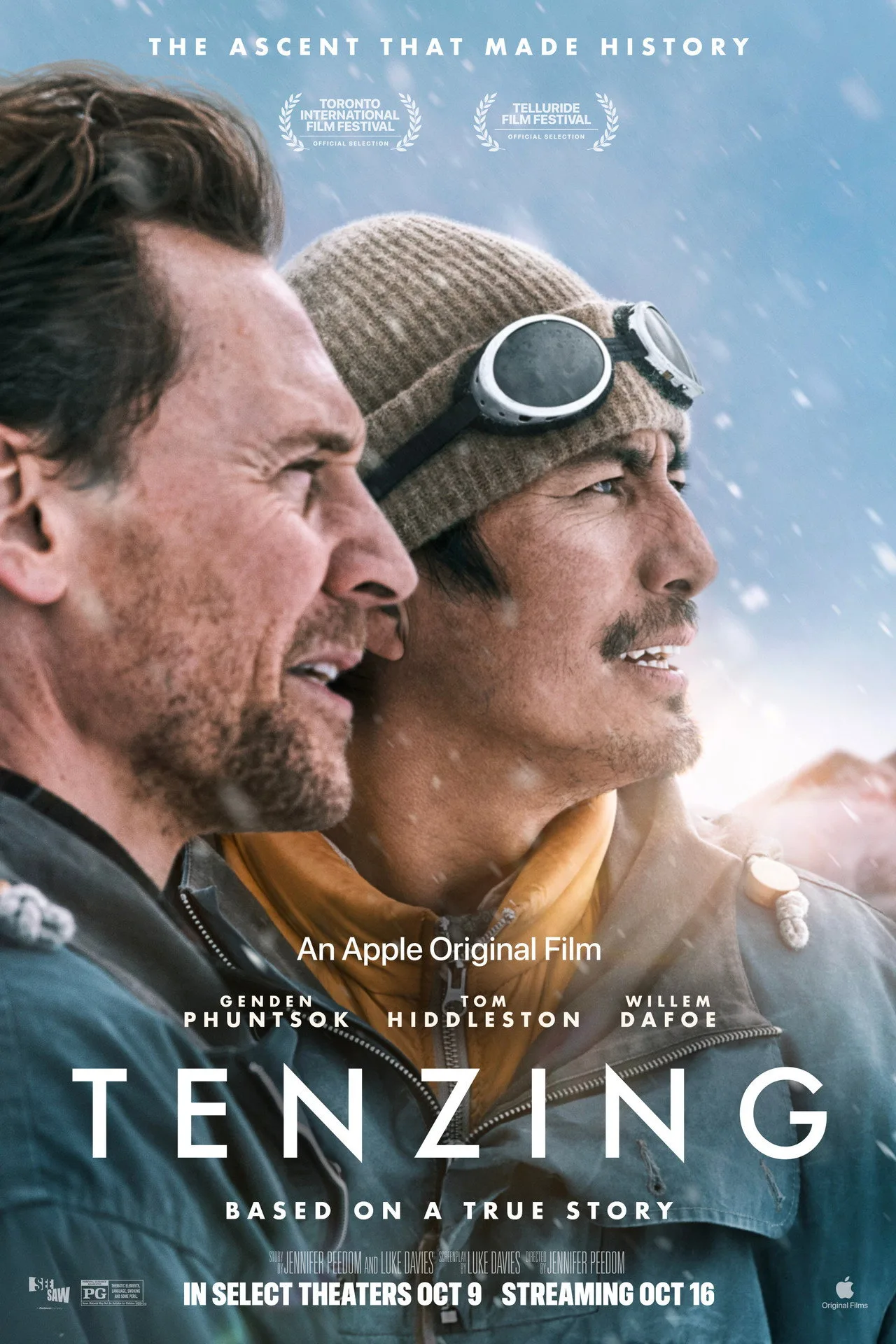
With great care, the heroic tale of mountain climber Tenzing Norgay is fictionalized for the first time. Based on true events and inspired by a book, “Tenzing” is crafted by director Jennifer Peedom and screenwriter Luke Davies with oversight from Tenzing’s son, Tenzing Norbu. On the surface, it’s an adventure flick, but the story has spiritual and emotional depth that gives Tenzing’s life mission universal resonance.
In his small Himalayan village, young Tenzing meets the infamous George Mallory in the 1920s as he embarks on one of the first expeditions to climb Mount Everest, known to Tenzing and others in his religion as the goddess Chomolungma. Without hesitation, Tenzing requests to tag along. There is something so beautifully synergetic, like a Jupiter cazimi, in discovering one’s life calling at an early age, and this wholesome dream drives Tenzing’s real-life, retold story.
Unfolding in a balanced, nonlinear format, “Tenzing” bounces between his little (Samdrup Dorje Lama), young adult (Tenzin Dalha), and middle-aged years (Genden Phuntsok). This structure lends itself to that of a biopic, but it also reinforces the subject’s earnest, dedicated nature. It is as he matures from a teen to young adult, working as a farm boy, that he meets Dawa, whom he longs to give his entire heart and future to. Despite being an outsider and without her father’s approval, she reciprocates his love and hope; the two set off for the city, where Tenzing lands his first opportunity to support an expedition team.
After many years, Tenzing makes a name for himself as one of the best guides, but we later learn he first failed when he applied to join. His resilience is consistent across his few, concentrated passions. Just as he did not let go of his love for Dawa because of their class difference, he showed up time and time again until he was offered a spot as a shepherd, who supports the climbing team by carrying their supplies.
The story is somewhat Westernized by positioning Tenzing as, literally and figuratively, climbing the ranks. After he helps the Swiss team go farther up the mountain than any human has ever gone before, he’s set on retiring from summits. That is, until the determined British team recruits him in 1953. His one condition in joining them, and in doing so breaking his promise to his daughter, he must be considered a formal member of the climbing team. Not compromising on this technicality is culturally and historically crucial, yet it adds a complexity to the fictional depiction of Tenzing.
As they embark on the 3-month journey, perpetual tension with the supplies crew arises from inequities in treatment and recognition. Tenzing, in turn, walks a tightrope trying to appease Colonel John Hunt (Willem Dafoe) while keeping the Sherpas compliant with the demands. This is both physically and emotionally exhausting, but it’s what allows us to connect so deeply to Tenzing. When explaining that the British team’s conqueror mindset will limit how far they go, Tenzing counters gently: “I climb to know her better.”
His tender nature also extends to his spirituality. Without his prayer and appreciation for Chomolungma, it seems they would have fallen short. Phuntsok’s performance is perfectly emotional; his eyes convey contentment but also that inexplicable sadness that comes after finally getting the thing he’s wanted for so long.
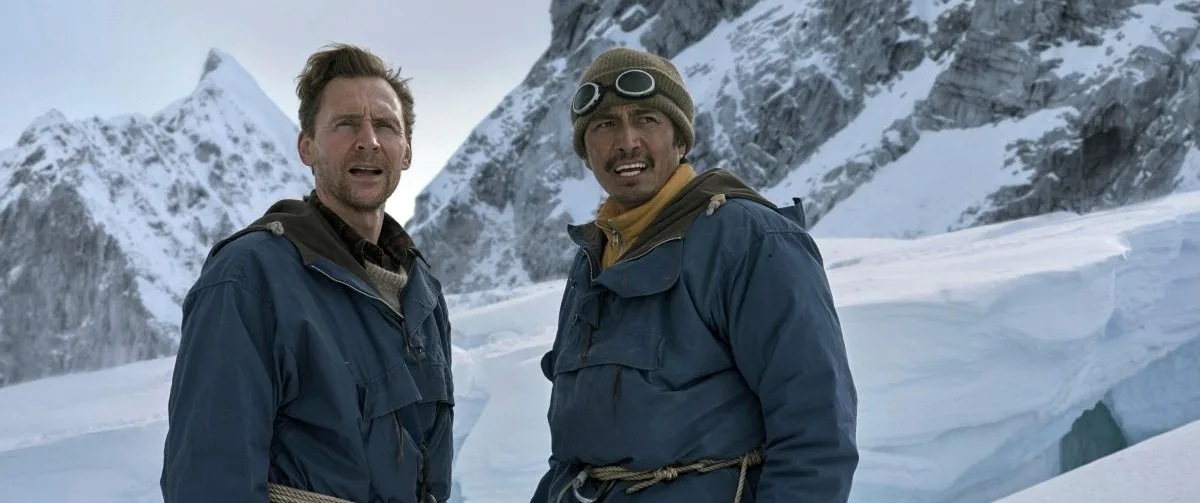
Another key member of the climbing team is New Zealand mountaineer Edmund Hillary (Tom Hiddleston). Tenzing and Hillary’s friendship is built on trust and mutual respect. Often, when a bigger actor like Hiddleston is placed in a supporting role, it’s easy for them to outshine the main character (whether because of skill or character development). However, Hiddleston is the perfect partner, and he mirrors Phuntsok in a way that makes Tenzing beam even brighter. Their bond and Tenzing’s unwavering love for Chomolungma assure the audience they will prevail.
Since the story centers around the power of relationships as a means to making one’s aspirations a reality, the two key female characters, Dawa and the expedition secretary Jill Henderson (Caitríona Balfe), are underwritten. They unfortunately fall into the stereotypical position of being a building block for a man’s ego and achievements. The film clearly wants to position them as important parts of Tenzing’s becoming, but they serve no purpose beyond reassurance and opportunity. In the end, it feels obligatory.
The technical excellence and commitment to craft in front of and behind the screen are awe-striking. In recreating such a dangerous adventure, the “Tenzing” cast and crew are exceptionally committed to the level of safety required, which reflects the reality faced by the British climbing team. The natural hair and makeup design is phenomenally executed, seamlessly aging certain characters. In depicting the harsh effects of climbing Mount Everest, it’s as if every actor actually spent extensive periods outside, surviving wicked, chilling winds.
Through drone technology, “Tenzing” transports us to a bird’s-eye view few people will ever see. Every shot of the snowy, stark mountain landscape feels like 8K. Paired with a crisp sound design, the film becomes quite immersive. The crunch of the snow and every emphasized exhale in the thin air feel familiar, yet create a deep unease, knowing every step is on uncertain ground.
Peedom’s leadership of the production is pivotal. In some ways, her directorial decisions feel as contemplative and considerate as Tenzing’s stewardship of the summit. Her balance of Western and Eastern ideologies is impeccable, even as she navigates intense locations, stunts, and sentimental integrity.
This review was filed from the Telluride Film Festival on September 8, 2026.