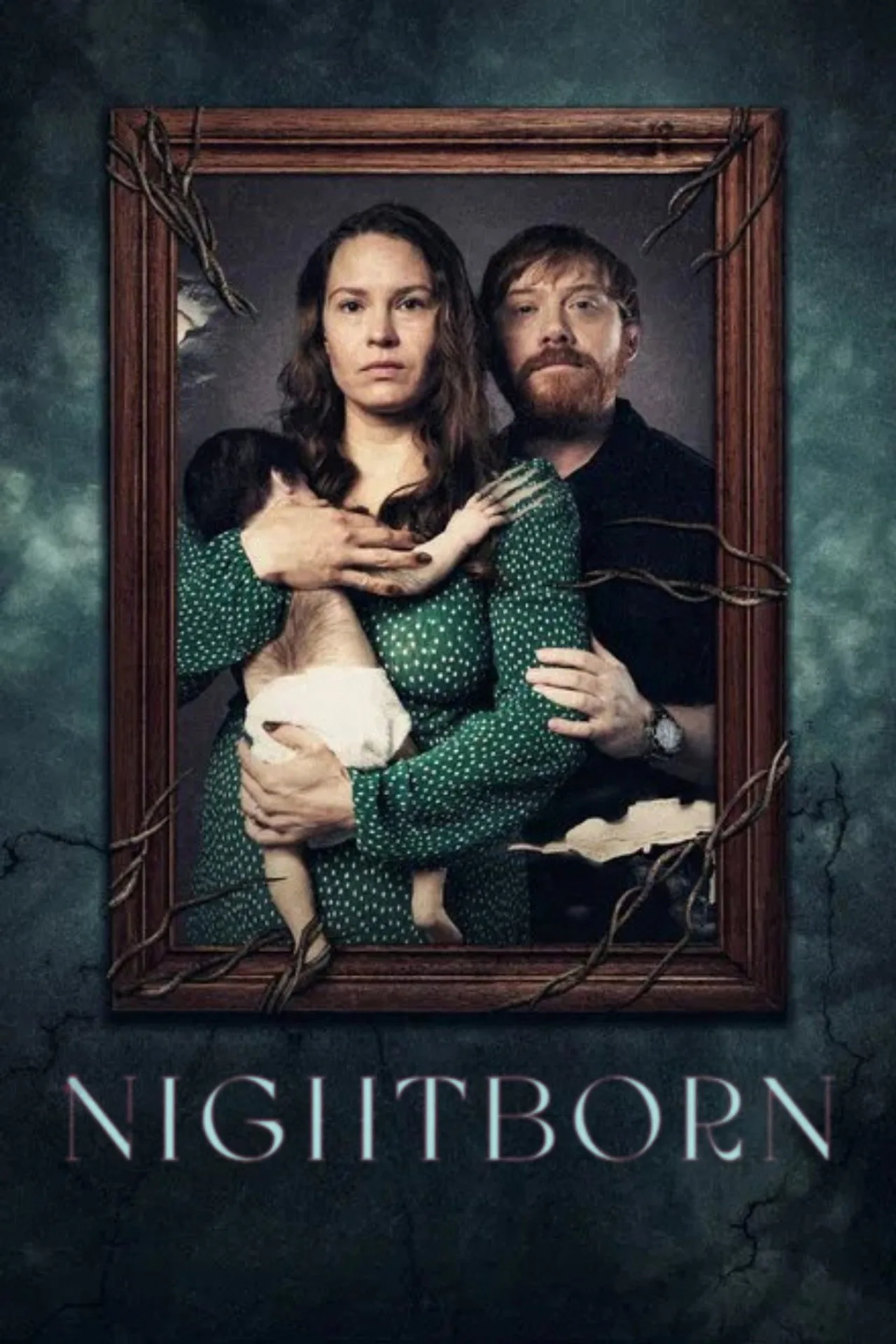
Englishman Jon (Rupert Grint) constantly declares that the elements of his life are just “so Finnish.” In Hanna Bergholm’s newest infant-oriented horror story, “Nightborn,” this proclamation is foundational. Rooted in Finnish folklore, where tales of trolls in the woods boast dark influences on newborns, “Nightborn” is simultaneously a dark cultural fantasy and a visceral depiction of postpartum realities.
Jon and his wife, Saga (Seidi Haarla), have moved into her remote childhood home, a now-dilapidated abode surrounded by the forest she frequented as a child. As they enter the space, with splintered staircase handrails, flora and fauna sprouting from the floorboards, and water dripping from the ceiling, they are more excited than daunted by making the house a home. The couple, who decided on this Finnish landscape to build their family (rather than Jon’s London origin), did so out of a desire to raise their child close to nature. But these woods are different. And as they explore that very landscape for the first time together, Saga traipses happily, either unaware or blinded by her own nostalgia, to the anthropomorphisms Jon notices as he stumbles behind her. Branches reach, trunks bellow with mouths and eyes agape, and fallen logs kneel on the land, their own brush appearing like hair that bows to the earth. Yet cushioned by this lively, lush ground, the couple collapses into an ardent heap, where they conceive their son, Kuura.
But this passionate tumble in the woods is the last glimpse we see of a happy marriage. The moment Kuura is born, he is abnormal: covered in dark, shaggy hair and with a face even the camera spares us from seeing. To Jon, he’s an ugly duckling of a baby, in need of patient love to adjust. To Saga, he is a grotesque gremlin, a damned product of the woods her grandmother always warned her about. He suckles blood from her breast, bristles at her touch, and just won’t stop crying.
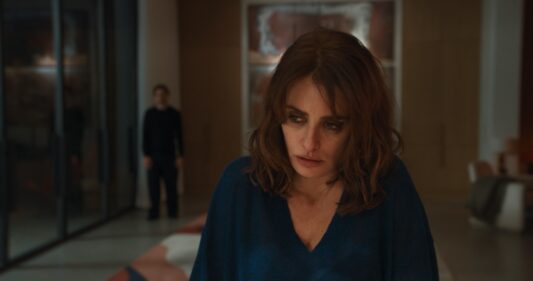
Between Lynne Ramsey’s “Die My Love,” Mary Bronstein’s “If I Had Legs I’d Kick You,” and Marielle Heller’s “Nightbitch,” “Nightborn” fits cozily into the recent cinematic moment that turns its eyes towards the darker, more traditionally taboo emotions of motherhood and postpartum. Here, in Bergholm’s film, the primality of corporeal changes and the animalistic demands of both a mother’s body and an infant’s need are dialed directly into a horror sensibility. Sleepless nights, her paranoid distress, and childbirth itself wear on her body, with Kuura’s bites, which have weathered her nipple raw, being treated with the same bestiality and anxiety as Saga’s blood-filled postpartum diaper. Her body is still bloated from childbirth, but alternately, her face becomes gaunt, and her eyes darken and sink under the psychological pressure.
Through its soundscape, “Nightborn” excellently places us into Saga’s headspace. We are worn thin by the hoarse, bloodcurdling, and never-relenting cries of Kuura, and when we are given respite from them, it is only in exchange for dark, looming droning tones that insist something is wrong. Yet concurrently, we maintain empathy and perspective for Jon’s disposition: a worried, supportive husband juggling care for his newborn son, his wife’s decline, and his own mental wellbeing in trying to keep it all steady.
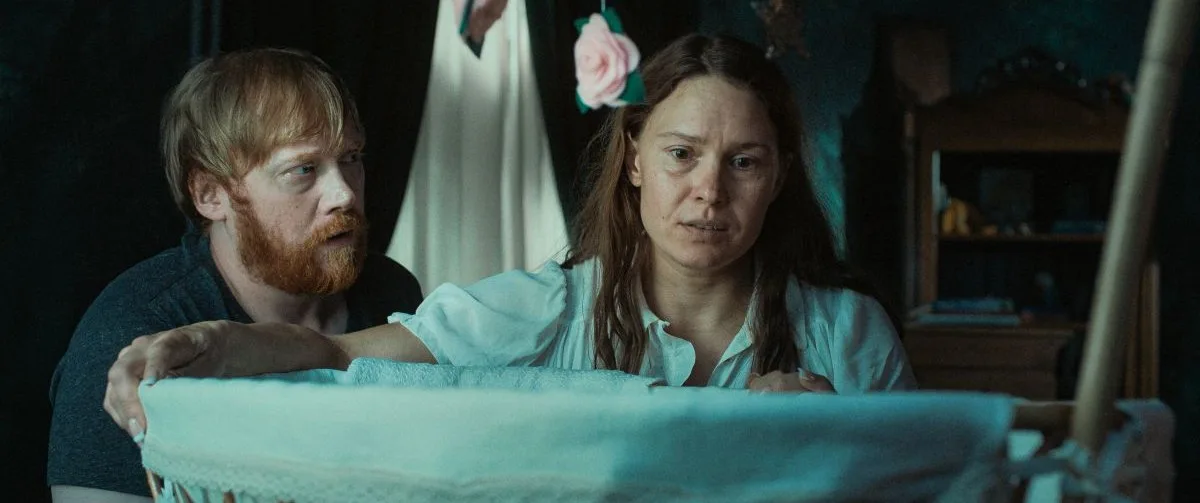
In these dynamics is where the shortcomings of “Nightborn” come to life, however. The screenplay diverges from performance and direction, with the former being much stronger and grounded than the latter’s harried expressions tend to be. Naturally, Grint keeps the film down to earth. He delivers both tenderness and overstimulated frustration with compatible ease and believability, playing the straight man to Saga’s frantic desperation. It’s difficult to play “crazy” without unraveling yourself, and this tightrope walk is one that Haarla stumbles through the entire film. At times, her animalism is indicative of the intended catharsis, and at others, it feels completely unmoored. As the film’s center, Haarla is unreliable; her hysterical frenzies pale in comparison to the hollowed depressive spells, where in this case, less really is more.
“Nightborn” doesn’t aim for camp, instead opting for a raw, psychological demand, but oftentimes it lands left of center. The fantastical elements, like the covert forestry that surrounds Kuura’s nursery, particularly under the floorboards in the center of the room, and even the portrayal of Kuura him/itself, with backlit silhouettes and clumsy puppetry galore, are all flashier than necessary. This hyper-stylization lends itself to overexposure, and a more subtle approach to these otherworldly elements would have been much more harrowing (à la “Rosemary’s Baby,” perhaps). So while built on an excellent screenplay and grounded center, “Nightborn” falls victim to fatiguing its elements through overzealous, flustered execution.