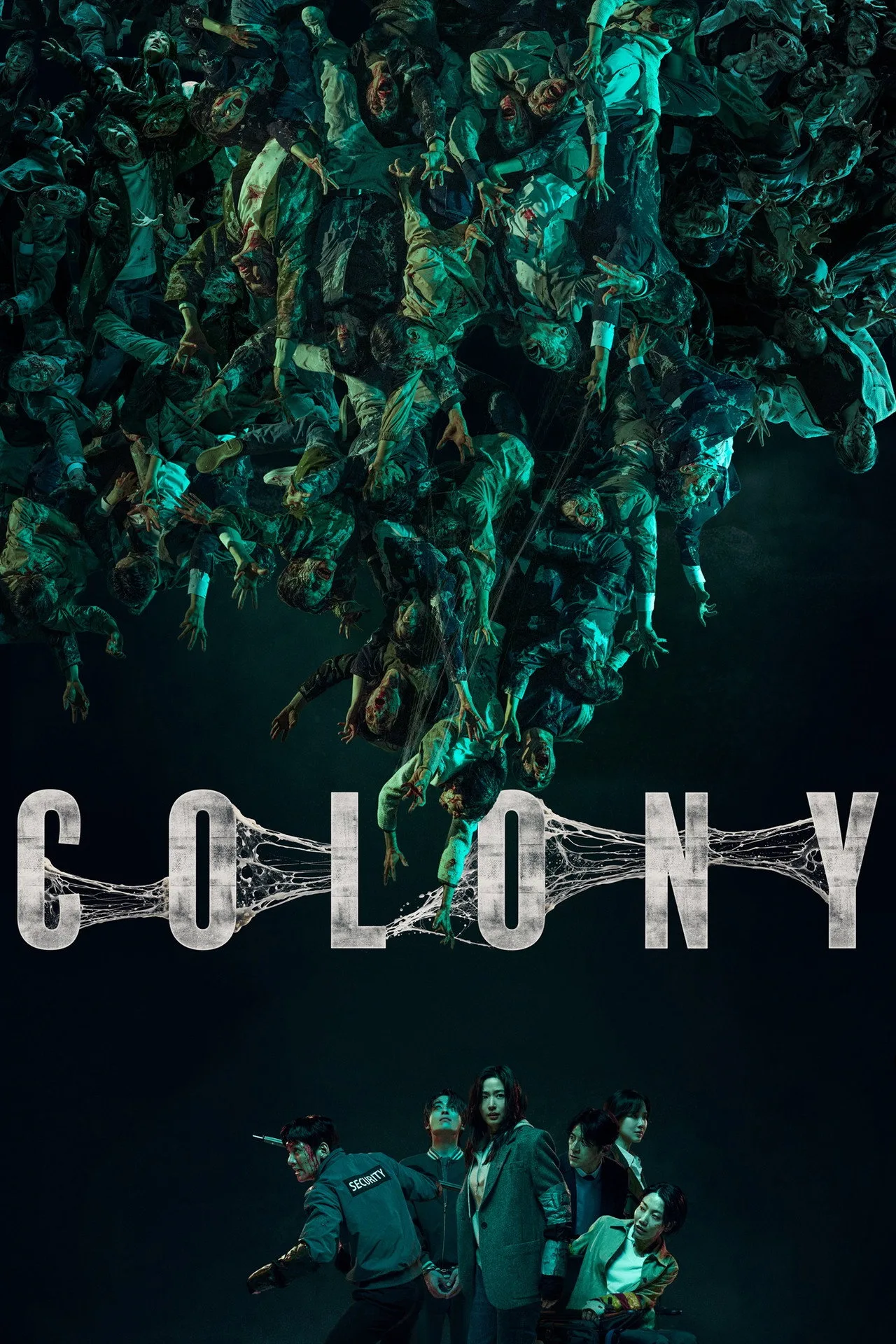

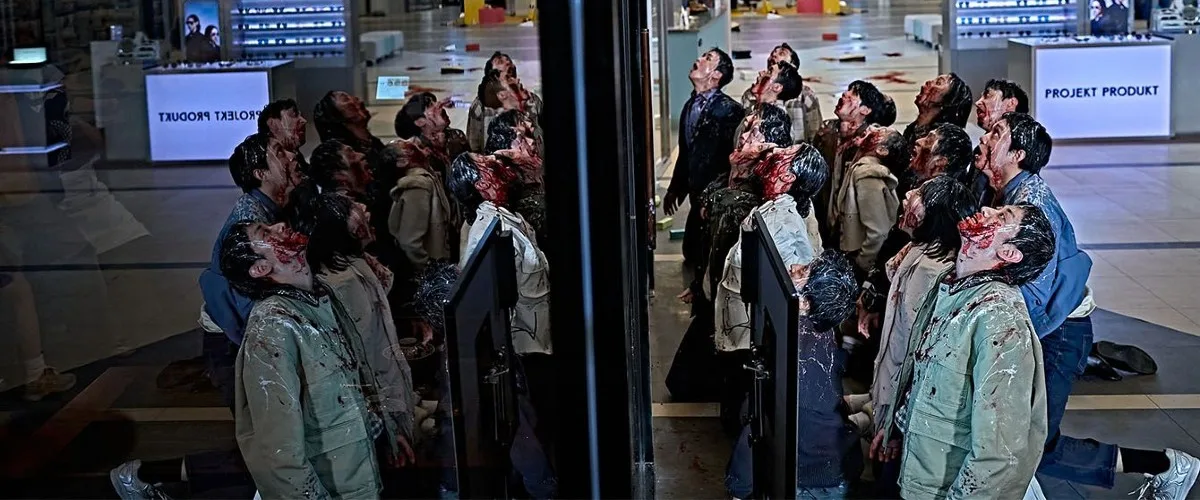
It’s hard in this day and age of zombie media to find a new spin on the formula: we’ve had fast zombies, we’ve had slow zombies, we’ve had lovesick zombies. (Just this past year, we got to see a stoner zombie with a big ol’ dingus.) But Yeon Sang-ho, director of last decade’s mile-a-minute zombie chiller “Train to Busan,” tries a new tack with his latest, “Colony”: What if the zombies could talk to each other? What if they could learn?
The premise is ripe for all kinds of acrobatic carnage, especially with Sang-ho, who fashioned delightfully claustrophobic chaos with “Busan” and built more citywide mayhem with “Peninsula,” to tear into. But the premise of a mold-based zombie hive mind isn’t exactly innovative (hello, “The Last of Us”), and its ideas about communication and social breakdown don’t bite deep enough to draw blood.
The setting of “Colony” is still suitably confined to give its zombie breakdown sufficient structure: Set in a Korean high-rise facility where a biotech company is making a presentation about its latest discovery—a bioengineered mold that can communicate with itself and regenerate dead tissue. Problem is, a disgruntled scientist, Seo Young-chul (Koo Hyo-hwan, all smirking cheekbones), has planned an outbreak of that virus and injected himself with the only vaccine. He confronts the CEO (Kom Jeong-tae) in his VIP room and jabs him with the mold, turning him into a spitting, vomiting, contorting patient zero; before long, the whole building is overrun, and—wouldn’t you know it—there are only a scant few survivors scrambling to escape.
In its early goes, the novelty of “Colony” lies in its cast of characters, thinly drawn but initially clever, learning the rules of this particular strain of zombiedom. Kwon Se-jeong (Jun Ji-hyun), an unemployed biotech professor invited to the event by her ex-husband Han (Go Soo) in the hopes of landing her a job, quickly becomes the undead whisperer to this group of misfits; she clocks that the horde of zombies learn from their failures, performing “information exchange” in the form of collective seizures that feel like gloopy K-pop flash mobs. (Choreographer Jeon Young makes inventive use of dancers, contortionists, and movement artists to play the zombies, as they crunch, flip, and crawl their way toward their prey in increasingly animalistic ways).
As such, there’s a giddy sense of discovery watching these characters observe, learn, and adapt to the zombies’ ever-changing capabilities. First, they distract them with cardboard cutout decoys from clothing stores; when the zombies figure that out, they switch to misleading them with cologne and antifreeze. This experimentation makes you hope that, for once, the cast of a zombie movie won’t just run headlong into the kind of stupid decisions endemic to the genre.
Alas and alack, that doesn’t last long, and “Colony”‘s charms start to grow thin as its zombie logic gets more repetitive, and its human meat-sacks get dumber and dumber. Granted, it’s a staple of the zombie genre that even the most level-headed protagonists can lose their heads when they lose loved ones, panic, or face seemingly insurmountable dilemmas. But this group falls prey to self-interest and self-destructive grief so quickly that it’s hard to root for anyone besides Se-joung to even make it out alive.
Major sacrifices go unrewarded, and the group finds themselves breaking the very rules they set up for success—particularly around Dr. Seo, whose inoculation (and eventual infection) eventually grants him control over the horde to further his apocalyptic goals. It’s a neat wrinkle to give a zombie movie like this an explicit villain, someone who just wants to watch the world burn, and Koo plays him with a devilish demon-twink swagger. But the group’s attempts to capture him are stymied by his ability to communicate to his munchy minions exactly where they are at all times, and it’s aggravating to see these characters so easily undone by their own personal foibles.
Granted, “Colony” occasionally dabbles in the contrast between its hive-mind shamblers and the flawed, self-interested, impulsive humans we’re meant to root for. For Dr. Seo, the infection represents a chance to eliminate “imperfect communication,” which, in his mind, is the source of all human misery; contrast this with our survivors, who are either fueled or undone by their personal obligations, connections, and resolve. Sang-ho bolsters this point in the back half by cutting to the authorities’ response to the infection, with characters making difficult decisions between the public good and the politically expedient (though it just reminds you of how much better “Shin Godzilla” handled this kind of bureaucratic squabbling). But the film can’t quite sit still long enough to delve into these ideas of individualism vs. collectivism; it’s too busy crab-walking its way to the next frenetic setpiece.
Those chases, right up until a bonkers climax that features an honest-to-God zombie ant mill, keep “Colony” floating well enough from one beat to the next. It’s the moments in between that rankle, the feeling that we’ve seen so much of this before in more substantive packaging. Instead, it’s a re-tread of a dozen zombie movies we’ve seen before, with the addition of some rules-based groupthink and a heaping helping of jizz-like mycelium coating every surface. It’s gloopy, gory, and greasy, which is all you might want from a zombie movie. But “Colony” feels like it wants to do more, and comes up short in the bargain.
The film was screened as part of our coverage of the 2026 Fantasia International Film Festival, and releases wide August 28th. This review was originally filed on July 28, 2026.