
We are in the midst of another wave of musical biopics. “Elvis,” “A Complete Unknown,” and “Springsteen: Deliver Me From Nowhere” are among the more recent examples of traditional films that dramatize a beloved artist’s life, struggles, and art for the screen. There’s also been a few exceptions to the formulaic musical biopic, including the hilariously ridiculous “Weird: The Al Yankovic Story” and the uncanny “Better Man,” which reimagines pop star Robbie Williams as a chimpanzee. Now, a tribute band gets the musical biopic treatment with all the sincerity of a somber drama.
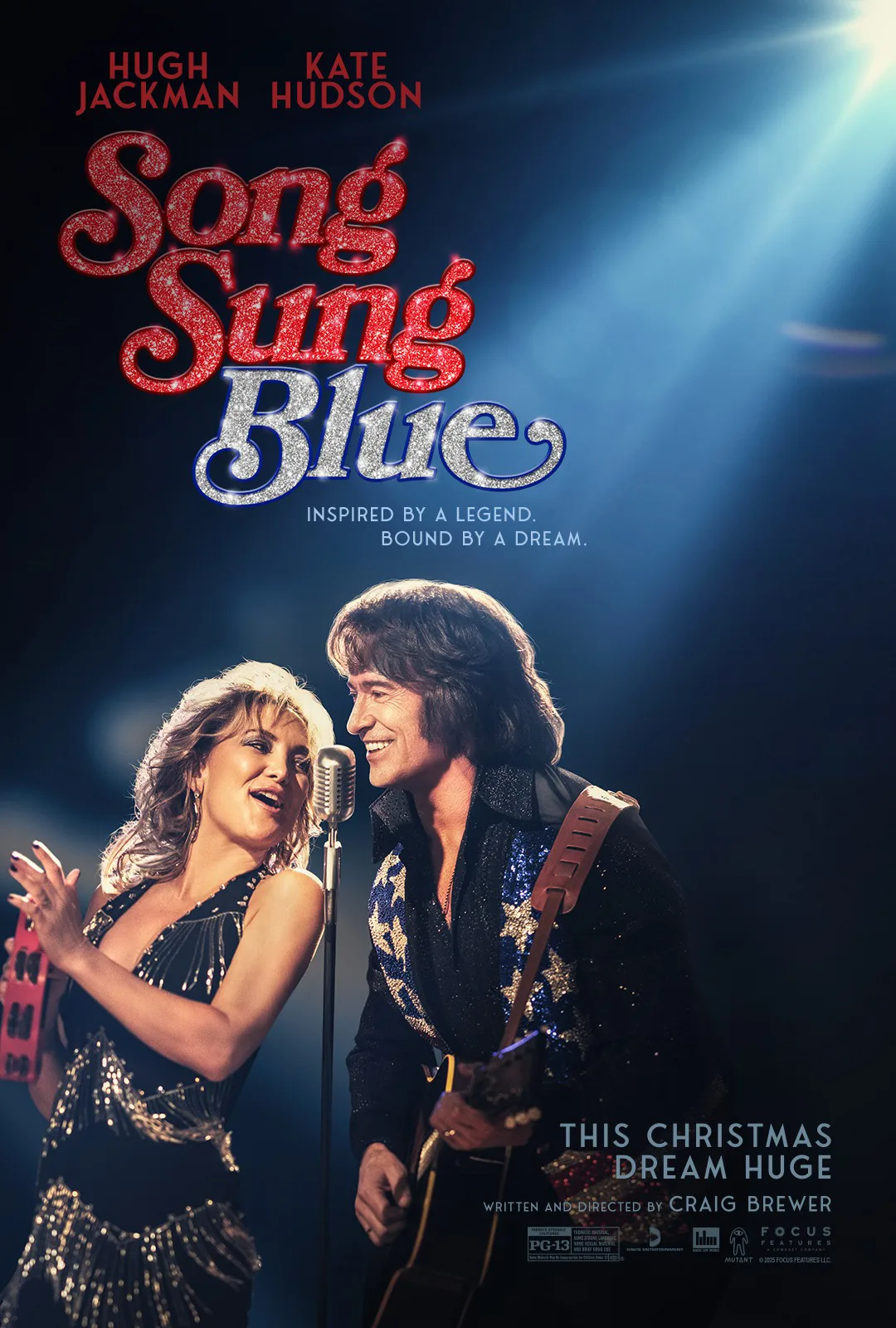
Craig Brewer’s latest film, “Song Sung Blue,” is—according to its opening title card—“based on a true love story” of Lightning and Thunder, a couple in Milwaukee who channeled their love of music into a passion project that became a Neil Diamond tribute show. Mike (Hugh Jackman) is a recovering alcoholic Vietnam War veteran who’s tired of singing half-hearted Don Ho covers at the Wisconsin State Fair. He decides to quit his job as a Buddy Holly impersonator alongside his friend Mark (Michael Imperioli); Mike, who also goes by the nickname Lightning, insists on performing as himself. A bright-faced Claire (Kate Hudson), a mom of two who’s about to take the stage as Patsy Cline, is intrigued by Mike’s passion.
When they connect, the chemistry is instantaneous, and the two quickly become a couple, a singing duo now named Lightning (Mike) and Thunder (Claire), and not long after, are married. Just as their bookings are taking off, Claire is horrendously injured in a car accident on their front lawn, and their story takes one of many turns.
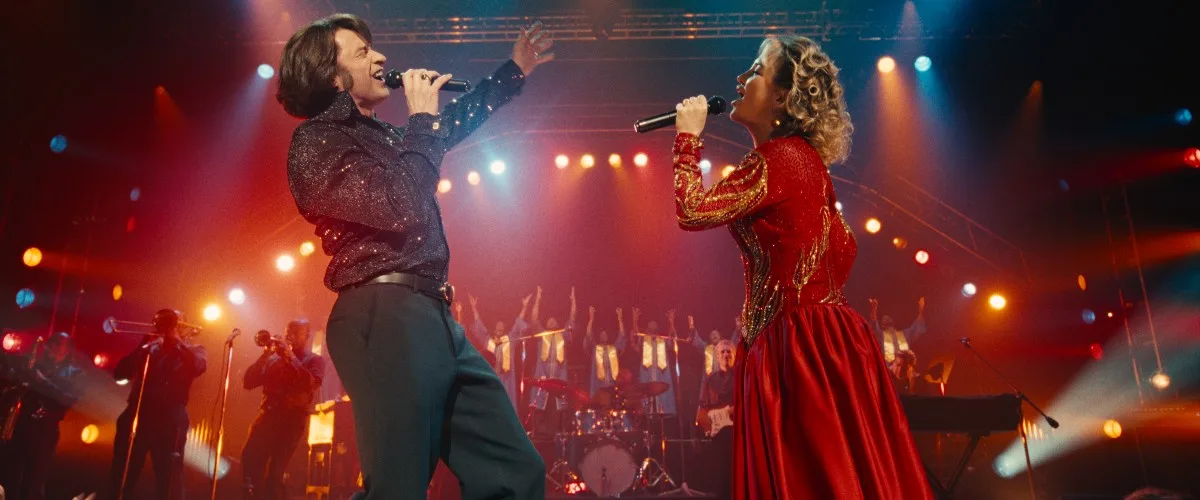
Greg Kohs’ documentary, also titled “Song Sung Blue,” recounts the couple’s story through old home movies and colorful interviews with the two, their friends, and family. Brewer, who broke out with movies like “The Poor & Hungry” and “Hustle & Flow,” made a bit of a comeback with the 2019 film “Dolemite Is My Name.” He happened to catch Kohs’ documentary during a festival appearance and was inspired to make this version years later. While Kohs’ film feels like a heartwarming tribute, Brewer’s adaptation feels more melodramatic, concentrating years and months of pain into a dizzying carousel of events. The upbeat scenes of Jackman and Hudson singing and locking eyes across the stage are relatively short-lived compared with the intensified timeline that focuses more on their struggles than on their moments of joy.
If the narrative doesn’t get you down, then maybe the dialogue will, because it’s perhaps even more leadened and cheesy than many might stomach. When Mike’s had enough of covering “Tiny Bubbles,” he tells Mark, “I should be enough!” When a new business partner seals a deal with Mike, he exclaims, “Music to my ears!” And when Claire is telling an uncaring doctor about her former life, she ends with, “We were so close.” One could almost predict what the following line would be in certain scenes because Brewer hewed so closely to musical biopic beats we’ve seen before.
Under a jet black shock of coiffed hair and a missing tooth, Jackman plays Mike like a consummate showman, always ready with a smile, if a bit pompous and rather full of himself. Jackman comes on a little too hot at first, practically annoying everyone with his delusions of grandeur at the beginning. It’s not until his character softens as the movie goes on that his performance finds some balance. Hudson, however, comes out of the gate with a pitch-perfect vision of Claire: warm, excited to perform, and so in love with her partner. Even when Claire faces her most challenging moments, the absence of her bubbly presence is felt throughout the household.
“Nostalgia pays,” quips Claire, and she isn’t wrong, but Brewer could have made more room for more than just tragedy in Lightning and Thunder’s story. The scenes where the pair pooled resources from friends and neighbors to put together their first show or mount yet another comeback, despite the odds, ring closer to what made the original documentary and the couple’s story so moving.
But no number of Neil Diamond covers can soften the blow of the way Brewer depicts Claire’s accident (a shot he repeats to scare the audience), showing how he’s playing up the drama in the couple’s life. With unbelievable dialogue and a truncated timeline of events, “Song Sung Blue” ends up dabbling in “Walk Hard” territory, making the film seem silly even when the couple at the heart of this story only ever wanted to play the hits.