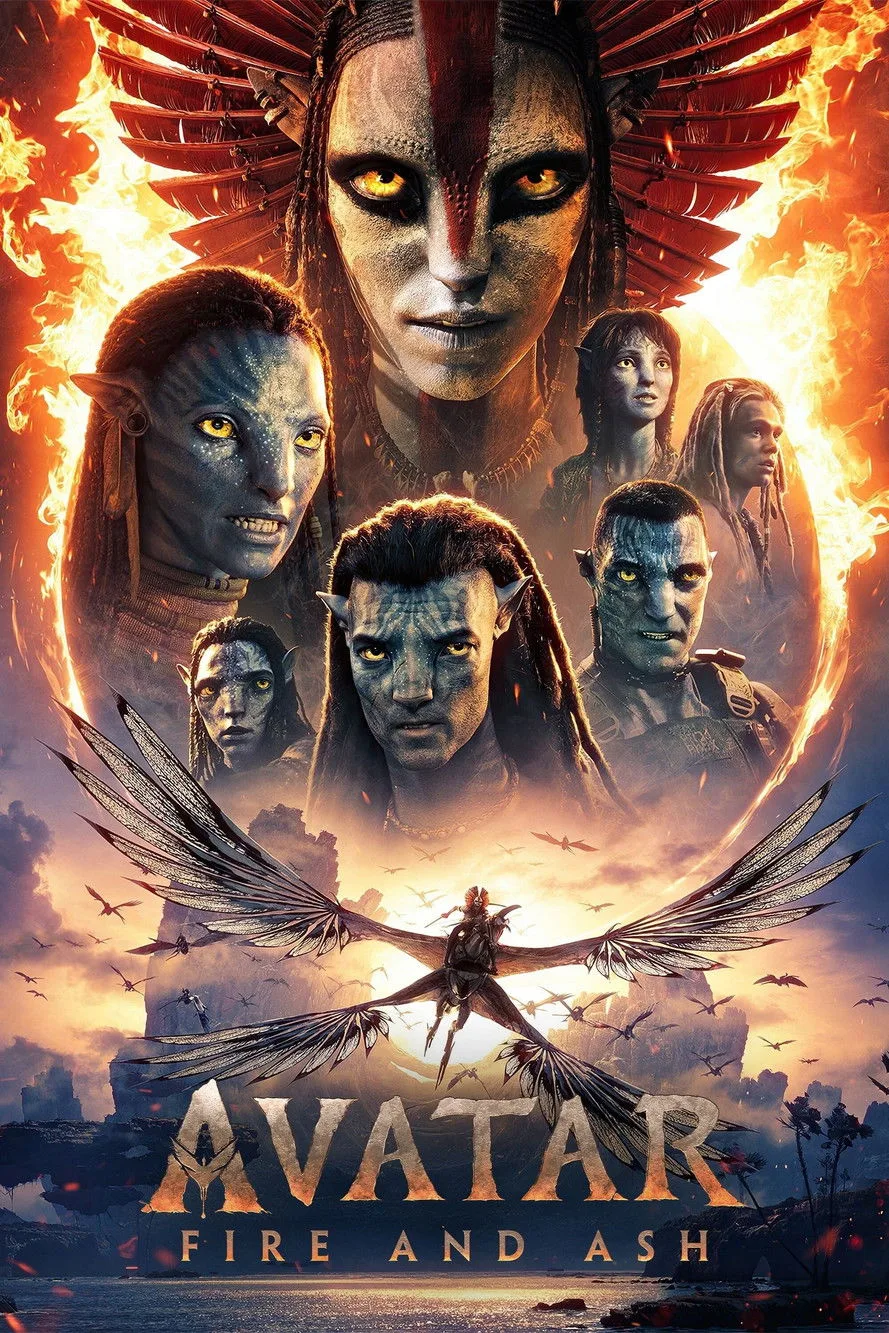
Is there anyone better at the art of the sequel than James Cameron? “Terminator 2: Judgment Day,” “Aliens,” and “Avatar: The Way of Water” are wonderful examples of how to build on what came before instead of just repeating it and hoping people don’t notice. So it makes sense to go into “Avatar: Fire and Ash” hoping it will expand on the world and themes of the first two films rather than just running it back. Leave those hopes at the door.
While “Fire and Ash” does spectacle well because of course it does, it squanders the opportunity to close out what could be a trilogy (although I’d wager a fourth film still happens) with weight and fury. The movie is constantly nodding to new ideas in Rick Jaffa and Amanda Silver’s script before running back into the blue safety of what it’s done before. Yes, this film was apparently written as one LONG script with the last one, but that doesn’t justify its bizarre repetition, hitting so many of the same beats as “Way of Water” that future generations won’t be able to tell one from the other. Great sequels don’t just repeat; they build. This one treads beautifully rendered water.
It’s been a year since the climax of “The Way of Water,” which included the death of Neteyam. Jake (Sam Worthington) has grown distant from his son Lo’ak (Britain Dalton), who opens the film narrating a beautiful sequence about loss, which feels like a promise of a story of grief and guilt that never really surfaces. While Lo’ak and Jake struggle to figure out how to reconnect after the tragedy, Neytiri (Zoe Saldana) is adrift in her pain, feeling like she can’t find stability so far away from home. Again, Cameron and his writers play with ideas about peace vs. power and how those who stay in tune with Mother Earth (or, in this case, Eywa) will overcome those who seek to destroy it.
In the latter category, we once again face off against Quaritch (Stephen Lang), now in full Na’vi form, even as he awkwardly walks around the military base and shouts orders at Edie Falco and Giovanni Ribisi. Stuck in the middle, where he occupies way too much screen time in “Fire and Ash,” is Spider (Jack Champion), now the adopted son of Jake & Neytiri. A few smart sequences between Spider and Kiri (Sigourney Weaver) regarding how they feel like outsiders in their communities can’t make up for an exorbitant amount of time spent with the underdeveloped Spider. While Weaver does an incredible job imbuing Kiri with the pain of someone whose identity keeps them from that which they believe will make them happy, Spider is just woefully underwritten, which is especially frustrating given how essential he becomes to the plot when the humans see him as the key to future domination of the planet.
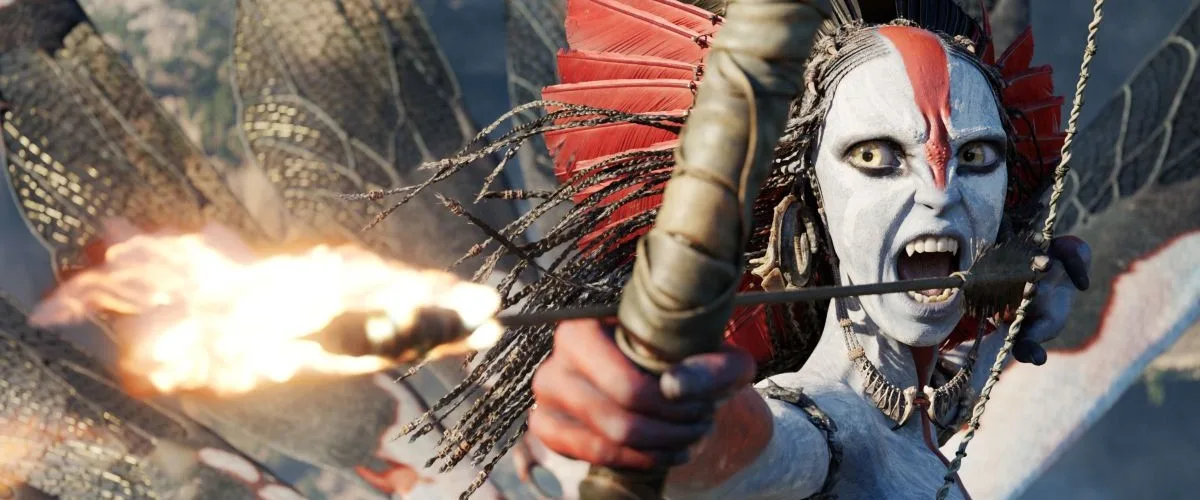
Into this fraught family dynamic drops Varang (Oona Chaplin), the visually striking leader of a cult-like group of Na’vi warriors known as the Mangkwan. If Tonowari (Cliff Curtis) and his water-logged Matkayina clan represent a quest for peace in a time of conflict, the Mangkwan are set up as a counter to that, an almost feral representation of impulsive, selfish violence. When Quaritch finds his way to Varang’s lair, Cameron stages his best sequence in the film, sketching Varang as a sort of cult leader, an almost Manson-esque figure who rules through force and manipulation.
And then he totally drops the ball. Without spoiling, Varang becomes a secondary or even tertiary character, a side piece for Quaritch rather than a true villain in her own right. It’s one of the biggest disappointments in Cameron’s career, especially given how wonderfully he’s brought strong female heroes and villains to life in the past. Instead of developing Spider or Varang, “Fire and Ash” hurtles toward a climax that’s nearly identical to “The Way of Water,” right down to poachers underestimating the ability of the tulkun to ruin their day.
Of course, many will forgive the storytelling flaws of “Fire and Ash” in favor of the pure spectacle of it all. In a time when it feels like entertainment is contracting under the weight of shoddy streaming service originals and the abundance of AI, it’s tempting to give “Fire and Ash” a pass just for how much it seeks to wow the viewer. Cameron feels like one of the few remaining directors who, first and foremost, tries to make sure that viewers get the most for their entertainment dollar. If he never makes a film again outside of this franchise, and it increasingly seems likely that he won’t, he can still claim to have done something that few ever have: created his own entire film universe, one that will outlive all of us through theme park rides, toys, video games, and more. There’s a big part of me that wants to give “Fire and Ash” a pass on billion-dollar chutzpah alone.
Yet the disappointment of what this could have been hangs in the air. From the unfulfilled promise of Varang & Spider to the sequences that feel like exact carbon copies of ones from “The Way of Water,” I can’t imagine anyone thinking this film is the best of the trilogy. And that’s what feels so new for James Cameron, someone who used to know how raise the temperature in sequels instead of just sifting through the debris.