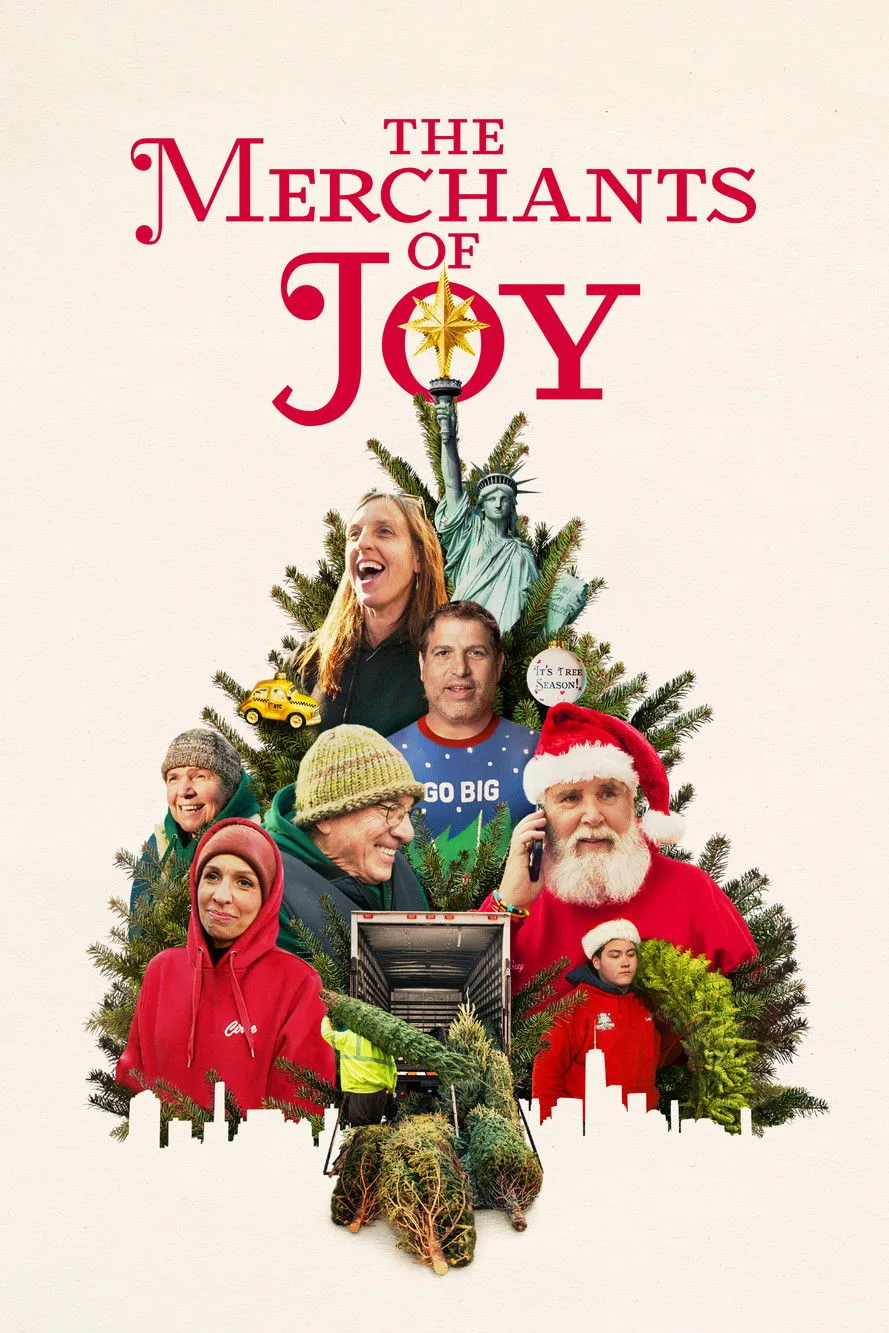
I happened to watch the screener for “The Merchants Of Joy” on the Saturday before Thanksgiving, which, as the documentary tells us, is when Christmas tree season starts. Anyone who runs a Christmas tree lot starts assembling their stand, unloads bundles of trees from the trucks, and calculates how many trees they need to sell to break even by the end of December. Just hours before I started watching this film, I happened to drive by a lot here in Chicago, where I watched people do just that. I now have a better understanding of those who run these seasonal pop-ups after watching Celia Aniskovich’s film, which follows four families and one elusive saboteur of the season, all of whom claim to have the best Christmas tree lots anywhere in New York.
Right off the bat, Aniskovich’s charming doc plays like a fast-paced travelogue of the city that never sleeps, positioning it as the place to be during the holidays. Once the film calms down and starts getting to know its players, “The Merchants of Joy” finds a more assured footing. The “five families of Christmas” are “frenemies.” They remind me of drive-in theater owners, good-natured people (mostly) who work hard for their passion and who know how to survive in what has always been a tough racket. Aniskovich’s subjects are true, no-nonsense New York street vendors who all have closely-guarded secrets to their success, pasts that can come back to haunt them, and families who can carry on with the business if they so choose.
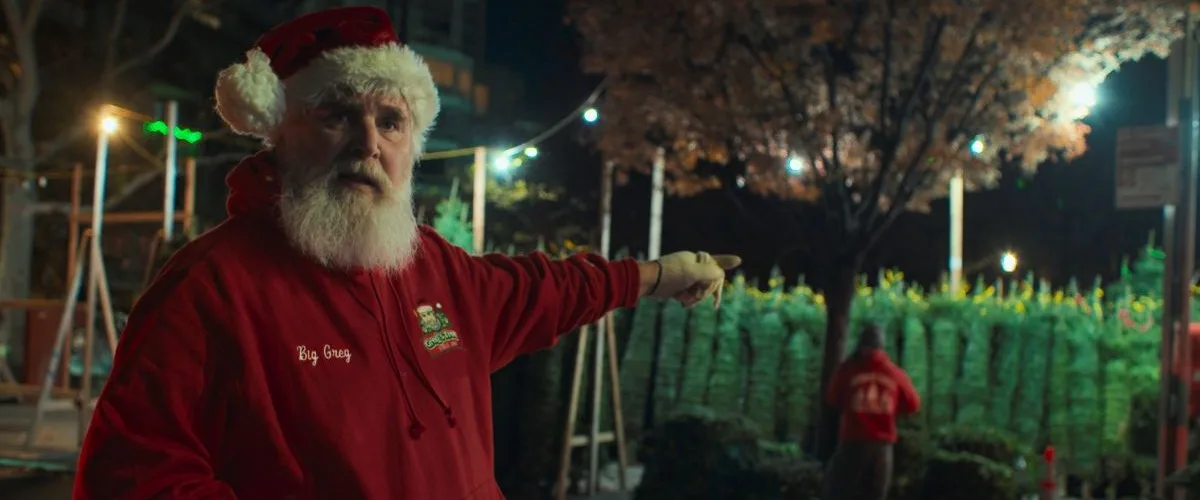
We first meet Gregory Walsh, who has been running Greg’s Trees for thirty-eight years. The Santa-like figure also owns pumpkin stands and sells roses for Mother’s Day. His son, “Little” Greg (age 20), could take over the business at some point, but will he? Then there’s George Schmidt, who once worked for Gregory and is now on his own. He’s a single dad with four kids and always seems to be striking out with women, though he keeps trying valiantly. “A businessman always works,” he says, and we get the feeling he doesn’t just mean selling trees. Over in Vermont, there’s Jane Waterman and George Nash, a married couple who have a daughter, Ciree, who has all but taken over the family trade. “Two things you’ll find when you Google me,” she says. “A multimillion-dollar business and getting arrested for heroin.” Then, over in New Jersey, there’s Heather Neville, owner of NYC Tree Lady, who at one point worked for George Schmidt.
Everyone has their turf in New York, the hardest place in America to sell Christmas trees, we’re told. They all have to bid for these spots before the start of the season. Unfortunately, all this goodwill toward one another cannot stop one Christmas tree vendor from outbidding these families for some of the best lots in the city. Kevin Hammer started selling trees at nineteen and has been a shadowy figure ever since. He is compared to Keyser Söze from “The Usual Suspects,” a phantom menace who exists to make life difficult for these people. Aniskovich manages to score an interview with him, but only by phone, much to the amazement of the other subjects, who have never been able to find out who he is. He sounds exactly like how you’d expect him to sound. He’s basically a Ratso Rizzo-type who doesn’t care one bit about making friends with his competitors.
The film comes alive even more when he’s introduced, and we start feeling like there’s more at stake here for these people and what they have to deal with every year. While one would not want Aniskovich to manufacture any drama where there isn’t any, Hammer’s presence eventually fades away, unfortunately. We’re left with a series of sequences involving the farms where trees come from, what it takes to work a Christmas tree lot all season (many people sleep on the lot), what makes fake trees and corporate retail trees a horrible choice, and the tensions that can come from having two competitors across the street from one another. Aniskovich clearly loves her subjects, but the lack of tension is noticeable and a bit of a letdown, even if everyone else remains engaging and worth following. I particularly loved a moment where Ciree, the former heroin addict, finds a homeless man sleeping in her office and encourages him to get help.
“The Merchants of Joy” fits in nicely with other Christmas-based documentaries of its kind, including Dana Nachman and Chelsea Matter’s “Dear Santa” (2020), Mitchell Kezin’s “Jingle Bell Rocks” (2013), and my personal favorite, Jeff Myers’ “Becoming Santa” (2011). While this is the least family-friendly film of the bunch (they all freely drop f-bombs throughout), all of these films explore a niche market of the holiday season we take for granted and show what goes into the hard work of bringing joy to people’s lives. Still, what is it about Kevin Hammer? Why does he want to be in this line of work when he seems to need so little joy himself?
Aniskovich tries her best to get at the heart of that, but Hammer only gives her so much. Despite his shadowy presence, he makes “The Merchants of Joy” a little more memorable than it might have been without him. In the end, the film has a tried-and-true message: stop working overtime to make a few bucks, slow down, and appreciate what you have. Next time you buy a Christmas tree, you might feel compelled to ask the owners about their history with this line of work and how their year is going. Hopefully, you’ll get the kind of interesting characters and stories that Aniskovich finds here.