Movie theaters are currently inundated with major motion pictures that examine and/or indict the behavior of wealthy Silicon Valley leaders, including Meta’s Mark Zuckerberg (“The Social Reckoning”), Theranos fraudster Elizabeth Holmes (“You Can See Everything”), Elon Musk (Alex Gibney’s “Musk”), and OpenAI’s Sam Altman (“Artificial”). Television is in on the trend, too. In November, Netflix will remind us of the implosion of cryptocurrency fund FTX and its founder, Sam Bankman-Fried, in “The Altruists.”
On CBS and Paramount+ starting Thursday, there’s “Cupertino,” a broadcast-network procedural that doesn’t zero in on a real-life tech bro, but does raise a lot of sobering questions about the industry currently attempting to cram A.I. down the throats of the global populace.
Created by Michelle and Robert King—the showrunning power couple responsible for “The Good Wife,” “The Good Fight,” “Evil,” “Elsbeth,” and ensuring that CBS still offers quality programming in primetime—the series is a legal drama about an upstart law firm that focuses specifically on clients who want to sue powerful Silicon Valley companies.
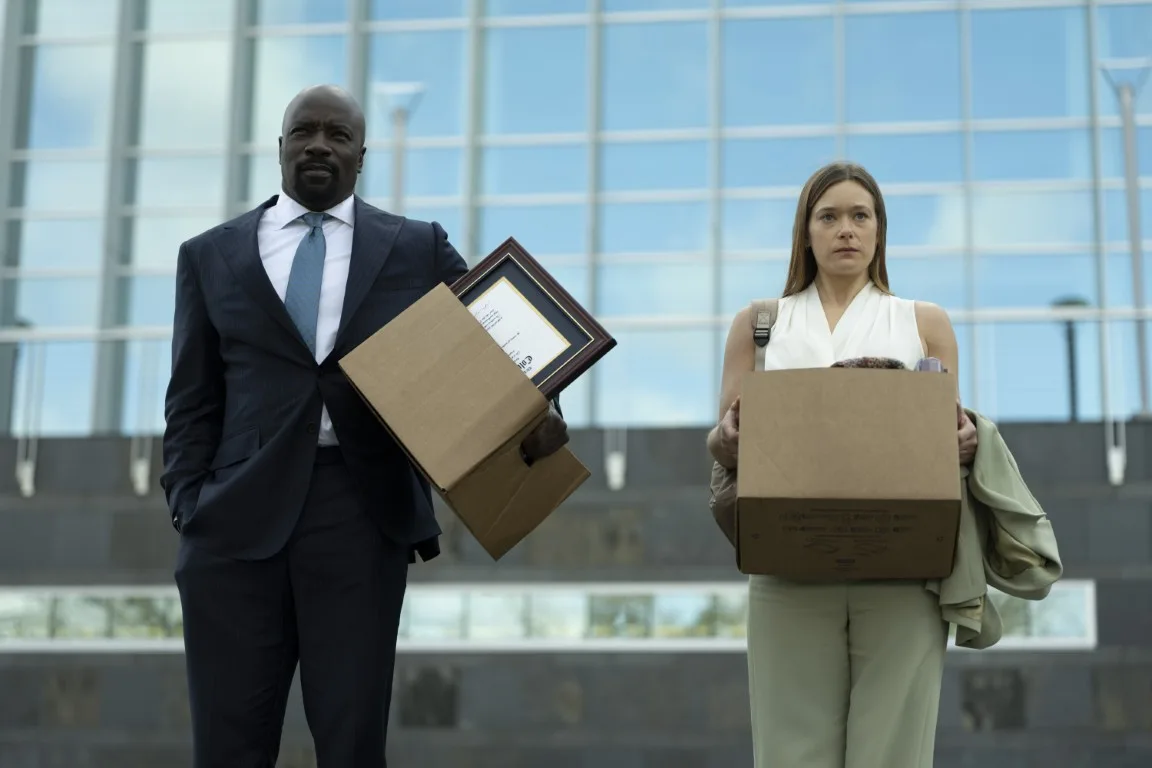
“I’m sick of people controlling my fate, and my guess is there are a lot of people out there that feel the same way but don’t have anyone to represent them,” says Michael Price (Mike Colter of “Luke Cage” and “Evil”), an attorney who co-founded, then got edged out of, an extremely successful big tech company called S-Talk.
He’s explaining his reasons for wanting to start an agency that takes on the cases against Magnificent 7-level companies that other firms are too afraid to touch. But he could just as easily be describing this show’s appeal to an American audience frustrated by the unemployment rate, the disproportionate power and wealth of the billionaire class, and the non-stop insistence that everyone get on board with artificial intelligence.
Unlike the other projects mentioned above, “Cupertino” does not focus on the idiosyncrasies/neuroses of a single, perceived “genius.” It is more general in its depiction of big tech, which enables it to feel both timely and, perhaps, more relatable to the average person.

While there are some key storylines that run throughout the first 10 episodes—the rivalry between Michael and his showboating lawyer father (Joe Morton); another, separate rivalry between Michael and his ex, also an attorney (Renée Elise Goldsberry, who co-starred opposite Colter on “Evil”); and, most importantly, an ongoing narrative about a particularly dangerous form of AI—this is largely a case-of-the-week type of show.
With its quick, plot-driven pacing, “Cupertino” is episodic, mainstream network storytelling that shows, like so much of the Kings’ output, that it’s still possible to make smart, sophisticated, digestible television within that framework.
As Michael, Colter is dignified, pragmatic and, if I’m being honest, not wildly different in demeanor from David, the priest the actor played on “Evil.” But he’s a persuasive lead in both shows, so I’m not going to complain too much about any overlap. While Michael believes in justice and the rule of law, he’s not some anti-capitalist hero who wants to burn down all of Silicon Valley. He simply sees a gap in the marketplace that needs filling. “When you’re in the middle of the ocean, you don’t sell people more water,” he explains to Goldsberry’s Nichole. “You sell them life jackets.”
His partner at the new firm, Olivia Siffre (Rachel Keller), a devout Christian and gifted lawyer who also gets fired from S-Talk after being sexually harassed by the head of the company, is the bleeding heart in this pairing. Keller and Colter have an organic, friendly chemistry that, to the show’s credit, is supportive without being romantic, at least not in these early episodes.
But the standout performances in “Cupertino” come from the two actors who provide the most comedic relief in a drama that doesn’t shy away from poking fun at the always-pitching culture of venture capitalism. Ella Stiller (daughter of Ben Stiller and Christine Taylor) gets a break-out role as Christy Palladino, a third employee who gets fired from S-Talk and becomes the receptionist at Price and Siffre, where she proves to be a fantastic investigator for her attorney bosses.
Christy is particularly adept at tracking down leads and calling in favors from her extensive family of blue-collar workers; after being escorted out of the S-Talk building, she phones her electrician uncle, who proceeds to turn the power on and off in that office and enrage everyone still “lucky” enough to be employed there. Christy knows nothing about technology, but she loves to stick it to the man. Her default expression is resting “you’ve got to be kidding me” face, and Stiller has got that expression down pat.
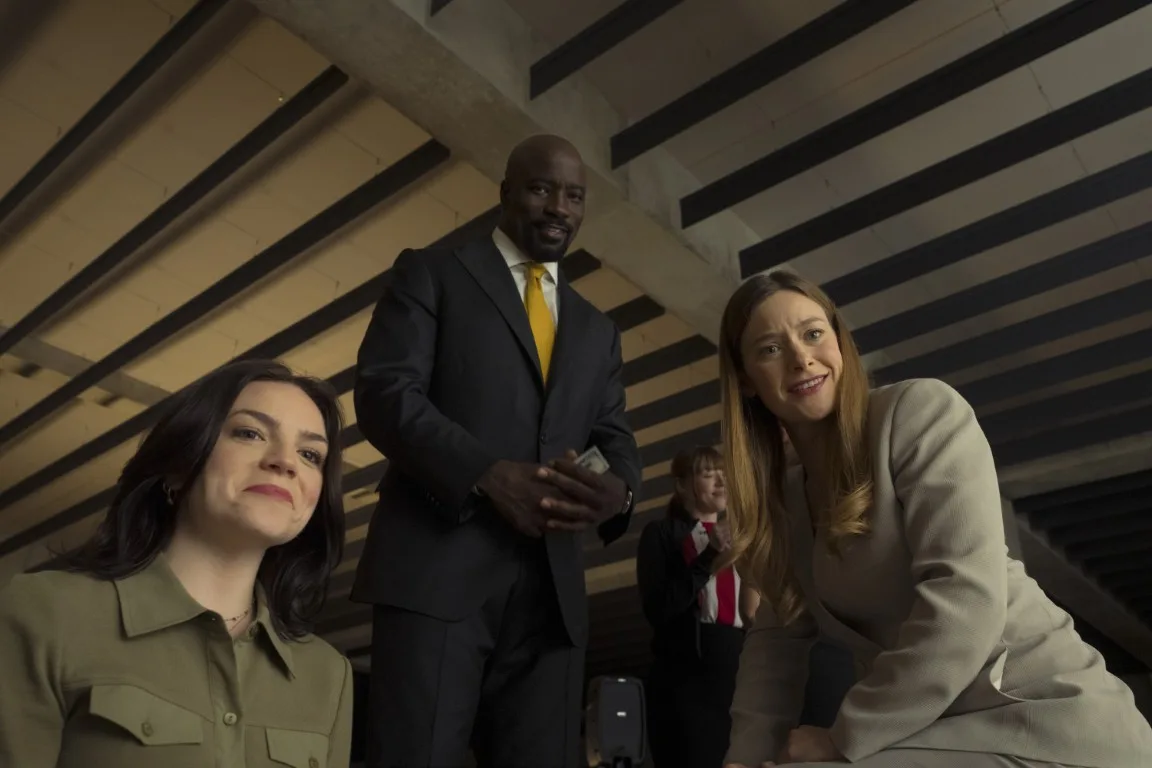
Then there’s Busy Phillips, who’s cast as Natalia Boutella, a key investor in the new firm who also happens to be divorced from a tech executive played by Fisher Stevens who is not Jeff Bezos, but also is totally Jeff Bezos. Natalia is less interested in sticking it to the man than she is in sticking it to that particular man. When he denies that he has gained weight after she tells him he “got fat,” Natalia counters: “You dined with the president, you had a front row seat to that inauguration, you bought a billion-dollar yacht. You got fat.” Phillips utters lines like that as if they’re coated in venom.
(As an added bonus, every time she and Goldsberry appear in the same scene, it’s like a partial “Girls5Eva” reunion, and that alone deserves a fresh designation on Rotten Tomatoes.)
The Kings and co. tackle numerous zeitgeisty tech trends; one episode focuses on a teenager compelled to kill his father by a chatbot, while another, which happens to debut less than a week before the midterms, zeroes in on prediction websites used to manipulate elections.
But “Cupertino” is not a purely anti-A.I. narrative. The episodes also highlight situations where technological assistance can help. In one, Christy gets incredibly frustrated by an A.I. agent she attempts to train by making sure its knowledge of horror movies is up to snuff. (“In which state did ‘The Blair Witch Project‘ take place?” she asks. “Wisconsin,” the agent cheerfully responds. Christy: “No, Maryland, moron.”) But she’s pretty grateful for that moron when he can warn her not to take a sip of a drink that’s been spiked at a bar.
If “Cupertino” has an official position on technology, it’s that it can be very useful, but it desperately needs significant, legally enforceable guardrails. This is an opinion shared by most sentient beings with anything akin to a conscience. This series dares to suggest that there’s a world where guardrails could be put in place, and where the “little guys” in the tech world have a chance to be heard. Maybe that’s a fantasy, but it’s one that’s extremely entertaining to live in for 42 minutes every week.
The first ten episodes of season one were screened in advance for critics. An additional ten episodes are currently in production.